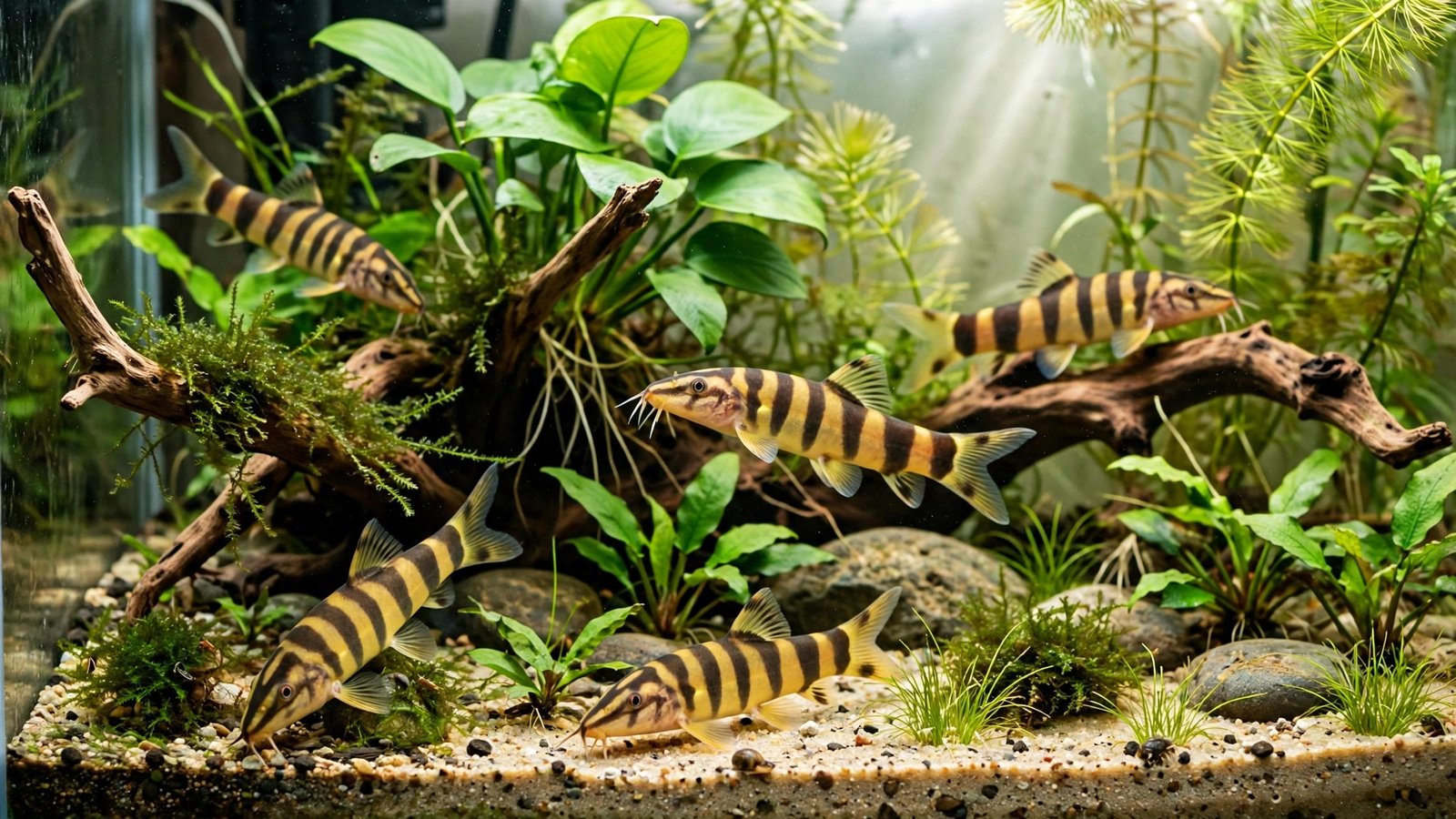
The fish labeled "zebra loach" at the shop is not always the fish you take home. Two very different loaches share that name, and one of them grows twice as big — so the first step of any zebra loach planted tank is knowing which loach you actually bought.
This guide centers the golden zebra loach, Sinibotia robusta: a 10–18 cm bottom-dweller from southern China and northern Vietnam that hunts pest snails at dusk and slots beautifully into a low-tech planted tank setup — provided the substrate, group size, and hiding places are right.
Can zebra loaches live in a planted tank? Yes — golden zebra loaches (Sinibotia robusta) thrive in planted tanks built around fine sand, caves, and driftwood. Keep them in groups of at least five, plan for 30–40 gallons minimum, and feed sinking foods after lights-out when they become active. They will not eat healthy plants, and one small group can erase a pest-snail population within weeks.
Building a zebra loach planted tank that works
Golden zebra loaches are social bottom-feeders with a real hierarchy: in groups of five or more they forage together and show bold gold coloration, while lone fish turn shy or aggressive. A 30–40 gallon tank suits five or six; full-size adults reaching 15–18 cm do better toward the 53-gallon end that some retail care sheets recommend.
Give them clean, well-oxygenated water with moderate flow, mimicking the streams of southern China. A sponge filter paired with a gentle hang-on-back works, but keep the lid sealed: zebra loaches are confirmed jumpers and will find the one gap you left.
Water parameters that keep them bold
| Parameter | Target | Notes |
|---|---|---|
| Temperature | 20–26 °C (68–79 °F) | One retail care sheet lists 18–26 °C; stay above 20 for active behavior |
| pH | 6.5–7.5 | Stable matters more than a perfect number |
| Hardness | 5–12 dGH | Soft to moderately hard |
| Flow | Moderate, well-oxygenated | Surface agitation or airstone helps |
| Water changes | 25–30% weekly | They are sensitive to nitrate buildup |
Loaches punish sloppy maintenance fast, so treat water quality as the foundation — clean, well-oxygenated water is the single biggest success factor.
Substrate: fine sand, no exceptions
This is the one hard rule. Zebra loaches spend their lives nosing through the bottom with delicate barbels, and coarse gravel abrades them until they shorten, redden, and invite infection. A 5–7 cm bed of fine, smooth aquarium sand lets them sift naturally — and fine sand protects their barbels while rooting most plants perfectly well.
The reasoning mirrors kuhli loach substrate guidance: any bottom-sifting loach needs a soft bed. Skip crushed coral, sharp gravel, and dyed novelty substrates entirely.
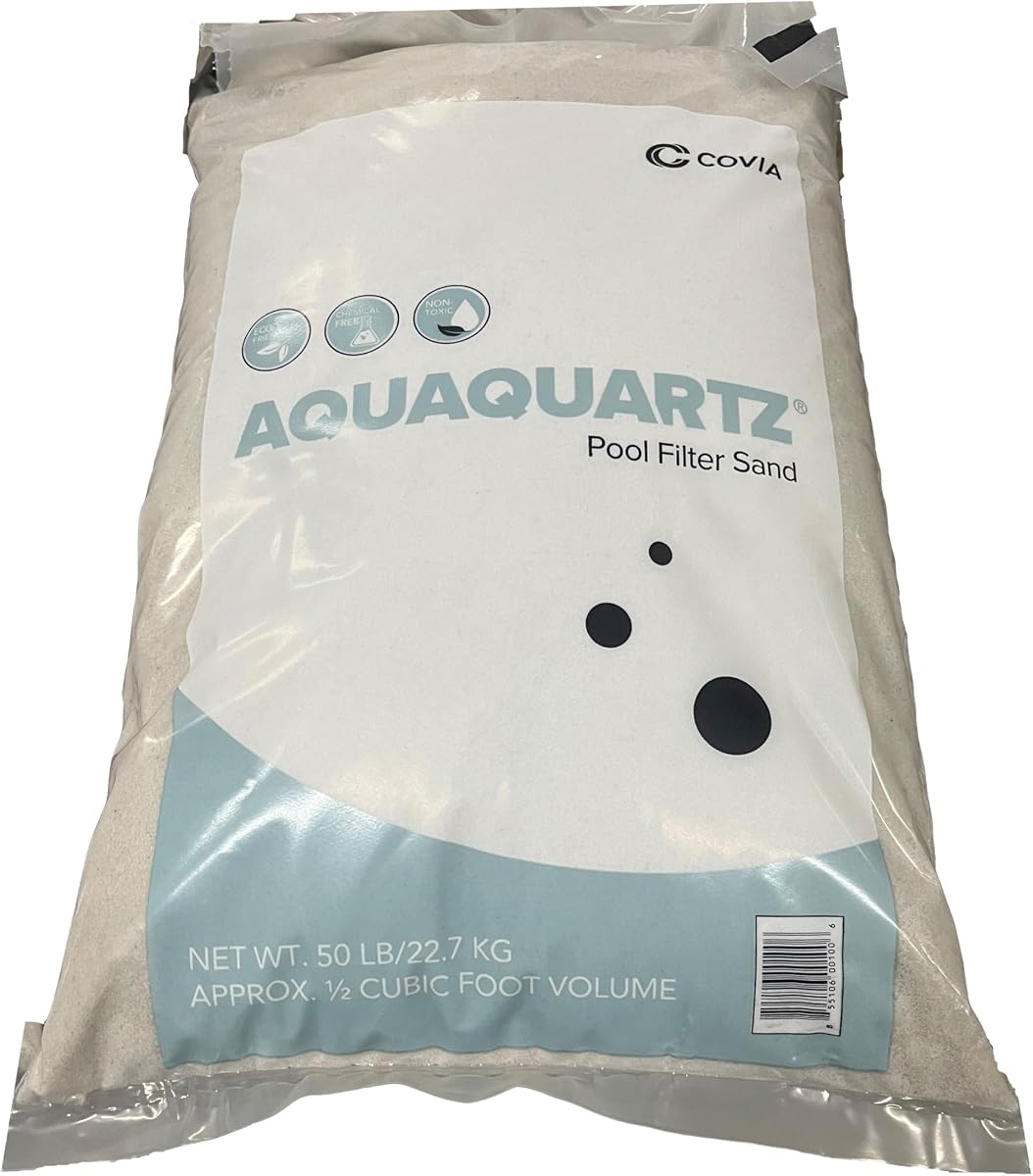
Covia AquaQuartz Pool Filter Sand
Check Price on AmazonPlants and hardscape
Choose plants the fish-first way: fish-first plant selection means tough, well-rooted species that survive an active bottom forager. Amazon swords and cryptocorynes root deep in sand; Anubias and Java fern tied to driftwood sit above the digging zone entirely. Add caves, terracotta tubes, and driftwood tangles — without enough hides, these fish go pale and stressed.
Unlike the yoyo loach, which digs far more aggressively, golden zebra loaches sift rather than excavate, so established plantings survive. Dim one corner with floating plants or overhanging driftwood; they venture out more when shade is nearby.
Feeding zebra loaches
These omnivores run on a nocturnal clock. Feed sinking pellets or algae wafers as the staple, bloodworms and brine shrimp two to three times a week, and blanched zucchini or spinach weekly. Feed at dusk or after lights-out — day-feeding lets fast mid-water fish strip the food before your loaches wake.
Pest snails are the bonus: a group of five will methodically clear a bladder-snail infestation in weeks, which is why a snail-control planted setup and a zebra loach shoal are natural partners. They cannot tell pest snails from ornamental nerites, though — keep prized snails in another tank.
Tank mates
Golden zebra loaches are mostly peaceful but genuinely boisterous — they barrel around the bottom at feeding time and startle slow, delicate fish, which rules out bettas. Pair them with confident mid-water swimmers: tetras, danios, barbs, and other sturdy loaches of similar size. Avoid anything small enough to be bullied, or large enough to eat them.
Frequently Asked Questions
Can zebra loaches live in a planted tank?
Yes. Golden zebra loaches (Sinibotia robusta) are fully plant-safe — they sift sand and eat pest snails but never chew or uproot healthy plants. Build around fine sand, deep-rooted or epiphytic plants, and plenty of caves and driftwood, and you get one of the most entertaining cleanup crews a planted tank can have.
How many zebra loaches should you keep together?
Five is the minimum, and six to eight is better. In a proper group zebra loaches are bolder, more colorful, and more active at dusk; lone fish or pairs hide constantly and may turn aggressive toward other bottom-dwellers out of insecurity.
Do zebra loaches eat pest snails?
Yes — enthusiastically. They crack bladder snails and small Malaysian trumpet snails, clearing an infestation within weeks in most tanks. They cannot distinguish pests from ornamental snails, so move nerites and other prized invertebrates to a different tank before adding the loaches.
Are zebra loaches good tank mates for bettas?
No. Golden zebra loaches are too boisterous for bettas — their fast bottom-rushing at feeding time stresses slow, long-finned fish badly. Pair them instead with confident, active community fish like tetras, danios, and barbs, which match their energy and ignore their antics.
Why does my zebra loach hide all day?
It is naturally nocturnal — zebra loaches become active at dusk and after lights-out, which is normal, not illness. If yours never emerge even at night, add more caves and driftwood, confirm at least five members in the group, and check water parameters.
Worth watching at dusk
A well-set zebra loach tank rewards a habit most fishkeepers never build: sitting in front of the glass after the lights dim. That is when the shoal comes out — stripes flaring, barbels sweeping the sand. Get the sand soft, the group large, and the food sinking after dark, and you will wonder why anyone keeps these fish any other way.