 Lighting & CO2
Ambient Room Light: Friend or Algae Fuel?
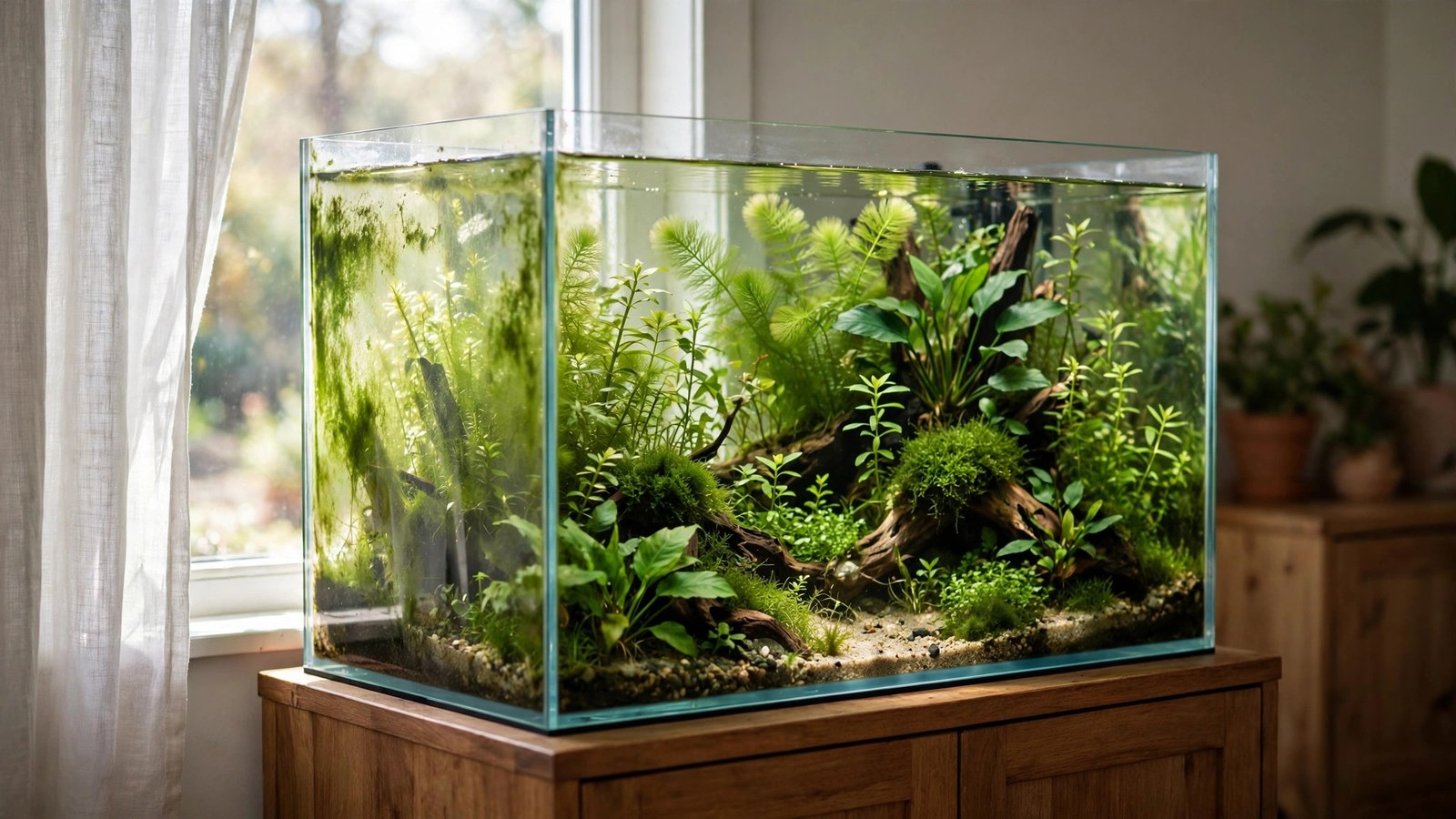
Your tank gets light you never scheduled. Learn when window and room light helps plants, when it feeds algae, and how to measure and manage what your room delivers.
Light is the accelerator pedal of a planted tank and CO2 is the fuel line — press the pedal without enough fuel and algae, not plants, wins the race. This is the most misunderstood pairing in the hobby: beginners routinely buy strong LED fixtures, run them 10–12 hours, skip CO2, and then blame “bad luck” for the hair algae farm. The rule is simple and non-negotiable — light intensity, photoperiod, CO2 supply, and fertilization must rise together, or the weakest link becomes an algae invitation.
On lighting, the number that matters is PAR (photosynthetically active radiation) at the substrate, not watts or lumens: roughly 20–40 µmol/m²/s for low-light plants, 40–80 for medium, 80+ for demanding carpets and red species. Match the fixture to the plants you actually keep, run a 6–8 hour photoperiod while the tank matures, and use a timer with a sunrise/sunset ramp — consistency beats intensity. LED comparisons in this section cover Hygger, NICREW, Fluval Plant 3.0, Chihiros, and Twinstar on the metrics that decide purchases: PAR output, spread, controllability, and value.
On CO2, you have three tiers: liquid carbon (a mild algae suppressant and carbon supplement — not a replacement for gas), DIY yeast or citric-acid generators (cheap, inconsistent), and pressurized injection with a regulator, solenoid, diffuser, and drop checker (stable, tunable, the professional standard). Pressurized CO2 at ~30 ppm — verified lime-green on a 4 dKH drop checker — transforms what is possible in a tank, but only when light and ferts keep pace. The setup guides below walk through each tier with parts lists, tuning procedures, and the safety basics (never run CO2 without a drop checker and a timer-synced solenoid).
Lighting & CO2 Your tank gets light you never scheduled. Learn when window and room light helps plants, when it feeds algae, and how to measure and manage what your room delivers.
 Lighting & CO2
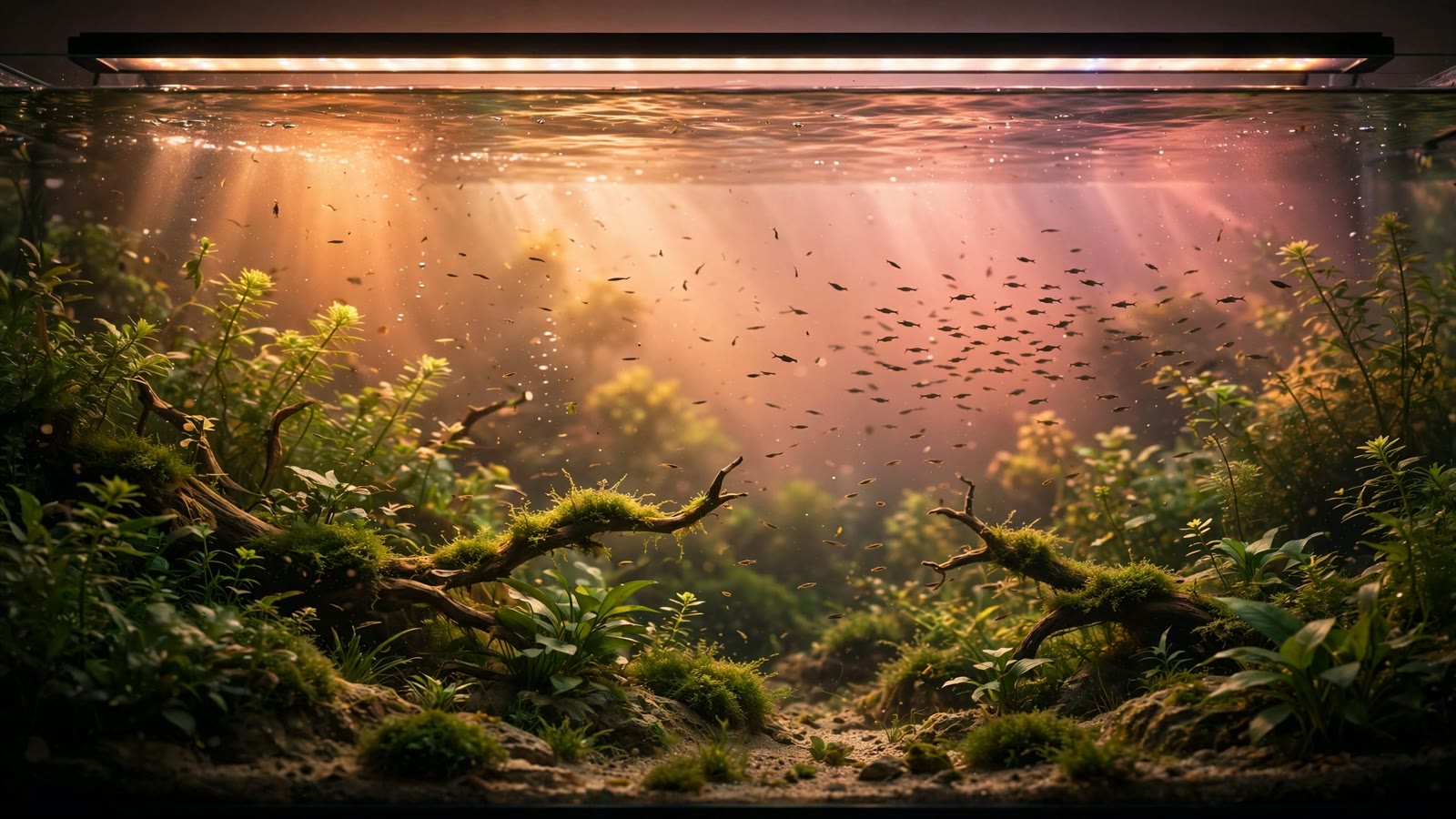
What the 24/7 automatic sunrise-to-moonlight cycle on LED lights actually does, how it affects plant growth and algae, and which models offer it.
 Lighting & CO2
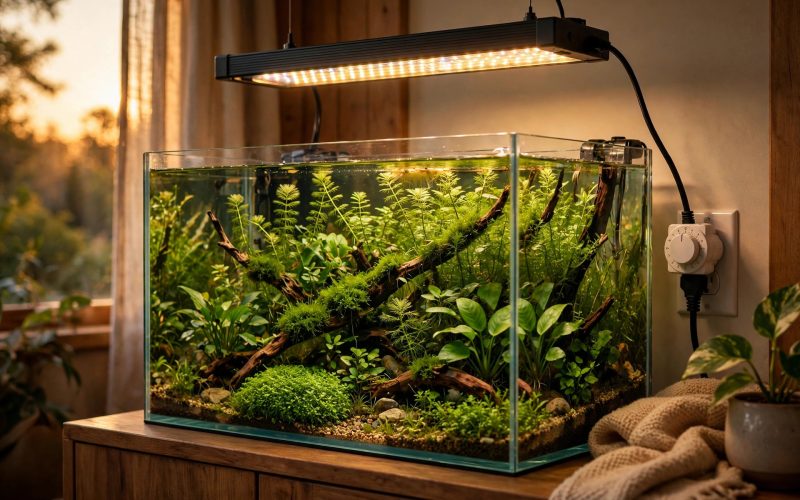
The best aquarium light schedule for plant growth — photoperiod timing, the siesta method debate, timers, and CO2 syncing.
 Lighting & CO2
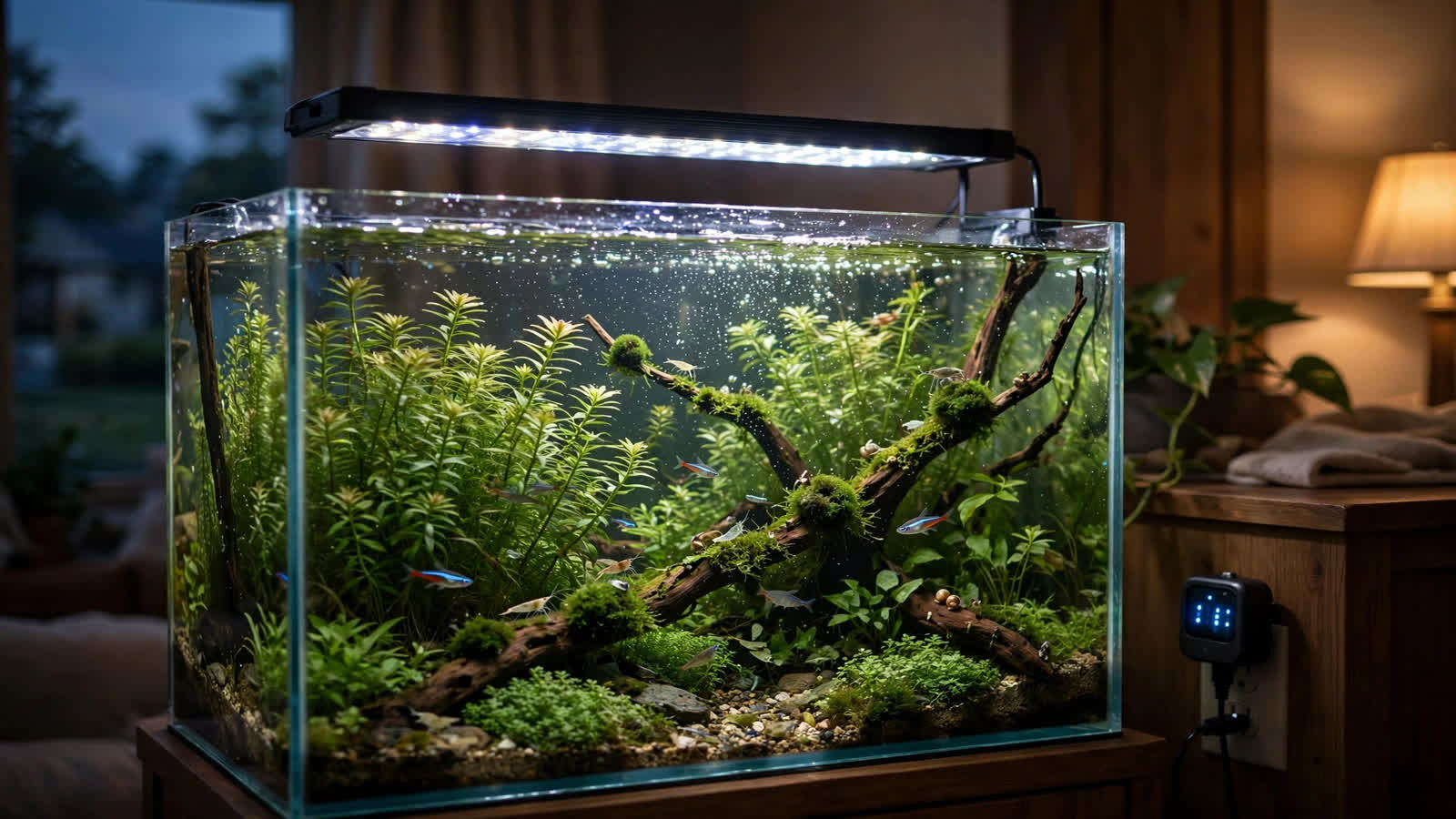
A $15 plug that runs your lights on a strict schedule is the simplest algae-prevention tool in the hobby. Here's how to choose, program, and troubleshoot one.
 Lighting & CO2
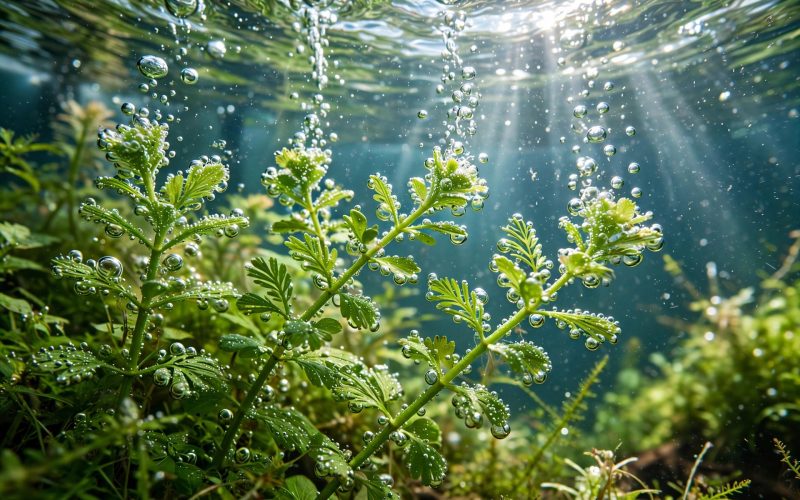
Aquarium plants pearling — what those oxygen bubbles really mean, the science of saturation, myths, and why some healthy tanks never pearl.
 Lighting & CO2
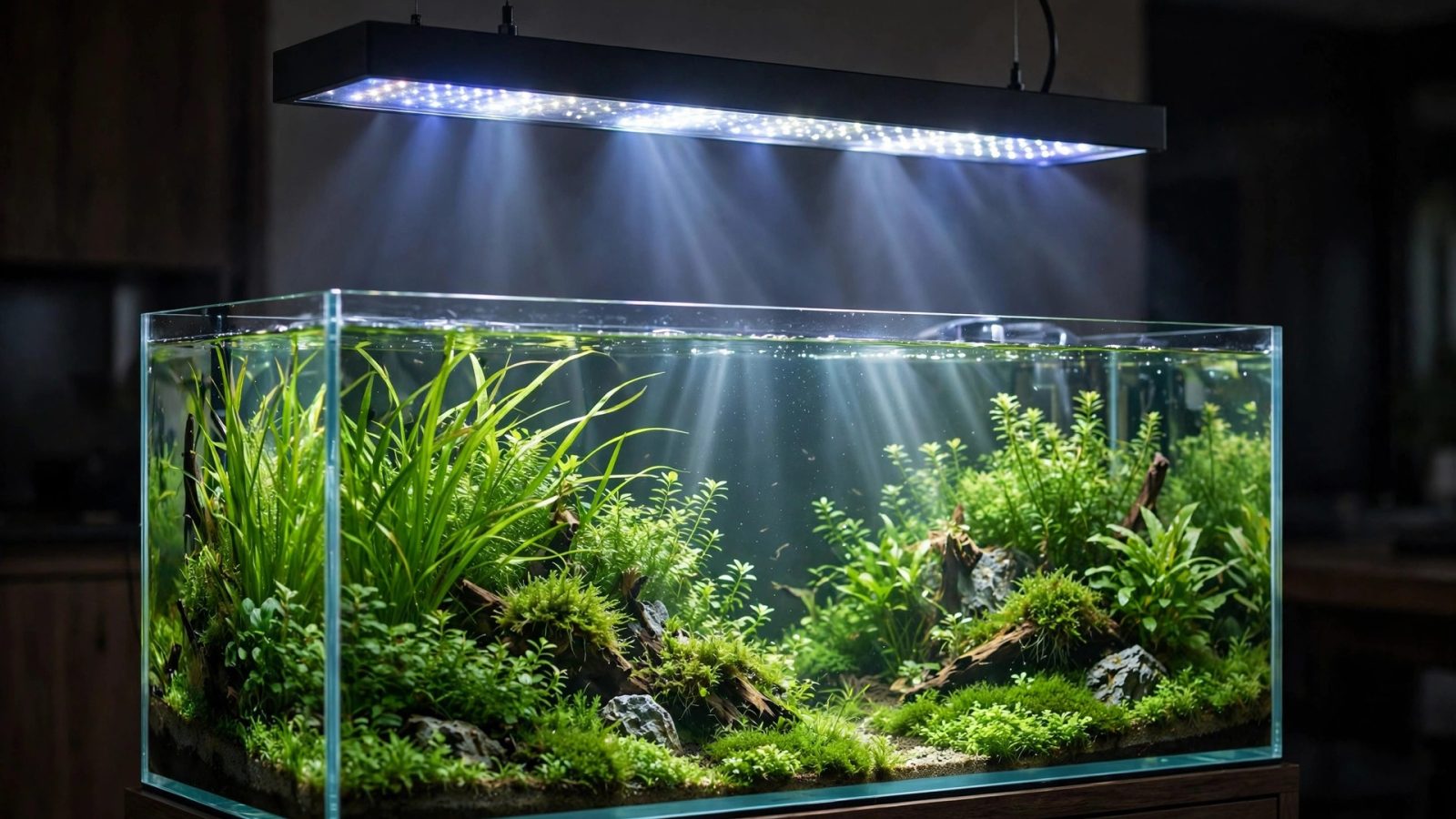
The 8 best aquarium lights for planted tanks compared by tank size, budget, and tech level — with PAR guidance and buying advice.
 Lighting & CO2
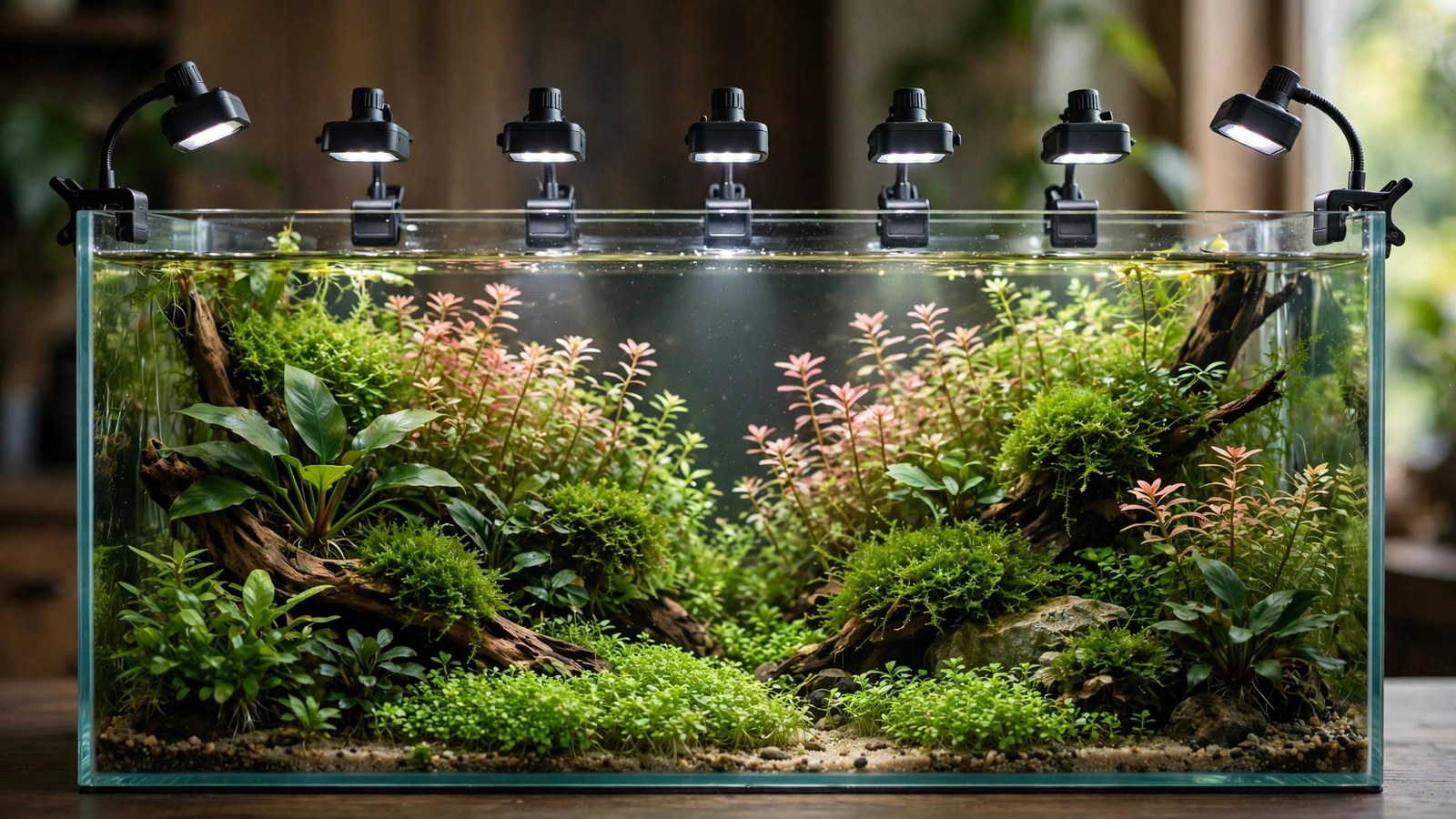
Seven clip-on lights for nano planted tanks compared, from budget bars to premium showpieces, plus sizing guidance and the nano-specific pitfalls to avoid.
 Lighting & CO2
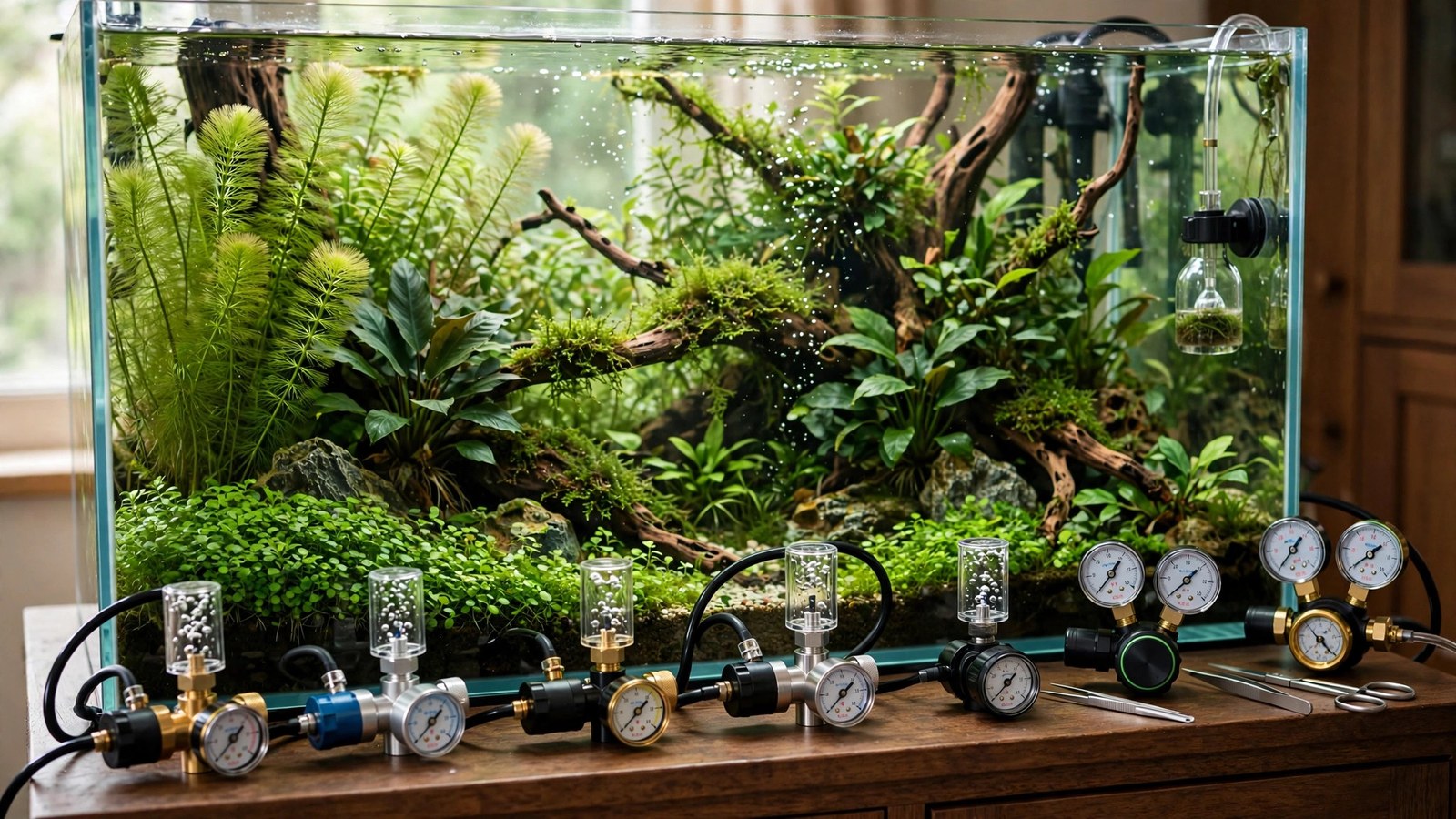
Seven proven CO2 regulators from budget to premium, plus why dual-stage matters, how to avoid end-dump, and how to size a regulator to your tank.
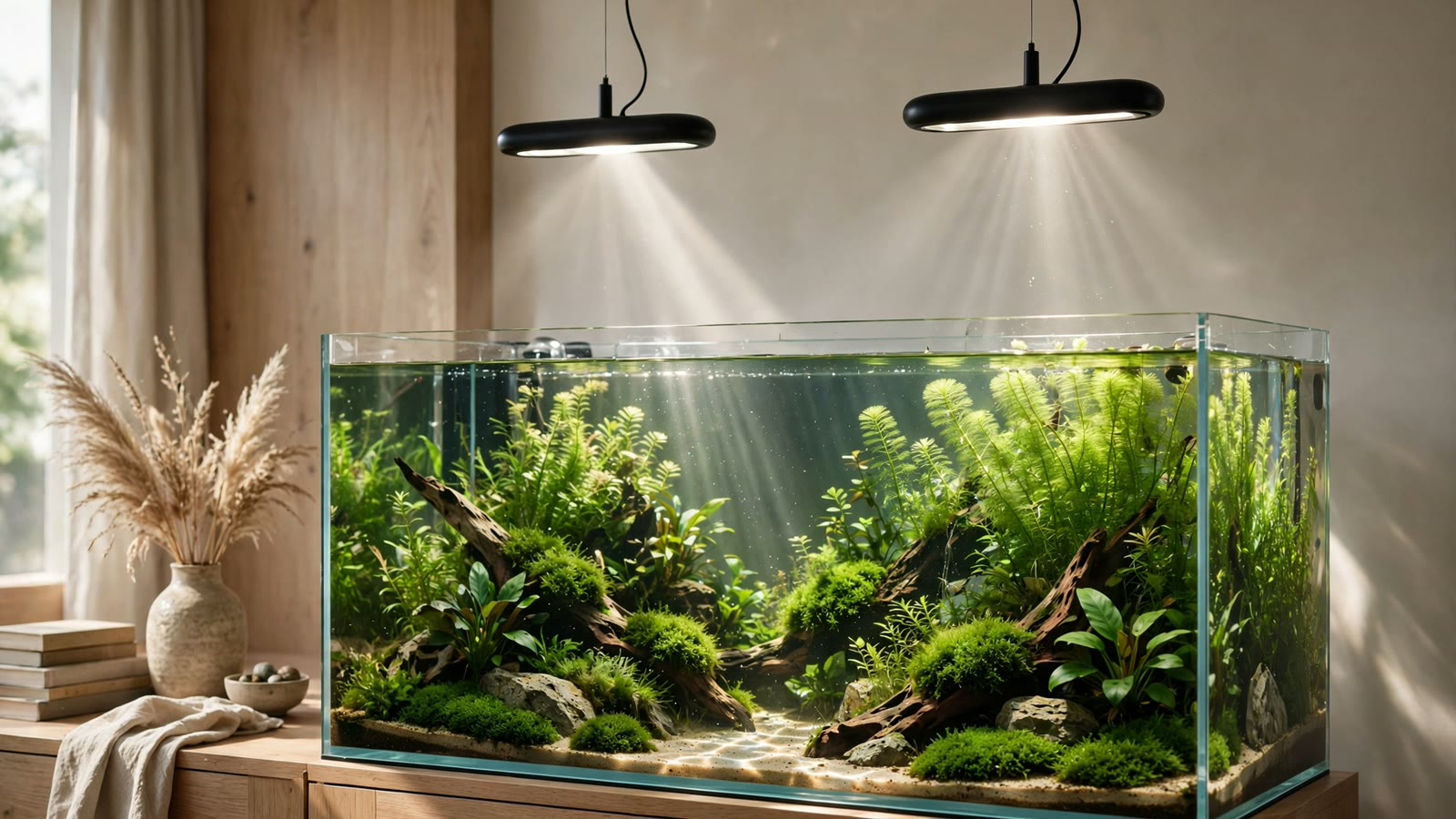 Lighting & CO2
Choosing the best hanging light for a planted tank: pendant PAR, spread per fixture, mounting hardware, spill control, and picks by footprint.
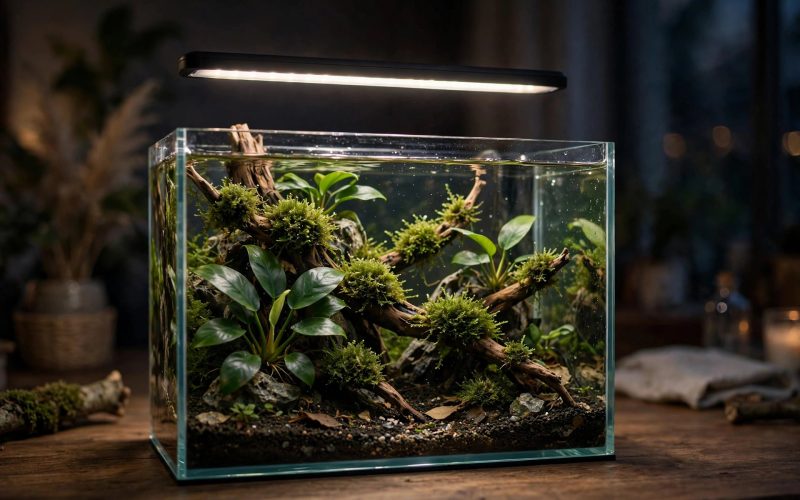 Lighting & CO2
The 6 best LED lights for low-tech planted tanks — no-CO2-friendly fixtures with the right PAR, dimming, and budget prices.