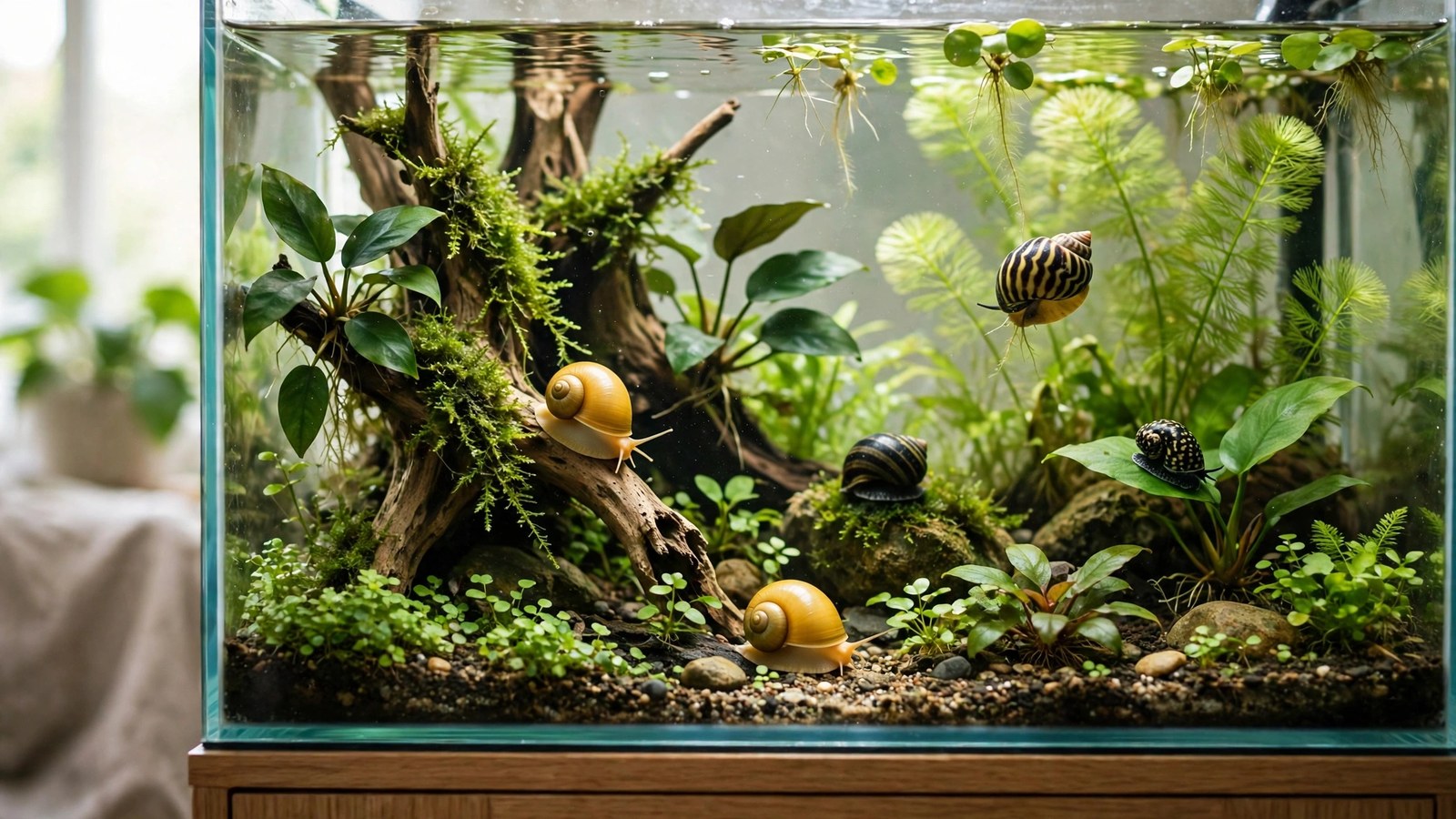
Here is the mistake almost every new snail keeper makes: they build a beautiful planted snail tank with soft, acidic water — perfect for the plants, catastrophic for the snails. Within months, the mystery snails' shells pit, erode, and develop white chalky patches as the acidic water literally dissolves the calcium carbonate their shells are built from. A thriving snail scape is a negotiation between two organisms that want slightly different things, and once you understand how to balance that trade-off, you can keep both lush plants and glossy, hard-shelled snails in the same tank for years.
By the end of this guide, you will know how to set up a planted tank that keeps mystery and nerite snails shell-healthy: which plants survive constant rasping, how to dial in calcium and water chemistry, and how to stop your snails from treating the lid seam as an exit ramp.
Why Snails and Plants Are a Negotiation
A standard planted aquarium is optimized for plants: soft, slightly acidic water, lean dosing, and often CO2 injection. Snails flip several of those priorities. Mystery snails (Pomacea diffusa) and nerite snails (mostly Neritina natalensis) build their shells from calcium carbonate, which dissolves in acidic water. Keep them long-term at pH 6.5 and you will watch their shells thin, pit, and turn chalky white — damage that never fully heals.
The good news: plenty of aquarium plants thrive at pH 7.2–7.8 in moderately hard water, especially low-tech species that do not demand CO2 or ultra-soft conditions. So your job is not to choose between plants and snails — it is to build a tank in the shared middle ground.
Mystery vs Nerite: Pick Your Grazers
Both species are excellent algae grazers, but they have different habits and quirks. Most planted snail tanks do best with one or the other rather than a mixed crowd competing for the same algae.
| Trait | Mystery snail | Nerite snail |
|---|---|---|
| Adult size | 5–6 cm (2–2.5 in) | 2–2.5 cm (under 1 in) |
| Plant risk | Low when fed; rasps soft leaves when hungry | Near zero — rarely touches healthy plants |
| Algae appetite | Strong on soft algae and biofilm | Exceptional on green spot algae and diatoms |
| Escape artist? | Yes — needs a tight lid | Yes — notorious for wandering out of open tanks |
| Breeding in freshwater | Yes — lays clutches above the waterline | Eggs need brackish water; no freshwater babies |
| Lifespan | 1–2 years | 2–3 years |
| Ideal pH | 7.2–7.8 | 7.0–8.0 |
Mystery snails are the charismatic option — big, active, and visible — but they produce a surprising bioload. Nerites are the workhorses: smaller, less messy, and unbeatable at scrubbing green spot algae off glass and leaves. If you run a planted shrimp tank, nerites slot in as ideal algae-control tankmates.
Snail-Proof Plants That Thrive in Hard Water
Snails rasp surfaces with a radula — a tongue covered in microscopic teeth. Soft, thin-leaved plants are the first casualties of a hungry snail. The fix: choose plants with tough, thick leaves, and keep your snails well-fed so grazing stays recreational.
| Plant | Snail resistance | Notes |
|---|---|---|
| Anubias (any species) | Excellent | Thick leathery leaves; attach to wood, never bury the rhizome |
| Java fern | Excellent | Tough bitter leaves snails ignore; tie or glue to hardscape |
| Cryptocoryne wendtii | Very good | Tolerates higher pH; root tab feeder |
| Vallisneria | Very good | Fast background grower in hard alkaline water |
| Java moss / Christmas moss | Good | Dense shelter for baby shrimp and grazing surface for snails |
| Hornwort | Good | Fast nutrient sponge; soft texture but grows faster than snails can eat it |
| Amazon sword | Moderate | Good once mature with thick leaves; young shoots can get rasped |
What to skip: fine-leafed stems like rotala or cabomba, and any delicate carpet plant — a roaming mystery snail will bulldoze newly planted carpets and rasp tender tips. For species-specific inspiration, browse Tropica's aquarium plant database, which lists each plant's care needs and water preferences.
If your snails live alongside shrimp, a biofilm-rich shrimp tank setup pairs naturally with snail-proof epiphytes — both animals graze the same surfaces.
Water Chemistry for Shells: pH, GH, and Calcium
This is the heart of the whole setup. Your snails' shells are the visible readout of your water chemistry, so treat these numbers as non-negotiable.
pH 7.2–7.8 is the target band for mystery snails; nerites tolerate 7.0–8.0. Below 7.0, calcium carbonate dissolves faster than the snail can deposit it, and shell erosion is inevitable. Many commercial aquasoils (ADA Amazonia and similar) actively buffer water down to pH 6.0–6.5 — excellent for plants but hostile to snails — so avoid buffering soils in a dedicated snail tank. Inert substrates (pool filter sand, fine gravel, or inert soil capped with sand) keep your pH where you set it instead of fighting you.
GH 7–12 dGH gives snails the calcium and magnesium they need for shell growth, and most of the plants listed above are perfectly happy there. Keep KH at 4–8 dKH for pH stability — snails are more sensitive to pH swings than to the exact number.
Calcium supplementation is cheap insurance. Drop a piece of cuttlebone (the bird kind, unflavored) in the filter or tank and let it dissolve slowly — snails will rasp it directly. Alternatively, mix crushed coral or aragonite into the filter, or dose calcium chloride at 1–2 grams per 40 liters after water changes if your tap is soft. Feed calcium-rich foods weekly: blanched kale or spinach, plus commercial calcium-fortified snail food.
On water changes: snails are more sensitive to copper and sudden parameter shifts than fish, so keep changes modest — 20–25% weekly rather than large swings — and always use dechlorinator. For a tank philosophy that pairs naturally with snail-safe stocking, see our guide to low-tech planted tank setups.
The Copper Rule: Non-Negotiable
Copper kills invertebrates at concentrations measured in parts per billion — levels invisible on a standard aquarium test kit. This is the one tank parameter where "close enough" does not exist.
- Fertilizers: use only copper-free formulas. Many all-in-ones contain chelated copper at levels harmless to fish and plants but risky for snails and shrimp.
- Medications: never dose copper-based parasite treatments in a snail tank. Quarantine and treat fish elsewhere.
- Tap water: homes with copper plumbing can leach trace copper, especially first-draw morning water. Run the tap 30 seconds before filling buckets, and use a dechlorinator that neutralizes heavy metals.
- Algaecides: most are copper-based. Rely on your snails, manual removal, and balanced light and nutrients instead.
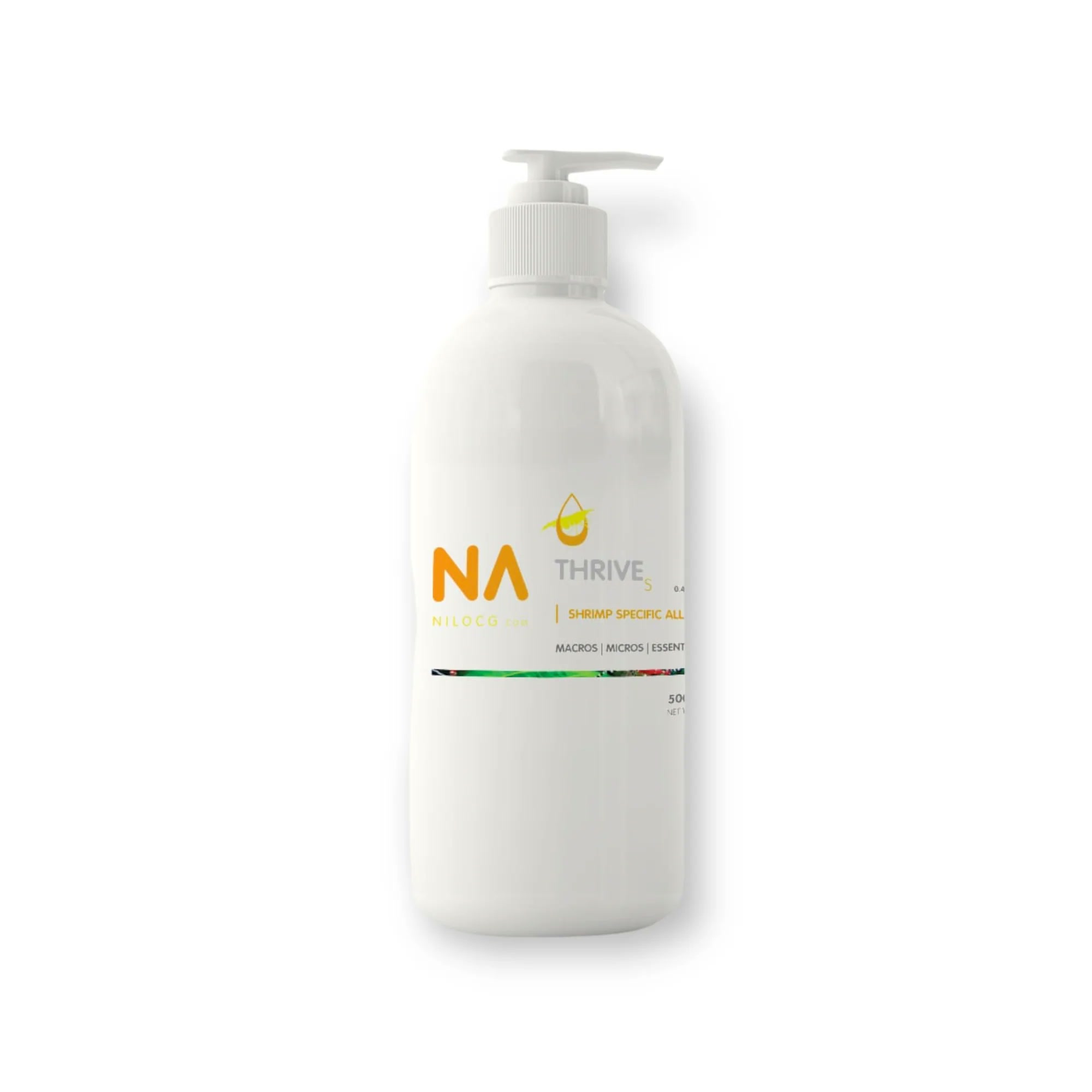 ★4.7
NilocG ThriveS Shrimp-Safe All-in-One 500ml
Check Price on Amazon ★4.7Lids and Escape Prevention
Both mystery and nerite snails leave the water on purpose. Mystery snails crawl above the waterline to lay egg clutches on the glass or lid underside; nerites wander when something about the water bothers them — or sometimes for reasons known only to them. An open-top snail tank is an invitation to find a dried snail on the carpet.
Use a tight-fitting lid — glass canopies or solid plastic lids with all gaps (filter cutouts, tubing holes) covered by mesh or sponge. For mystery snails, leave a 5–8 cm (2–3 inch) air gap between the water surface and the lid: females need that humid space above the waterline to deposit egg clutches.
If you find snails clustered at the waterline constantly, treat it as a warning light: check ammonia, nitrite, and copper first, then oxygenation. Snails gasping at the surface of an otherwise fine tank often means something invisible is wrong.
Feeding: What Algae Alone Won't Cover
A common myth is that snails survive on tank algae alone. In a planted tank with grazing snails, algae is a snack, not a diet. Underfed mystery snails turn to your plants — this is where most "my snails ate my plants" stories begin.
Feed every day or two: one algae wafer per 2–3 mystery snails, or a thumbnail-sized piece of blanched vegetable (zucchini, cucumber, kale, spinach) left in the tank for a few hours. Nerites thrive on biofilm and algae alone in most tanks but will clean up wafers too. Remove uneaten vegetables after 8–12 hours before they foul the water. Cuttlefish bone in the tank doubles as a constant calcium snack.
Feed in the evening: snails are most active after lights-out, and you will see them congregate on the food within an hour. If your snails ignore food entirely, check water parameters — refusal to eat is an early warning sign.
Stocking and Tankmates
Snails add bioload — a few large mystery snails produce roughly the waste of a small school of tetras, so stock conservatively: one mystery snail per 2.5 gallons, or one nerite per 3–5 gallons. A 20-gallon snail scape comfortably holds 4–5 mysteries or 5–6 nerites, plus plants.
Best tankmates are peaceful community fish that ignore snails: tetras, guppies, rasboras, and corydoras. Avoid snail predators entirely: loaches, puffers, and large cichlids will crack snail shells for sport. A planted neon tetra tank with nerite snails added is one of the most classic and trouble-free combinations in the hobby, and the cleanup crew guide rounds out the full cast of grazers.
If you plan to keep guppies with your snails, check the best plants for guppy tanks — many of the same tough, hard-water-friendly species pull double duty.
Planted Snail Tank Maintenance Rhythm
A planted snail tank is genuinely low maintenance once established — the snails do the glass-cleaning, and the plants handle nitrates. Your weekly routine:
- Test: pH, GH, ammonia, nitrite, nitrate. Watch for pH drift downward as plant CO2 and organics accumulate.
- Water change: 20–25%, temperature-matched, dechlorinated. Vacuum visible detritus but leave the mulm in plant beds — snails graze it.
- Feed: wafers or blanched vegetables every day or two; check your calcium source (replace cuttlebone when it dissolves).
- Prune: remove yellowing leaves before they rot — decaying plant matter plus snail waste can spike ammonia faster than you'd expect.
- Egg clutch check (mystery snails): clutches appear above the waterline as pale pink clusters. Leave them for babies (2–4 weeks to hatch at warm temps); crush or remove them if you don't want 50–200 surprise snails.
Snail reproduction is worth deciding on early — "surprise babies" is one of the most common snail-keeper regrets. Nerites never reproduce in freshwater, which is why they are the zero-surprise option.
Frequently Asked Questions
Will mystery snails eat my live plants?
Usually not — as long as they are well-fed. Mystery snails prefer algae, biofilm, and supplemental food over healthy leaves, and most keepers never see plant damage. The rasped-leaf stories almost always trace back to hungry snails in algae-free, underfed tanks. Feed wafers or blanched vegetables every day or two and choose tough-leaved plants like anubias and java fern, and your plants are safe.
Why is my snail's shell turning white or pitting?
White chalky patches and pitting are classic signs of shell erosion from acidic or calcium-poor water. Test your pH (below 7.0 is the usual culprit) and GH, then raise pH toward 7.2–7.8, add a cuttlebone or crushed coral calcium source, and feed calcium-rich foods like blanched kale. Existing damage is permanent, but new shell growth will come in healthy and glossy once the chemistry is corrected.
Do I really need a lid for a snail tank?
Yes. Both mystery and nerite snails regularly leave the water — mysteries to lay egg clutches above the waterline, nerites when water quality bothers them. A tight-fitting lid with all equipment gaps covered is mandatory. For mystery snails, leave 5–8 cm of air space between the water surface and the lid so females have somewhere to lay their clutches.
Can I use CO2 injection in a snail tank?
Yes, but carefully. CO2 lowers pH, and snail tanks need pH at 7.2 or above — so dose conservatively, target only a mild pH drop of 0.3–0.5, and monitor with a drop checker and pH test. Many keepers skip injected CO2 entirely in snail tanks and rely on low-tech plant choices, which removes the pH risk completely.
Are nerite or mystery snails better for algae control?
Nerites win for algae control: they are relentless grazers of green spot algae and diatoms, smaller and less messy, and they never reproduce in freshwater. Mystery snails eat plenty of soft algae too, but their larger size means more waste and a bigger appetite for supplemental food. Many aquarists use nerites as the algae crew and add one or two mysteries purely as showpiece animals.
Is aquarium fertilizer safe for snails?
Only if it is copper-free. Copper is lethal to snails at trace concentrations, and several common all-in-one fertilizers contain chelated copper as a micronutrient. Look for formulas labeled copper-free and shrimp-safe — they are snail-safe by the same standard. Iron, potassium, and other standard macros and micros are fine at recommended doses.
A Tank That Works as Hard as Its Snails Do
A planted snail tank is one of the most satisfying builds in the hobby: the plants stay clean because the snails polish them, the snails stay healthy because you tuned the water for their shells, and the whole system hums along on a light maintenance routine. Get the water right, feed your grazers, choose tough plants, keep copper out, and put a lid on it.