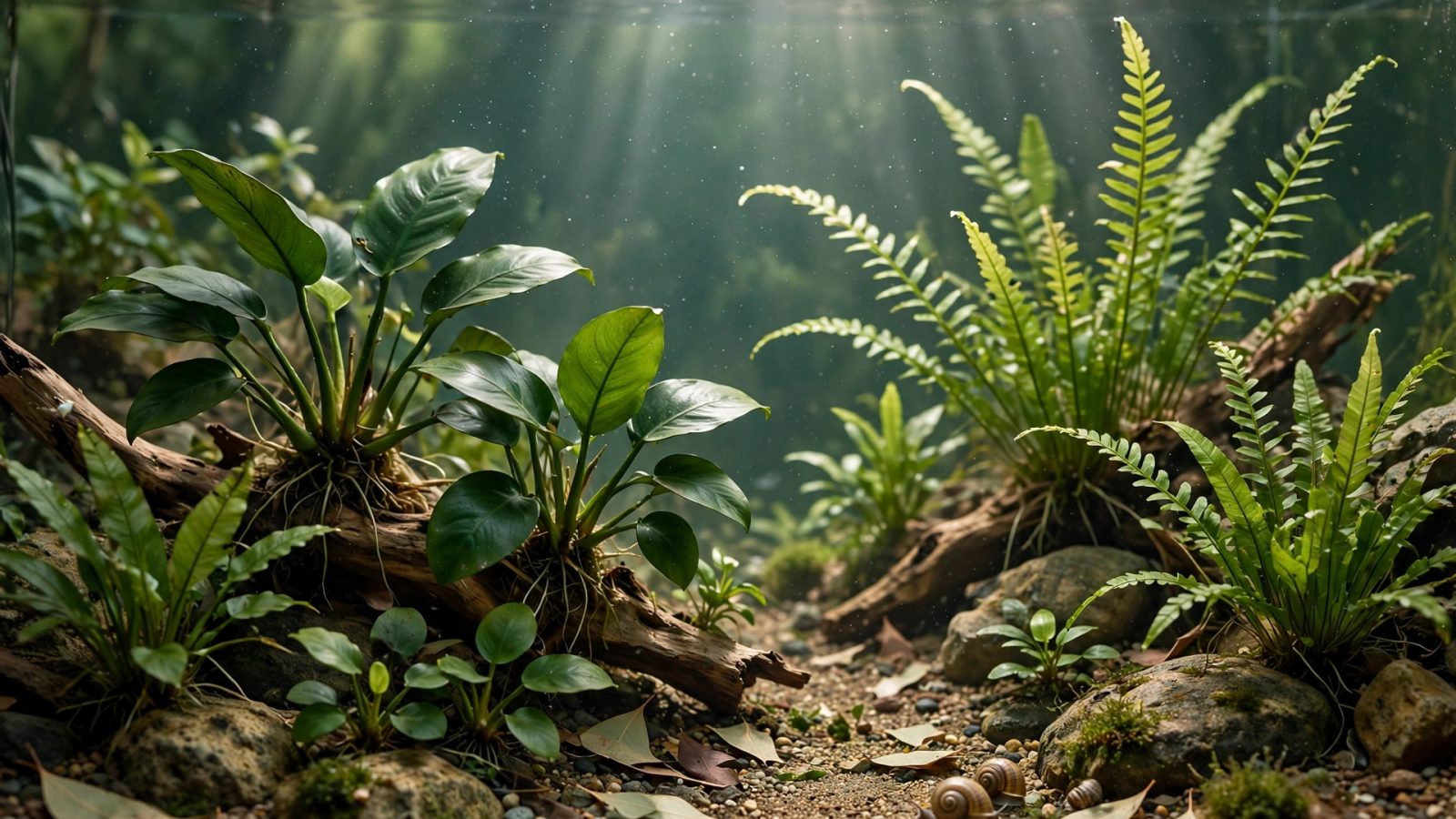
Low-tech planted tanks are the hobby’s sweet spot: real, thriving aquatic plants with no CO2 injection, no daily dosing rituals, and no expensive controllers. Just a tank, a light, sensible plant choices, and a routine measured in minutes per week. If the high-tech world of pressurized CO2 and EI dosing sounds like a second job, this is your path.
“Low-tech” means one thing technically — no injected CO2 — but in practice it describes a philosophy: work with undemanding plants, moderate light, and patience instead of equipment. This guide covers the complete beginner build: equipment, plant selection, setup, and the maintenance rhythm that keeps it effortless. For the natural soil-based variant, see our Walstad method guide and dirted tank setup; for the upgrade path later, see high-tech setup.
Low-Tech vs. High-Tech: The Real Tradeoffs
- Growth speed: Low-tech plants grow 2–4x slower. A stem that needs weekly trimming in CO2 might need monthly trimming without it. For most hobbyists, slower is a feature — less pruning, less replanting.
- Plant palette: Roughly 70% of commonly sold aquarium plants thrive low-tech. The excluded 30% — demanding carpets (HC Cuba, Glossostigma), most intense reds, finicky stems — are beautiful but genuinely need CO2.
- Algae dynamics: Counterintuitively, low-tech tanks are often more algae-stable than high-tech ones. The #1 algae cause in CO2 tanks is fluctuating CO2; low-tech tanks don’t have that variable at all.
- Cost: A low-tech setup costs a fraction of high-tech. No regulator, no diffuser, no drop checker, no refills — often $200+ saved.
- Forgiveness: Miss a week of maintenance on a high-tech tank and algae explodes. Miss a week on low-tech and the plants barely notice.
The honest summary: high-tech grows more species faster; low-tech grows plenty of species with far less effort and money. Most beginners are happier low-tech — and many veterans stay there deliberately.
Equipment: The Minimal List
Tank
10–20 gallons is ideal for a first low-tech tank — stable parameters, room for a real scape, forgiving of mistakes. Standard rectangles beat cubes for planting footprint. Bigger is easier; a 20-long is arguably the best beginner planted tank ever made.
Light: Moderate, Timed
The single most consequential choice. You want low-to-medium intensity, 6–8 hours daily, on a timer. Most kit LEDs or a basic planted-tank fixture (Nicrew, Hygger class) suffice. The beginner error is always too much light — blasting a low-tech tank with a high-end fixture grows algae, because the plants can’t use that light without matching CO2. If your fixture is dimmable, start at 60–70%.
Filter: Any Gentle Filter
Sponge filters, HOBs, small canisters — all fine. Size for gentle turnover (4–6x tank volume per hour is plenty). Surface agitation is good; it oxygenates without driving off the limited CO2 present.
Heater (for Tropical Setups)
Most low-tech plants are tropical: 72–78°F suits the majority. An adjustable heater sized to the tank, verified with a thermometer.
Substrate: Your Choice
Low-tech works over inert gravel/sand (with root tabs for heavy feeders), commercial aquasoil, or dirt. Each is covered in our dirted guide. For the absolute simplest start: inert gravel + root tabs + liquid fertilizer. Nothing to leach, nothing to cycle around, predictable from day one.
Fertilizer: Simple Dosing
Yes, low-tech tanks still need fertilizer — “low-tech” means no CO2 injection, not no nutrients. The simple regime: a comprehensive liquid fertilizer at half to full dose once or twice weekly, plus root tabs under swords/crypts every 2–3 months. That’s it. No daily micro-dosing, no test-kit-driven adjustments needed to start. If leaves show deficiencies later, adjust then.
The Low-Tech Plant Palette
These are proven performers without CO2. Every one is widely available and forgiving:
Bulletproof Background
- Water sprite — the low-tech workhorse; fast, feathery, nutrient-hungry.
- Anacharis — grows in a bucket; great cycling helper.
- Vallisneria — grass-like runners fill the background; avoid in very soft water.
- Hornwort — floated or weighted; algae-suppressing and fast.
Reliable Midground
- Anubias (all varieties) — slow, indestructible, attach to hardscape.
- Java fern — same care as anubias; see our Java fern guide.
- Cryptocoryne wendtii — melts then rebounds; leave it alone.
- Java moss / Christmas moss — tie to wood or rock for instant age.
Foreground That Actually Carpets Low-Tech
- Dwarf sagittaria — the easiest low-tech carpet; runners spread steadily.
- Staurogyne repens — compact, bushy; trim to encourage lateral growth.
- Marsilea hirsuta — clover-like; slow but genuine carpet without CO2.
Floaters
- Frogbit, salvinia — shade, nitrate uptake, and the fastest growth in the tank. Details in our floater guide (principles apply beyond bettas).
For species-specific picks by situation, browse our low-light plants list.
Setup Timeline: Week by Week
Day 1 — Build: Substrate, hardscape, plant heavily (70%+ coverage), fill carefully, install equipment, lights at 6 hours. Dose dechlorinator.
Weeks 1–2 — Establishment: Test ammonia/nitrite every few days. Water change 30% twice weekly. Expect diatoms and some melting — normal. Don’t add livestock yet. Don’t increase light. Don’t “fix” anything that isn’t clearly dying.
Weeks 3–4 — Stocking begins: Once ammonia and nitrite read zero, add a small cleanup crew and first fish gradually. Start half-dose liquid fertilizer weekly. Our planted cycling guide details the silent-cycle shortcut.
Month 2+ — Routine: Weekly 25–30% water change, weekly fertilizer, trim as needed, thin floaters. That’s the entire maintenance load — typically 20 minutes a week.
The Maintenance Rhythm
- Weekly: Water change, glass wipe, floater thinning, quick plant health scan.
- Biweekly/monthly: Stem trimming and replanting, filter rinse (in tank water, never tap).
- Quarterly: Root tabs under heavy feeders, light fixture cleaning, timer check.
Notice what’s absent: daily dosing, CO2 monitoring, constant testing. A stable low-tech tank mostly runs itself — your job is water changes and gardening.
Troubleshooting
Algae in the first month: Normal. Keep photoperiod at 6 hours, maintain water changes, ensure fast growers dominate. It passes as plants establish.
Plants not growing (but not dying): Usually insufficient light or nutrients. Bump light duration to 7–8 hours first; if no change in two weeks, increase fertilizer. Patience — low-tech growth is measured in weeks, not days.
Yellowing leaves: Nitrogen or iron deficiency most commonly — increase comprehensive fertilizer slightly. Old-leaf-only yellowing is natural turnover.
Everything melts: If all plants melt simultaneously, suspect a water parameter issue (extreme pH, untreated chloramine, temperature shock) rather than a method failure. Test and address the parameter.
Frequently Asked Questions
Can I grow a carpet without CO2? Yes — dwarf sagittaria and Marsilea hirsuta carpet genuinely low-tech. They spread slower (months, not weeks), but they get there. Manage expectations, not methods.
Do I need special substrate? No. Inert gravel + root tabs grows everything on our palette. Fancy substrates help but aren’t required — that’s rather the point of low-tech.
How many plants to start? More than feels reasonable. See how many plants for a new aquarium for the coverage rule.
When should I upgrade to high-tech? When you want species that genuinely need CO2 (demanding carpets, intense reds) or you want 3x growth speed. Not before you’ve mastered low-tech — the skills transfer, and you’ll appreciate the CO2 more.
The Bottom Line
Low-tech isn’t a compromise — it’s a different optimization: maximum beauty per unit of effort. Moderate light, undemanding plants, simple fertilizer, weekly water changes. Build it patiently, plant it heavily, and you’ll have a tank that looks better every month while asking less of you than a houseplant collection.
Equipment Recommendations by Budget
Tight budget (under $100 beyond the tank): Sponge filter + air pump ($15), 25W adjustable heater ($15), basic LED clip light ($20), pool-filter sand ($8), root tabs ($10), liquid fertilizer ($12), timer ($10). This grows everything on our palette.
Mid-range: Add a proper planted-tank LED fixture ($40–60) with dimmer, aquasoil instead of sand ($30), and a canister or quality HOB ($50). Noticeably better growth and aesthetics.
What not to buy: CO2 “alternatives” (liquid carbon — marginal benefit, some plant sensitivities), pH controllers, UV sterilizers (for planted tanks — unnecessary), and expensive substrate additives. Low-tech rewards simplicity; every gadget is a variable you don’t need.
The Algae Field Guide for Low-Tech Tanks
Low-tech tanks get algae too — usually in the first two months. Identification and response:
- Brown diatoms (dusty brown coating): New-tank normal. Otocinclus and nerite snails eat it; it fades as silicates deplete. Wait it out.
- Green spot algae (hard green dots on glass/slow leaves): Too much light or low phosphates. Reduce photoperiod 1 hour; ensure fertilizer includes phosphate.
- Hair/thread algae (green strands): Nutrient imbalance + excess light. Manual removal (twirl with a toothbrush), reduce light, add fast-growing stems to outcompete.
- Blue-green algae / cyanobacteria (slimy blue-green sheets, earthy smell): Low nitrates + poor circulation. Increase water changes, improve flow, manually remove. It’s a bacteria — antibiotics work but address the cause first.
- Black beard algae (dark tufts on edges): The dreaded one — usually from fluctuating CO2 or decaying organics. Remove affected leaves, spot-treat with hydrogen peroxide (1–2 ml/gallon, filter off 15 min), fix the underlying instability.
The universal low-tech algae protocol: less light, more water changes, more fast-growing plants. In that order. Chemicals last, if ever.
Propagating Your Plants: Free Plants Forever
Low-tech growth is slow but steady — and every trimming is a new plant:
- Stem plants: Cut the top 3–4 inches, replant the cutting; the rooted base sprouts two new shoots. Exponential.
- Anubias/java fern: Divide rhizomes with a clean cut; each piece with 3+ leaves becomes a new plant.
- Crypts: Daughter plants sprout beside the mother; separate gently once they have their own roots.
- Dwarf sag/vallisneria: Runners — snip and replant wherever you want coverage.
- Mosses: Tear a clump in half, tie both down. That’s it.
Within a year, a well-kept low-tech tank produces enough trimmings to plant a second tank free — the hobby’s best economy.
Low-Tech and Livestock: The Symbiosis
Fish and plants feed each other: fish waste provides nitrogen and phosphorus; plants clean the water. Optimize it: moderate stocking (not minimal — too few fish starves plants of nitrogen), feed quality food (better waste = better fertilizer), and include bottom-dwellers (corys, loaches) whose foraging gently turns the substrate surface. Shrimp are the perfect low-tech citizens — tiny bioload, constant algae grazing, and they breed in the plant cover. Our schooling fish guide lists plant-safe species with temperature notes.
When Low-Tech Isn’t Enough (Honest Assessment)
Consider upgrading when: you want specific plants that genuinely need CO2 (carpeting HC, intense reds), you’ve mastered low-tech and want a new challenge, or you’re entering aquascaping contests. Don’t upgrade because your low-tech tank has algae — that’s a balance problem, not an equipment problem, and CO2 won’t fix it. The high-tech guide is there when you’re ready — and your low-tech skills (patience, observation, plant husbandry) transfer completely.
Month-by-Month: The First Year
Month 1: Establishment. Some melting, diatoms, patience. Keep light at 6 hours, water changes twice weekly. Don’t judge the tank yet.
Month 2: Fast growers take off. Add cleanup crew and first fish. Start half-dose fertilizer. Increase light to 7 hours if plants demand it.
Month 3: The tank fills in. Begin shaping — trim stems, thin floaters, remove failing specimens. This is when it starts looking like the vision.
Months 4–6: Maturity. Growth steadies, algae (if any) is minor and manageable. Settle into the weekly routine. Propagate trimmings.
Months 6–12: The golden age. Deep root systems, stable parameters, lush growth. Annual tasks: root tabs, equipment check, maybe a rescape section. Enjoy — this is what you built toward.
Low-Tech Aquascaping Styles
Low-tech suits certain aesthetics naturally:
- Nature style: Wood, stone, and drifts of plants mimicking a landscape. The low-tech sweet spot — anubias, ferns, mosses, and crypts are all nature-style staples.
- Jungle style: Deliberate overgrowth — vallisneria walls, floating plants, minimal hardscape. Forgiving and lush; the “organized chaos” look hides beginner imperfections.
- Biotope: Replicating a specific habitat (Amazon stream, Southeast Asian marsh). Low-tech plants include many true biotope species; research the region and plant accordingly.
- Dutch streets: Possible low-tech with the right stems (ludwigia repens, rotala rotundifolia, pogostemon) — just slower to fill than CO2 versions.
Avoid: Iwagumi carpets (need CO2 for the classic look) and anything promising “contest-ready in 8 weeks” — low-tech contests are won on year-old tanks.
Lighting Upgrades Worth Considering
If your kit light underwhelms after six months, the worthwhile upgrade is a dimmable full-spectrum fixture in the 30–50 PAR range at substrate. Dimmable matters more than maximum output — you’ll run it at 70%, with headroom for deeper tanks or light-hungry species later. Skip RGB “party mode” fixtures; plants want full-spectrum white with good red/blue balance, not disco.
The Zen of Slow Growth
High-tech growers prune weekly; you’ll prune monthly. That slowness is a gift disguised as a limitation: time to observe, to notice the new crypt leaf unfurling, the shrimp colony doubling, the way light moves through water sprite at 7 AM. Low-tech tanks reward the watcher. The hobby’s deepest pleasure isn’t growth rate — it’s a living system thriving on your windowsill, asking almost nothing and giving daily. That’s not a compromise. That’s the point.
Low-Tech for Specific Tank Sizes
5-gallon: The betta/shrimp nano. Epiphyte-heavy (anubias, java fern, moss on wood), frogbit on top, dwarf sag foreground. One small sponge filter, 25W heater, clip-on LED. The entire setup costs under $100 and maintains in 15 minutes weekly. See our betta build and nano ideas.
20-gallon long: The ideal beginner low-tech tank. Room for a real scape — vallisneria background, crypt midground, dwarf sag carpet — plus a proper fish school. Forgiving parameters, cheap to plant, easy to maintain. If you’re buying one tank to learn on, this is it.
55-gallon: The statement tank. Low-tech at this scale is wonderfully economical — no CO2 rig for 55 gallons saves serious money. Plant in drifts and groups; buy stems in bulk bundles. Maintenance scales linearly: 15-gallon weekly water changes via Python changer, monthly trim sessions.
Common Low-Tech Mistakes (Summary)
- Too much light — the #1 killer of low-tech tanks. When in doubt, dim it.
- Too few plants at startup — the 70% rule exists for a reason.
- No fertilizer — “low-tech” doesn’t mean “no nutrients.”
- Impatience — judging the tank at week 3 instead of month 3.
- Constant rescaping — every uprooting resets root establishment.
- Chasing parameters — stability beats ideals.
- Overstocking — more fish isn’t more beautiful; it’s more waste.
Avoid these seven and the method practically runs itself.
Low-Tech FAQ
How long do low-tech plants live? Years. Anubias and java fern specimens decades old exist in the hobby. Crypts and swords live for many years. Stems are functionally immortal through propagation — the individual stem ages, but its cuttings continue the line indefinitely.
Can I keep shrimp with low-tech plants? It’s the ideal combination. Shrimp bioload is tiny, they graze algae constantly, and plant cover shelters shrimplets. A low-tech shrimp tank is the lowest-maintenance aquarium possible.
Do I need a heater? For tropical plants and fish, yes — stability matters more than the exact number. For temperate setups (white clouds, native plants), room temperature works if it stays above 65°F year-round.
What’s the #1 low-tech upgrade after 6 months? A dimmable light. It’s the single purchase that most expands your options — better color, controlled intensity, and room to grow into demanding species later.