 Substrate & Hardscape
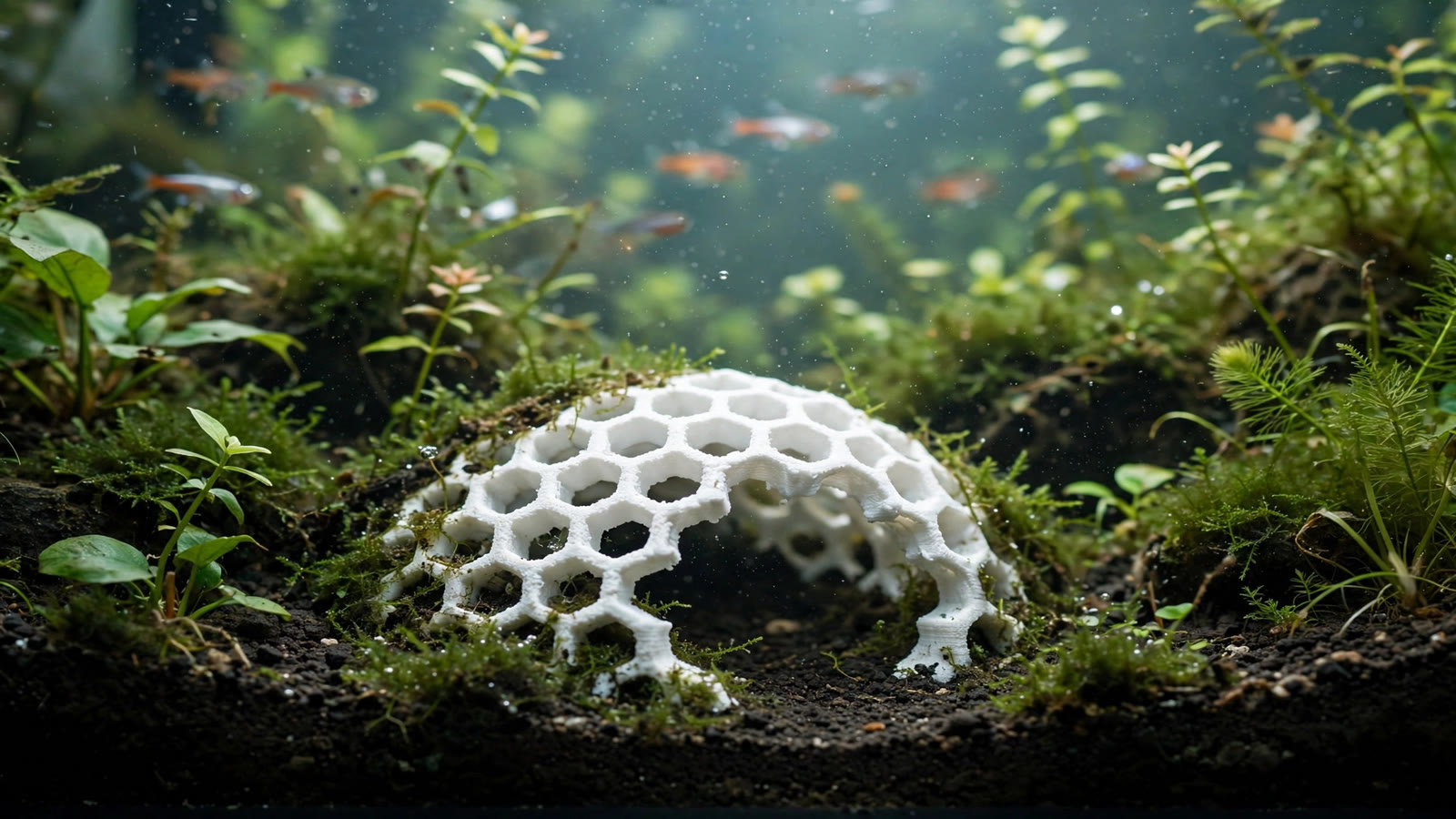
3D-Printed Aquarium Decorations: Are They Safe for Planted Tanks?
PETG and plain PLA are tank-safe — ABS, resin, and glow filaments are not. Learn to print, seal, and anchor 3D decor that lasts for years.
Substrate and hardscape are the foundation your entire aquascape stands on — literally and biologically. Substrate choice decides which plants can root, whether your water chemistry gets buffered (aquasoils like ADA Amazonia pull pH and KH down for soft-water species and shrimp), and how much built-in nutrition your plants start with. Hardscape — driftwood and stone — decides the composition, the hiding places, and the surfaces your epiphytes and mosses will colonize.
The substrate decision tree is short. Want a high-tech carpeted tank or caridina shrimp? Nutrient-rich aquasoil (ADA Amazonia, UNS Controsoil, Tropica) buffers pH low and feeds roots for a year or more — at the cost of an ammonia leach during the first weeks that demands water changes. Running low-tech with epiphytes and water-column feeders? Inert sand or fine gravel with root tabs under heavy root feeders is cheaper, cleaner, and perfectly effective. Capping soil with sand gives a natural look with the best of both. Avoid coarse gravel for planted tanks — debris sinks where siphons cannot reach it.
For hardscape, learn your materials: spider wood and mopani leach tannins (harmless, even beneficial, but they tint water); dragon stone and seiryu stone raise pH and hardness slightly — test before committing in soft-water setups. Arrange dry, photograph, revise, then flood. The guides below compare every major substrate head-to-head, cover depth and sloping techniques, and show how to anchor wood that wants to float and stack stone that wants to tumble.
Substrate & Hardscape PETG and plain PLA are tank-safe — ABS, resin, and glow filaments are not. Learn to print, seal, and anchor 3D decor that lasts for years.
 Substrate & Hardscape
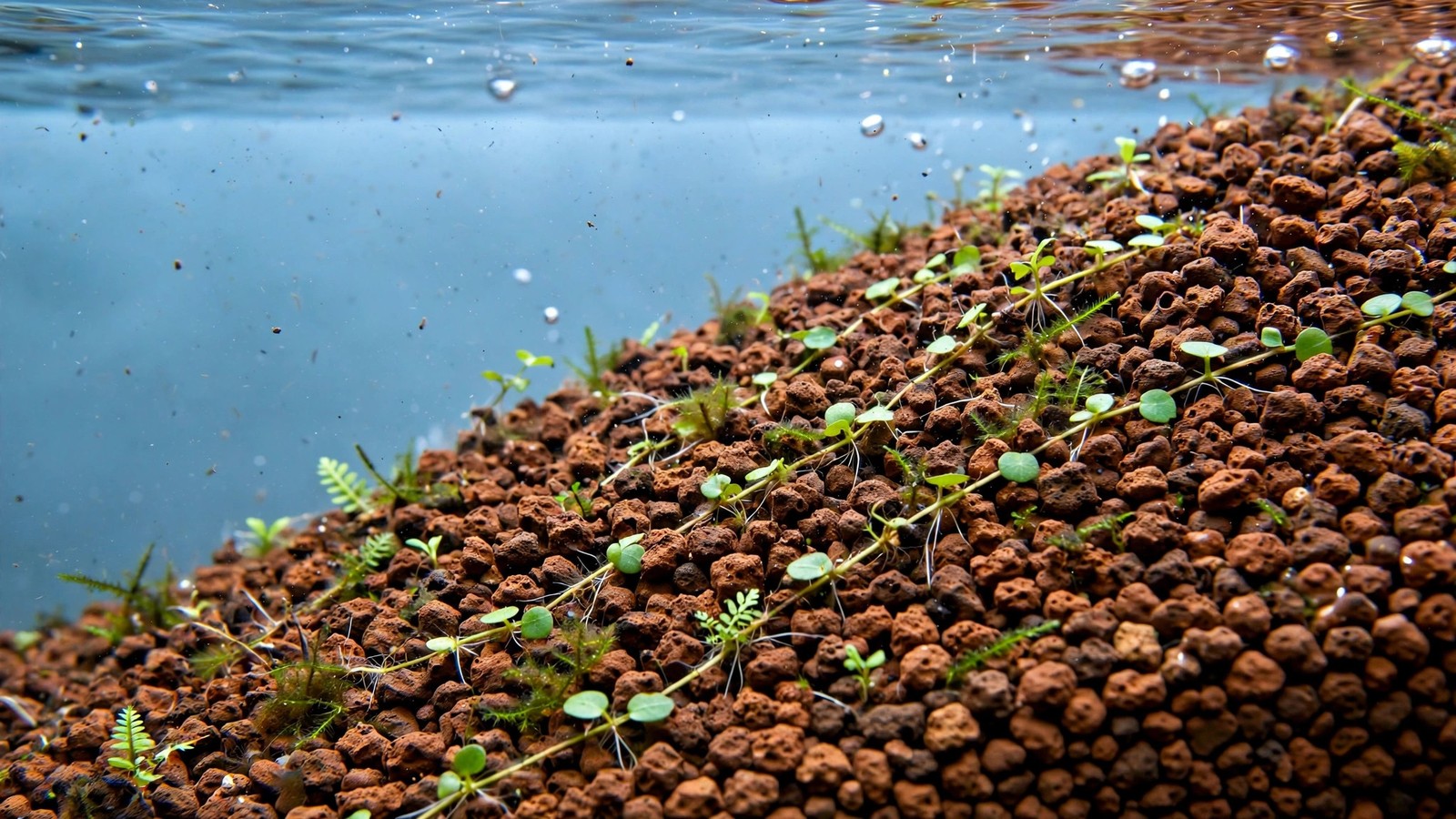
Can Japanese bonsai clay replace aquasoil? This akadama aquarium substrate guide covers CEC, water softening, setup, fertilizing, and the honest aquasoil comparison.
 Substrate & Hardscape
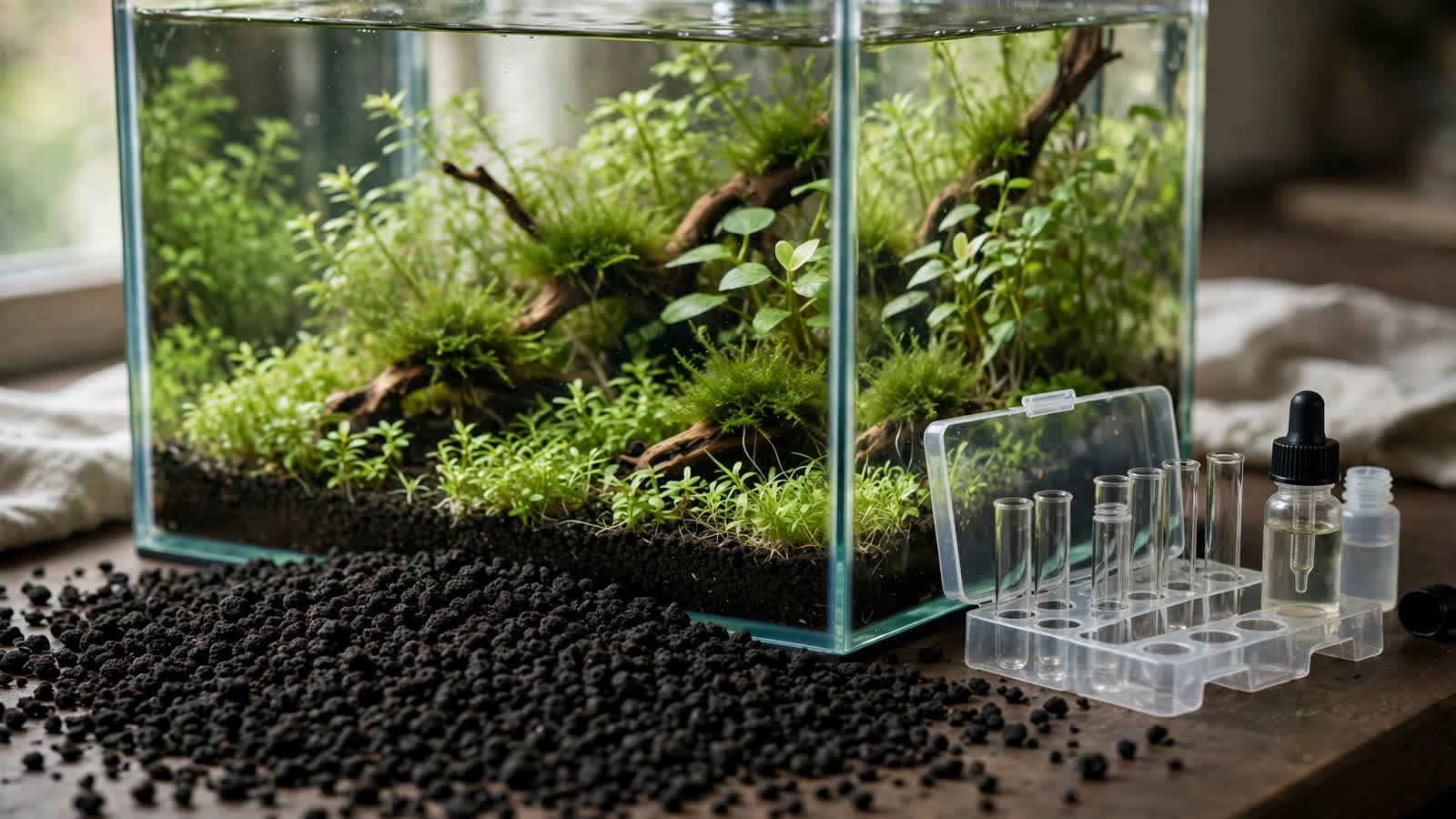
Yes — aqua soil lowers pH through humic acids and ion exchange. See how far the drop goes by brand, how long buffering lasts, and when it's a problem.
 Substrate & Hardscape
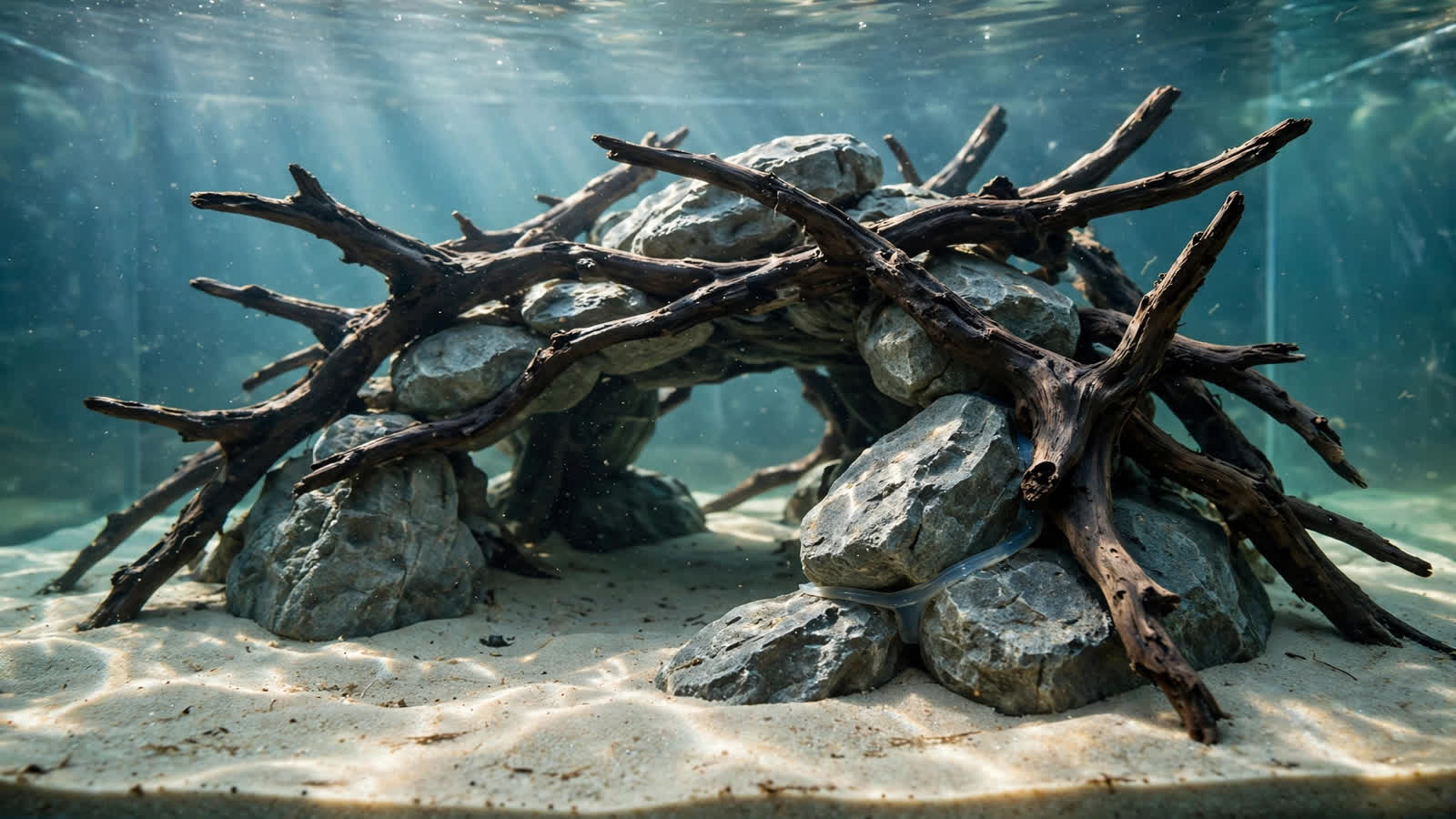
Pick the right aquarium safe silicone, cure it a full 7 days, and bond rock and driftwood into lasting hardscape. Types, cure times, and mistakes to avoid.
 Substrate & Hardscape
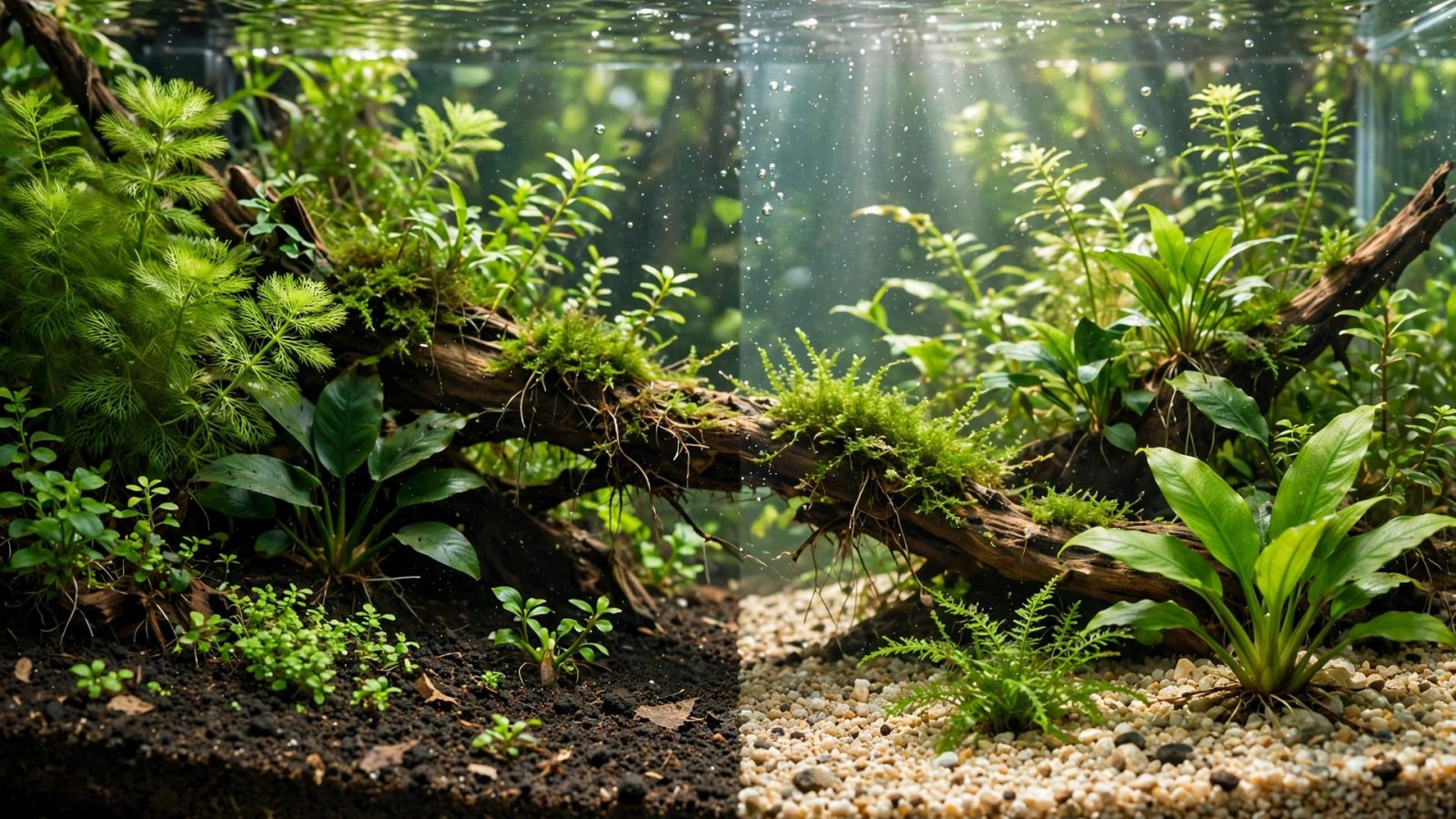
Aquarium soil vs gravel: nutrients, cost, water chemistry, planting ease, and longevity compared so you can choose the right substrate for your tank.
 Substrate & Hardscape
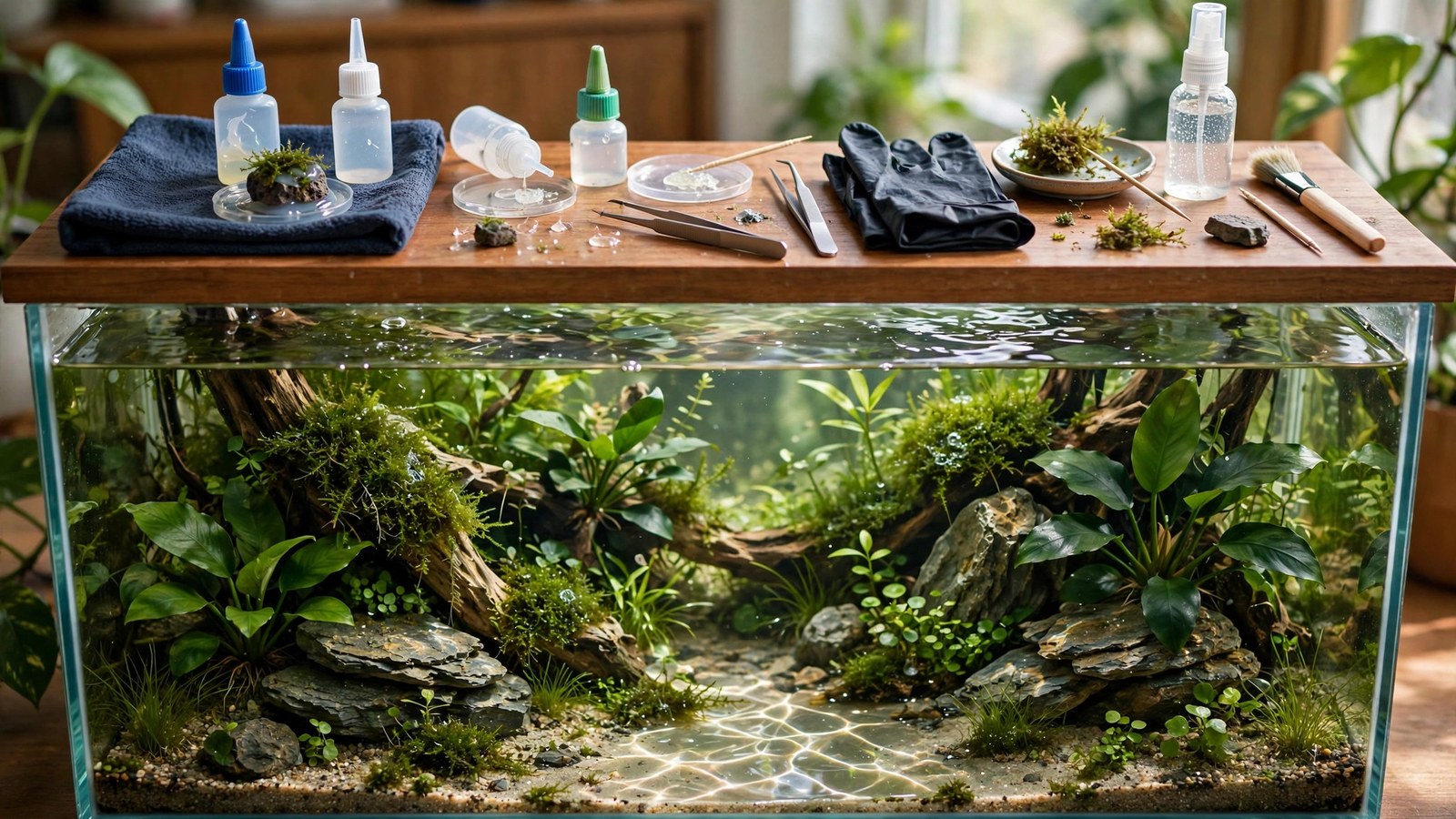
Cyanoacrylate gel is the aquascaper's essential tool. Which glue is safe, the tissue method for structural bonds, gluing plants, and troubleshooting.
 Substrate & Hardscape
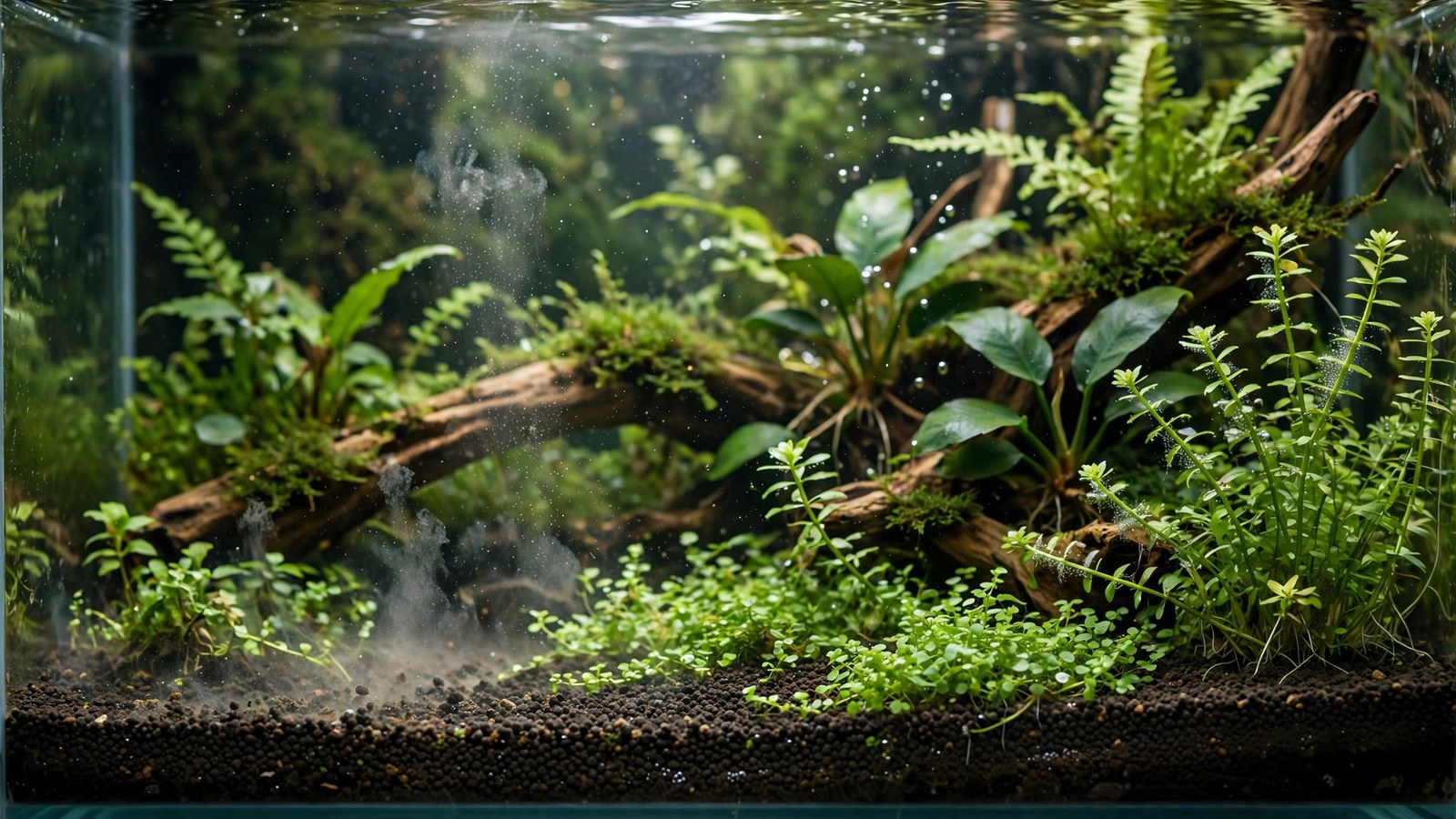
Why new aquasoil spikes ammonia, how long the leach lasts, and the exact water-change and planting protocol to cycle through it without an algae disaster.
 Substrate & Hardscape
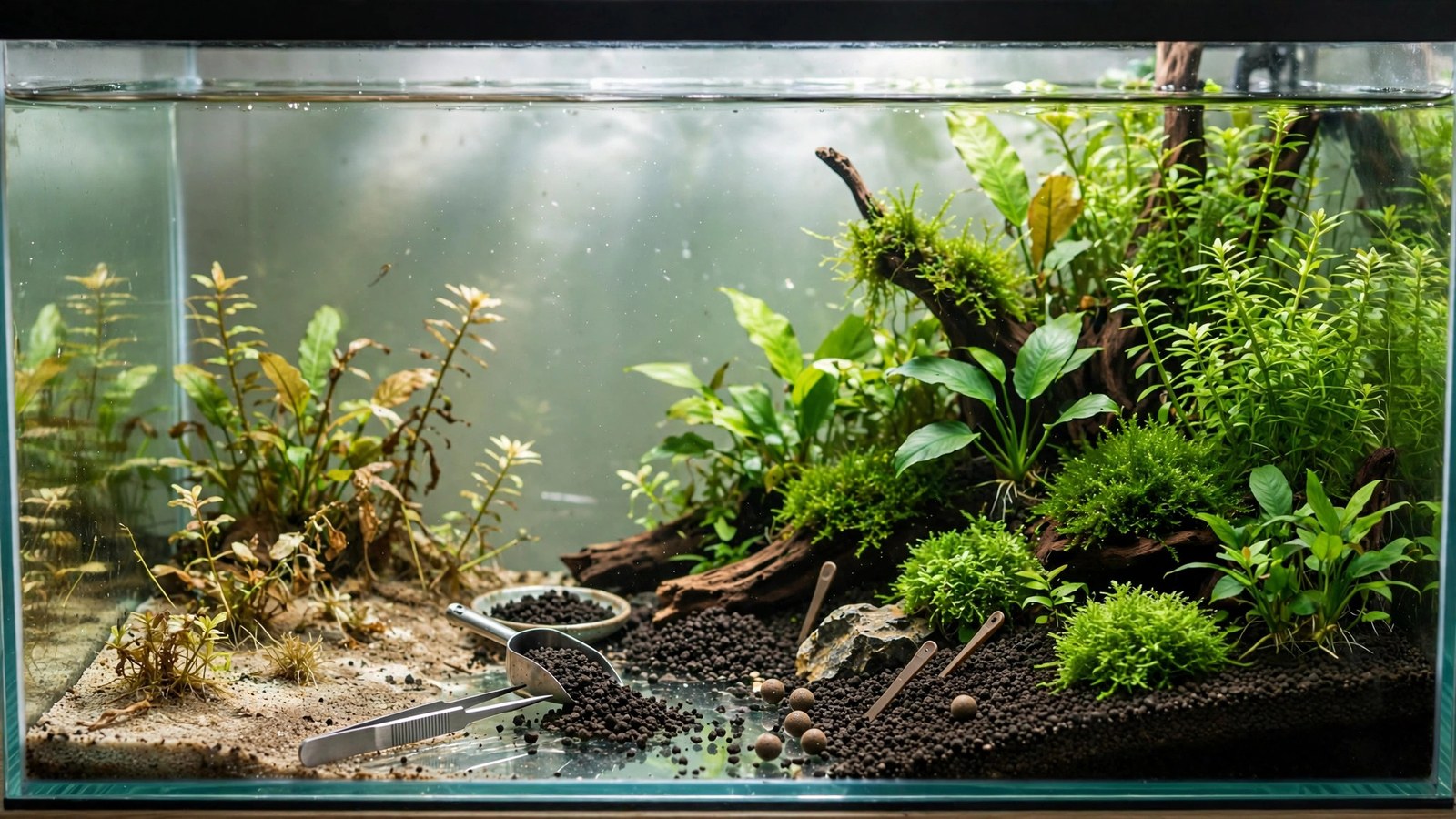
How to tell when your aquasoil is nutrient-exhausted or physically broken down, how to recharge it with root tabs, and how to replace it without tearing down the tank.
 Substrate & Hardscape
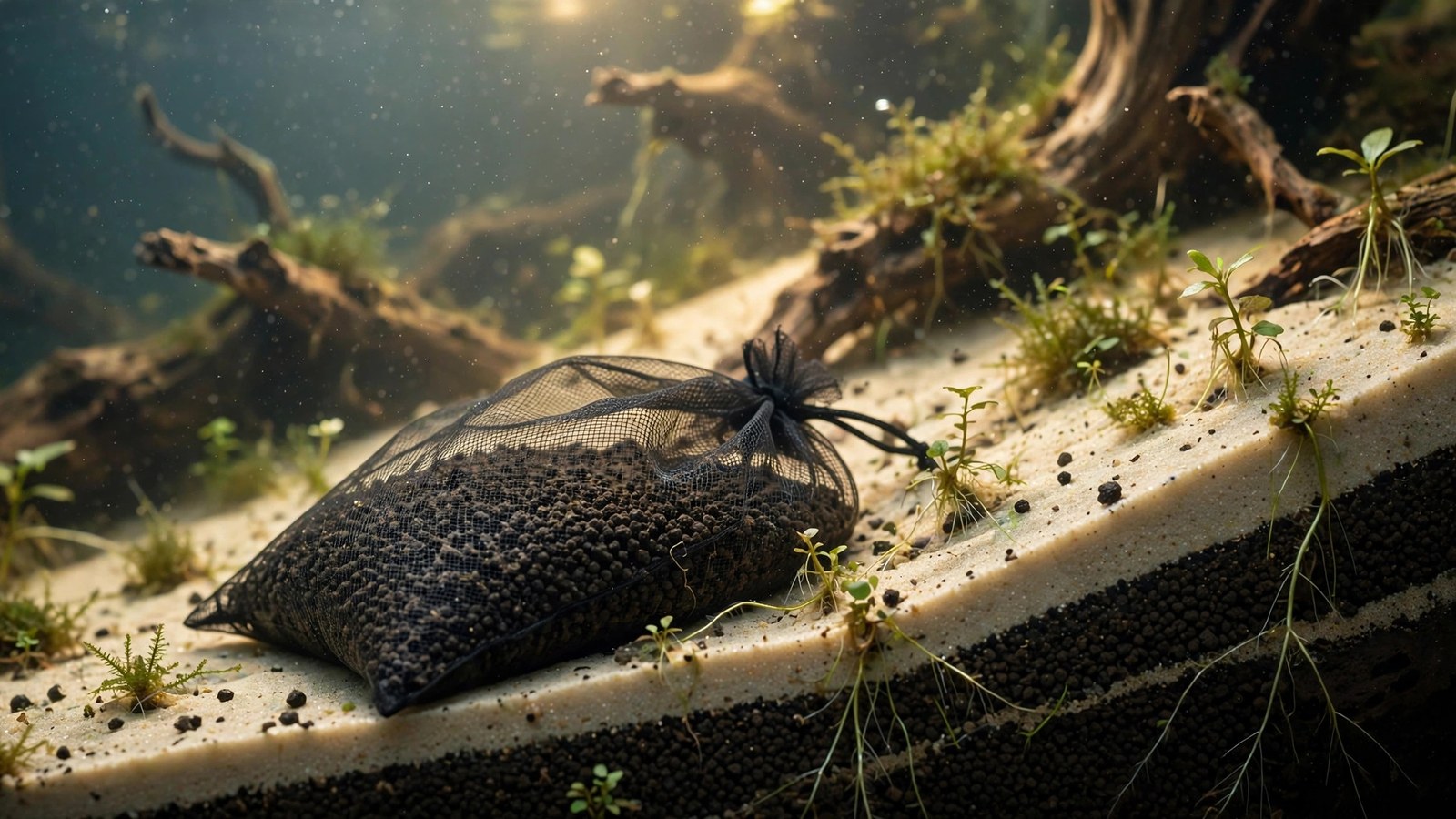
Portion aquasoil into mesh bags for slopes and terraces that hold shape for months. Bag sizes, fill steps, caps, and the trade-offs vs loose soil.
 Substrate & Hardscape
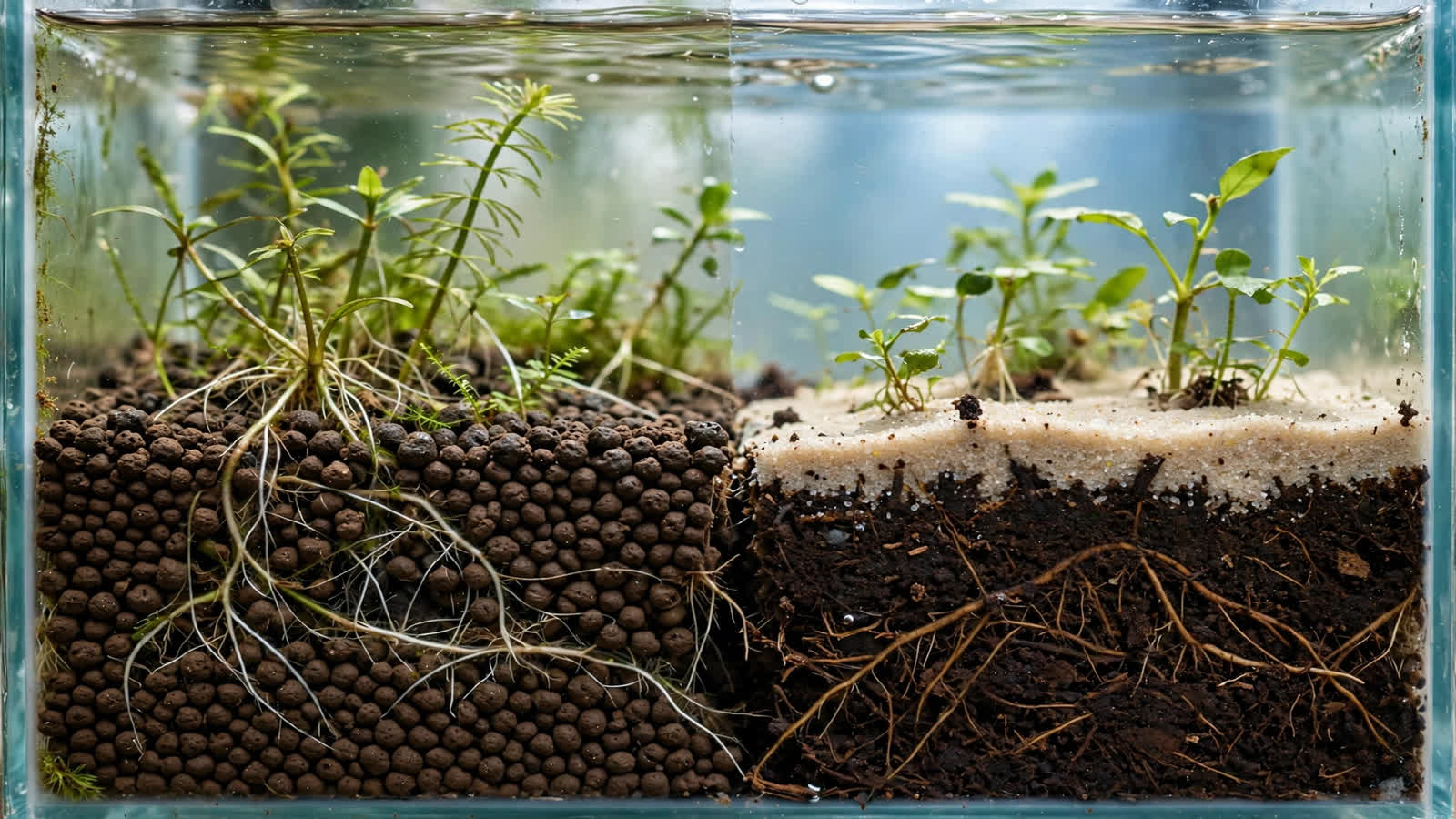
Aquasoil or a dirted tank? Compare upfront cost per gallon, nutrient longevity, ammonia leach, buffering, and rescape ease to pick the right substrate.