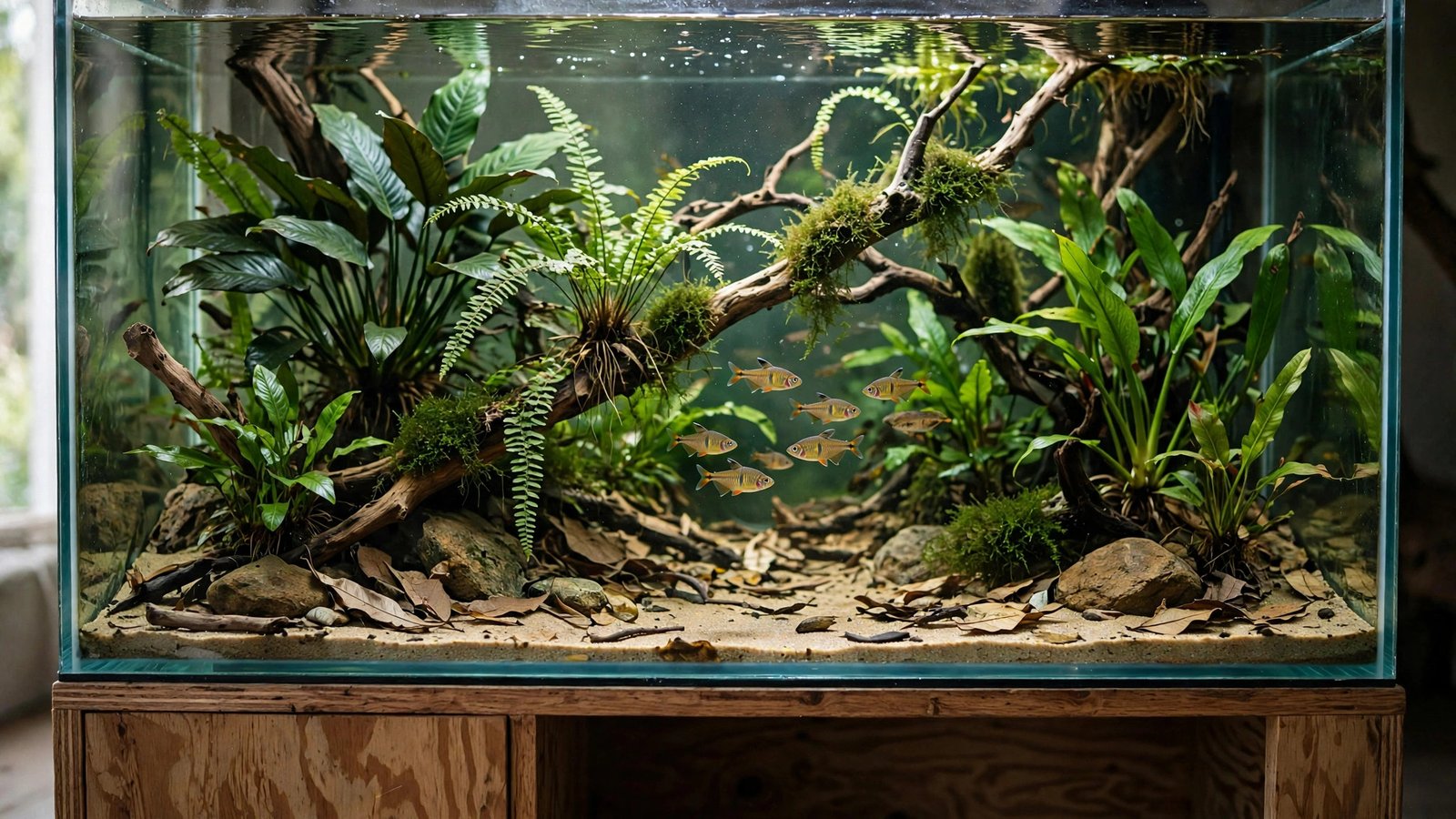
Most biotope builds you see online chase the Amazon's amber blackwater — dark tint, leaf litter, tannin haze — and aquarists copy that whole recipe onto a Congo setup. The Congo needs none of it. A congo biotope aquarium setup recreates a bright, clear-water Central African forest creek: white river sand, tangled driftwood, Anubias and Bolbitis fastened to wood, and a flashing shoal of Congo tetras in crystal water. Our biotope aquascaping methodology guide covers the general method; here we apply it to the Congo.
The short answer: a congo biotope aquarium setup recreates a clear-water Central African forest creek with fine white river sand, tangled driftwood, true Congo-basin plants (Anubias spp., Bolbitis heudelotii, Crinum calamistratum), gentle flow, clear neutral water at pH 6.2–7.2 and 24–26 °C, and a shoal of Congo tetras with African companions. The citable fact: Congo creeks run a full point higher in pH than Rio Negro blackwater (6.2–7.2 vs 5.5–6.5) — which is why a Congo biotope needs zero tannin chemistry: no peat, no leaf litter, no blackwater extract.
Your Congo Biotope Aquarium Setup: Size and Hardscape
Driftwood tangles eat footprint, and a Congo tetra school needs length to behave like a school. One hundred ten litres is the honest floor — room for a wood cluster, open sand in front, and twelve tetras. Two hundred litres is the sweet spot: the tangle sprawls, a second species fits, and chemistry stays steadier.
| Tank | Best for | Watch out for |
|---|---|---|
| 110 L (30 gal) | Entry build: one tetra school, one cichlid pair | Oversized wood crowds the footprint |
| 200 L (55 gal) | The classic: layered schools, full wood tangle | Large driftwood gets pricey |
| 260 L+ (70 gal+) | Showpiece creek: multiple zones, breeding pair | Bigger sand budget, bigger water changes |
Lay fine white river sand 3–4 cm deep — pool-filter sand or pale quartz works. Congo forest creeks are sunlit and sandy; the bright floor bounces light upward and makes the tetras' iridescence pop. For wood, think fallen bankside roots: two or three branching pieces of mopani or spiderwood tangled low and off-centre, as in the Leka River contest build — wood as the whole architecture.
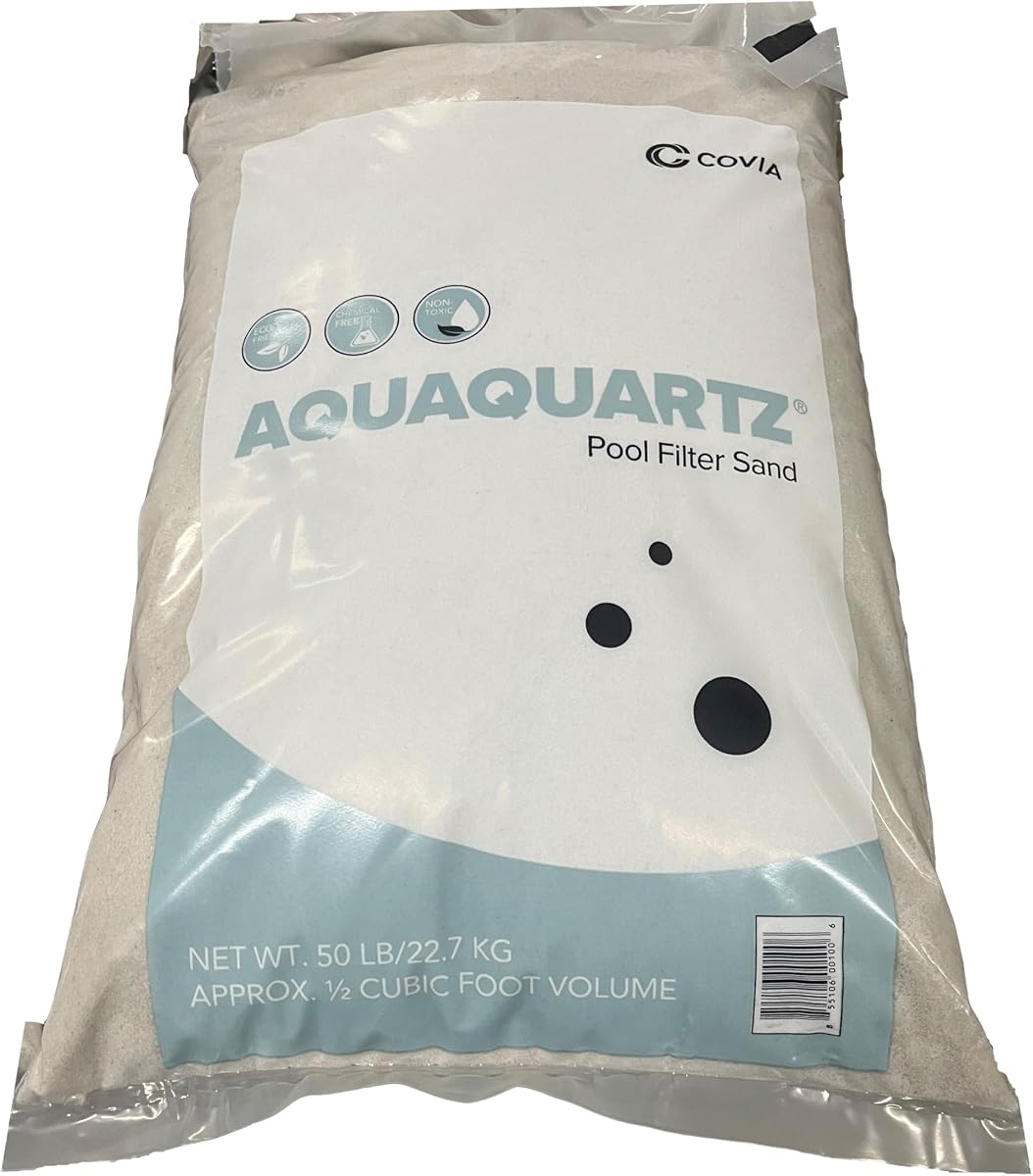
Covia AquaQuartz Pool Filter Sand
Check Price on Amazon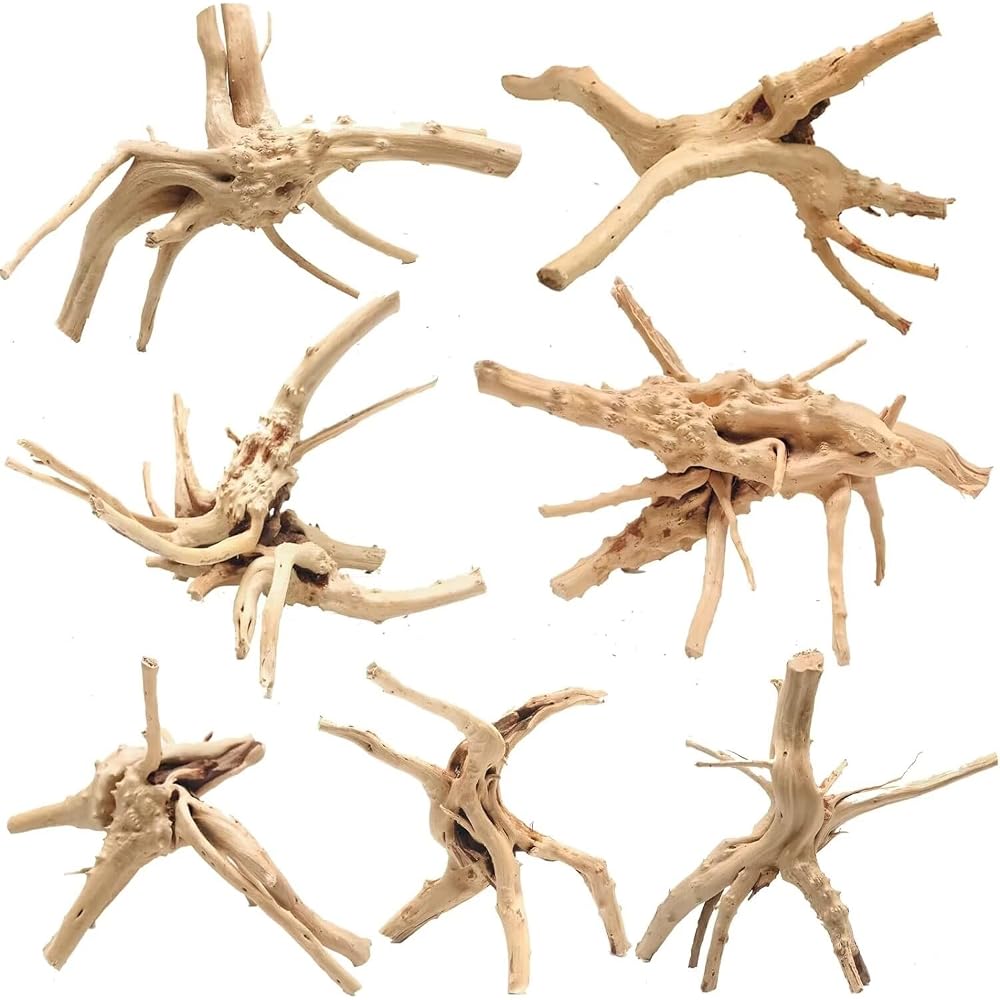 ★4.2
Hamiledyi Natural Spider Wood Driftwood
Check Price on Amazon ★4.2True Congo-Basin Plants: Anubias, Bolbitis, and Crinum
The locality rule is what makes this a biotope instead of a decorated community tank: every plant should trace to the Congo basin. Fasten rhizome plants to the wood, root the bulb plants in sand, and let the hardscape carry the composition — Congo creeks are planted, never thickets. Our aquarium plants for fish tank guide covers fish-first plant selection, and the complete freshwater aquarium plants guide covers care basics for each species.
| Species | Placement | Notes |
|---|---|---|
| Anubias congensis / A. barteri var. nana | Tied to wood, foreground–mid | True Congo species; slow, low-light, hardy |
| Bolbitis heudelotii (African water fern) | Tied to wood, mid–background | The signature Congo fern; loves gentle flow |
| Crinum calamistratum | Background, bulb in sand | Crinkled leaves; one bulb lasts years |
| Nymphaea lotus (tiger lotus) | Background corner | African waterlily; prune runners |
| Ceratophyllum demersum (hornwort) | Floating or weighted | Dims light naturally |
This is a low-tech planted setup by nature: no CO2, 30–40 PAR at the substrate, a root tab under the Crinum every two months, and a lean weekly liquid fertiliser dose for the epiphytes.
Clear Water and Gentle Flow
Congo creeks run clear and neutral: pH 6.2–7.2, GH 4–10, KH 3–6, 24–26 °C — ordinary conditioned tap water in most cities, so test yours before reaching for remineralisers. Check the targets against our planted tank water parameters guide; biotopes reward stability over precision.
Flow should be gentle to moderate — forest creeks move, they don't churn. A canister rated at 4–6× tank volume per hour with a spray bar along the back wall gives the whole tank a slow current that Bolbitis visibly enjoys; see our water flow and circulation guide for placement and the canister filter guide when choosing hardware. Keep the surface lightly rippled, not breaking.
Stocking the Creek: Congo Tetras and African Companions
Build around one large Congo tetra school, add a surface species and a bottom dweller, then stop. Every fish must be African — one Asian rasbora breaks the biotope more than any equipment choice. Congo tetras are the reason for the build — our Congo tetra species setup covers them in depth — and they colour up best in clear water with company of their own kind.
| Species | Group (200 L) | Role |
|---|---|---|
| Congo tetra (Phenacogrammus interruptus) | 12–15 | Centrepiece; flashes green-gold schooling |
| African butterflyfish (Pantodon buchholzi) | 2–3 | Surface layer; tight lid — they jump |
| Kribensis (Pelvicachromis pulcher) | 1 pair | Bottom caves; colours up when breeding |
| Upside-down catfish (Synodontis nigriventris) | 4–6 | Nocturnal crew among the wood |
Quarantine everything for 2–3 weeks and acclimate slowly — Congo-basin fish dislike sudden shifts even when the targets are ordinary. Feed small pellets, frozen daphnia, and occasional live food; the tetras' fins stay longest on a mixed diet. The African river biotope reference covers the rapids variant of this region — ours is the calm forest-creek version.
Frequently Asked Questions
Is a Congo biotope the same as a blackwater tank?
No — clear water is the whole point. Congo forest creeks are sunlit and sandy with visibility across the full water column; Rio Negro blackwater is tannin-stained and tea-dark. If your Congo tank looks amber, you have borrowed the wrong river's recipe: run fine filter floss for a week and skip the leaf litter.
What size tank do I need for a Congo biotope?
One hundred ten litres (about 30 gallons) is the minimum: enough footprint for a driftwood tangle, open sand in front, and 10–12 Congo tetras. Two hundred litres (55 gallons) is the sweet spot — the tangle sprawls, a second African species fits, and chemistry stays steadier between changes.
Can I use regular tap water for a Congo biotope?
Usually, yes. This build targets pH 6.2–7.2, GH 4–10, and 24–26 °C — ordinary conditioned tap water in most cities. That is why the Congo is a friendlier biotope than blackwater builds: no RO water, no peat filtration, no pH crashes. Test your tap, dechlorinate, and stock after the 3–4 week cycle.
Do Congo biotope plants need CO2 or strong light?
No. Anubias, Bolbitis, and Crinum evolved in shaded forest creeks — 30–40 PAR at the substrate and a lean weekly liquid fertiliser dose is plenty. Strong light is the classic beginner mistake here: it grows algae faster than it grows Anubias.
What fish can I keep with Congo tetras?
African species only — that is the biotope rule. Good companions: African butterflyfish for the surface, a kribensis pair for the bottom, upside-down catfish among the wood. Avoid Asian rasboras, South American tetras, and any "looks close enough" substitutes; locality separates a biotope from a themed community tank.
A Clear Window on the Congo
When it works, the effect is unmistakable: a bright sandy creekbed, Bolbitis swaying in gentle current, a dozen Congo tetras flashing like struck matches. No tint, no gimmicks — one river, honestly recreated. Build slowly, stock lightly, and let the Congo do the rest.