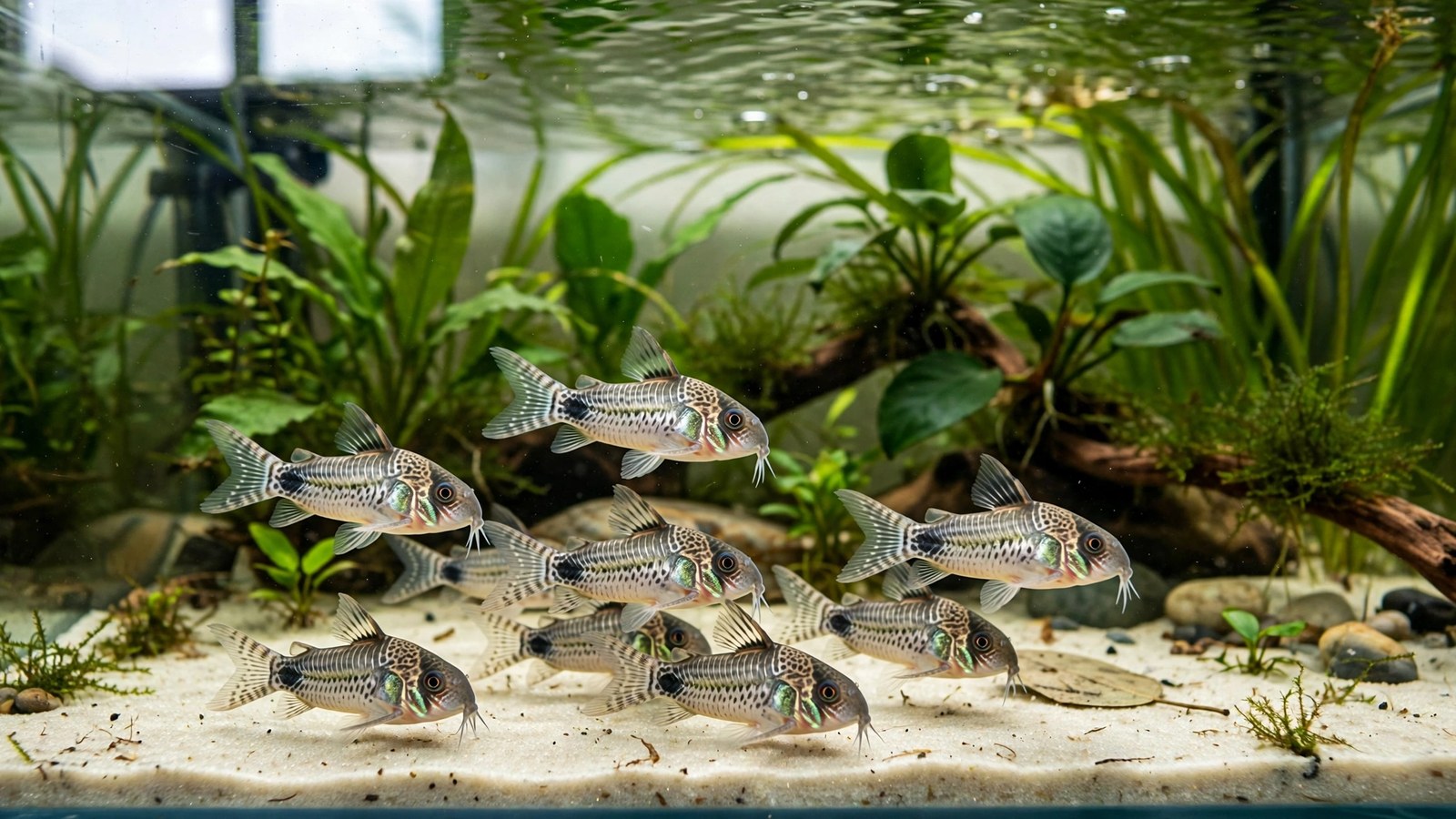
Most people buy a "cory catfish" without knowing which species they brought home — then the care sheets contradict each other. A peppered cory planted tank built around Corydoras paleatus is one of the hobby's most rewarding bottom-level setups, once you know you're dealing with peppered cories and not their lookalikes. Here's how to ID them, pick a barbel-safe substrate, and build a school that forages without wrecking your plants.
A peppered cory planted tank starts with the right species
Peppered, bronze, and panda cories are routinely mixed in shop tanks and mislabeled — yet they are three separate species with different temperature preferences. Corydoras paleatus wears mottled olive-gray speckling and a fine networked pattern on its head. Corydoras aeneus (bronze cory) is a uniform warm brown with no mottling. Panda cories have stark black eye and tail patches and prefer warmer water.
The mix-up matters practically. Peppered cories thrive at 64–75°F — cooler than the 74–79°F range pandas want — which changes which plant picks for a cory tank suit the tank. It also explains why one "peppered cory" care sheet describes easy cool-water breeding while another describes a fussy warm-water fish: those sheets described different species. Photograph the fish at the shop and compare the head patterning before you buy.
The sand-vs-gravel debate, honestly settled
Cories hunt with barbels — short, fleshy whiskers that taste the substrate as they sift. Sharp-edged gravel erodes those barbels slowly over weeks and months, and damaged barbels invite bacterial infection. Fine sand lets them sift the way wild C. paleatus does in South American riverbeds: mouthful in, food filtered, grains puffed out. Watch a school work sand once and the debate ends for you.
But the "sand or death" version is overblown. Smooth, rounded gravel with no jagged faces is genuinely acceptable — run your fingers through it; if nothing catches your skin, barbels are safe. The real enemy is sharp crushed quartz, slag gravels, and anything with a rough, glittery edge. In a planted tank, lay sand 1.5–2 inches deep in the open foraging zones, and feel free to put nutrient soil beneath a full sand cap under planted areas. This roundup of sand substrates that protect cory barbels compares grain sizes and which sands compact least over time.
| Substrate | Barbel safety | Plant rooting | Notes |
|---|---|---|---|
| Fine pool-filter sand | Excellent | Good with root tabs | Best all-rounder; natural sifting behavior |
| Aquasoil capped with sand | Excellent | Excellent | Strongest growth; cap must fully cover the soil |
| Smooth rounded river gravel | Acceptable | Good | Must pass the finger test — zero sharp faces |
| Sharp crushed gravel / slag | Poor | Good | Avoid: erodes barbels, invites infection |
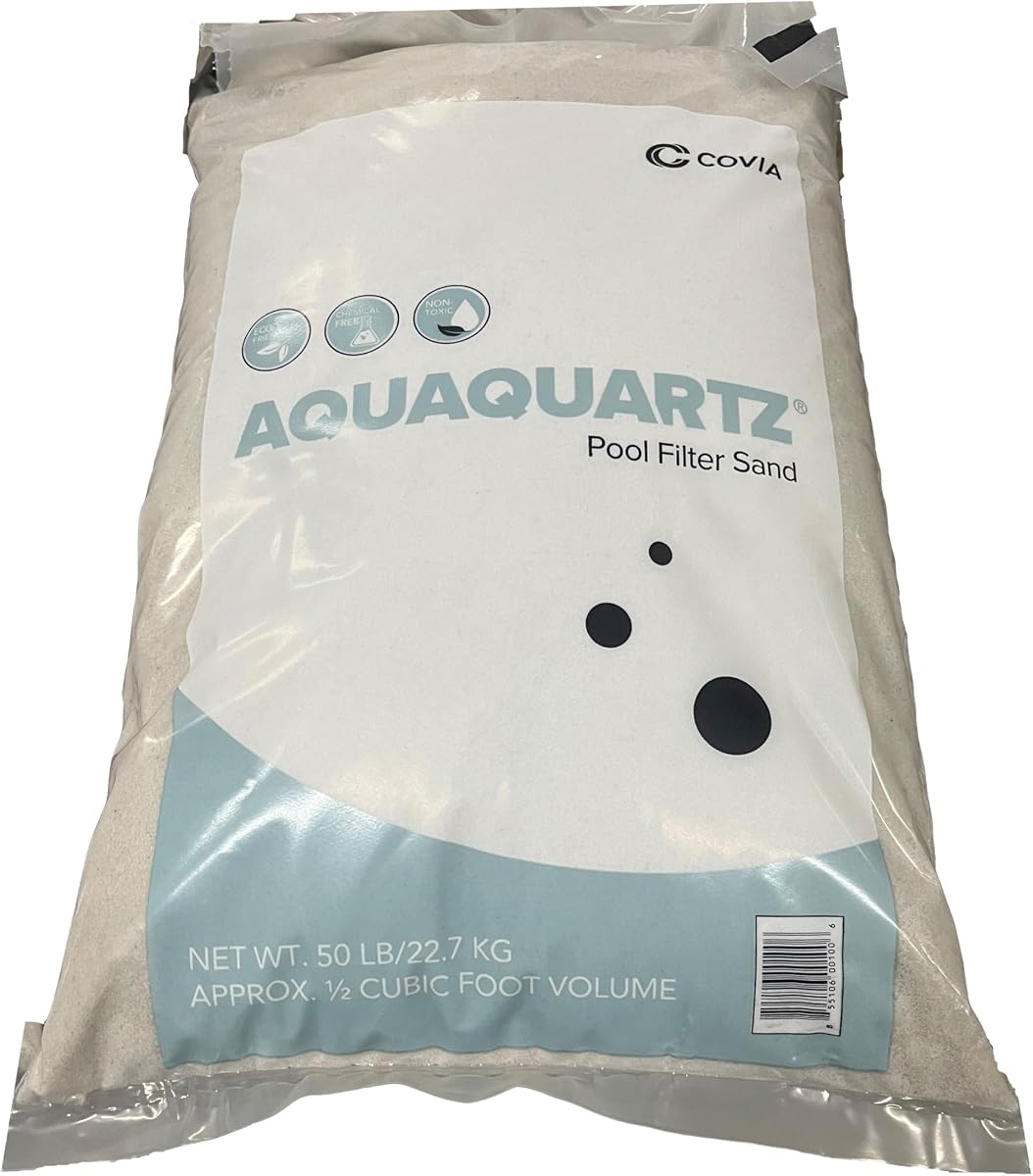
Covia AquaQuartz Pool Filter Sand
Check Price on AmazonHow foraging interacts with your plants
Cories are sifters, not diggers. The motion barely disturbs more than the top few millimeters, so established plants are safe — a genuine contrast with loaches or goldfish, which truly excavate. Two failure modes remain, and both are easy to plan around. Freshly planted stem cuttings with no roots can be lifted by a curious school in the first 48 hours, so let stems anchor for a week or weigh them down with plant anchors. A delicate foreground carpet can also thin where the school's favorite lane crosses it — leave that lane as open sand, which ends up looking like a natural riverbed anyway.
Root tabs sit exactly where cories feed, so press them a full inch below the surface near plant bases rather than scattering them in open sand. The easy plants that survive cory foraging — Anubias, Java fern, swords, Cryptocoryne — either root deeply or attach to hardscape, which is exactly the profile that shrugs off a passing school.
Schooling, stocking, and tankmates
A group of 6 is the honest minimum; below that, peppered cories hide, eat poorly, and get sick. At 8–10 you get the full show: synchronized foraging runs and the occasional spawning dance after a cool water change. A 20-gallon long is the sweet spot — cories use floor space, not height.
For tankmates, think peaceful community: small tetras, rasboras, and livebearers occupy the mid-water your cories ignore. Skip aggressive bottom dwellers like large cichlids. Note that cories are not cleaner fish and not algae eaters — they need their own meals every day. Feed sinking pellets or wafers as the staple, frozen daphnia or bloodworm twice a week for conditioning, and drop food in after lights-out if greedy day-feeders steal it first. The cleanup crew guide for planted tanks shows how cories fit alongside snails and otocinclus without redundant roles.
Breeding bonus: the cool-water trigger
A mature setup often breeds on its own. Condition the school with frozen foods for two weeks, then do a 30% water change with water 3–5°F cooler. Females swell with eggs, males chase in the classic T-position, and 20–40 eggs stick to glass and broad leaves per spawn. Fry hatch in 3–5 days. For wild habitat data and the full species profile, see the Seriously Fish page on Corydoras paleatus.
Frequently Asked Questions
Is a peppered cory the same fish as a bronze cory?
No. The peppered cory is Corydoras paleatus and the bronze cory is Corydoras aeneus — two distinct species, not color morphs. Peppered cories have mottled speckled patterning and prefer cooler water (64–75°F); bronze cories are uniformly warm brown and prefer slightly warmer conditions.
Will peppered cories uproot my aquarium plants?
Rarely. They sift only the top few millimeters of substrate rather than digging, so established plants are safe. The risk is limited to freshly planted stem cuttings in their first 48 hours — let stems root for a week or use plant anchors first.
Can I keep peppered cories on gravel instead of sand?
Yes, if the gravel is smooth and rounded with no sharp faces — if nothing catches your fingers, barbels are safe. Sand remains preferred for natural sifting behavior with zero barbel risk. Avoid sharp crushed gravel or slag entirely; it erodes barbels and invites bacterial infection.
How many peppered cories should I keep?
At least 6, with 8–10 ideal for a 20-gallon or larger tank. Cories are obligate schoolers — smaller groups hide, eat poorly, and fall ill. Add the whole school at once after the tank is fully cycled, never "a couple now and more later."
What do peppered cories eat in a planted tank?
Sinking pellets or wafers as a daily staple, plus frozen daphnia or bloodworm twice a week for conditioning. They are not algae eaters and need dedicated meals — feed after lights-out if greedy mid-water fish steal their food. Press root tabs a full inch deep near plant bases so the foraging school never unearths them.
Do peppered cories need a heater?
Often not. Their 64–75°F range suits unheated room-temperature tanks that stay above 64°F year-round. If the room drops below 64°F in winter, add an adjustable heater set to around 68°F, placed near the filter outflow so warmth reaches the bottom where the corys live.
A calm, busy riverbed
A peppered cory planted tank rewards the patient setup: correct species ID at the shop, sand the school can sift, plants that anchor deeper than cories forage, and a full school added all at once. The payoff is one of the most animated bottom layers in the hobby — plus the occasional cool-water spawning show.