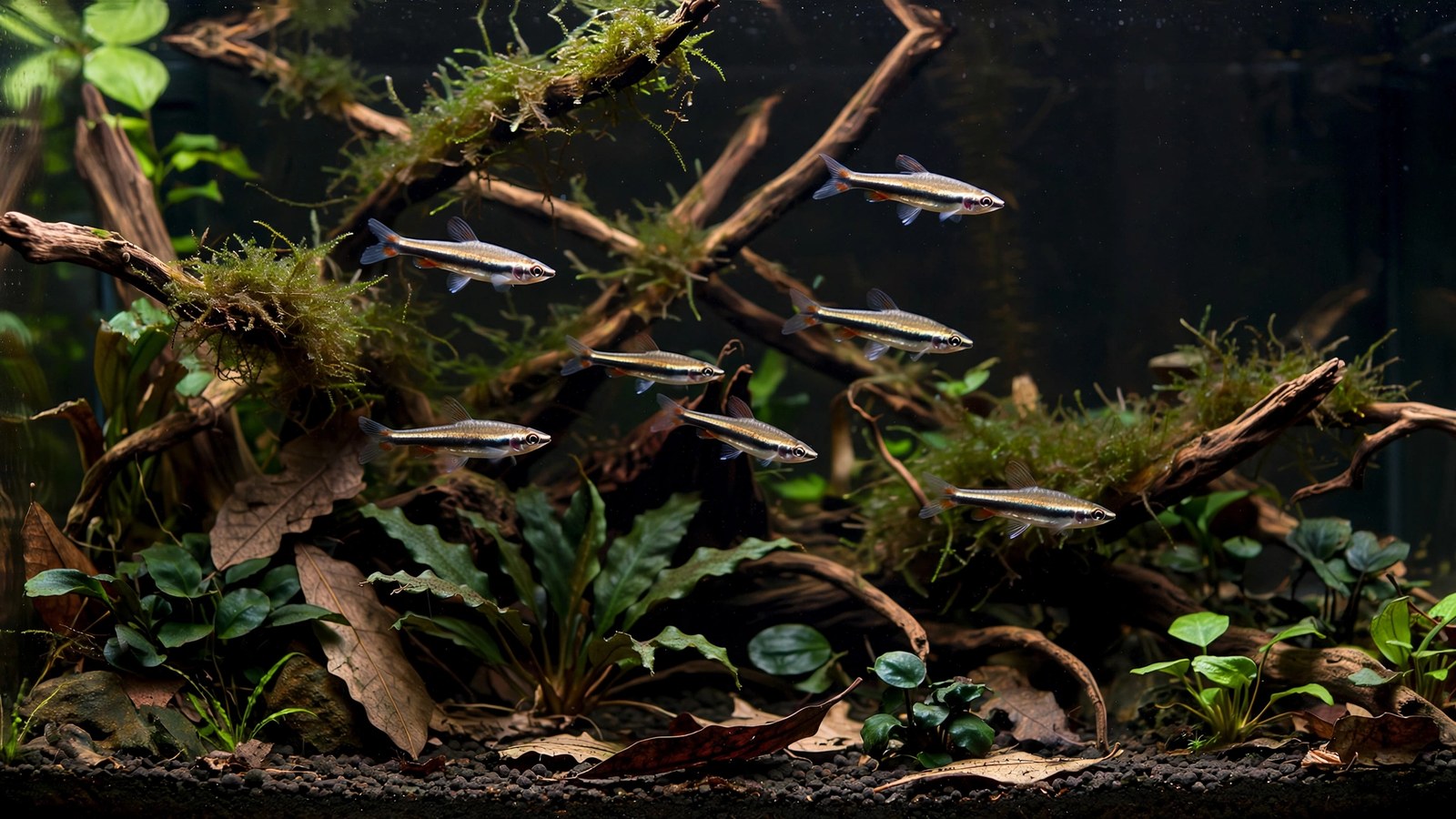
Most people buy pencilfish like tetras — a bright, open tank with strong lights — and then watch them wash out pale and flatten against the glass all day. A proper pencilfish planted tank is the opposite build: a dim, calm blackwater corner of the Amazon where these shy shoalers finally color up, school, and behave like wild fish, and it takes only modest gear to pull off. Your soft-water shoaler plant picks carry straight across; you just need the recipe that matches the fish — low light, a floater canopy, leaf-tinted water, micro foods, and tankmates that never chase.
Which pencilfish? Three species worth building around
Build around one species, not "pencilfish" in general:
| Species | Size | Temperament | Standout trait |
|---|---|---|---|
| Nannostomus beckfordi (Beckford's / golden) | 2–2.5 in | Peaceful, the boldest of the three | Develops barred night camouflage after lights-out |
| Nannostomus marginatus (dwarf) | 1.2 in | Very shy; freezes under bright light | True nano size — needs the dimmest build |
| Nannostomus mortenthaleri (coral-red) | ~1.5 in / ~4 cm | Peaceful; males spar harmlessly | Breeding males flare deep coral-red fins |
Beckford's is the forgiving first pick: largest, least bullied, most tolerant of ordinary water. The dwarf pencilfish is spectacular in a species-only 15-gallon but punishes bright tanks fast. Buying just three or four is the single biggest reason pencilfish "never school" — get 8–12 at once.
The pencilfish planted tank blueprint
Start with a 15- or 20-gallon long — horizontal swimming room matters more than height for fish that cruise the mid and upper levels. Spread 1–2 inches of dark fine sand: dark ground deepens their color and makes leaf litter read as cover. Hardscape sparsely — one or two slender driftwood branches, plus catappa (Indian almond) leaves on the substrate from day one. The leaves tint the water amber, release mild antibacterial tannins, and grow a microbe film the fish peck at all day. Dose about one medium leaf per 5 gallons, replaced monthly as it skeletonizes. The blackwater build specifics guide unpacks the botanical method in full depth.
Filtration should be gentle by design: one air-driven sponge filter gives you biological filtration without the current these fish avoid. Plant it up and cycle 3–4 weeks before stocking — pencilfish hate new-tank ammonia, so follow the cycling a planted tank routine and confirm zero ammonia and nitrite.
Dimmable light and the floater canopy
Lighting is the single most misunderstood variable here. Pencilfish come from tea-stained streams under rainforest canopy, so treat bright light as the enemy: 10–25 PAR at the substrate and a 6–8 hour photoperiod on a timer. A dimmable LED is the cheapest calmness upgrade you can buy — a 20–30 watt adjustable bar over a 20-gallon is plenty.
Then build the canopy. Floating plants do three jobs at once: they cut surface light, strip excess nutrients from the water column (starving algae in dim tanks), and give the fish the overhead cover they associate with safety. Pick one floater and commit to weekly thinning, because an unthinned canopy kills the light entirely:
| Floater | Shade | Best for |
|---|---|---|
| Amazon frogbit | Moderate | 20+ gallons; trailing roots as cover |
| Red root floaters | Light | Small tanks; red roots glow in blackwater |
| Giant duckweed | Heavy | Fast shade establishment; needs most thinning |
Remove a handful at every water change — never more than a third of the cover at once, or the light swing stresses the school. This is a low-tech blackwater build: leave the CO2 diffuser in the drawer — dim light and no injected CO2 keep algae at bay and maintenance honest.
 ★3.9
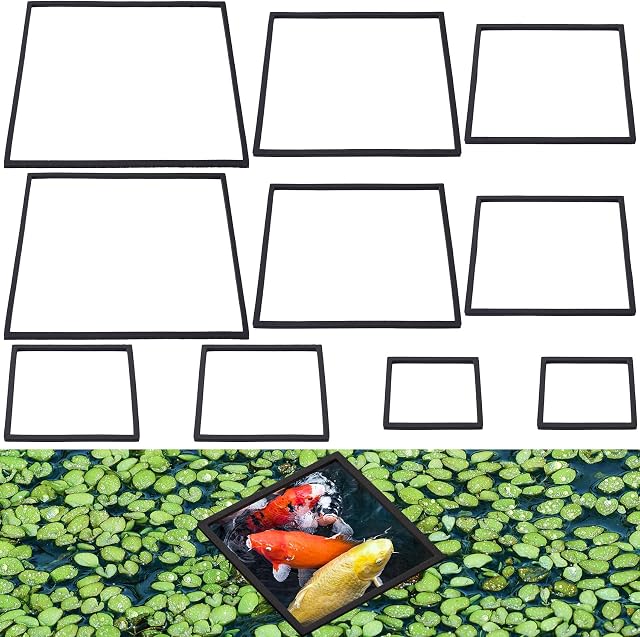
PAGOW Floating Plant Corral Rings
Check Price on Amazon ★3.9 ★4.6
NICREW ClassicLED Plus LED Aquarium Light
Check Price on Amazon ★4.6Shelter plants: fine leaves calm a shoaler
Under the canopy, plant for shelter rather than show. Pencilfish duck into plants when startled, and fine-leafed species weave a curtain they can see through — which makes them braver, since an exit is always visible. Plant dense background clumps of Cabomba caroliniana or Myriophyllum mattogrossense (same easy-stem expectations as Bacopa caroliniana's Tropica plant profile), with Rotala wallichii for red accents in the tint. Midground, Cryptocoryne wendtii forms thickets they weave between. Keep the center open: a 6-inch lane lets the school cross in formation.
Micro foods for tiny mouths
Pencilfish have genuinely small mouths: oversized flakes hit the substrate uneaten, rot, and spike ammonia in soft acidic water. Feed twice daily, only what vanishes in 60 seconds — frozen baby brine shrimp or live microworms as the staple, a micro pellet crushed to dust for convenience, live daphnia once or twice a week. A DIY brine hatchery pays for itself within a month, and the fish brighten visibly within two weeks. Thaw frozen foods in tank water first; a frozen cube dropped straight in creates a cold spot that stresses shy fish.
Tankmates: calm neighbors or none at all
You have two honest options: a single-species display, or a quiet community of equally timid fish. Ten to twelve Beckford's in a 15-gallon is underrated — males claim tiny territories and the tank becomes a study in microbehavior. If you want company, draw from the calm end of the best schooling fish for planted tanks list: chili rasboras are a superb upper-level companion — the chili rasbora species tank uses this same blackwater logic — and six pygmy cories work the lower third without ever bumping a pencilfish (see the pygmy cory nano setup). Add newcomers only after the pencilfish are feeding confidently.
The blackwater maintenance routine
Change 25–30% of the water every 7 days with temperature-matched, dechlorinated water, and swap one or two spent catappa leaves at the same time. Trim stems from the top and replant the cuttings rather than pulling whole stems — pencilfish memorize their layout and sulk for days after a full rescape. Chase stability, not target numbers: a steady pH 6.8 beats one swinging between 5.5 and 6.5 from constant "adjusting." If your tap is hard, cut it 50/50 with RO water, then leave it alone. Check the Nannostomus beckfordi species datasheet for habitat baselines and the water parameters for planted tanks guide for how GH, KH, and pH interact.
 ★4.8
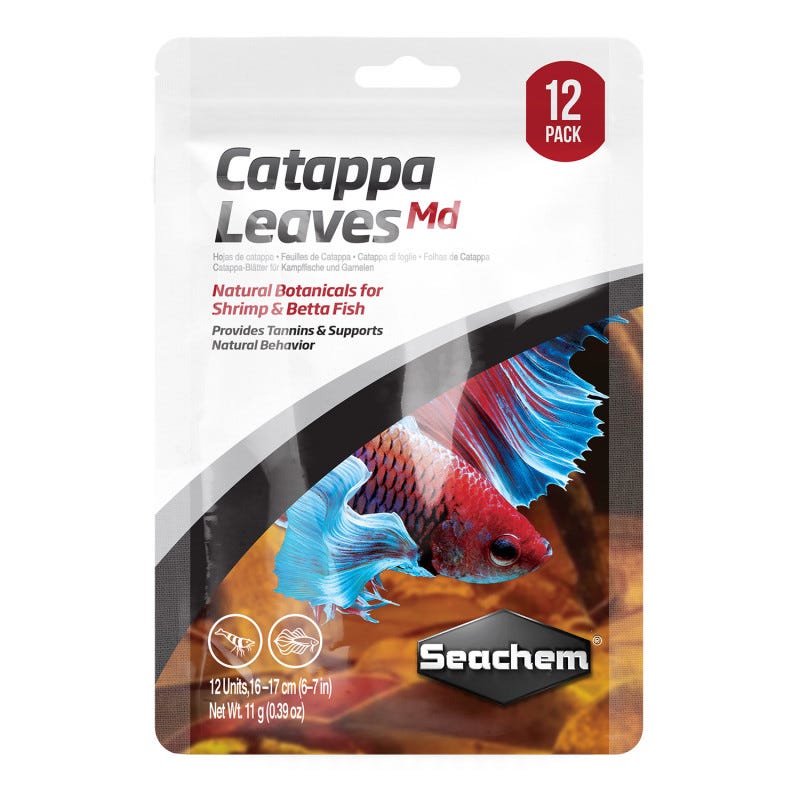
Seachem Catappa Leaves 12-pack
Check Price on Amazon ★4.8Frequently Asked Questions
How many pencilfish should I keep in a planted tank?
Keep 8–12 of one species in 15–20 gallons. Groups under six stay perpetually nervous: they scatter instead of schooling, eat poorly, and fade. Buy the whole school at once and quarantine together for two weeks.
Do pencilfish need blackwater, or will they adapt to clear water?
Beckford's adapts to neutral clear water, but dwarf and coral-red pencilfish do far better in soft, tannin-tinted water. Even adaptable fish school tighter and show richer color in blackwater — and the botanicals cost almost nothing.
Can I keep pencilfish with shrimp?
Adult cherry and Amano shrimp are safe; newborn shrimplets will get eaten, so don't expect a breeding colony. Dense moss and leaf litter let some shrimplets survive — stock shrimp first, fish second.
Why are my pencilfish pale and hiding all day?
The three usual causes: light too bright, school too small, or tankmates too active. Dim the light or add floaters first — improvement often shows within 48 hours. Then check group size (aim for 8+) and feeding-time harassment.
What do pencilfish eat in a planted tank?
Micro foods: baby brine shrimp, microworms, daphnia, and crushed micro pellets, twice daily in 60-second portions. Standard flakes are usually too large and sink uneaten. Biofilm on leaves and wood doubles as a constant snack bar.
Dim, calm, and full of microdrama
A pencilfish tank done right is the opposite of flashy: tea-colored water, soft light, a school of slender fish gliding under a ceiling of floating plants. Give them shade, leaves, and quiet neighbors, and you get a tank closer to a wild stream edge than any bright community setup — with behavior you'll sit and watch. Set it dark, set it calm, and let the school do the rest.