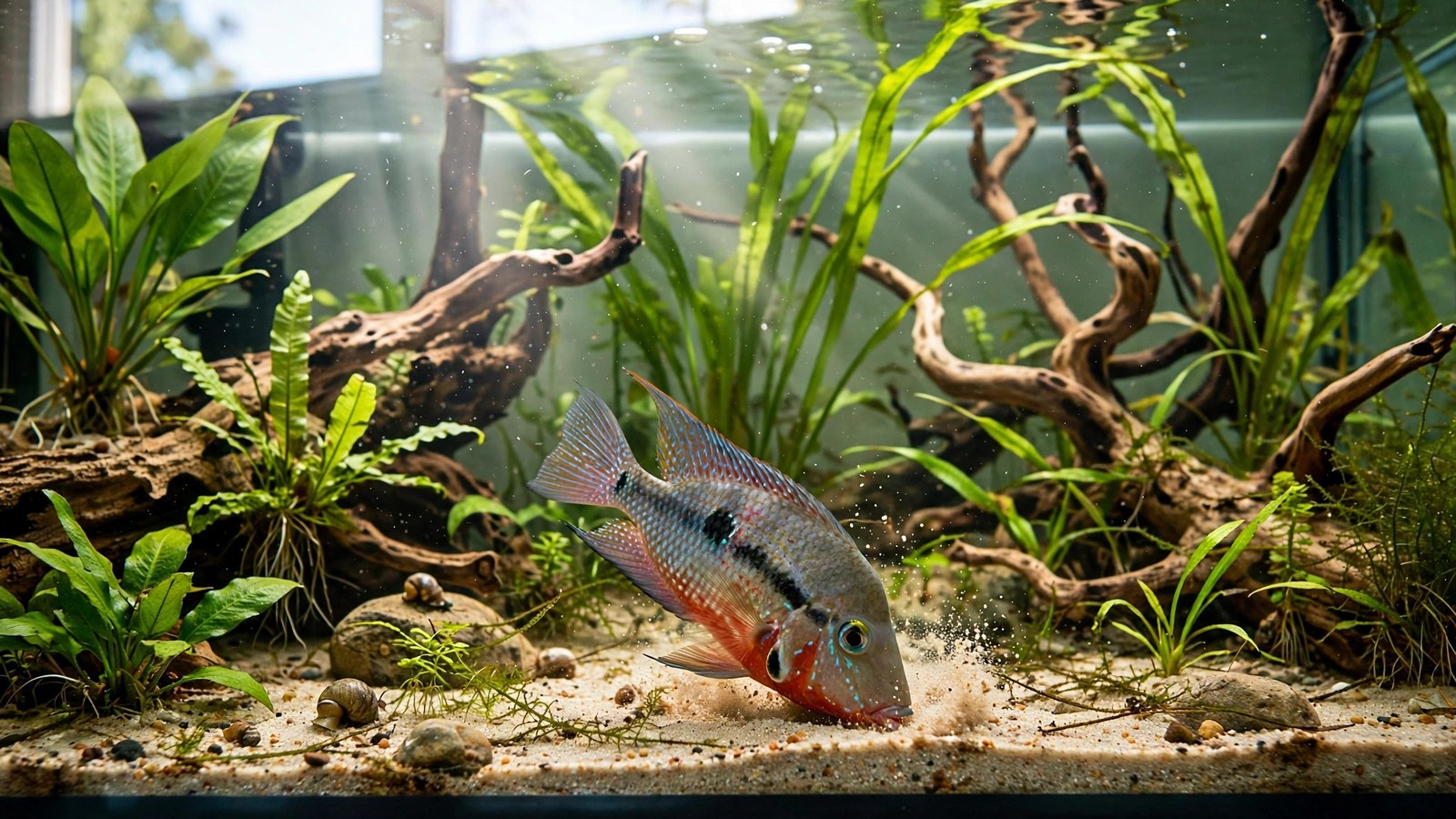
Most people plant a firemouth tank the way they would plant anything else — neat rows of stems in gravel — and wake up a week later to a bulldozed wasteland. The firemouth cichlid (Thorichthys meeki) is not eating your plants; it is sifting, digging, and redecorating, which is exactly what a healthy firemouth does. A firemouth cichlid planted tank built around that behavior stays lush for years, because you plant with the digger instead of against it.
Why Firemouths Dig: Know the Behavior Before You Plant
In the wild, firemouths hunt sandy river stretches by scooping mouthfuls of sand and sifting edible bits through their gills. In your tank that means the substrate is constantly worked — grains picked up and spat out, shallow pits excavated wherever a pair nests. Coarse gravel is a poor choice here: it jams in gills and scrapes mouths, while fine sand passes through harmlessly and invites the natural behavior that makes firemouths so fun to watch. The crucial distinction: firemouths are not herbivores. They damage plants almost entirely by accident — tipping stems out while pit-digging or burying low rosettes under excavated sand. That is the whole design principle: choose dig-proof plant picks for a sifting cichlid rather than trying to fence off a fragile aquascape. Firemouths are also famous for the throat-flare display — the namesake red throat fans out while the fish flares its gills at rivals. Keep the front center open as their stage.Blueprint for your firemouth cichlid planted tank
A 30-gallon breeder (36 × 18 inches) suits a bonded pair; a 40-gallon breeder or 55-gallon long adds room for dither fish and a community. Firemouths reach about 6 inches, and a spawning pair defends roughly a 12-inch radius around its chosen flat rock — factor that in when you place hardscape. Lay fine pool-filter or aquarium play sand 1.5–2 inches deep, rinsed until the water runs clear. The fish will re-grade it within days, so obsess over grain size, not contour. Filtration should turn over 6–8× tank volume per hour; place intakes a few inches above the sand so they do not suck up grit. Guard or hide the heater behind hardscape — firemouths nudge equipment while rearranging. The firemouth tank runs low-tech planted tank setup rules: hardy plants, moderate light, no CO2, and a nutrient load from fish waste the plants will absorb. Maintenance settles to a weekly 25–30% water change and the occasional glass wipe.Dig-Proof Planting: The Three-Tier Strategy
Tier 1 — Epiphytes on hardscape. Anubias and Java fern attach to driftwood and smooth rock with thread or cyanoacrylate gel. Their rhizomes sit above the substrate, so a digging firemouth cannot uproot them — there is nothing in the sand to grab. Both tolerate the slightly alkaline, moderately hard water firemouths prefer. Place them along the sides and back, leaving the front sand stage open. Tier 2 — Rock-guarded root feeders. Amazon swords want real substrate, so give it to them inside small unglazed terracotta pots sunk level with the sand and ringed with smooth river stones. Push a root tab under each plant every 2–3 months. If the fish partially buries a crown, brush the sand back during your water change; swords survive brief burial. Tier 3 — Floating plants. Water lettuce, frogbit, or salvinia sit above the battlefield entirely. They shade the tank (firemouths color up beautifully under dappled light), soak up nitrates, and cannot be disturbed. Thin them weekly to cover no more than a third of the surface.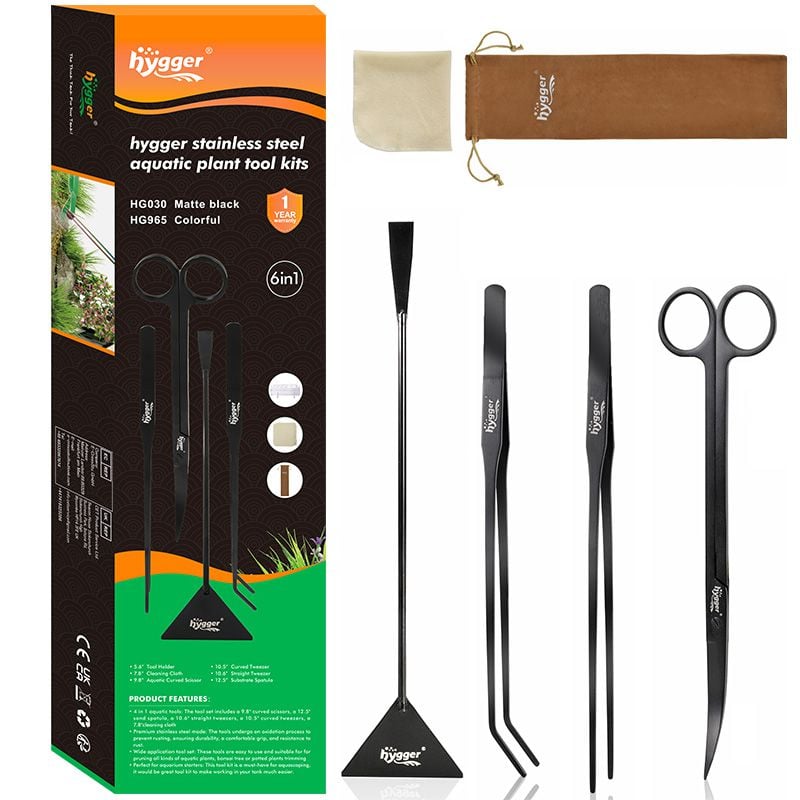 ★4.6
hygger 6-in-1 aquarium aquascaping tool kit
Check Price on Amazon ★4.6Hardscape That Handles the Sifting
Two or three pieces of driftwood along the back and sides create the structure and the anchor points for your epiphytes. Then add the firemouth's favorite furniture: smooth flat rocks. A pair picks one flat stone as its spawning and display platform, and most serious digging concentrates around it. Offer two or three candidate flats, let the pair choose, and remove the rejects later. Seat every stone firmly — press tall stacks onto the tank floor with sand poured back around them, and silicone shaky piles before the fish move in. A digging firemouth can undermine a poorly seated rock, and a collapse can crack glass.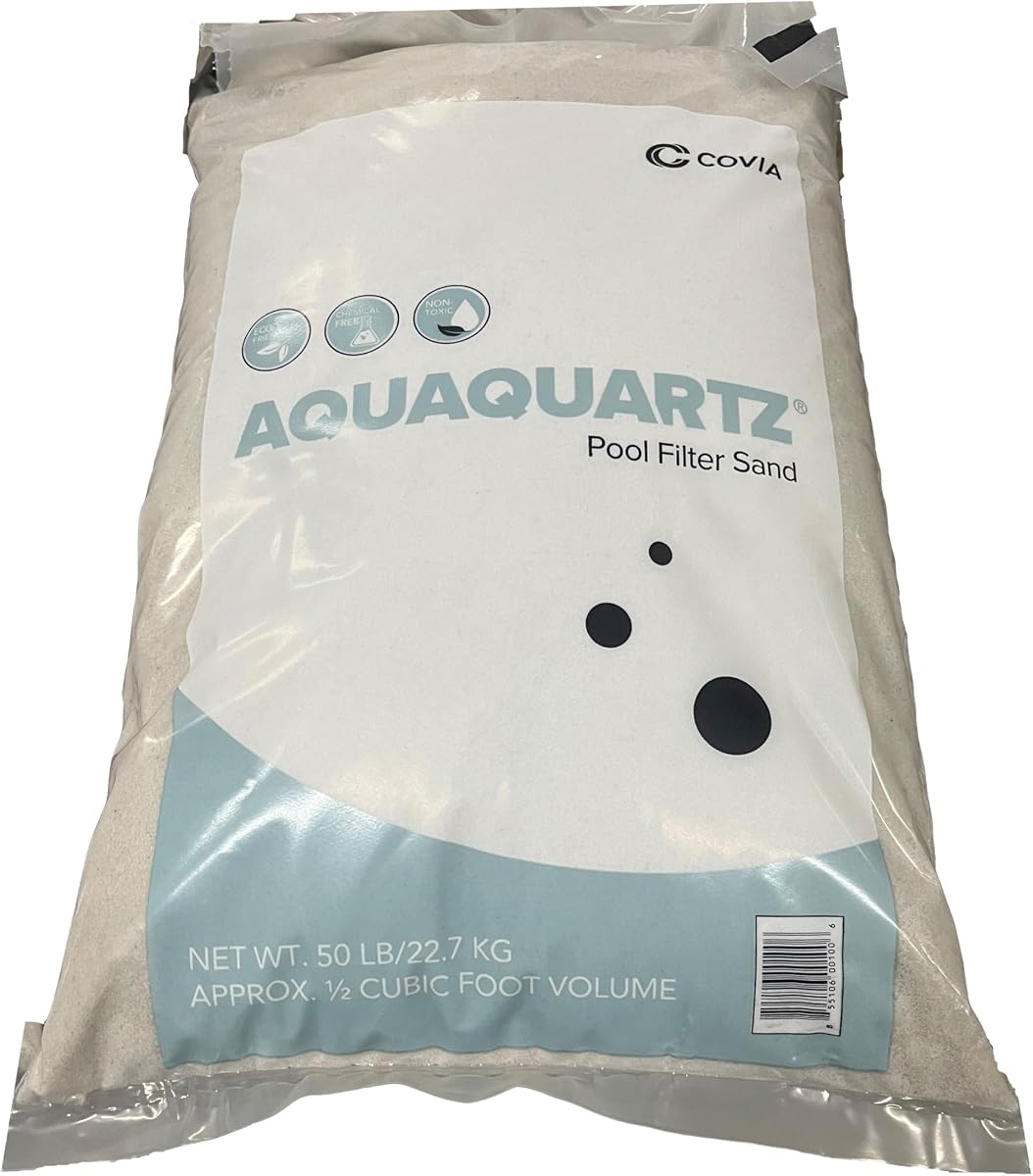
Covia AquaQuartz Pool Filter Sand
Check Price on AmazonWater Parameters, Tankmates, and the Display
Firemouths suit beginners because they handle a wide parameter band — stability beats perfect numbers every time.| Parameter | Target | Notes |
|---|---|---|
| Temperature | 75–79°F (24–26°C) | A steady 77°F works year-round |
| pH | 7.0–8.0 | Stable tap water is fine; skip pH chemicals |
| Hardness | 8–15 dGH | Matches their Central American home |
| Ammonia / nitrite | 0 ppm | Cycle the tank fully before adding fish |
| Nitrate | Under 40 ppm | Weekly 25–30% water changes keep it low |
Frequently Asked Questions
Will firemouth cichlids eat my aquarium plants?
Rarely. Firemouths are sand-sifters, not herbivores — they damage plants by digging and uprooting, not by chewing. Use epiphytes tied to hardscape, potted swords ringed with stones, and floaters, and the plants will outlast any amount of sifting. Skip delicate carpeting plants: everything else in a dig-proof layout survives the redecorating.
What substrate is best for a firemouth cichlid planted tank?
Fine, smooth sand — pool-filter or aquarium play sand — 1.5 to 2 inches deep. Firemouths take mouthfuls of substrate and sift it through their gills while hunting, and coarse gravel can injure their mouths. Fine sand passes through harmlessly and lets them display natural behavior.
What tank size do firemouth cichlids need?
A minimum of 30 gallons for a bonded pair, ideally a 36-inch-long breeder for the footprint. Firemouths reach about 6 inches and defend roughly a 12-inch radius around their spawning rock. For a community with tankmates, step up to a 40-gallon breeder or 55-gallon tank.
Do firemouth cichlids need a lid on the tank?
Yes — a tight-fitting lid is essential. Firemouths startle easily and are strong jumpers; a spooked fish can clear an uncovered rim in one burst. A lid also slows evaporation and keeps floating plants contained. Leave no gaps around filter and heater cutouts.
Can firemouths live with other fish in a planted tank?
Yes, with robust, calm companions: silver dollars, swordtails, bristlenose plecos, giant danios, or mild medium cichlids like blue acaras. Avoid tiny tetras and guppies, which eventually become food. Breeding pairs get territorial, so give each pair a defined rock zone in tanks 55 gallons and up.
A firemouth cichlid planted tank rewards you twice: the steady green of a tank nothing can uproot, and a centerpiece fish that performs for it. Set the sand deep, tie the plants high, give the pair its flat rock — and enjoy the show.