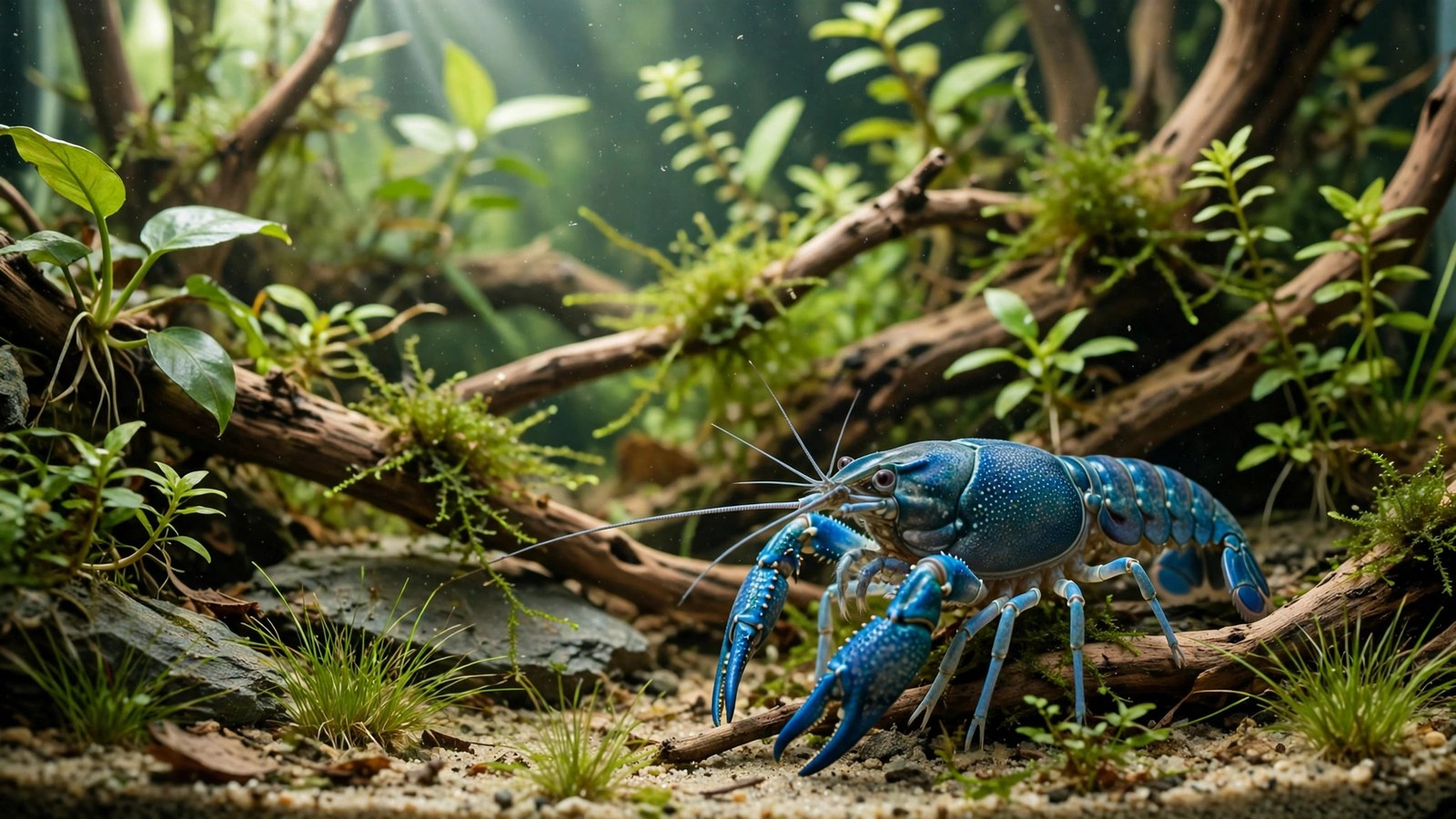
Let's skip the polite version: an electric blue crayfish planted tank is a contradiction you manage, not a problem you solve. Procambarus alleni snips, uproots, and relandscapes — every keeper source agrees it is not plant-safe. But a tank built around the animal, rather than against it, thrives for years. This guide gives you the minimum tank size, the exact parameters (68–75°F, hard alkaline water), burrow-safe hardscape, escape-proofing, a feeding routine that keeps it off your plants, and which tankmates survive.
One boundary first: this is the setup guide. Its foundations live in the complete guide to aquarium plants for fish tanks and the easiest aquarium plants for a beginner community tank (most of those gentle picks would not survive here).
 ★4.5
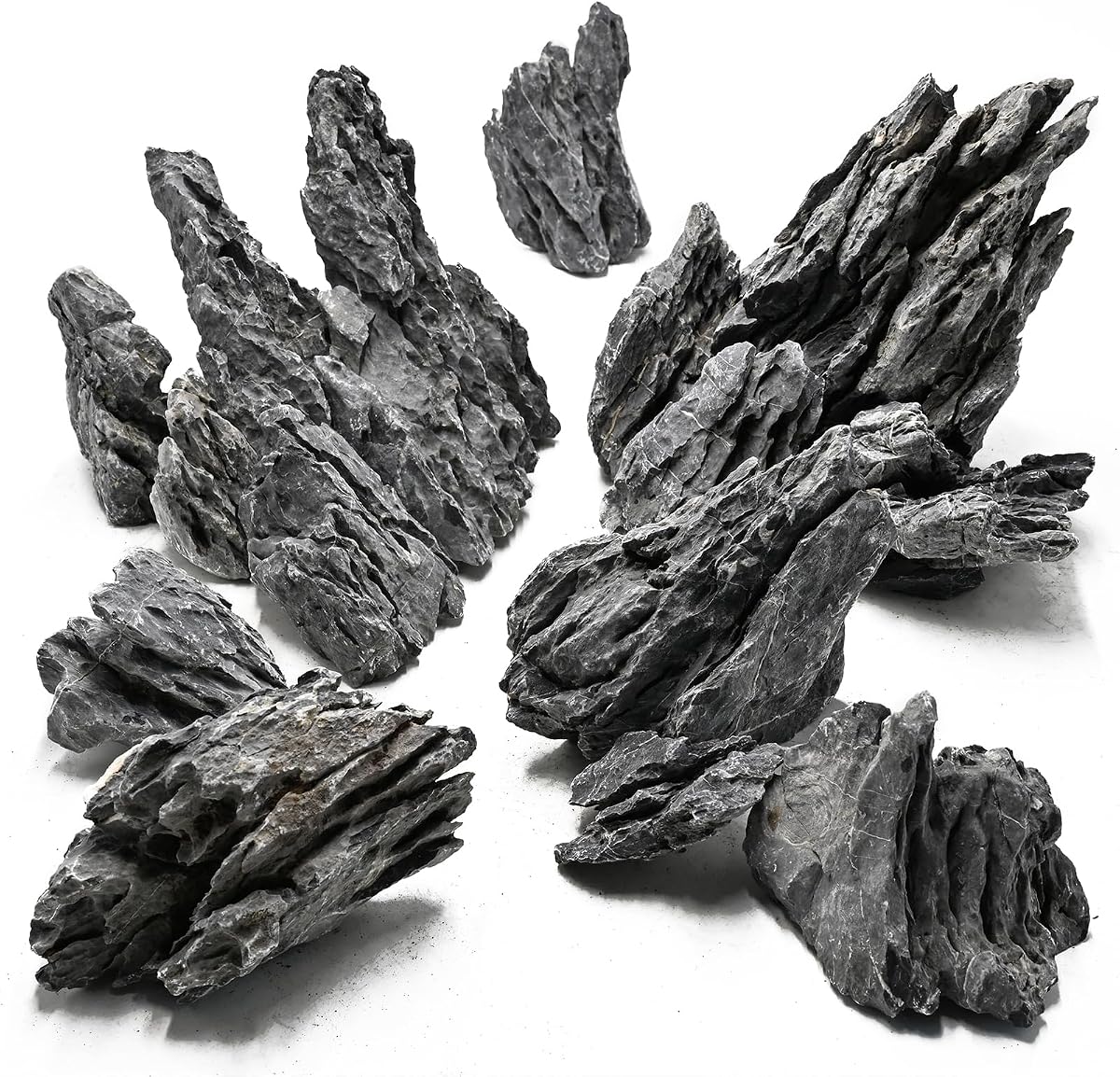
Eorbow Natural Seiryu Stone Rocks
Check Price on Amazon ★4.5The Electric Blue Crayfish Planted Tank Reality Check
Procambarus alleni, a 5–6 inch Florida native, eats whatever it can catch and shreds whatever it can't. No plant list changes that. So why plant? Plants process heavy waste, cover reduces stress and escape attempts, and it looks better. Budget for losses and you'll enjoy the animal instead of mourning stems.
One rule outranks everything: one electric blue crayfish per tank. Pairs fight, and the loser has nowhere to run.
Tank Size, Water, and the Non-Negotiables
A 20-gallon long is the floor for one adult; a 30-gallon is workable, and a 40-gallon breeder (36×18 inches) is the sweet spot. Floor area matters more than volume — crayfish live on the bottom, and a bigger tank dilutes heavy waste and separates the plant zone from burrow territory.
| Parameter | Target | Why it matters |
|---|---|---|
| Temperature | 68–75°F (20–24°C) | Cool side of tropical; heat shortens lifespan. Our coldwater planted tank guide covers no-heater approaches. |
| pH | 7.0–8.2 | Alkaline-leaning; crashes below 7.0 interfere with molting. |
| General hardness (GH) | 6–12 dGH | Calcium and magnesium rebuild the shell after each molt. |
| KH | 3–8 dKH | Buffers pH; stability matters more than exact values. |
| Ammonia / nitrite | 0 ppm | Fresh molts are soft and vulnerable; pristine water is non-negotiable. |
Soft tap water? Add calcium via a cuttlebone tucked behind hardscape or a shrimp mineralizer dosed to target GH. A crayfish molting cleanly every 4–8 weeks in its first year is getting what it needs.
Burrow-Safe Hardscape and an Escape-Proof Lid
This animal digs like it has a deadline, so build for burrows, not just looks. Use 2–3 inches of fine gravel or sand (no sharp crushed rock that chips claws), and place every rock on the bare glass first, substrate second — if the crayfish undermines a stone, the structure must stay put, or it can pin it. Give at least two hides (terracotta pots on their side, slate lean-tos, crayfish caves), leave open sand as a molt zone, and wedge heavy wood rather than balancing it. Our digger-proof yoyo loach setup uses the same rocks-down-first principle for a different excavator.
Escape-proofing is equally critical. Any gap around a filter intake or lid edge is a door, and a crayfish at the glass can push a loose lid open. Use a tight-fitting lid with every opening sealed and keep the water line 2–3 inches below the rim. For this species, the open top vs lid debate has one answer: lid.
Plants That Survive: The Two-Tier Strategy
Experienced keepers converge on a two-tier system. Tier 1: floating plants — frogbit, water lettuce, salvinia — sit above the crayfish's reach, shade the tank, and drink nutrients directly. Tier 2: sacrificial fast growers — cheap stems like hornwort and anacharis you expect to lose and replant from trimmings. They cost little, grow fast, and absorb the animal's considerable waste.
Rhizome plants tied to hardscape (anubias, Java fern) get pushed but rarely eaten, since the crayfish severs stems at the substrate line. Still, never plan a layout around a rooted centerpiece. The full toughness ranking lives in aquarium plants for crayfish tanks.
Feeding to Reduce Plant Damage
Underfeeding is the biggest reason keepers watch their plants get shredded — a hungry P. alleni turns enthusiastically omnivorous, plants included. Feed after lights-out to match its nocturnal schedule: sinking pellets as a daily staple (enough to finish in 2–3 hours), blanched zucchini or peas 3–4 times weekly, and bloodworms 1–2 times weekly. Keep cuttlebone in the tank for calcium, and leave the shed shell for 24 hours after a molt — the crayfish eats it to reclaim calcium.
Tankmates: Few, Fast, and Top-Dwelling
Most fish are either predators of a soft, freshly molted crayfish or prey of a hard-shelled one. The safe list is short: small, fast, top-dwelling species — white cloud minnows, zebra danios, endler guppies. Snails get eaten eventually; shrimp, inevitably. For temperament contrast, see the Mexican dwarf crayfish planted tank guide — that species tolerates far more tankmates.
After every molt (roughly monthly in juveniles), the crayfish is soft for 24–48 hours — the one time a tankmate can kill it. Give it a hide it can seal.
Sourcing and Responsible Ownership
Buy captive-bred from a reputable retailer and quarantine new animals for 2–4 weeks — wild-caught P. alleni can carry crayfish plague (Aphanomyces astaci), harmless to North American species but lethal to European natives. The USGS Nonindigenous Aquatic Species database tracks where introduced crayfish are already established.
Frequently Asked Questions
Can an electric blue crayfish live with any plants at all?
Yes, but choose by strategy, not hope. Floating plants like frogbit and salvinia sit above the crayfish's reach and thrive. Rhizome plants tied to wood (anubias, Java fern) get pushed but rarely eaten. Rooted stems will be severed at the base — treat them as sacrificial nutrient sponges you replant from trimmings, not permanent aquascape features.
What size tank does an electric blue crayfish need?
A 20-gallon long is the absolute minimum for one adult, but a 30-gallon or 40-gallon breeder is far better. Floor area matters more than volume because crayfish are bottom dwellers. A bigger tank also dilutes the heavy waste load of a 5–6 inch invertebrate and leaves room for a plant zone away from its burrows.
What temperature do electric blue crayfish need?
Keep them at 68–75°F (20–24°C) — cooler than most tropical setups. They tolerate the low 60s briefly, but prolonged heat above 78°F shortens their lifespan and lowers dissolved oxygen, which they need in good supply. In a warm room, cooling fans on the water surface are usually enough; most keepers don't need a chiller.
Will an electric blue crayfish eat fish?
It will catch what it can. Healthy mid-water fish are usually too fast, but sleeping bottom dwellers, fry, shrimp, and snails are all on the menu. The safest companions are small, fast, top-dwelling species like white cloud minnows and danios. And remember the reverse risk: for 24–48 hours after molting, the crayfish is soft and defenseless.
How often do electric blue crayfish molt?
Juveniles molt roughly monthly as they grow; adults slow to every few months. Before a molt the crayfish stops eating, hides, and may look dull. Provide calcium beforehand, keep the water pristine, and never disturb it mid-molt. Leave the shed shell in the tank for a day so it can eat the shell and reclaim calcium.
Are electric blue crayfish legal to keep?
It depends on where you live. Some US states and EU countries restrict or ban live crayfish because of invasive-species risk and crayfish plague. Check your regulations before buying, and buy captive-bred from reputable sources. Never release an aquarium crayfish into local waterways — rehome it instead.
The Honest Bottom Line
An electric blue crayfish planted tank works when you treat the tank as its habitat, not as a decoration. One animal, a 40-gallon breeder of cool hard water, rocks on glass, a sealed lid, floaters up top, sacrificial stems, and a diet that keeps it too full to garden. Do that and you get both: a living blue centerpiece and green, waste-filtering cover.