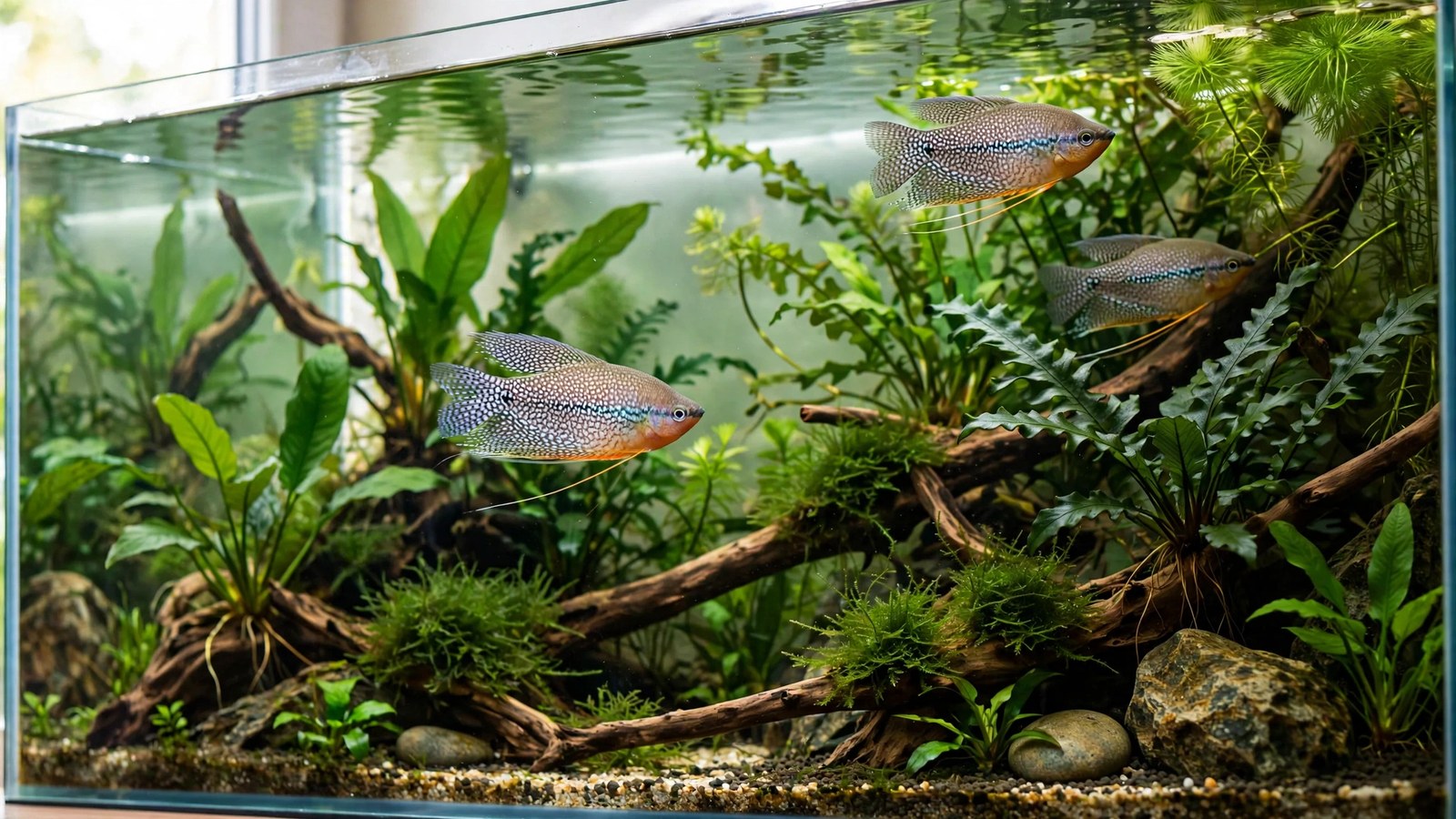
If your pearl gourami paces the glass instead of cruising your plants, the tank is usually the problem — too small, too bright, and too bare on top. Give Trichopodus leerii room to swim, floating-plant cover, and warm air above the waterline, and you get one of the most graceful centerpiece fish in the hobby: a shimmering 4-to-5-inch glider that patrols your plants like it owns them. Here is how to set one up.
Setting Up a Pearl Gourami Tank: Size and Air
Pearl gouramis grow to 4–5 inches. A 30-gallon tank works for one pair, but pearls settle best in a small group — and a group of four to six belongs in 55 gallons or more. In cramped tanks, shy individuals hide behind the filter intake and never settle; in a roomy tank they spread out, display, and relax. If you are sizing a setup from scratch, our 55-gallon planted tank setup guide covers scape, substrate, and equipment for exactly this stocking.
Like all gouramis, pearls carry a labyrinth organ: they rise to the surface and gulp air. That air must be warm and humid, so keep a tight lid with only a small gap, and position the tank away from doors, windows, and AC vents. A cold draft above cold water can shock the labyrinth organ — the number-one winter killer of gouramis in drafty rooms.
Flow should be gentle. Use a sponge filter, or baffle a hang-on-back — strong currents stress pearls and shred bubble nests. A low-tech planted tank setup suits them perfectly: calm water, healthy plants.
Water Parameters for Pearl Gouramis
Pearls are adaptable, but stability matters most. Acclimate slowly, never chase pH with chemicals, and match refill temperature closely — pearls notice a 3°F swing.
| Parameter | Target | Notes |
|---|---|---|
| Temperature | 77–82°F (25–28°C) | Stable; avoid drafts and sudden swings |
| pH | 6.5–7.8 | Stable > ideal number |
| Hardness | 5–15 dGH | Soft to medium |
| Ammonia / nitrite | 0 ppm | Cycle the tank before stocking |
| Nitrate | Under 40 ppm | Weekly 25–30% water changes |
Best Plants for a Pearl Gourami Tank
Plants are a pearl gourami's security system, not decoration. Start with the best aquarium plants for gourami tanks, then build two layers: floaters on top, broad leaves below.
Floating plants are the single most important choice. Amazon frogbit, water lettuce, and red root floaters dim the harsh light that makes pearls nervous, anchor bubble nests, and tell shy fish the surface is safe. Cover about a third of the surface and thin weekly so floaters don't mat over completely — you want dappled light, not a sealed ceiling. Our beginner's floating-plant guide compares the easiest species, and the best floating plants for betta tanks overlap almost entirely with what pearls want.
Broad-leaf plants are the resting perches. Pearls hover just under broad leaves as if sitting on them — Amazon swords, anubias on driftwood, and java fern are ideal. They thrive in the calm, moderate light pearls prefer and give females escape routes when a male turns pushy during breeding. Back the scape with vallisneria or water wisteria to break sightlines.
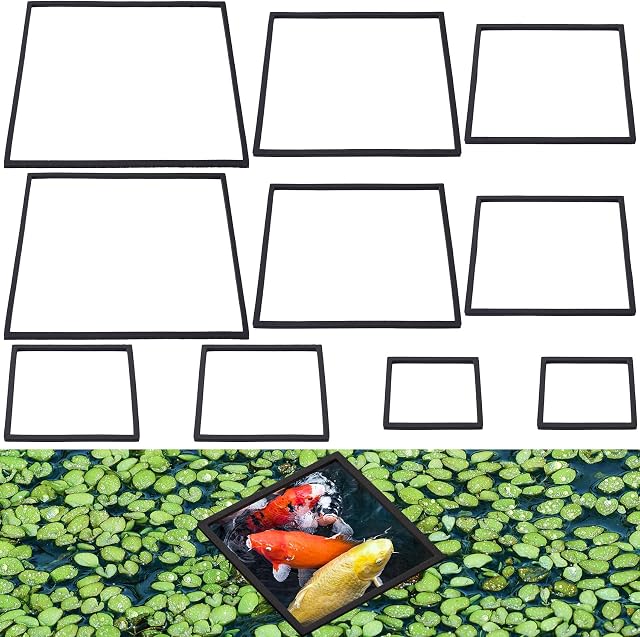 ★3.9
PAGOW Floating Plant Corral Rings
Check Price on Amazon ★3.9Tank Mates for Pearl Gouramis
Pearls are a true centerpiece fish for a peaceful community — but only with calm neighbors. They withdraw, stop eating, and fade in color around boisterous or nippy fish. Build the community around gentle schoolers and bottom dwellers; avoid anything that competes at the surface or shreds flowing fins.
| Tank mate | Why it works |
|---|---|
| Harlequin rasboras, cardinal tetras, rummy-nose tetras | Peaceful schoolers sharing pearls' soft-water origins |
| Corydoras catfish | Gentle bottom scavengers; ignore upper-water fish |
| Kuhli loaches | Shy, nocturnal, bother no one |
| Bristlenose pleco | Algae control without larger-pleco aggression |
| Cherry shrimp | Cleanup crew; colonies outbreed occasional predation |
Avoid tiger barbs, serpae tetras, and any fin nipper — they chew the pearls' long pelvic feelers. Skip male bettas: a betta reads a male pearl gourami as a rival and the clash is almost guaranteed. For numbers, introduction order, and quarantine, see our planted community tank setup guide.
Pearl Gourami vs Dwarf, Honey & Sparkling Gouramis
All four love floating plants, but the differences matter. The dwarf gourami is half the size, more colorful, and more belligerent for its size — and farmed dwarfs carry a documented virus risk (dwarf gourami iridovirus) that pearls don't share. The honey gourami is smaller and even gentler, ideal for a 20-gallon; the sparkling gourami is a 1.5-inch nano fish with a signature croak. Pearls sit at the top: biggest, longest-lived, most reliably peaceful.
| Species | Size | Min. tank | Temperament |
|---|---|---|---|
| Pearl gourami | 4–5 in | 30 gal (pair) / 55+ gal (group) | Peaceful, shy; hardiest of the group |
| Dwarf gourami | 2.5–3 in | 20 gal | More territorial; iridovirus risk in farmed stock |
| Honey gourami | 2–2.5 in | 15–20 gal | Very gentle; best small-tank gourami |
| Sparkling gourami | 1.5 in | 10 gal | Timid; nano setups only, keep in groups |
Feeding and Breeding Pearl Gouramis
Pearls are unhurried omnivores and surface feeders. Feed quality flake or micro pellets as the staple, plus frozen bloodworms, daphnia, or brine shrimp two or three times a week — that protein keeps their pearl spotting crisp and conditions them for breeding. Feed twice daily only what they finish in two minutes; uneaten food rotting under the floaters fouls the tank fast.
Breeding is straightforward bubble-nesting. Under the floaters, the male blows a foam nest several inches across, courts a female beneath it, and wraps her in the classic anabantoid embrace. Eggs float up into the nest; the male tends them alone — remove the female right after spawning, because a guarding male attacks her relentlessly. Eggs hatch in about 20–30 hours and fry swim free in four to five days. The Trichopodus leerii species profile documents the full timeline, and our Aquarium Plants for Fish Tanks guide keeps planting decisions fish-first.
Frequently Asked Questions
How big a tank does a pearl gourami need?
A single pair does fine in 30 gallons, but pearls are social fish that settle best in groups. Keep four to six in a 55-gallon or larger tank. Undersized tanks make pearls hide constantly, skip meals, and squabble — almost every "shy pearl gourami" problem traces back to too little room.
Do pearl gouramis need a lid on the tank?
Yes. Pearl gouramis breathe air through a labyrinth organ and must gulp from the surface regularly. A lid keeps the air above the water warm and humid, which the organ requires. In a cold, drafty room, an open-topped tank can chill that air layer and cause respiratory infections.
Can pearl gouramis live with bettas?
Don't. A male betta sees a male pearl gourami as a rival anabantoid, and both occupy the same surface territory. The betta will almost certainly attack. Pearls do far better with peaceful community fish. They also fare poorly with fin-nippers like tiger barbs and serpae tetras, which chew the pearls' long pelvic feelers.
Why is my pearl gourami hiding all the time?
Hiding usually means the tank feels exposed. Pearls evolved under swamp canopies, so bright open water reads as danger. Add floating plants over at least a third of the surface, break sightlines with tall background stems, and remove any boisterous or nippy tank mates. Most pearls emerge within days once the tank has cover.
Are pearl gouramis hardier than dwarf gouramis?
Yes, noticeably. Commercially farmed dwarf gouramis are vulnerable to dwarf gourami iridovirus, an incurable disease that pearls don't carry. Pearls are also longer-lived — commonly six to eight years or more with good care — and less prone to stress-related illness.
The Takeaway
Pearl gouramis reward one thing above all: room to cruise, a canopy overhead, warm air at the surface, and calm neighbors. Get those four right and you get the gentlest giant in the gourami family, shimmering under your floaters for the better part of a decade.