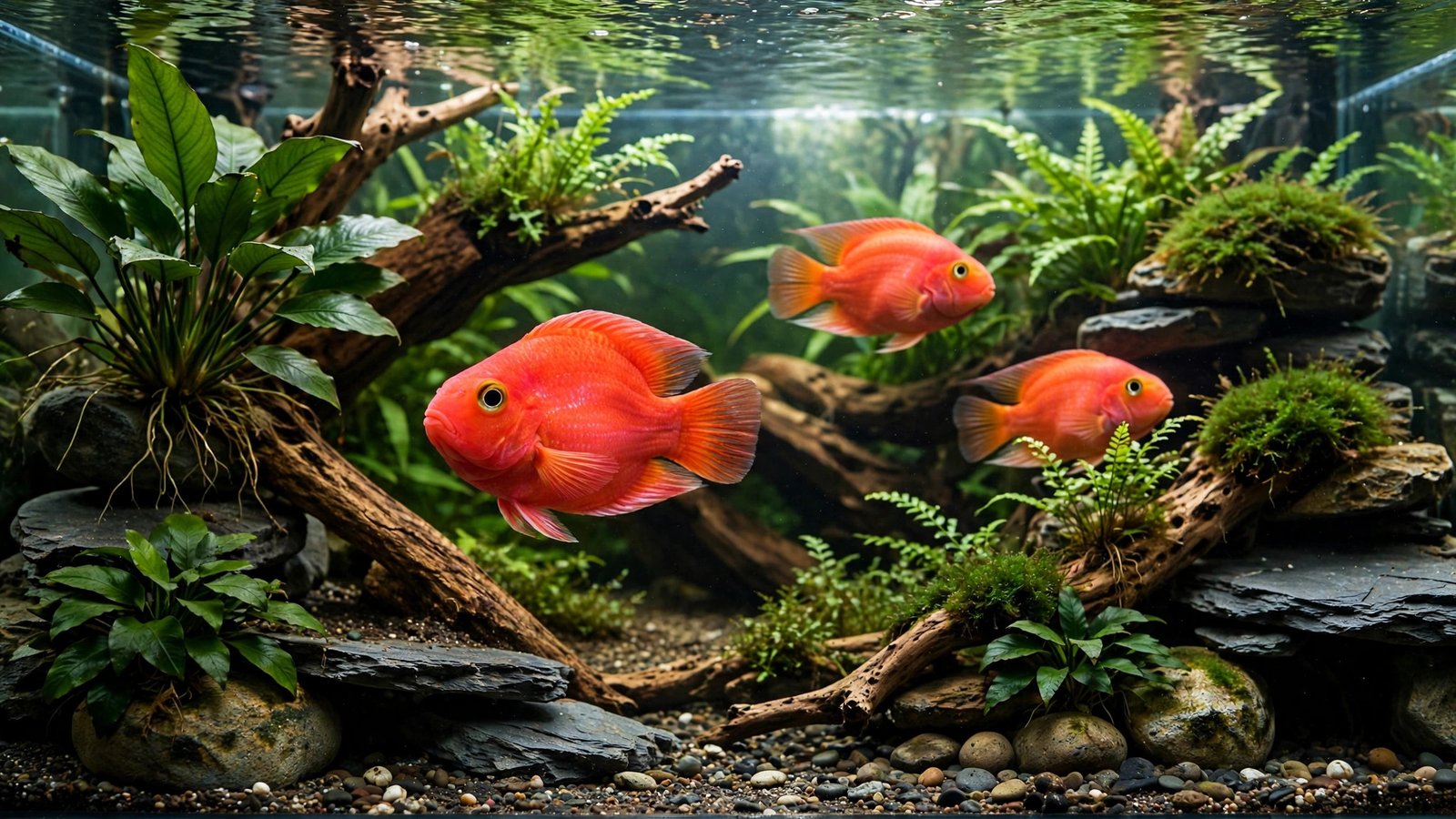
Walk into most blood parrot tanks and you will see the same sad diorama: bare gravel, two plastic plants leaning sideways, and a frustrated owner who has replanted the same sword for the fifth time. That disappointment is avoidable. A blood parrot cichlid planted tank works beautifully — but only if you plant for the fish you actually have: a muscular, mouthy digger that treats fresh substrate like a renovation project.
Why Blood Parrots Uproot Everything You Plant
Blood parrots are man-made hybrid cichlids with the territorial drive of their Midas and redhead cichlid ancestry and mouths built like small scoops. Digging is not misbehavior — it is the behavior. A breeding-age parrot excavates craters several inches deep, carries pebbles across the tank, and tests anything swaying in the current for edibility.
This is why the standard "plant it and forget it" advice fails. Stem plants rooted in gravel are toys to be uprooted; delicate carpets become confetti within a week. The fix is not choosing different fish — it is choosing a planting system that assumes the excavation is happening anyway. When you browse a broader dig-proof plant selection guide, look for the same traits we use here: tough leaves, strong anchoring, and plants that don't need substrate roots at all.
A successful setup is not a frozen aquascape; it is a living layout where the plants are mounted or potted strongly enough to survive the fish's rearranging.
Digger-Proof Plants for a Blood Parrot Cichlid Planted Tank
The shortlist below covers everything you need for a lush 75-gallon: background height, midground bulk, and shade — without a single plant that must root in open substrate. Every one of these tolerates 76–80°F water and the occasional bump from an eight-inch fish.
| Plant | Anchoring method | Placement | Light |
|---|---|---|---|
| Anubias barteri | Tied with cotton thread to driftwood or rock | Midground on hardscape | Low |
| Java Fern (Microsorum pterotoides) | Threaded or glued to wood; never bury the rhizome | Background on hardscape | Low–medium |
| Vallisneria spiralis | Planted in weighted clay pots or plant baskets | Background corners | Medium |
| Amazon Sword (Echinodorus) | Potted in a terra-cotta pot with root tabs | Midground focal point | Medium |
| Cryptocoryne wendtii | Weighted baskets tucked behind rock | Foreground–midground | Low |
| Water Lettuce / Frogbit | Floating — corralled with airline tubing | Surface, shaded zones | Low |
| Bolbitis heudelotii | Tied to rock like Anubias | Midground on hardscape | Medium |
Planting Methods That Actually Hold
Method matters more than species. The same Java Fern will live for years tied to a branch and die in weeks if someone buries its rhizome in gravel — and a parrot will unbury it on day one.
Tie, don't plant
Rhizome plants (Anubias, Java Fern, Bolbitis) must have their thick horizontal rhizome above the substrate. Wrap plain cotton thread or dab a small spot of cyanoacrylate gel super glue to fix the rhizome to driftwood or slate, and let roots grip naturally over 3–4 weeks. Once cemented on, even a parrot headbutt won't move them.
Pot everything else
Use 3–4 inch terra-cotta pots or black plastic mesh baskets filled with aquarium soil or coarse sand capped with fine sand. Sink each pot flush with the surrounding substrate and place one sand-vs-gravel substrate layer around the rim to blend it in. A parrot can bulldoze loose stems, but a buried pot full of gravel-weighted roots is a different negotiation. Add one root tab per pot every two months.
Let the surface do the work
Floating plants are immune to digging by definition. Water lettuce or frogbit, corralled in a floating ring of airline tubing so it doesn't clog the filter outflow, gives shade, nitrate uptake, and a green canopy with zero planting risk. Keep about 60% of the surface open so light still reaches below.
Hardscape Layout for a Big Cichlid Tank
Build the caves before you place a single plant. Stack smooth river rocks or slate into two or three caves at opposite ends of the tank — a parrot that has claimed a cave digs dramatically less than one still shopping for one. Cap your stone piles with driftwood so the structure can't topple onto the glass when the fish reworks the base.
Zone the 75-gallon like this: caves at the ends, tall driftwood as midground anchors, open swimming space across the front. A 75-gallon planted build layout keeps sightlines open so parrots can retreat without constant face-offs — and your pots and tied plants live behind the hardscape.
Leave the front third mostly bare sand. It will become a digging zone; accept it, level it during water changes, and enjoy watching the behavior instead of fighting it.
Lighting, Feeding, and Daily Care Adjustments
Keep lighting moderate — 6 to 8 hours a day on a timer. All the plants above thrive in low to medium light, and longer photoperiods just feed the algae that heavy parrot bioload already encourages. If green dust algae appears on Anubias leaves, cut the photoperiod by an hour before reaching for chemicals.
Feed portions the fish finish in two minutes, twice daily — high-quality cichlid pellets as the base plus occasional shelled peas. Uneaten food rots in sand fast and spikes ammonia, stressing fish and plants. Keep fertilizer lean: one half-dose of a complete liquid fertilizer weekly is plenty, since fish waste supplies most nitrogen and phosphate.
Water changes stay at 30% weekly. Use a gravel vacuum lightly over the sand surface — hovering just above it so you lift detritus without sucking up the top sand layer. If you are coming from a classic setup, the maintenance rhythm will feel familiar; this angle simply makes the planting survive it. Angelfish keepers face a gentler version of the same challenge, as shown in this planted angelfish setup guide.
Frequently Asked Questions
Can blood parrot cichlids really live in a planted tank?
Yes, with the right planting system. Blood parrots dig constantly, so you must avoid delicate rooted plants and instead use rhizome plants tied to hardscape, swords and Vallisneria in weighted pots, and floating plants. Most failures come from planting like it's a tetra tank, not from the fish being incompatible with plants.
What is the best substrate for a blood parrot planted tank?
Fine sand, 3–4 inches deep. Sand lets parrots dig naturally without injury, compacts enough that potted plants stay anchored, and looks natural. Sharp gravel can injure their mouths and scatters too easily. Rinse pool-filter or play sand thoroughly before adding it to avoid cloudy water.
Will blood parrots eat aquarium plants?
They mostly uproot rather than eat, but soft-leafed plants get shredded by mouthing. Tough-leaved species like Anubias and Java Fern survive because their leaves are unpalatable and leathery. Offering blanched vegetables like peas twice a week reduces plant nibbling noticeably.
How many blood parrots can go in a planted 75-gallon tank?
Two to three adult blood parrots is the comfortable maximum for a planted 75-gallon. They reach 7–9 inches and are territorial at breeding age, so provide at least one cave per fish at opposite ends of the tank. Overstocking increases digging pressure and wastes the planting work you've invested in.
Do I need CO2 for a blood parrot planted tank?
No. Every plant on the digger-proof list thrives low-tech without injected CO2. Heavy fish bioload keeps nitrates and phosphates supplied, and moderate light plus a lean weekly fertilizer dose is enough for steady growth. CO2 is an unnecessary expense for this setup.
Give them sand to dig, caves to claim, and plants anchored like they belong on a renovation site, and you get what most parrot owners think is impossible: a lush green tank and a happy cichlid in the same glass box. For your next rescape, bookmark this cichlid-safe plant roundup.