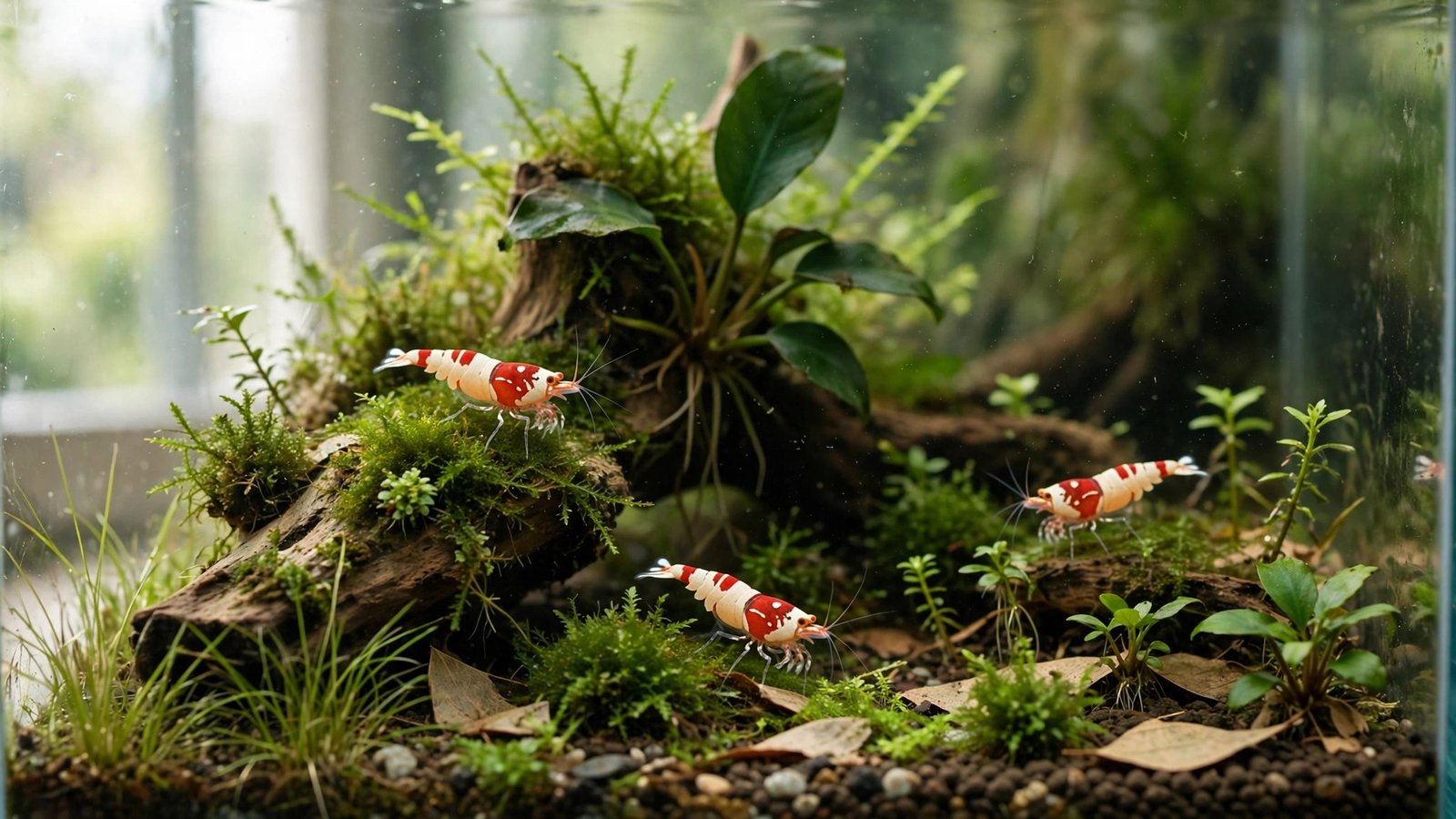
Treating Crystal Red shrimp like cherry shrimp is the hobby's costliest mistake: a colony worth five to ten times more than cherries can melt within weeks in the hard tap water cherries thrive in. Crystal red shrimp care means soft acidic water, an active buffering substrate, and mineral discipline Neocaridina never demands. Here is how to build a tank Caridina will breed in (pair it with our planted shrimp tank setup walkthrough).
Why Caridina Are Not Cherry Shrimp
Cherry shrimp are Neocaridina davidi. Crystal Reds are Caridina cantonensis var. "Crystal Red." Different animals, different water chemistry — and care sheets that treat them interchangeably are quietly wrong.
| Factor | Cherry shrimp (Neocaridina) | Crystal Red (Caridina) |
|---|---|---|
| pH | 6.5–8.0 | 5.8–6.8 |
| KH | 2–8 dKH | 0–2 dKH |
| Water source | Dechlorinated tap water | RO water + GH+ remineralizer |
| Substrate | Inert gravel or sand | Active buffering soil |
| Forgiveness | High | Low — swings kill |
Amanos (Caridina multidentata) are a third case: a larger cousin that tolerates wider water but never breeds in freshwater (amano shrimp care guide). For a cleanup crew instead of a breeding project, our cherry shrimp vs amano shrimp comparison picks the better cleaner.
Crystal Red Shrimp care Starts With Water
The founding decision is the substrate: an active, buffering soil such as ADA Amazonia that holds pH in the 5.8–6.8 window. It works by stripping carbonate hardness — which is why KH must stay at 0–2. High KH exhausts the soil and locks pH too high.
That KH ceiling rules out tap water in most regions: start with RO water near zero TDS, then remineralize with a Caridina-specific GH+ mineral like SaltyShrimp Bee Shrimp Mineral GH+, which raises general hardness without carbonate hardness. A Neocaridina GH/KH+ salt is the classic wrong purchase: it adds KH, fights your soil, and pins pH too high. Cross-check ranges against Aquatic Arts' Crystal Red shrimp parameters.
| Parameter | Target | Why it matters |
|---|---|---|
| Temperature | 68–74°F (20–23°C) | Above 76°F mortality climbs |
| pH | 5.8–6.8 | Held down by buffering soil |
| GH | 4–6 dGH | Calcium/magnesium for molting |
| KH | 0–2 dKH | Near zero so soil keeps buffering |
| TDS | 100–150 ppm | Best daily-health proxy |
| Ammonia / nitrite | 0 ppm | Non-negotiable |
| Nitrate | Under 10 ppm | CRS are nitrate-sensitive |
Drip-acclimate new shrimp over 2–3 hours — CRS react badly to TDS shifts cherries would shrug off (see our planted tank water parameters guide).
Setting Up the Tank
Ten gallons is the sweet spot: enough volume to slow parameter swings, small enough that RO remineralization stays cheap. Filter with a sponge filter — gentle flow, no intake to trap babies, and the sponge itself becomes a biofilm farm. Cover any canister or HOB intake with a fine prefilter sponge.
Cycle the tank a full 4–6 weeks before the first shrimp — follow a proper planted tank cycling process and confirm zero ammonia and nitrite, then wait two more weeks for biofilm to mature. Plant heavily from day one with mosses, Anubias, and fine-leaf stems suited to soft acidic water — our freshwater aquarium plants complete guide covers species selection. Cholla wood, Indian almond leaves, and alder cones add grazing surface and tannins.
Heat only to stay in range: a small adjustable heater at 70°F, checked against a separate thermometer. CRS die quietly above 76°F; see our planted tank heater guide for sizing.
Feeding: Biofilm First, Pellets Second
A healthy CRS tank feeds itself most of the week: shrimp graze constantly on biofilm and soft algae, and everything you add is a supplement. Feed small amounts 2–3 times a week: a Caridina-specific pellet, snowflake food, and blanched zucchini or spinach. Our biofilm shrimp tank guide shows how to grow more of it.
Remove uneaten food within a few hours. Overfeeding — not starvation — is the number-one beginner killer in shrimp tanks. Skip feeding for a day or two after a water change, when shrimp are stressed and barely graze.
Understanding CRS Grades (Honestly)
Crystal Reds are graded on white coverage, from C (mostly red) to SSS (nearly all white). The honest version:
| Grade | Typical appearance | What it means |
|---|---|---|
| C / B | Red-dominant, thin white bands | Affordable starter colonies |
| A | Balanced red-and-white banding | The classic "candy cane" look |
| S | Thick white bands | Selective-bred; pricier |
| SS | White-dominant, red patches | Show quality |
| SSS | Nearly solid white, red accents | Top tier; buy from a trusted breeder |
No universal grading standard exists — one breeder's S is another's A, so judge the shrimp in photos, not the letters. Grade describes pattern coverage only, not health or hardiness. And higher grades are not harder to keep: a C-grade and an SSS-grade shrimp need identical water. Buy the grade you enjoy looking at, from a reputable breeder.
Breeding Crystal Reds
In stable Caridina water, CRS breed on their own — no tricks, no brackish water like amanos. A berried female carries 20–30 eggs for about 28–30 days. Babies hatch as miniature adults and immediately graze biofilm.
Versus Neocaridina, shrimplets are far less forgiving of TDS creep, nitrate, and temperature spikes. Keep changes tiny and frequent, feed powdered baby food lightly, and resist constantly tweaking. A colony that stops breeding is telling you the water drifted — check TDS, then GH. Watch evaporation: remineralized top-offs concentrate minerals, pure RO dilutes them. Our topping-off vs water changes guide shows how to keep TDS flat month after month.
Tankmates: Keep It Simple
Species-only is the gold standard for a breeding colony — every fish you add is a shrimplet predator. For cleanup help, nerite snails are ideal: peaceful algae eaters that cannot reproduce in freshwater (nerite snail care guide). Amano shrimp coexist peacefully but outcompete CRS for food.
Cherry shrimp can share the tank without interbreeding — different genera cannot cross — but compromise water (around pH 6.8) is mediocre for both. If you want fish in the scape, plant with fish in mind using our aquarium plants for fish tanks guide, and accept you are running a display tank, not a breeding colony.
Frequently Asked Questions
Can Crystal Red shrimp live with cherry shrimp?
Yes, with no interbreeding risk — different genera cannot cross. The catch is water chemistry: cherries want harder, more alkaline water while CRS need soft acidic water. A compromise around pH 6.8 works, but neither breeds at full capacity, so most keepers run separate tanks.
Can I keep Crystal Red shrimp in tap water?
Only if your tap is already soft and acidic with TDS under ~150 ppm, which is rare. Most tap water carries KH that exhausts buffering substrates and pushes pH too high for Caridina. The reliable route is RO water remineralized with a GH+ mineral.
How long does buffering substrate last?
Typically 12–24 months with RO water and near-zero KH, since nothing fights the soil. High-KH water burns it out in months. When pH starts creeping upward despite unchanged maintenance, plan a gradual substrate refresh, never all at once with shrimp present.
Why are my Crystal Reds dying after water changes?
Almost always a TDS or temperature mismatch between new water and tank water. Keep replacement water within 20 ppm of tank TDS, temperature-matched, and change only 10% at a time. Large infrequent changes are the most common cause of these deaths.
How often do Crystal Red shrimp breed?
In stable water, a healthy female berries roughly every 4–6 weeks and carries eggs for about 28–30 days. Colonies grow more slowly than cherry shrimp colonies — expect tens of offspring per month, not hundreds. If breeding stalls, check TDS and GH first.
Start With the Water and the Shrimp Follow
Every thriving CRS colony shares one foundation: buffering substrate, RO water remineralized with GH+ only, and a keeper who checks TDS more than anything else. Get the water right, leave it alone, and watch them do the rest.