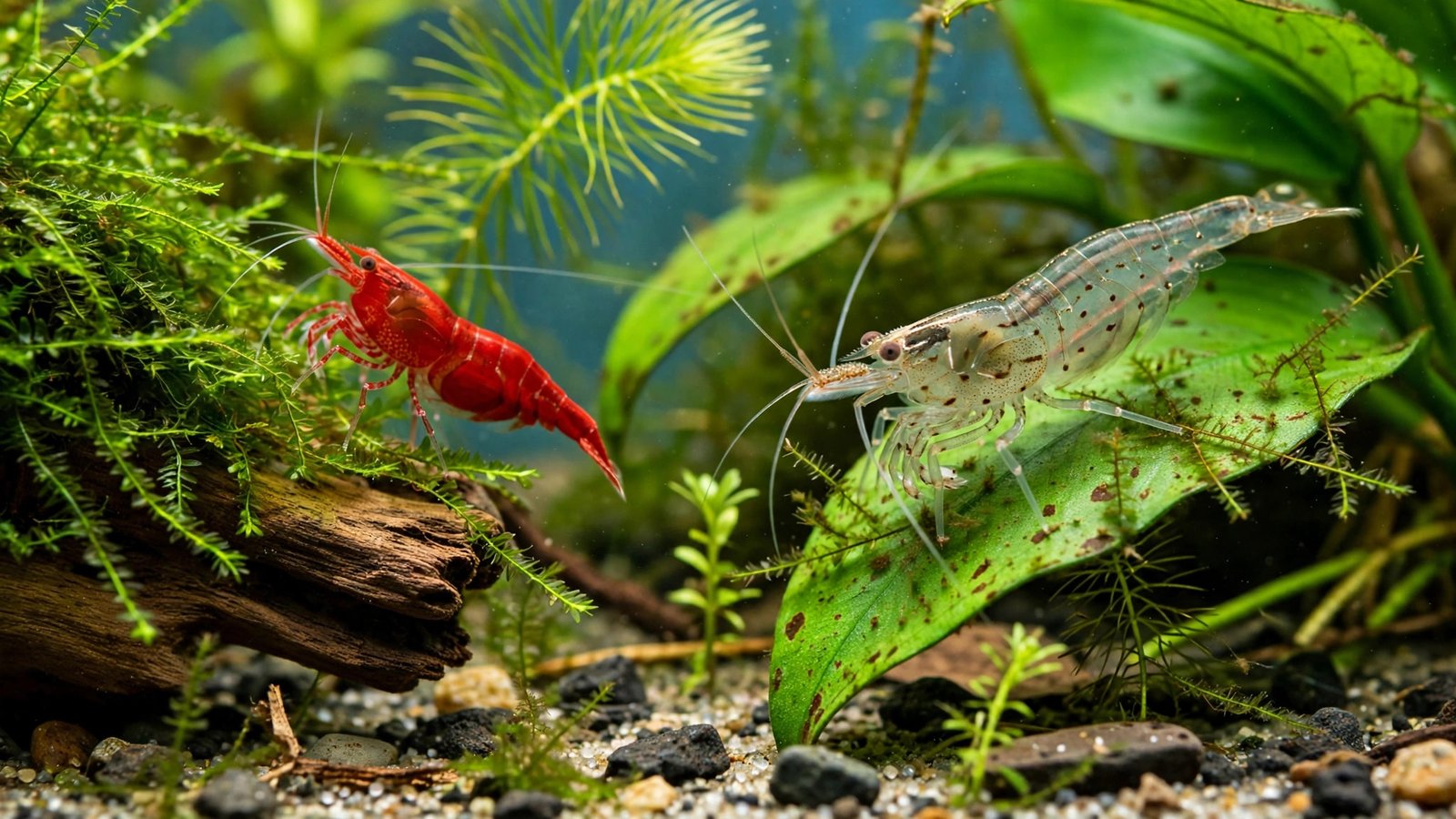
If you are buying shrimp to solve an algae problem, here is the twist most fish stores never tell you: the famous "best algae eater" and the humble cherry shrimp don't even eat the same algae. Pick the wrong species and you will watch your new crew graze politely on a leaf while hair algae throws a party behind them. In this cherry shrimp vs amano shrimp comparison, both are judged strictly as cleanup crews — which algae each one destroys, what each costs to stock a 40-liter tank, how they overlap on water parameters, and whether they work together. By the end you will know exactly which shrimp earns a spot in your tank.
What Each Shrimp Actually Eats
The whole comparison hinges on one fact: "algae eater" is not a single job. A planted tank grows half a dozen algae types, and each species has a distinct menu. Cherry shrimp are constant tiny grazers that sweep leaves and hardscape for soft growth — the brown diatom dust of a new tank, the translucent biofilm on fresh driftwood, and fine detritus in the carpet. Amano shrimp are larger bulldozers that tear into filamentous algae most tankmates ignore, and they handle chunky food particles and mulm piles the cherries walk past.
The table scores each species honestly on a five-star scale. The row that drives most buying decisions is hair algae.
| Algae / food type | Cherry shrimp | Amano shrimp |
|---|---|---|
| Soft green film algae | ★★★★★ | ★★★★★ |
| Diatoms (brown dust algae) | ★★★★★ | ★★★★★ |
| Biofilm on wood and leaves | ★★★★★ | ★★★★ |
| Leftover food and detritus | ★★★★ | ★★★★★ |
| Hair / thread algae | ★★ | ★★★★★ |
| Green spot algae | ★ | ★ |
| Black beard / staghorn algae | ★ | ★ |
Two honest caveats. First, no shrimp rasps off green spot algae — if your glass is dotted with it, reach for a scraper and cut light or phosphate, because no shrimp purchase fixes it. Second, black beard and staghorn algae signal unstable CO2 or decaying plant matter, not a shrimp shortage; both species will starve next to a thriving tuft. For independent confirmation of the gap, Tropica's own test of algae eaters measured an amano at roughly six times a cherry shrimp's cleaning output per animal — and nearly twice as efficient per gram of body weight.
Cleaning Power, Quantified
Because an amano is so much bigger and hungrier, the two species stock at very different densities. A working rule for amanos is one shrimp per 5–10 liters when algae is the target — Tropica recommends up to 1 per 5 liters during start-up, settling to about 1 per 15 liters once balanced. Cherry shrimp stock by the dozen: roughly one per 2–3 liters, and they breed constantly, so you start there and let the colony grow into the job.
For a standard 40-liter planted tank, that means 15–20 cherry shrimp or 4–5 amano shrimp. In raw output, one amano does roughly the work of five to six cherries on shared foods like diatoms — and effectively infinite times the work on hair algae, which cherries barely touch. But the cherry colony has a trick amanos can't match: six months later, those 15 cherries are 60 to 100 grazers working every leaf, while the 4 amanos are still 4 amanos. Numbers are a cleanup strategy too, and they are the cherry shrimp's superpower.
Cost Math for a 40-Liter Tank
Shrimp are cheap individually, which makes the real cost easy to underestimate. Run the three-year math and the two species tell opposite stories: cherries cost more up front, then pay you back; amanos cost less up front, then need rebuying. The table assumes $3 per cherry and $4.50 per amano — typical 2026 prices for healthy stock.
| Cost item (40L tank) | Cherry shrimp | Amano shrimp |
|---|---|---|
| Starting crew | 15–20 shrimp | 4–5 shrimp |
| Initial purchase | $45–$60 | $15–$25 |
| Replacements over 3 years | $0 (colony self-replaces) | ~$15–$25 (one restock cycle) |
| 3-year total | $45–$60 | $36–$46 |
| Bonus value | Sell or trade culls and shrimplets | None — larvae can't develop in freshwater |
The cherry "replacements cost $0" row flips the comparison. One berried female carries 20–30 eggs and can breed monthly in good conditions, so 15 starters reliably grow into 100+ shrimp within six months — deaths are replaced by offspring for free. Amanos live longer (2–3 years versus the cherry's 1–2), but every amano that dies is a trip back to the store. Over a decade, the amano tank costs roughly twice the cherry tank in livestock alone.
Water Parameters: The Overlap Zone
Good news: cherry and amano shrimp are among the easiest invertebrates to house together, because their parameter ranges overlap almost completely. Both are undemanding freshwater shrimp that thrive in the same mild, stable conditions most planted tanks already run. Aim for the shared sweet spot and both do well.
| Parameter | Cherry shrimp | Amano shrimp | Shared sweet spot |
|---|---|---|---|
| Temperature | 18–28°C | 18–28°C | 22–24°C |
| pH | 6.5–8.0 | 6.5–7.5 | 6.8–7.4 |
| GH | 6–10 dGH | 4–8 dGH | 6–8 dGH |
| KH | 1–8 dKH | 1–6 dKH | 1–4 dKH |
| TDS | 150–300 ppm | 120–250 ppm | 150–250 ppm |
Two warnings apply to both species: keep temperature under 26°C, because heat stresses shrimp while supercharging thread algae, and avoid sudden CO2 swings, which crash pH faster than shrimp can adapt. If shrimp keep dying within 48 hours while fish look fine, work through our shrimp dying in a planted tank checklist before buying replacements.
Breeding: Self-Sustaining Colony vs Replace-As-Needed
Breeding is where the two species diverge most, and it decides the purchase for many keepers. Cherry shrimp breed so readily that most keepers' problem is population control, not growth. Eggs hatch in about three weeks, shrimplets graze biofilm from day one, and one female can produce hundreds of offspring per year. For culling grades, moss cover, and population control, our breeding cherry shrimp in a planted tank guide walks through it step by step.
Amano shrimp do mate and hatch in freshwater — but the larvae must reach brackish or marine water to develop, and they die within days in a home aquarium. Raising them needs a separate saltwater larval tank, phytoplankton feeding, and weeks of salinity management: a fun project, not a cleanup strategy. Buy amanos knowing they are a consumable — excellent 2–3-year workers you replace as needed. One reassurance: the two species cannot interbreed, so a mixed tank never produces hybrids.
Can You Keep Both in the Same Tank?
Yes — and this is where most experienced keepers land. The species share water requirements, ignore each other socially, and divide the work instead of competing: amanos bulldoze filamentous algae and chunky leftovers, while dozens of cherries patrol every leaf for biofilm and diatoms. A mixed 40-liter crew of 10 cherries and 4 amanos costs about $48–$55 to start and covers nearly every algae type in the table above.
Two details make the mixed tank work better. First, amanos are bold at feeding time and will shoulder cherries off a sinking pellet — drop food in two spots so the smaller shrimp eat in peace. Second, cherries breed best with fine cover where shrimplets hide and graze; mosses and fine-leaved stems provide shelter plus first food, which is why biofilm development in a shrimp tank matters as much as any parameter. Use an inert or shrimp-safe active substrate for smooth molting — our shrimp tank substrate guide compares the options — and skip copper-based medications entirely.
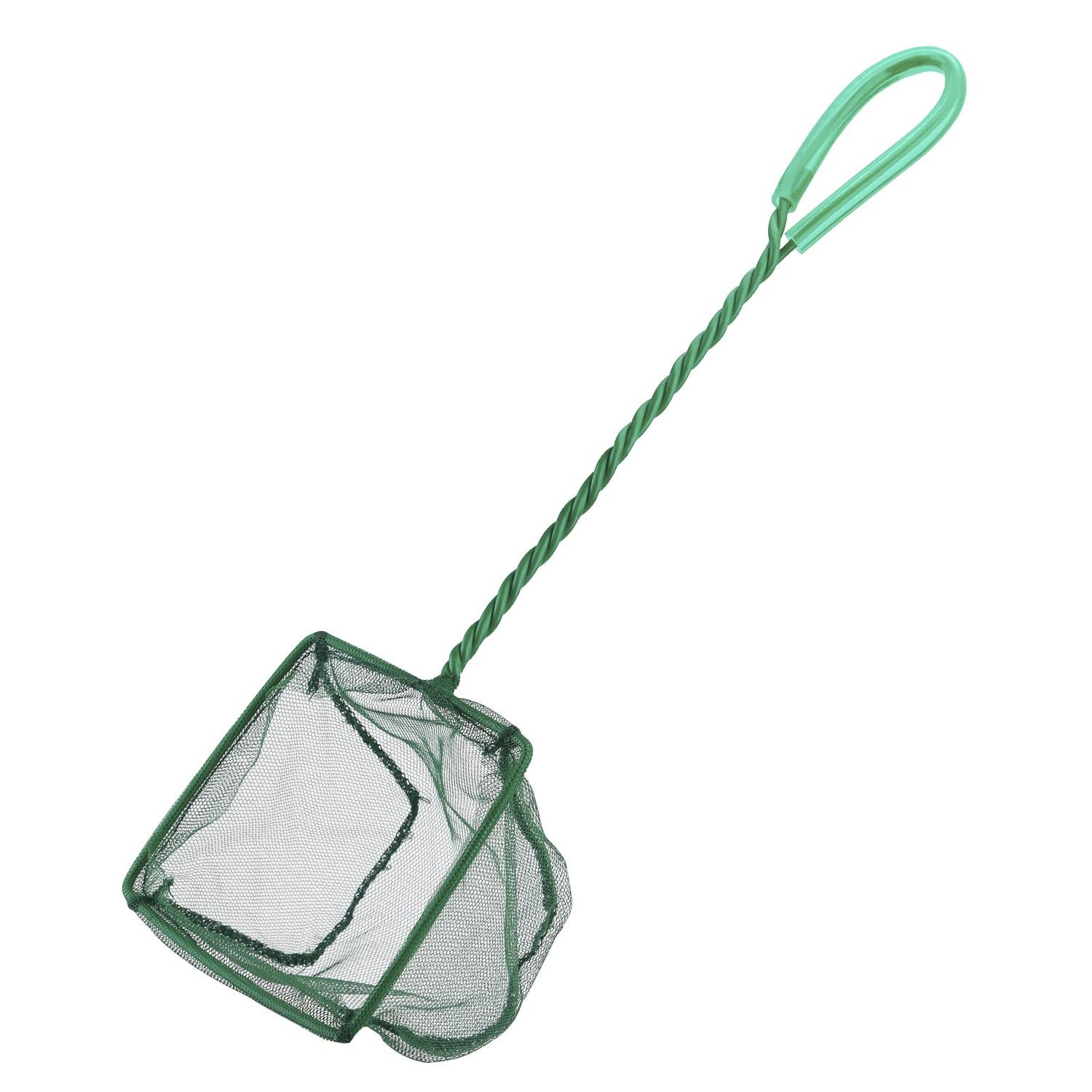
Introducing and moving shrimp without stress is part of mixing both species; a fine-mesh extendable net is the tool: a fine-mesh extendable shrimp net like Pawfly's.
 ★4.6
Pawfly 4" Aquarium Shrimp Net
Check Price on Amazon ★4.6Shrimp-Safe Fertilizers and the Copper Question
Every shrimp comparison eventually hits the copper question, so let's settle it. The trace copper in aquarium fertilizers — usually chelated copper or copper gluconate — is safe for both species at label doses. Shrimp actually need trace copper for their blood chemistry; the chelated form stays bound and plant-available without spiking free copper ions. Dose in the morning, follow the label, keep up weekly 30% water changes, and your colony will molt and breed normally.
The real killers are copper-based medications and copper sulfate algaecides. Products like Cupramine and Coppersafe, plus algae treatments listing copper sulfate, release free copper that wipes out shrimp colonies within days — cherry and amano alike. Root tabs are a middle ground: bury them deep so they don't dissolve into the water column where shrimplets graze. For the full breakdown of fertilizer types and dosing methods, see our shrimp-safe aquarium fertilizers guide.
The section is about shrimp-safe fertilizers — a shrimp-safe all-in-one is the product answer: a shrimp-safe all-in-one like NilocG ThriveS.
Cherry Shrimp vs Amano Shrimp: The Verdict
Choose amano shrimp if your main problem is hair or thread algae, you want maximum cleaning power per animal, or you run a larger tank and don't want hundreds of babies. Four to five amanos in a 40-liter tank will demolish filamentous algae that nothing else touches at that price.
Choose cherry shrimp if you want a self-sustaining colony that cleans for free forever, you like bright red grazers working every leaf, or your issue is diatoms, biofilm, and detritus in a newer setup. Start with 15–20 in a 40-liter tank, give them moss to breed in, and within months you own a restocking crew. This also suits a low-tech planted tank, where the gentle grazing of a cherry colony fits the slower pace.
Can't decide? Hire both. Ten cherries plus four amanos costs about the same as cherries alone, covers the full algae spectrum, and their strengths don't overlap — neither is redundant. It's the closest thing a planted tank has to a complete living filtration system.
Frequently Asked Questions
Will cherry shrimp eat hair algae?
They nibble soft, brand-new growth, but can't clear an established infestation — the strands are too tough for their tiny mouthparts. If hair or thread algae is your main problem, amano shrimp are the correct tool. Use cherries for biofilm, diatoms, and detritus, and fix the light or nutrient imbalance feeding the hair algae.
How many amano shrimp do I need for a 40-liter planted tank?
Start with 4–5 amanos for normal algae levels. Tropica recommends up to 1 per 5 liters during start-up, settling to about 1 per 15 liters once balanced — 4–5 sits right in that working range. With heavy-feeding fish, stay at the higher end; with minimal algae, three amanos plus a cherry colony works fine.
Can cherry shrimp breed out of control?
They can reach several hundred in a well-fed 40-liter tank within a year, but the population self-limits to available biofilm and food — rarely a crisis. If numbers bother you, reduce feeding, skip powdered fry foods, and sell or trade the extras; local fish stores often take healthy culls.
Is it true amano shrimp can't breed in freshwater?
Almost — they mate and hatch in freshwater, but the larvae need brackish or marine water to develop and die within days at home. Raising them requires a separate saltwater larval setup with weeks of salinity management. For practical purposes, treat amanos as non-breeding and replace lost adults with store-bought ones.
Are liquid fertilizers safe to use with shrimp?
Yes, at label doses. The chelated trace copper in aquarium fertilizers is bound and plant-available, not free copper ions, and shrimp tolerate it fine — they need trace copper in their diet. The danger is copper-based medications and copper sulfate algaecides, which release free copper at colony-killing levels.
Can I keep cherry shrimp and amano shrimp together?
Absolutely — they share ideal water (22–24°C, pH 6.8–7.4) and can't interbreed, so no hybrid worries. Amanos handle hair algae and big leftovers while cherries cover biofilm and diatoms on every leaf. Feed in two spots so bold amanos don't shoulder cherries away, and provide moss cover for cherry shrimplets.
If your algae problem drove you to this comparison, remember the hierarchy: shrimp are the maintenance crew, not the fire brigade. They keep a balanced planted tank spotless, but can't rescue a tank with too much light, unstable CO2, or chronic overfeeding — fix those causes first, then hire the right crew. For most 40-liter planted setups, the sweet spot is 10 cherry shrimp and 4 amano shrimp: one purchase, two specialists, almost no algae gaps.