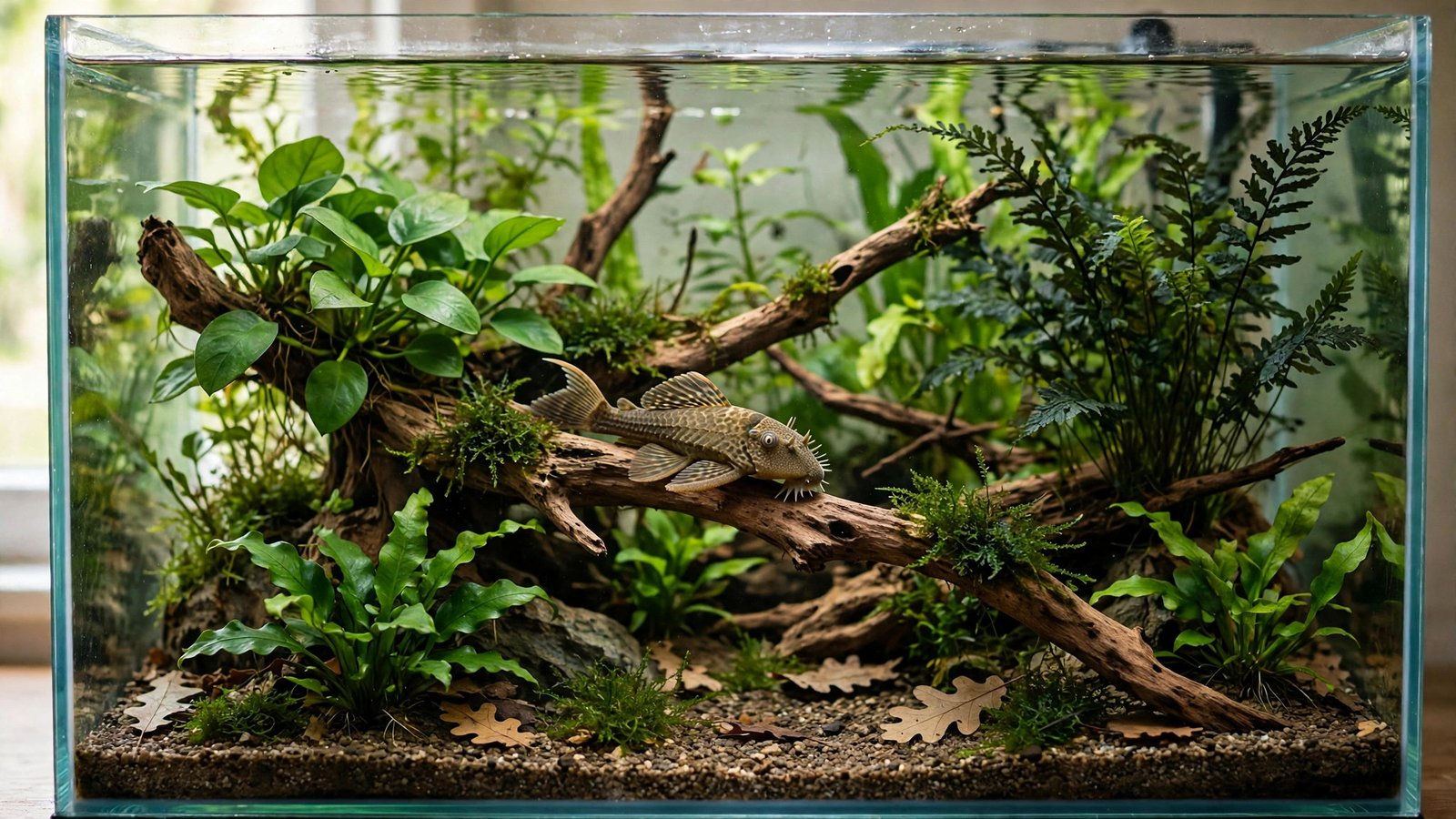
The fear sounds like this: your plants finally settle in, you add a bristlenose pleco for algae control, and wake up to find your favorite sword stripped to a skeleton. Every planted-tank forum has that photo. But a bristlenose pleco planted tank fails almost never because of the pleco — it fails because the pleco was hungry. A fed, wood-equipped bristlenose is one of the gentlest algae cleaners in the hobby; a starved one rasps soft leaves like it's punishing them. Here is the honest setup guide.
If you are still choosing which plants will share the tank, start with this plants-first guide to stocking aquarium plants for a fish tank so your scape is built from species a bristlenose tends to leave alone.
Is a Bristlenose Pleco Planted Tank Really Plant-Safe?
Yes, with one condition. A bristlenose (Ancistrus sp.) is an algae grazer, not a leaf eater — its sucker mouth rasps biofilm and soft algae off surfaces, and most of the time your plants are simply the surface it cleans. Problems start only when the tank holds no algae, no wafer schedule, and no driftwood: then the same rasping motion turns on whatever is available, starting with soft new leaves.
That is why the question gets such mixed answers. The people reporting shredded swords almost always describe a pleco that never got food beyond what algae the tank produced — and a clean planted tank goes algae-free fast. The honest formula: the better fed the pleco, the safer your plants.
One more caveat: a bristlenose is a heavy-bodied fish that barges through delicate arrangements. It rarely eats your carpet — it uproots it while chasing a wafer. Give new plants 3–4 weeks to root before the pleco moves in and you sidestep nearly all mechanical damage.
Bristlenose-Proof Plants vs. Vulnerable Ones
Waxy, leathery leaves survive a passing graze; thin soft leaves can develop pale rasp marks. Build your scape around the safe column.
| Plant | Safety | Why |
|---|---|---|
| Anubias (nana, barteri) | Very safe | Tough waxy leaves; used as perches |
| Java fern | Very safe | Leathery; tie to driftwood |
| Bucephalandra | Very safe | Tough leaves ignored once established |
| Amazon sword | Risky | Soft new leaves rasped by hungry plecos |
| Cryptocoryne wendtii | Mostly safe | Survives grazing; bruised by heavy traffic |
| Stem plants | Mechanical risk | Knocked loose while foraging |
| Carpeting plants | Mechanical risk | Uprooted before rooting |
| Floating plants | Completely safe | Never grazed |
Use epiphytes as the backbone — Anubias and Java fern tied to driftwood — with swords and stems as accents. This is a classic low-tech planted tank setup: moderate light, no CO2 gear for a foraging fish to knock around.
The Driftwood Rule: Non-Negotiable for Bristlenose Tanks
Every bristlenose planted tank needs real driftwood — Malaysian, Mopani, or spider wood — and not as decoration. Plecos rasp wood fibers as part of their diet, and the wood's biofilm is their most reliable grazing surface between feedings. Wood also supplies the hiding spots a shy, nocturnal fish needs; a bristlenose without a hide is a stressed fish, and stressed fish stop eating — which leads straight back to hungry fish rasping your plants.
Give the pleco at least one substantial piece it can fully shelter under, plus a cave if you keep two. Tie your Anubias and Java fern to the wood itself — the pleco's food source becomes your most plant-safe planting real estate. New driftwood tints water tea-colored from tannins; this is harmless and nudges pH toward the bristlenose's preferred 6.5–7.0. Boil or soak wood 24–48 hours first; the color fades within weeks. The dwarf gourami planted tank and endlers planted tank guides show this wood-anchored look in finished scapes.
Feeding: The Real Plant Insurance
Drop sinking algae wafers after lights-out — bristlenoses are nocturnal, and daytime fish will steal wafers dropped in daylight. Half a wafer every other day per pleco is the baseline; adjust up if the tank is algae-free.
| Day | Feeding | Notes |
|---|---|---|
| Mon / Thu | ½ sinking algae wafer | After lights-out; remove uneaten wafer by morning |
| Sunday | Blanched zucchini or cucumber | Weigh down with a fork; remove after 24 hours |
| Every 2 weeks | Small protein treat (bloodworms) | Very sparingly — excess protein causes bloat |
Watch the belly: slightly rounded is healthy; sunken means underfed — and underfed plecos are the ones that rasp leaves. Remove uneaten vegetables within 24 hours; rotting zucchini fouls water faster than any other common feeding mistake.
Stocking, Tank Mates, and Tank Size
Twenty gallons is the honest minimum for one bristlenose — smaller tanks concentrate its heavy bioload (plecos are messy eaters) and give a territorial male nowhere to retreat. Thirty gallons is noticeably better, especially with a second bristlenose or an active community. Filter robustly: a hang-on-back plus a small sponge filter delivers the oxygenation these fish prefer, matching their flowing-stream origins.
As tank mates, bristlenoses are peaceable almost to a fault and ignore schooling fish — a natural fit for the tight schools in a rummy nose tetra planted tank or bottom-dwellers like the pygmy cory planted tank, where the two simply split different grazing zones. Cave-layout ideas from an apistogramma planted tank setup translate directly too. Shrimp colonies are usually fine: a bristlenose may vacuum up a newborn shrimplet by accident, but will not hunt them.
Plan around one combination: two males in under 40 gallons will bicker over caves, leaving the loser stressed and hiding. A male-plus-female pair in 30+ gallons often breeds on its own — the male fans the eggs for about a week until fry swim free. Otherwise, one bristlenose is the perfect number: algae duty, fed plants left alone, asking only for wood, a cave, and dinner after dark. The lightly planted aquarium setup guide covers the open-layout philosophy that suits foragers like bristlenoses.
Frequently Asked Questions
Will a bristlenose pleco eat my aquarium plants?
Usually no. A well-fed bristlenose grazes algae off leaves without damaging them. Damage almost always means an underfed pleco — with no algae, wafers, or driftwood, it rasps soft leaves like Amazon swords. Feed wafers every other day plus weekly vegetables.
Do bristlenose plecos really need driftwood?
Yes — treat driftwood as a dietary and welfare requirement, not decoration. Bristlenoses rasp wood fibers, graze its biofilm, and need wood hides to feel secure. Without driftwood a bristlenose is more stressed, eats less, and may turn its rasping on soft-leaved plants.
What size tank does a bristlenose pleco need?
Twenty gallons is the minimum for one bristlenose; 30 gallons is better for a pair or a community. Plecos produce heavy waste for their size, so strong filtration matters as much as volume. Avoid two males in anything under 40 gallons — they fight over caves.
Which plants are safest with bristlenose plecos?
Tough-leaved epiphytes: Anubias, Java fern, and Bucephalandra — all survive a passing graze and tie directly to driftwood. Most vulnerable are soft-leaved swords (a hungry pleco's first target) and fresh carpets, which get uprooted before they root. Established swords hold up fine, and feeding a sinking algae wafer every other day keeps the pleco grazing on food, not leaves.
How often should I feed my bristlenose pleco?
Algae wafers every other day after lights-out (they are nocturnal), plus blanched zucchini weekly, removed within 24 hours. A slightly rounded belly is healthy; a sunken belly means underfed — and underfed plecos are the ones that rasp leaves. Offer protein only every couple of weeks.
A bristlenose pleco planted tank is one of the few setups where the honest answer beats the fear. Driftwood, a feeding schedule you actually keep, and a plant list built around tough leaves — do those three things and your bristlenose will spend its nights polishing your Anubias while your scape grows untouched. Set it up right once, and your biggest "problem" will be explaining to guests that yes, it really is supposed to look like that.