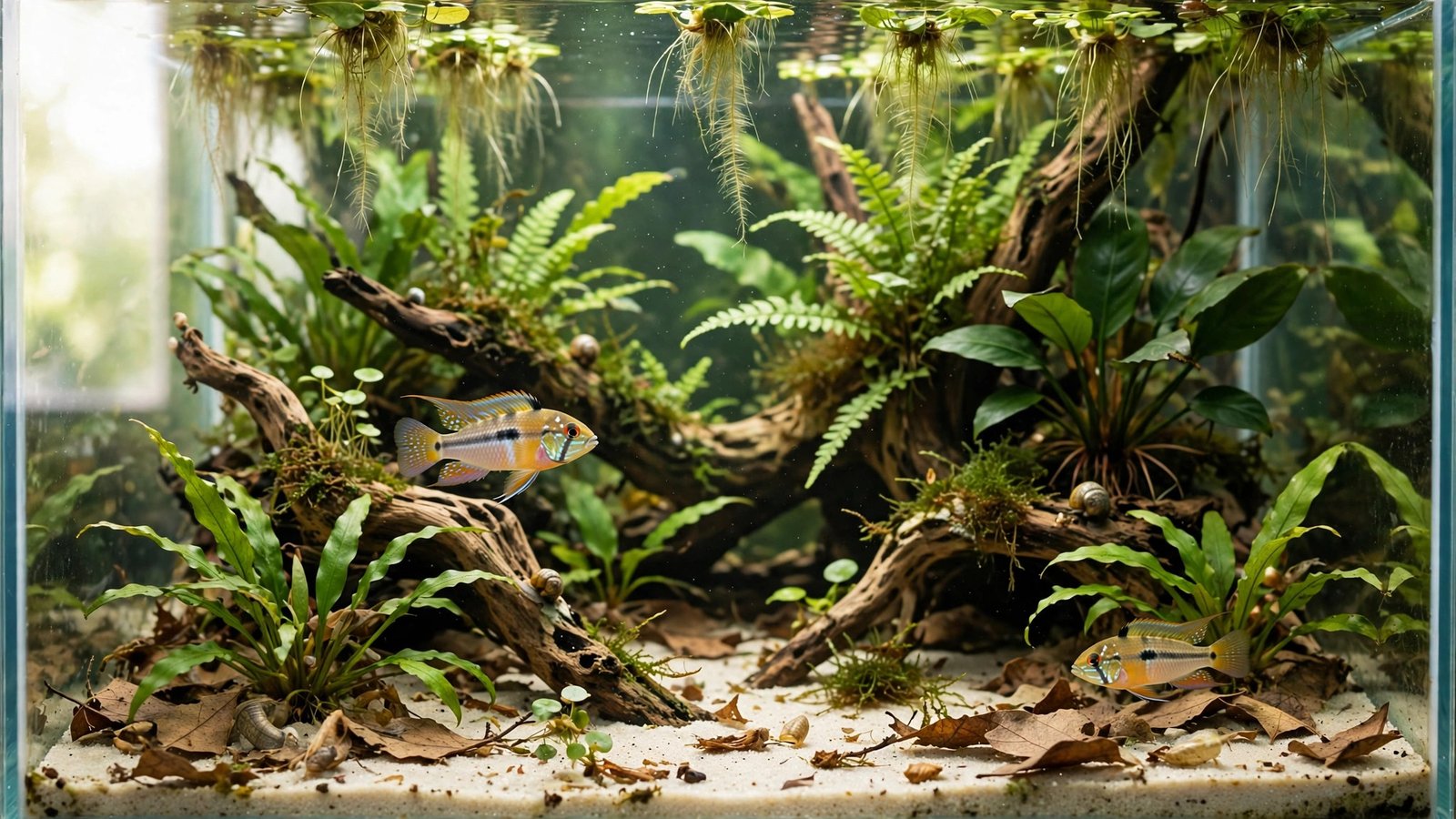
The males flash like embers under the leaves — yellow tails, electric blue cheeks, dorsal fins standing like flags. An apistogramma planted tank is the closest freshwater comes to a rainforest clearing: soft golden water, leaf litter underfoot, dwarf cichlids holding territories among the roots. Unlike larger cichlids that bulldoze aquascapes, Apistogramma stay small (8–10 cm), hover near the bottom, and thrive in the broken sightlines of a planted tank — set up around their instincts, not against them.
Why Apistogramma Belong in Planted Tanks
Dwarf cichlids come from Amazon blackwater streams, where leaves, roots, and overhanging vegetation shape everything they do. An aquarium plants for fish tank guide built around these habitats beats a bare breeding tank: plants diffuse aggression, absorb nitrates, and shelter fry. Males dig display pits; females need dense cover to lay. Provide both and you'll see courtship dances, fin-flaring standoffs, and fry-guarding a bare tank never produces.
The common three: A. cacatuoides (cockatoo — hardiest, best beginner), A. agassizii (flashy, fussier), A. borellii (smaller, cooler-tolerant). Confirm tank-bred or wild-caught with your supplier before locking in water chemistry.
Tank Size and Layout: Territories First, Plants Second
Footprint matters more than volume: a 20-gallon long (76 × 30 cm) for one pair. For a harem, 30–40 gallons lets you space three caves well apart. Hardscape first: position caves at least 20 cm apart, then plant around them so each cave mouth opens onto a different visual zone.
Use fine sand, not sharp gravel — apistos sift constantly and coarse gravel damages barbels. A dirted tank setup under a 4–5 cm sand cap works beautifully: soil feeds the swords and crypts, sand stays gentle, and male digging stays too shallow to breach the cap.
Water Parameters for an Apistogramma Planted Tank
Match the blackwater: pH 6.0–6.8, 75–82 °F (24–28 °C), GH under 6 dGH, KH under 3 dKH. If your tap is hard and alkaline, cut it with RO or distilled water (50/50 often lands near pH 6.5) or run peat through your filter. Consistency beats perfection — a stable pH 7.0 kills fewer fish than one that swings.
Keep filtration gentle — a sponge filter or baffled hang-on-back. Apistos hate strong current. Pair that with low-tech planted tank setup lighting (6–8 hours of moderate light) and the tank nearly runs itself once plants establish.
Choosing Plants That Survive Dwarf Cichlids
Build the list around one rule: nothing delicate, nothing newly rooted. Epiphytes like Anubias and java fern tied to driftwood sit above the substrate, so digging can't disturb them. Amazon swords and Cryptocoryne develop deep roots that shrug off excavation; tall Vallisneria defines territories vertically.
Skip carpeting plants — males dig through them to reach soil, and replanting weekly gets old fast. Floating plants (salvinia, frogbit, red root floaters) are a better investment: they dim light to the soft glow apistos prefer, calm shy fish, and export excess nutrients. Thin weekly so light still reaches the plants below.
Caves, Leaf Litter, and Botanicals
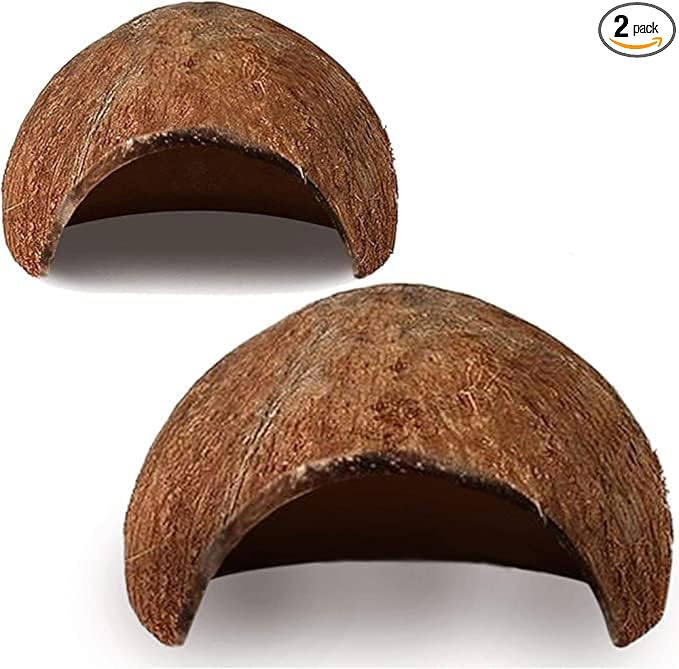
Each female needs a cave she can claim: coconut huts, stacked slate lean-tos, or driftwood hollows, tucked under plant cover or overhangs — an exposed cave gets ignored. Coconut caves are the classic: the rough shell grows biofilm fry graze on, and the low entrance is exactly what apistos look for.
Layer 2–3 cm of dried catappa, oak, or guava leaves around (not inside) the caves. Over 4–6 weeks they leach softening tannins, tint the water tea-gold, and — most importantly — grow the infusoria newly hatched fry eat first. Replace leaves as they skeletonize; a pygmy cory planted tank uses the same trick.
Article's territory section recommends coconut caves for apisto pairs — direct buying fit: coconut shell fish caves.
 ★4.6
SunGrow Coconut Shell Fish Caves, 2 Pcs
Check Price on Amazon ★4.6Tank Mates That Won't Cause Trouble
Pick dither fish that stay up top and ignore bottom territories: chili rasboras, ember tetras, hatchetfish. A chili rasbora planted tank school hovering above an apisto pair is one of the prettiest combinations in the hobby — and calm schooling draws shy apistos into the open. Keep bottom-dwellers minimal: one small cory group is fine; two territorial bottom species clash during breeding.
Shrimp are a gamble — amano adults usually survive, but cherry fry are apisto snacks. Nerite and Malaysian trumpet snails are the safest cleanup crew. Avoid cave competitors and egg-eaters: no other cichlids in a 20-gallon, no cave-raiding loaches, no fin-nippers.
Feeding Dwarf Cichlids
Apistos are carnivores with small mouths and fast metabolisms — feed small amounts twice daily. A quality micro-pellet or crushed cichlid granule as staple, rotated with frozen daphnia, baby brine shrimp, and grindal worms, keeps color and conditioning high. Live or frozen foods trigger spawning condition; dry food alone rarely gets females into breeding mode.
Buy dwarf cichlid foods sized under 1 mm — micro granules and fine crumbles get eaten instead of rotting in the litter. Breeders should also keep baby brine shrimp on hand: it's the first food that reliably grows fry fast.
Breeding in the Planted Tank
Apistos are cave spawners and the female does the heavy lifting: she lays 40–100 eggs on the cave ceiling, guards them alone, and herds the wrigglers after hatching — darkening her breeding dress and charging fish triple her size. The male patrols the wider territory once eggs are laid.
Trigger spawning with a large (30–40%) water change using slightly cooler, softer water — it mimics the rainy-season influx. Keep the tank calm for two weeks. Fry swim free around day 7, hunt litter microfauna, and take baby brine shrimp by day 10. A scarlet badis planted tank guide covers similar micro-predator parenting at a smaller scale.
If a male relentlessly chases one female, add a plant thicket or driftwood divider between territories before it turns into fin damage.
Frequently Asked Questions
What size tank do apistogramma need?
A 20-gallon long is the minimum for a pair — footprint matters more than volume. For a harem (one male, two or three females), use 30–40 gallons so each female holds a separate cave territory. Anything smaller and females can't escape male harassment, causing stress and skipped spawns.
Will apistogramma uproot my aquarium plants?
Males dig shallow display pits that disturb newly planted or shallow-rooted species. Stick to epiphytes like anubias and java fern tied to hardscape, plus deep-rooted swords and crypts. Avoid fresh carpeting plants until the tank has been rooted for at least a month.
What water parameters do apistogramma need?
Aim for soft, acidic water: pH 6.0–6.8, 75–82 °F (24–28 °C), GH under 6 dGH, KH under 3 dKH. Tank-bred A. cacatuoides tolerate pH to about 7.2, but wild-caught fish need it softer. Stability matters more than exact numbers — avoid pH swings from chasing an ideal.
Can apistogramma live with tetras and rasboras?
Yes — small, peaceful schooling fish like chili rasboras, ember tetras, and hatchetfish make excellent mates. They stay out of bottom territories and act as dither fish that draw shy apistos out. Avoid fin-nippers, rival bottom-territorial species in small tanks, and anything big enough to eat eggs or fry.
How do you breed apistogramma in a planted tank?
Provide one cave per female, keep water soft and acidic, and trigger spawning with a large water change using slightly cooler water. The female lays eggs on the cave ceiling and guards the fry; feed free-swimmers baby brine shrimp from about day 10. Leave the first spawn with the parents — survival is good in a dense, leaf-littered tank.
Do apistogramma need leaf litter?
Not strictly, but catappa, oak, or guava litter transforms the setup: it leaches softening tannins, grows the microfauna fry feed on, and replicates their blackwater habitat. A 2–3 cm layer around the caves, replaced as leaves break down over 4–6 weeks, is all it takes.
Bringing It All Together
An apistogramma planted tank succeeds when you design around the fish: caves first, broken sightlines second, tough plants third. Start with a 20-gallon long, soft acidic water, and a pair of tank-bred A. cacatuoides — letting the scape root for a month before the fish arrive. Seriously Fish's Apistogramma cacatuoides profile documents wild water parameters, and the University of Florida IFAS extension guide to dwarf cichlids covers breeding fundamentals.