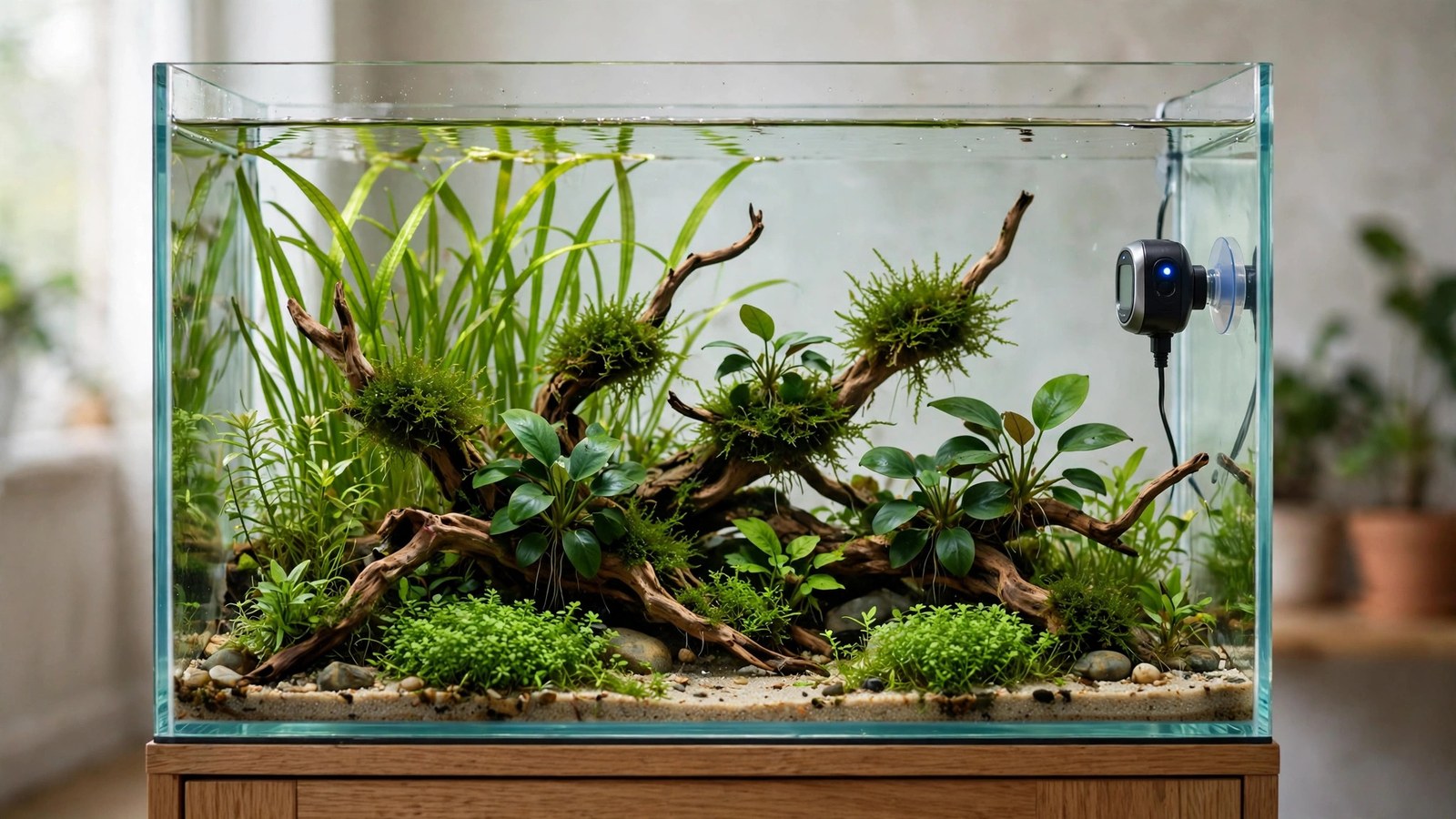
Every few months, a planted-tank photo goes viral with a small glowing gadget tucked in the corner — a Twinstar Nano, a Chihiros Doctor — and the comments fill with the same question: do algae inhibitor devices work, or just expensive aquarium jewelry? They do something, but not what most buyers think. They suppress free-floating algae spores before they take hold. They can't fix the light and nutrient imbalance behind your outbreak — and no gadget ever will.
What Algae Inhibitor Devices Actually Are
Two brands dominate this category, both better known for aquarium lights — see our Twinstar LED lights guide and Chihiros aquarium lights guide. Twinstar (Korean) sells the Nano and Nano+ algae inhibitors plus smaller M3/M5 models, covering nano tanks to about 66 gallons; its sibling Yotta line targets fish pathogens instead. Chihiros sells the Doctor line — the original Doctor, the Bluetooth-controlled Doctor Mate for tanks under 30 gallons, and the newer Doctor 5 with a temperature probe — with preset modes for plants, fish, and shrimp. Background on both brands is in our Twinstar vs Chihiros light comparison.
The mechanism is the same in both: a weak current between fine mesh electrodes splits water into hydrogen and oxygen, with a small fraction forming short-lived oxidizers — hydroxyl radicals, sometimes hydrogen peroxide — released as micro-bubbles that damage thin-walled single-celled organisms. In theory, algae spores take the hit while plants, fish, and filter bacteria are spared. The Doctor runs intermittently — one retailer FAQ notes visible bubbles roughly every 30 seconds — with sterilizing intensity adapting to tank size through its ALC (adaptive logic control) program. Independent analysis of the Chihiros Doctor's electrolysis explains the chemistry and notes fish gill cells are even more delicate than algae cells.
Do Algae Inhibitor Devices Work? The Honest Evidence
One clarification first: these are not UV sterilizers — a UV unit kills organisms passing through its chamber, while an inhibitor tries to stop algae before it attaches (see our UV Sterilizer for Planted Tanks: What It Actually Fixes (and What It Can't)).
What supports them: Twinstar's official store describes patented electrolysis producing free radicals that destroy bacteria and fungi without releasing harmful substances; retailer documentation claims effectiveness against hair/thread, brown, blue-green, fuzz, green dust, and green spot algae, backed by a Korea National Institute of Fisheries Science sterilization certification. Hobbyists on major forums report outbreaks only during weeks the device was accidentally switched off.
What undermines them: the same retailer page lists what it's ineffective against: green water and black brush/beard algae — the two problems driving the most desperate purchases. Skeptical analysis calls the Doctor essentially a sneaky way to dose oxidizers into the tank. Some aquarists call "sterilizer" a misnomer and credit any benefit to slightly raised dissolved oxygen. The cost is real: main units run roughly $90–$140, with replacement reactor disks around $60–$69 every six months.
The verdict: they partially work, at exactly one job — suppressing germination of free-floating green-algae spores. That's real, with a plausible mechanism and certification behind it, but narrow. Nothing about the device changes why your tank grew algae: too much light, too little CO2 for that light, or excess dissolved organics. Prevention, not treatment — the manufacturer says it "will not cure, remove and prevent algae growth alone" and must be paired with good maintenance.
What They Can and Can't Do
- Can do: reduce spore germination of common green algae (fuzz, dust, thread, spot, brown); add a small oxidative load that may suppress some water-column pathogens; give plants an edge during a new setup's fragile first weeks.
- Can't do: remove existing algae mats or clear a covered tank; fix green water or kill black beard algae (retailer-confirmed); correct a light/CO2/nutrient imbalance; replace water changes, trimming, or filter maintenance.
Fix the root causes first: the connection between light spectrum and algae, the truth about CO2 and algae, and how much ambient room light is feeding your algae.
How They Stack Up Against Other Algae Tools
| Tool | What it does | Rough cost | Ongoing cost | Best for |
|---|---|---|---|---|
| Inhibitor device (Twinstar/Chihiros) | Oxidizing micro-bubbles suppress algae spore germination | $19–$140 by model | Reactor/mesh replacement (~every 6 months) | Prevention in balanced or new tanks |
| UV sterilizer | Kills water-column organisms passing through the unit | $50–$150+ | Bulb replacement | Green water, pathogen control |
| Light dimmer | Cuts light intensity at the source | $15–$40 | None | Too-much-light algae (the #1 cause) |
| Balanced CO2 | Lets plants outcompete algae for nutrients | $60–$200+ setup | CO2 refills | High-light tanks |
The pattern: the alternatives address causes of algae; the inhibitor addresses a symptom stage (spores). That's why a light dimmer is usually the better first purchase — check the signs your light is too strong and dial in a sensible photoperiod duration first.
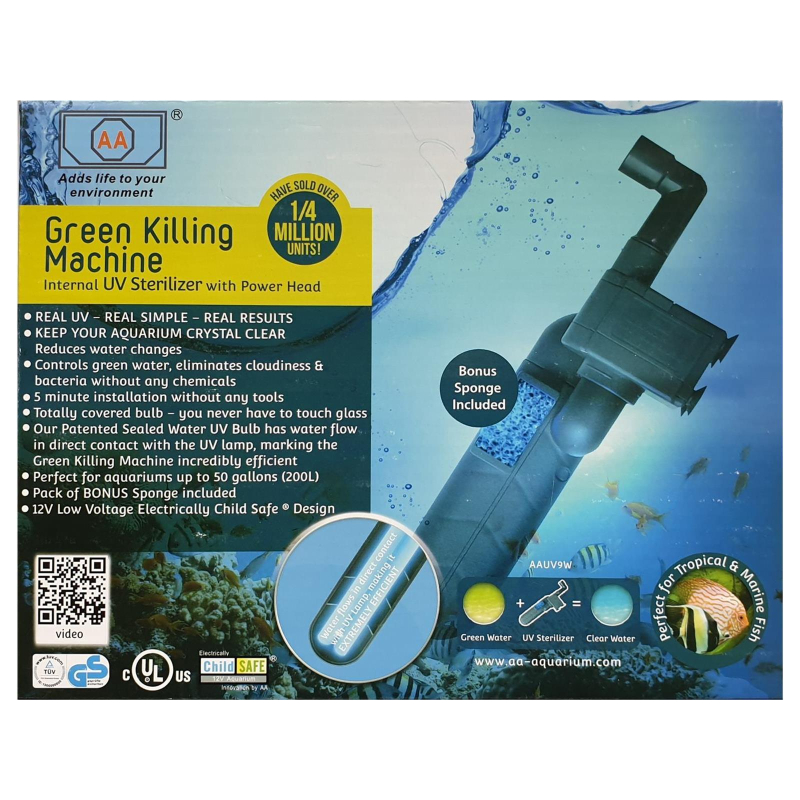 ★4.4
AA Aquarium Green Killing Machine 9W UV Sterilizer
Check Price on Amazon ★4.4Who Should Buy One — and Who Shouldn't
Buy one if: you're setting up a new aquascape and want every edge during the vulnerable first 2–3 months; you run a deep or dense tank where manual removal is a chore; or you're a shrimp breeder interested in the Yotta/Doctor pathogen modes. In these cases it's a reasonable "and also" purchase on top of a sound setup.
Skip it if: you have an active outbreak — diagnose light, CO2, and nutrients instead; your problem is green water (a UV sterilizer is the right tool) or black beard algae (inhibitors won't touch it); or your budget is tight, in which case a dimmer and timer deliver more algae reduction per dollar. Note the hard limits: the Chihiros Doctor is freshwater-only and not recommended above 500 TDS.
Frequently Asked Questions
Do algae inhibitor devices kill existing algae?
No. They target free-floating spores at the germination stage and cannot remove attached, growing algae. Retailers explicitly list green water and black beard algae as ineffective targets. Remove existing algae manually and fix the underlying imbalance first — the device only prevents new spores from settling.
Are Twinstar and Chihiros Doctor devices safe for fish and shrimp?
Manufacturers certify them safe for fish, shrimp, plants, and filter bacteria. Independent analysis notes the oxidizing chemistry is the same family as hydrogen peroxide dosing, and fish gills are delicate — so follow sizing guidelines, use plant or shrimp modes as intended, and keep them in freshwater under 500 TDS.
How often do you need to replace the reactor disk or mesh?
The mesh electrode degrades with use and is a consumable. Chihiros recommends replacing the Doctor's mesh about every 6 months; Twinstar sells replacement reactor disks (M5, M7, M9 for different models) priced around $60–$69. Factor this into the real cost — the device is not a one-time purchase.
What's the difference between the Twinstar Nano and the Yotta?
Same electrolysis technology, different targets. The Nano (and smaller M3/M5) line is aimed at algae-spore suppression for planted tanks; the Yotta line is aimed at fish-pathogen suppression and disease prevention. Match the model to your goal — and remember both are preventative devices, not cures.
Can an algae inhibitor replace a UV sterilizer?
No — they do different jobs. A UV sterilizer kills organisms passing through its chamber, making it the right tool for green water. An inhibitor tries to stop algae spores from germinating in the first place. Many hobbyists run one or the other depending on which problem they have.
The Honest Verdict
Neither scams nor miracles. The Twinstar Nano and Chihiros Doctor do a real, narrow thing — oxidizing micro-bubbles that damage algae spores before they attach — backed by certification and years of mixed-but-real hobbyist experience. What they don't do is fix aquariums. A balanced tank with a sensible photoperiod and stable CO2 barely needs one; an unbalanced tank won't be saved by one. Buy it as insurance for a tank you're already running well — never as a rescue for a tank you aren't.
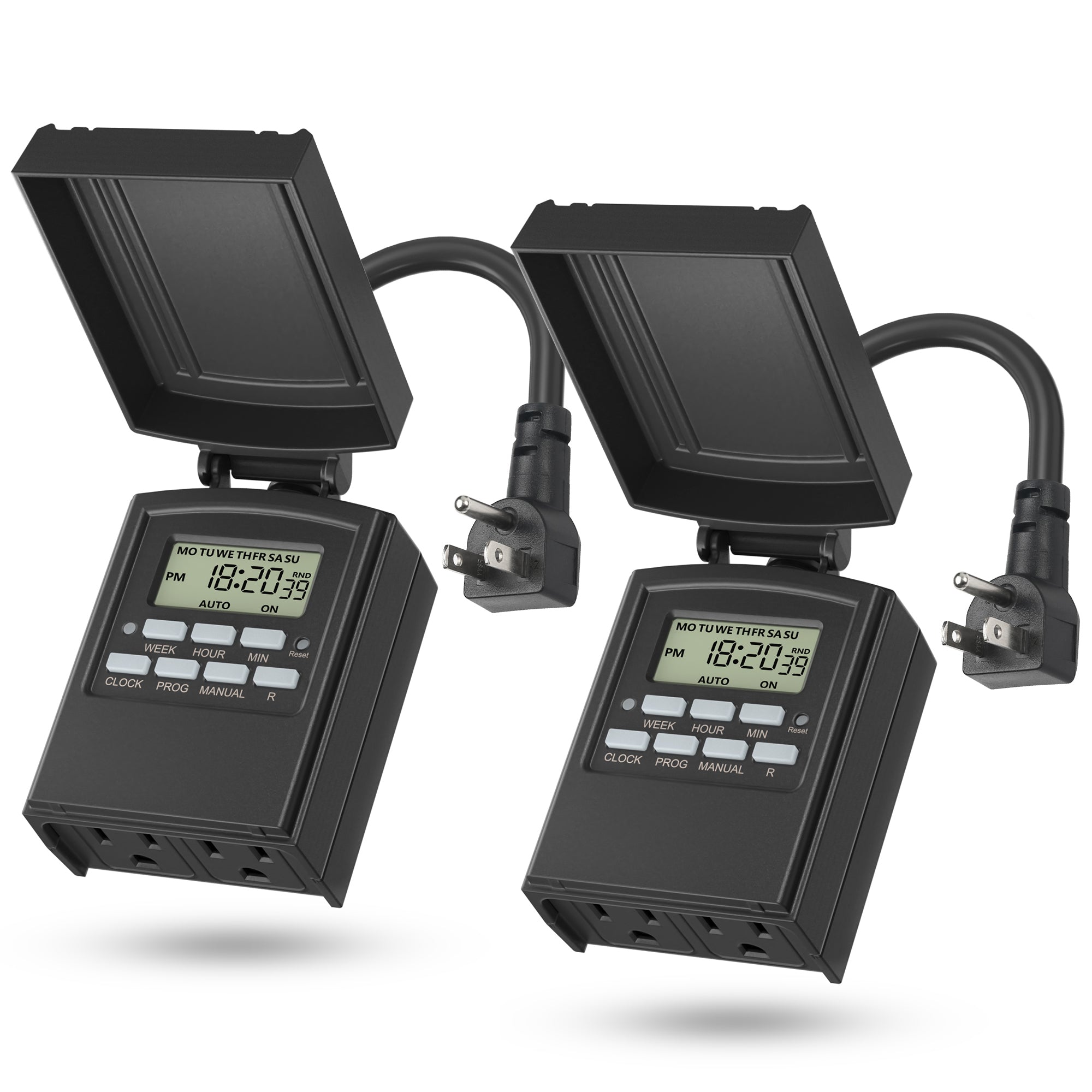 ★4.4
BN-LINK Digital Outlet Timer
Check Price on Amazon ★4.4