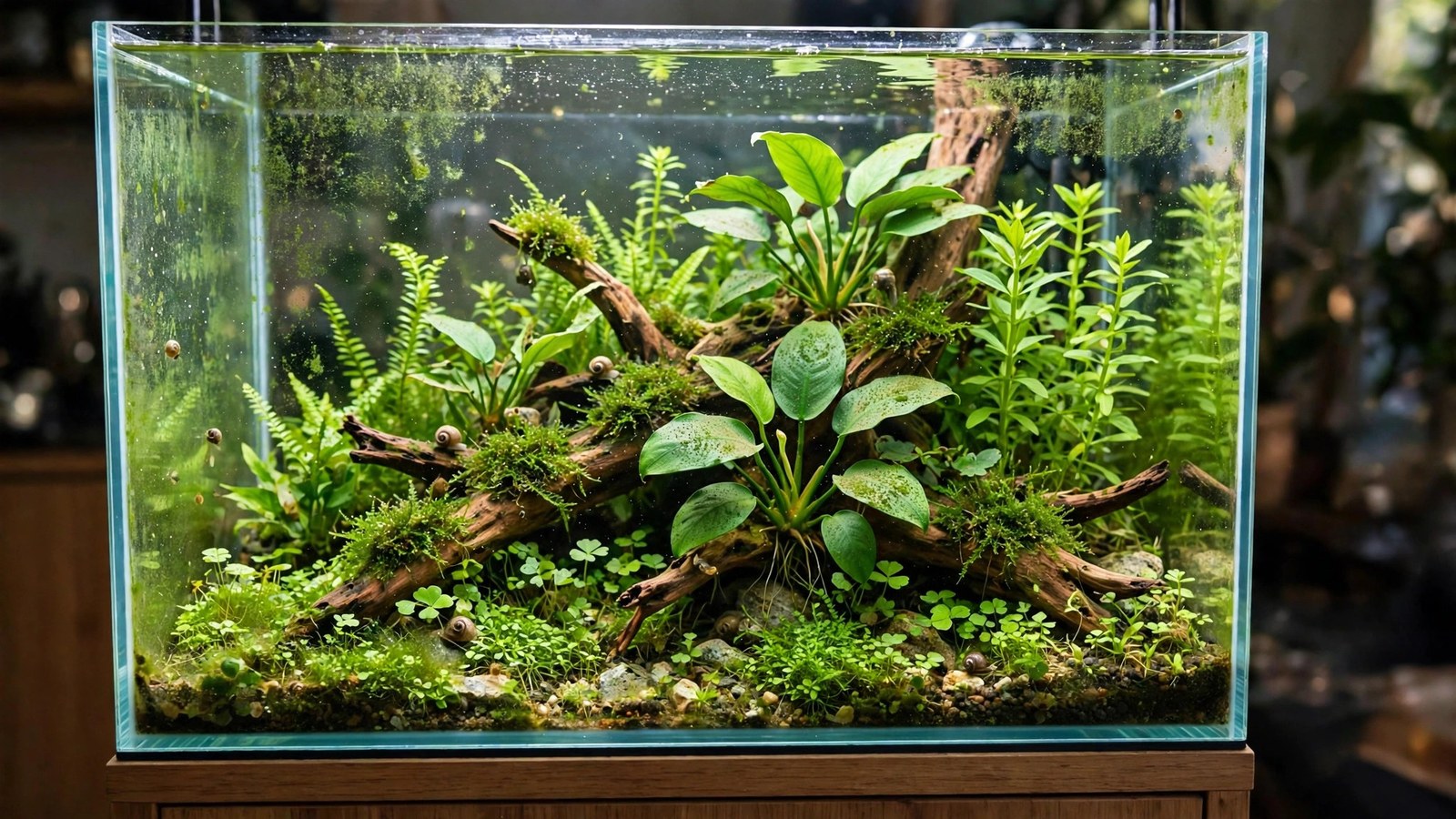
A week after installing their first CO2 system, many planted tank owners notice the same disheartening sight: wisps of hair algae on the driftwood, a green dusting on the glass, maybe staghorn creeping over the stem plants. The new equipment takes the blame instantly. But does CO2 cause algae in aquariums? The honest answer is no — and misunderstanding that single fact sends countless beginners down the wrong path, usually ending with them turning CO2 down or off, which is precisely what makes the algae worse.
This is one of the hobby's most persistent myths, and it survives because the timing looks so convincing. Algae appears after CO2 starts, so CO2 must be the cause. In reality, what triggers algae is almost never the carbon dioxide itself — it is CO2 instability, the swings and dips in concentration that happen when a new system is dialed in. Balanced, stable CO2 is one of the strongest algae-prevention tools you have, because it lets your plants grow vigorously enough to outcompete algae for light and nutrients. Below: why the myth exists, what actually goes wrong, and how to run CO2 so it fights algae instead of seeming to invite it.
The Short Answer: CO2 Does Not Cause Algae in Aquariums
Algae are simple organisms that need only three things to grow: light, water, and some nutrients. Dissolved CO2 is optional for most algae — many species can use bicarbonate from hard water directly, and some simply tolerate very low carbon levels that would stall a demanding stem plant. Adding CO2 does not introduce anything algae lacked before. It is already in every aquarium, produced by fish respiration, bacteria, and surface gas exchange.
What CO2 does change is the competitive balance of the tank. In a planted aquarium, plants and algae compete constantly for light and nutrients. When carbon is the limiting factor, plants grow slowly and inefficiently, and algae — which need far less CO2 to thrive — claim the unused light and nutrients. Raising CO2 to a healthy, stable level (around 25–30 ppm) removes plants' carbon bottleneck, letting them grow fast and shade out competitors. This is why experienced aquascapers treat CO2 injection as an anti-algae strategy, not an algae risk.
Why Everyone Blames CO2: The Coincidence Trap
The myth persists because of a classic correlation trap. Beginners typically add CO2 when they upgrade their whole setup: a new light, new substrate, fertilizer, new plants — and then CO2. When algae blooms a few weeks later, the CO2 rig is the newest, most unfamiliar variable, so it takes the blame. But several other things changed at the same time, and they are the real suspects:
- Light increased. A CO2 upgrade usually coincides with a brighter fixture or longer photoperiod. More light is the single biggest algae trigger in the hobby.
- Nutrients entered the picture. New aquasoil leaches ammonia for weeks; new fertilizer dosing raises nutrient levels. Both feed algae before plants establish.
- Plants were still adjusting. Newly planted stems spend weeks melting and re-rooting, during which they consume almost nothing while the tank is flooded with light and nutrients.
- CO2 was unstable. This is the one CO2-related factor that genuinely matters — and it is fixable.
The cause is the transition, not the carbon: a tank with stable lighting, established plants, and consistent fertilization rarely breaks out in algae just because CO2 was added carefully.
CO2 Instability: The Real CO2-Related Algae Trigger
If there is one CO2 behavior that genuinely invites algae, it is fluctuation. Plants adapt their photosynthetic machinery to the CO2 concentration they expect. When levels swing — high in the morning, crashed by afternoon, off overnight, different again tomorrow — plants must constantly re-adapt. During each adjustment period they photosynthesize poorly while algae, which adapt to changing conditions in minutes rather than days, keep growing at full speed. Every fluctuation is a window where algae outcompete your plants.
What counts as instability
- CO2 that runs out mid-photoperiod. A nearly empty cylinder, a needle valve that drifts, or a timer set wrong can let concentration sag for hours while lights stay blazing.
- On/off timing that fights the photoperiod. CO2 should start about an hour before lights on and stop about an hour before lights off. Starting both simultaneously wastes the first hour of light and can stall plants each morning.
- Solenoid malfunctions or manual shutoffs. Frequently turning CO2 off "because the algae is bad" creates the exact yo-yoing that worsens it.
- Poor diffusion that varies with flow. If CO2 only reaches plants when the filter flow happens to push mist that way, concentration is inconsistent across the tank.
The fix is boring but effective: set the system once, verify it, and leave it alone. Use a timer, keep a consistent CO2 schedule that shuts off at night, and make sure your bubble counter shows the same steady rate day after day. Stability matters more than hitting a perfect number — as The 2Hr Aquarist's black brush algae guide notes, fluctuating CO2 in injected tanks is one of the biggest triggers for that stubborn algae.
Why Stable CO2 Actually Suppresses Algae
Understanding the mechanism makes the strategy obvious. Aquatic plants evolved in water, where CO2 diffuses about 10,000 times slower than in air — they are chronically carbon-starved compared to land plants. When you supply 25–30 ppm of CO2, plant growth rate can double or triple compared to a low-tech tank. That faster growth means:
- More nutrient uptake. Fast-growing stems strip nitrates, phosphates, and micronutrients from the water column, leaving less for algae.
- More shading. Dense, healthy canopies block light from reaching surfaces where algae would colonize.
- Healthier leaves. Algae spores settle far more readily on damaged, melting, or stagnant leaves than on vigorous new growth. A plant firing on all cylinders is a hostile landing surface.
- Allelopathic edge. Some plants release mild growth-inhibiting compounds when healthy; a starving plant releases none.
This is the logic behind high-tech aquascaping: run enough CO2 and light to push plants into overdrive, and algae never get a foothold. Notice it also explains why pearling plants — bubbling oxygen as they photosynthesize hard — are a sign of an algae-resistant tank. The plants are winning.
Light Is the Real Algae Lever
If CO2 is the accused, light is the actual culprit in most algae stories. Algae can survive and reproduce at light levels far below what plants need, and they respond to excess light almost instantly. Every major algae outbreak has too much light, too long a photoperiod, or both — while CO2 problems are secondary. Compare the two factors:
| Factor | Effect of increasing it | Who benefits most |
|---|---|---|
| Light intensity / duration | More total energy available | Algae — they need less light to start, so excess favors them first |
| CO2 (stable, ~30 ppm) | Plants photosynthesize faster | Plants — algae were never carbon-limited, so added CO2 barely helps them |
| CO2 (fluctuating) | Plants stall during re-adaptation | Algae — they adapt in minutes while plants take days |
| Fertilizer | More nutrients in water column | Whichever grows faster — healthy plants in CO2 tanks absorb it first |
The practical takeaway: when algae appears after a CO2 install, reach for the light timer before the needle valve. Dropping the photoperiod to 6–7 hours or dimming the fixture 20% does more against algae than any CO2 adjustment; our guide to an aquarium light schedule for plants shows how to dial it in.
Liquid Carbon Is Not CO2 — It Is an Algaecide
A persistent confusion muddies this whole debate: products sold as "liquid CO2" or "liquid carbon." These are glutaraldehyde-based solutions, and glutaraldehyde is a disinfectant and known algaecide — that is literally why it clears algae. It does provide a marginal carbon source, but nowhere near what gas injection delivers, and its algae-killing effect comes from its chemistry, not from adding carbon.
This matters because many hobbyists observe that "liquid CO2 kills algae, but my CO2 system causes algae," and conclude the two work oppositely. They are different substances doing different things. Gas CO2 feeds plants; glutaraldehyde poisons algae (and, in overdose, plants and livestock too — dose exactly as labeled, never more). If you like, spot-dosing liquid carbon on algae patches is a legitimate treatment, but it belongs in the algae-treatment toolbox, not the CO2 conversation. Do not expect a bottle of liquid carbon to replace real injection, and do not judge gas CO2 by what the bottle does.
A reliable pick here is Seachem Flourish Excel.
How to Run CO2 So It Fights Algae, Not Feeds It
Here is the disciplined setup that keeps CO2 firmly on the anti-algae side.
1. Dial it in before the algae starts
Set your injection rate using a drop checker and aim for lime-green by the time lights switch on — that indicates roughly 30 ppm. Start conservative (a bubble or two per second on a typical 20-gallon) and raise gradually over days while watching livestock. Our CO2 bubble rate guide explains how to translate bubble counts into actual tank levels for your size.
2. Put it on a timer and never touch it
CO2 on one hour before lights, off one hour before lights out — every single day, no exceptions. A solenoid on a timer removes human forgetfulness from the equation. Resist the urge to crank it up or shut it down in response to algae; both moves create the instability that helps algae. Check the bubble counter reading weekly to confirm the rate has not drifted.
3. Diffuse it well
CO2 that gurgles straight to the surface in big bubbles is wasted — and the effective concentration ends up lower and more variable than the bubble rate suggests. An in-tank atomizer, inline diffuser on a canister filter, or reactor each have trade-offs; the comparison in CO2 diffusion methods compared will help you pick. Whatever you use, place it where filter flow carries the mist across the whole tank so every plant gets the same concentration.
4. Match light to your CO2, not the other way around
Start a new CO2 setup at moderate light — 6 to 7 hours, fixture dimmed or raised — and only increase intensity once plants are growing vigorously with no algae. Light is the accelerator pedal; CO2 is just the fuel that lets plants keep up. Pressing the accelerator before the engine is tuned is how tanks crash.
5. Keep the fundamentals boring
Stable CO2 cannot compensate for chaos elsewhere. Weekly 30–50% water changes, consistent fertilization, prompt removal of melting leaves, and not overfeeding all reduce the organic load algae feed on. CO2 is a multiplier of good maintenance, not a substitute for it.
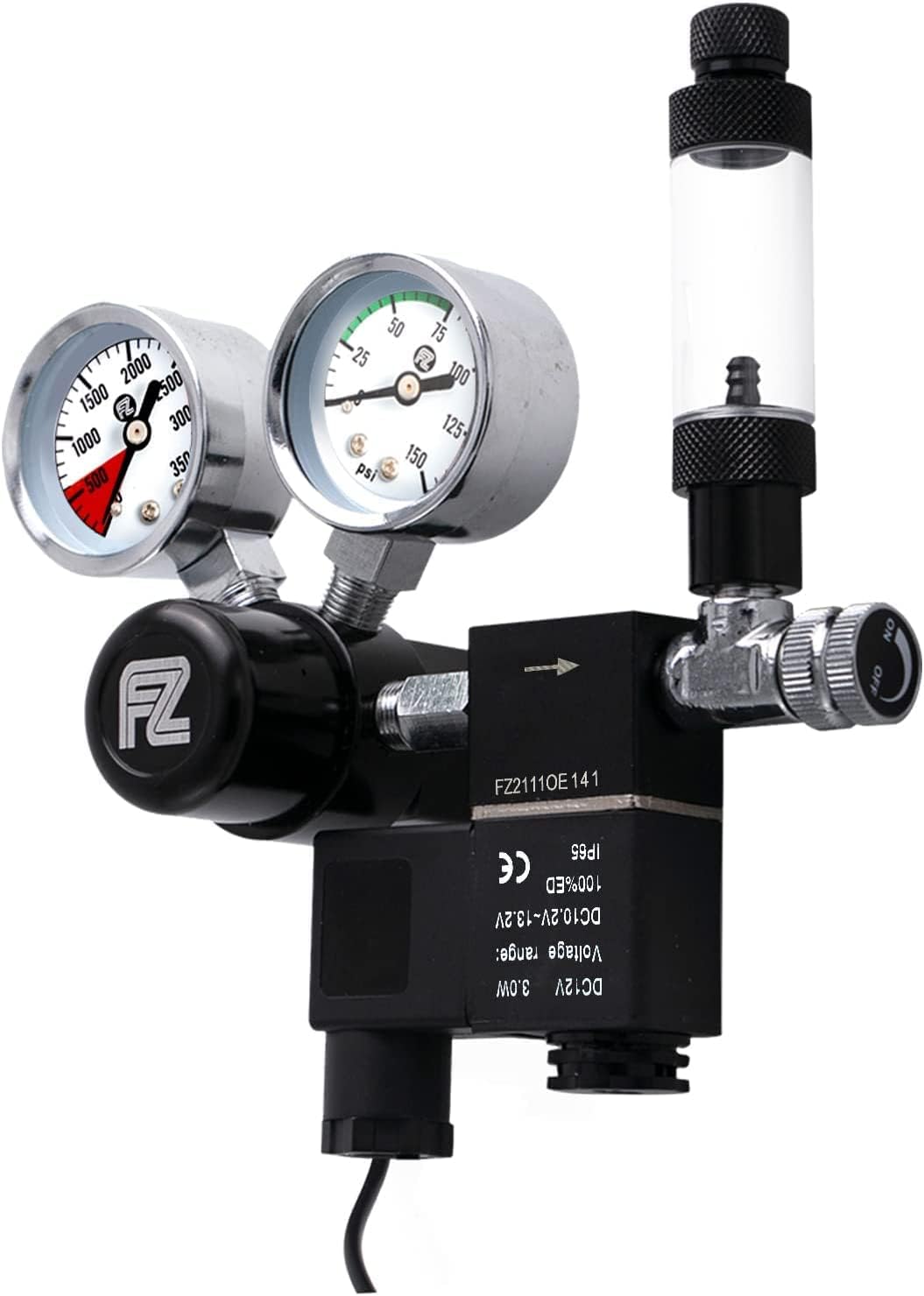
A reliable pick here is Fzone Pro Series regulator.
 ★4.2
Fzone Pro Series Dual Stage CO2 Regulator
Check Price on Amazon ★4.2Troubleshooting: Algae Appeared After Starting CO2
If you are reading this mid-outbreak, do not tear down the system. Work through this checklist in order — The 2Hr Aquarist's hair algae guide makes the same core point: hold CO2 steady and stop tweaking while stressed plants adapt, because constant changes extend the outbreak.
- Check stability first. Is the bubble rate identical every day? Is the timer correct? Did the cylinder run low? Fix any inconsistency before anything else.
- Cut light. Reduce the photoperiod to 6 hours and dim the fixture. Keep this for two weeks; it is the highest-leverage move available.
- Verify diffusion. Watch the mist: it should be a fine fog distributed by flow, not large bubbles racing to the surface.
- Clean up organics. Remove algae manually, trim melting leaves, siphon detritus, and do a large water change. Less fuel, less algae.
- Wait. Plants need one to two weeks to re-adapt after any change. Judging results on day three leads to more changes, more instability, more algae.
- Do not turn CO2 off. This is the critical one. Shutting off injection "until the algae clears" hands algae a fluctuation event on top of everything else. Keep it stable; fix light and maintenance instead.
On a budget, all of this is achievable without premium gear — see cheap CO2 systems for planted tanks for setups that stay stable without breaking the bank. Stability is a design property, not a price tag.
Frequently Asked Questions
Does too much CO2 cause algae?
No — excess CO2 does not feed algae the way excess light or nutrients do. The danger of too much CO2 is to livestock, not algae: levels well above 30–35 ppm can stress or suffocate fish and shrimp, which is why a drop checker turning yellow means back off immediately. Algae simply do not care much about CO2 concentration either way. If algae appeared after you increased CO2, look at stability and light first, because the carbon level itself is almost never the trigger.
Why did algae appear right after I installed CO2?
Almost always, the install coincided with other changes: brighter light, longer photoperiod, new nutrient-rich substrate, fresh fertilizer dosing, and plants still adjusting. Any one of those can trigger algae on its own. The CO2-specific contribution is usually instability during the dial-in period — the rate drifting, timers mis-set, or diffusion not yet optimized. Work through light reduction and consistency checks before blaming the gas.
Should I turn off CO2 to get rid of algae?
No — this is the single most counterproductive response. Turning CO2 off creates a sudden concentration crash, stalls your plants' photosynthesis, and hands algae a wide-open window while plants re-adapt to low carbon. It converts a stable system into a fluctuating one, which is the one CO2 behavior that genuinely favors algae. Keep injection steady and attack the algae with reduced light, manual removal, and water changes instead.
Can CO2 fluctuations alone cause an algae bloom?
Yes, and this is the real grain of truth inside the myth. When CO2 swings, plants spend days re-adapting their photosynthetic machinery while algae adapt within minutes, so each swing is a period where algae outcompete plants for light and nutrients. Repeated swings — from drifting needle valves, bad timer settings, or frequently toggling the system — can absolutely trigger blooms. The solution is a timer, a solenoid, and a hands-off policy once dialed in.
Is liquid CO2 better than gas CO2 for preventing algae?
They do different jobs. Gas injection raises dissolved CO2 to ~30 ppm and supercharges plant growth, which starves algae of light and nutrients — genuine prevention. Liquid carbon (glutaraldehyde) is an algaecide that kills algae on contact but provides negligible carbon for plants. It treats existing algae; it does not build the fast-growing plant mass that prevents the next bloom. For long-term algae control, stable gas CO2 plus controlled light wins every time.
The Bottom Line
CO2 does not cause algae — unstable CO2, excessive light, and new-tank chaos do. Once you separate the carbon from the coincidence, the strategy becomes simple: inject steadily, verify with a drop checker, put everything on timers, keep light moderate until plants are thriving, and leave the system alone. Stable CO2 turns your plants into algae's toughest competitors instead of its fellow victims. The next time someone tells you their CO2 caused their algae, you will know the real story — and more importantly, the fix.