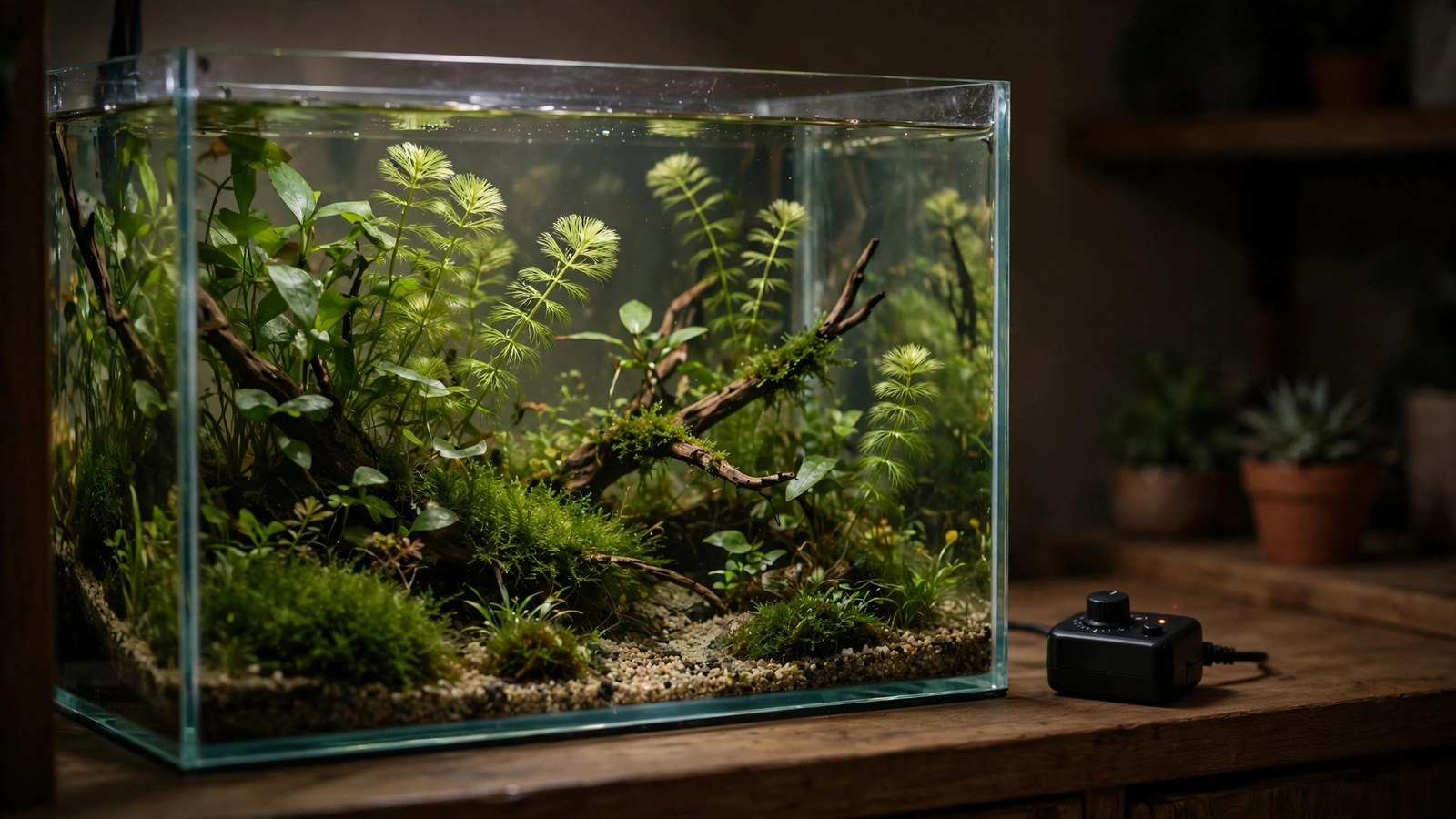
If algae keeps winning and your plants look stressed, your light is probably the bully. Most planted-tank LEDs ship at full blast, and the fix is rarely a new fixture — an aquarium light dimmer turns intensity down to match what your plants can actually use. Below: which dimmers fit which LEDs, the exact settings to start with, and when dimming alone ends an algae outbreak.
Your Light Is Probably Stronger Than Your Tank Needs
Modern LEDs are efficient to a fault: a mid-range fixture at full power can push 80–120 PAR at the substrate in a shallow tank — high-light territory demanding pressurized CO2 and heavy fertilization. Run that over a low-tech tank and algae feasts while plants choke on energy they can't use. Our roundup of the best aquarium lighting for planted tanks shows what "enough" looks like per tank size — if yours is fine but too strong, dimming is the cheapest upgrade in the hobby.
What Does an Aquarium Light Dimmer Actually Do?
A dimmer doesn't starve LEDs of voltage — that would shift their color. Instead it uses PWM (pulse-width modulation): it flicks the diodes on and off thousands of times per second, and the on-to-off ratio reads as brightness. At 50% the light is simply on half the time, so colors stay true — and spectrum drives photosynthesis, so plants keep their color recipe while total energy drops. Inline dimmers put a knob on that circuit; app-controlled lights do it in software, adding sunrise ramps. The GSA's LED lighting and controls guidance explains the same principle for building LEDs.
Five Signs You Actually Need a Dimmer
- Thread, hair, or green-spot algae keeps returning even with weekly water changes and clean glass.
- Anubias and Bucephalandra wearing a green fuzz coat — a classic too-much-light signature.
- Fish hide during the photoperiod, or their colors look washed out at "noon."
- You run CO2 and dose well, yet algae outpaces plants — light is the leftover variable.
- Your tank is shallow (under 35 cm) and the light has no dimming — full blast is simply high light. (No budget for one? Raising the light cuts intensity for free.)
Dimmer Types Compared
Not every "dimmer" dims: smart plugs only switch power on and off — they belong on timers. Real dimming comes in four flavors:
| Type | How it works | Best for | Limitation |
|---|---|---|---|
| Inline PWM dimmer (knob) | Dials the DC power between supply and light | Basic DC LEDs with no built-in dimming | Won't work on app-controlled lights |
| Inline dimmer + timer | Dimming with a programmable schedule | Budget single-tank setups | Fiddly menus, no sunrise ramp |
| Built-in dial or remote | Dimming ships inside the fixture | Dial-equipped lights like hygger models | Fixed steps, limited schedules |
| App-controlled fixture | Phone app sets intensity curves per channel | Fluval Plant 3.0, Chihiros, ONF Flat One | Higher price, one ecosystem |
How to Dim Your Aquarium LED: A Four-Step Routine
- Photograph the tank and note where algae sits — without a baseline, every change is guesswork.
- Set 60% for low-tech, 75% for CO2-injected tanks, and hold the photoperiod at 6 hours. Our photoperiod duration guide explains why short days beat dim all-day light for algae control.
- Keep CO2 and dosing exactly as they were. Our CO2 and light timing guide shows how to sync injection with the shorter day.
- Wait two full weeks, judging new growth only — old leaves won't heal. Then adjust in 5–10% steps, one variable at a time.
Can Dimming Your Light Stop Algae?
Often, yes — when light is the excess. Algae is an opportunist: give plants exactly the light they can use, with CO2 and nutrients to match, and algae starves at the margins. Dimming cuts total energy without touching your schedule, so outbreaks from a new, stronger fixture usually fade within two to three weeks. It can't fix what light didn't cause, though: sky-high phosphates, fluctuating CO2, or a tank still cycling need direct treatment. Pair dimming with the siesta lighting method — a midday dark break — and you attack algae from two angles.
Inline Dimmer vs App-Controlled Light: Which Should You Buy?
An inline dimmer is a small module with a knob or buttons on the low-voltage cable between power supply and LED. It's the cheapest fix, works across brands on any plain DC-powered unit — NICREW-style classics, Finnex Stingray panels, most no-name fixtures — and installs in seconds. Trade-offs: manual control only, no sunrise/sunset ramps, one more box on the cable.
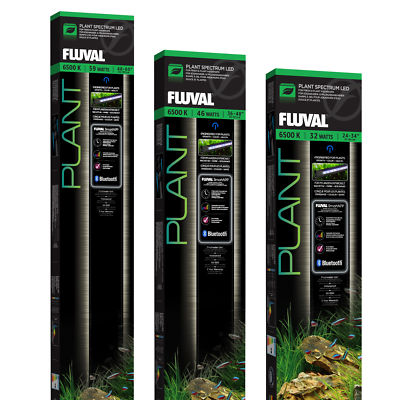
An app-controlled light — Fluval's Plant 3.0, Chihiros' WRGB II with its controller, the ONF Flat One — dims in software. You get smooth dawn-to-dusk ramps, per-channel RGB control (our RGB aquarium lighting guide covers that), and self-running schedules. You pay fixture prices, and you're locked into that brand's app. So the rule of thumb: if your light already dims through an app, learn the app instead of buying hardware — if it's a basic DC LED with no dimming at all, an inline PWM dimmer is the smartest money in the hobby.
 ★4.3
Fluval Plant 3.0 LED Planted Aquarium Lighting
Check Price on Amazon ★4.3Which Dimmer Works With Popular LED Brands?
| Your light | Dimming path |
|---|---|
| Fluval Plant 3.0 | Built-in — FluvalSmart app, no hardware needed |
| Chihiros WRGB II / C series | Commander controller or My Chihiros app |
| Twinstar S / E series | Inline dimmer box on non-app models |
| NICREW ClassicLED / SkyLED | Inline PWM dimmer on the DC cable |
| Finnex Stingray / Planted+ | Inline dimmer module or 24/7 controller |
| hygger | Built-in dial on most models |
| ONF Flat One | Bluetooth app control |
| Generic DC LED panel | Inline PWM dimmer if voltage matches (usually 12V DC) |
Match the dimmer to the light's voltage, and never stack an inline dimmer on a light that already dims through an app — the two controllers fight.
Two Rules That Save You From Yourself
Frequently Asked Questions
Do I need a dimmer for my aquarium light?
If your LED runs at one fixed brightness and you battle recurring algae, yes. Lights with built-in dimming or app control already cover it. Shallow tanks under 35 cm with a strong fixed-output LED are the classic case: a dimmer turns high light into a manageable medium-light fixture.
How do I dim my aquarium LED?
For basic DC-powered LEDs, plug an inline PWM dimmer into the low-voltage cable between power supply and light, then set it to 50–70%; for app-controlled lights, set an intensity curve in the app instead. Keep the photoperiod at 6–8 hours, change nothing else; judge new growth after two weeks.
Can dimming my light stop algae?
It can when excess light is the cause. Dimming to 50–70% typically clears light-driven algae within two to three weeks, because plants keep growing while algae loses its surplus energy. It won't fix algae driven by unstable CO2, excess nutrients, or a tank still cycling — treat those directly instead.
Inline dimmer vs app-controlled light — which is better?
Inline dimmers are cheaper, brand-agnostic, and install in seconds, but they're manual with no sunrise ramps. App-controlled lights cost more but automate ramps, schedules, and per-channel color control. If your light already has an app, use it; if it's a basic DC LED with no dimming, an inline dimmer is the better buy.
Will dimming change my light's color?
No. PWM dimmers pulse LEDs on and off rather than lowering voltage, so the spectrum stays identical at every level. Plants get the same color recipe with less total energy — which is why dimming beats raising the fixture, a change that also alters light spread and coverage.
The Short Version
If your LED is basic and bright, an inline dimmer at 60% with a 6-hour day solves most algae problems for less than any other upgrade. If your light already dims through an app, skip the hardware and learn the scheduling screen. Change one variable, wait two weeks, and let new growth tell you what to do next.