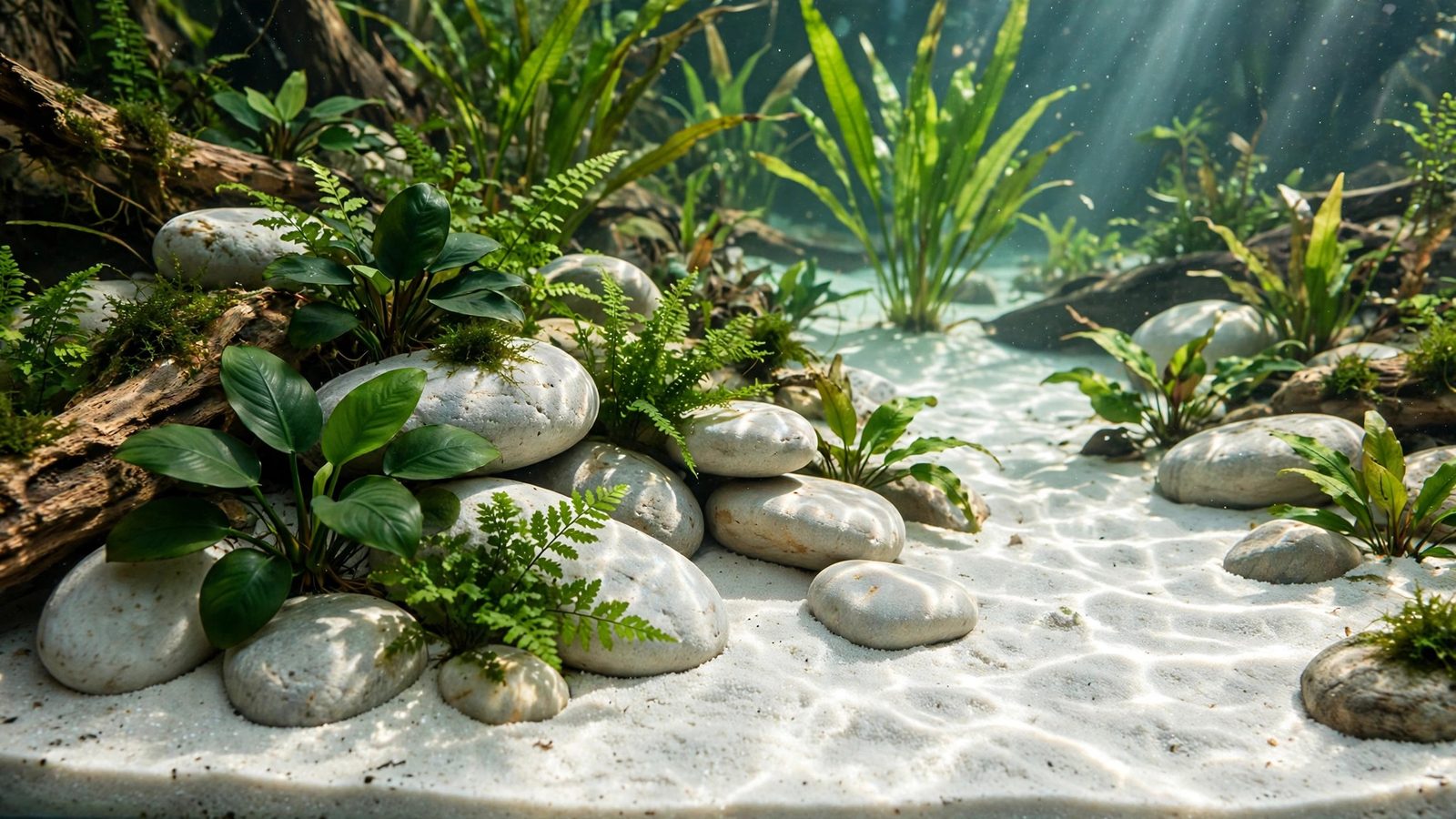
Most Amazon tanks cheat: tea-dark water, red driftwood, a bag of "Amazon biotope" gravel — and they call it done. The real Rio Tapajós looks nothing like that. Its water runs green-clear over pale sand banks, not tannin-stained, and a true rio tapajos biotope aquarium recreates that sunlit, clearwater scene: eartheater cichlids sifting fine sand, submerged roots, smooth river stones, almost no tannin at all. By the end of this guide you'll know exactly how to build one — substrate, hardscape, fish, and the patience to let it mature.
A Tapajós biotope is a clearwater tank, full stop. The river's headwaters drain the ancient, highly weathered Brazilian Shield, so the water carries almost no suspended sediment — and because the banks are sand rather than leaf-littered forest floor, there's little tannin to stain it. At Alter do Chão, its blue-green water and pale beaches are famous across Brazil as the "Caribbean of the Amazon." Your tank's job is to echo that: bright water, clean sand, and fish that sift it.
Why the Tapajós Isn't Another Blackwater Tank
New to the concept? Start with our biotope aquascaping guide to recreating real habitats — then come back, because the Tapajós breaks the most common biotope habit. Amazon-themed tanks almost always default to blackwater: dark substrate, heavy tannins, low light. The Tapajós is the opposite — a bright, open river where sunlight reaches the bed and visibility runs for meters. Biotope interest is peaking this month: the 7th Biotope Aquarium Contest announced its winners about eight days ago, and the design lessons from 2026's contest-winning aquascapes show clearwater entries dominating. Get the water right and everything else — fish behavior, plant choice, photography — falls into place.
Your Rio Tapajos Biotope Aquarium Build: Step by Step
Work hardscape-first, dry, before a drop of water goes in. Use the hardscape-first method so every stone and root sits exactly where you want it.
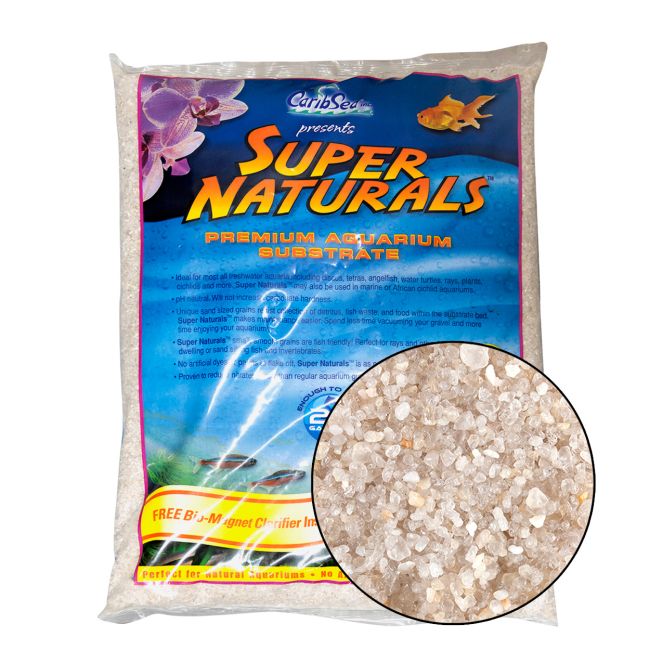
- Lay the sand. Spread fine silica sand 5–8 cm deep, sloping gently up toward the back. The river's banks are open sandbars, so a broad open foreground reads as honest — see our guide to sand layouts for shaping techniques.
- Place roots and stones. Two or three pieces of smooth, weathered driftwood angled like fallen riverside timber, plus a handful of rounded river stones. Branchy, dramatic wood suits this look better than single slabs — browse single-driftwood layouts for placement ideas.
- Plant the margins only. Keep 70% of the sand open. A few Echinodorus at the back corners and floating Limnobium overhead; nothing in the foreground.
- Fill gently and cycle. Flood over a plate to protect the sand bed, then run the tank fishless for 4–6 weeks with ammonia dosing until nitrite reads zero.
 ★4.6
CaribSea Super Naturals Moonlight Sand
Check Price on Amazon ★4.6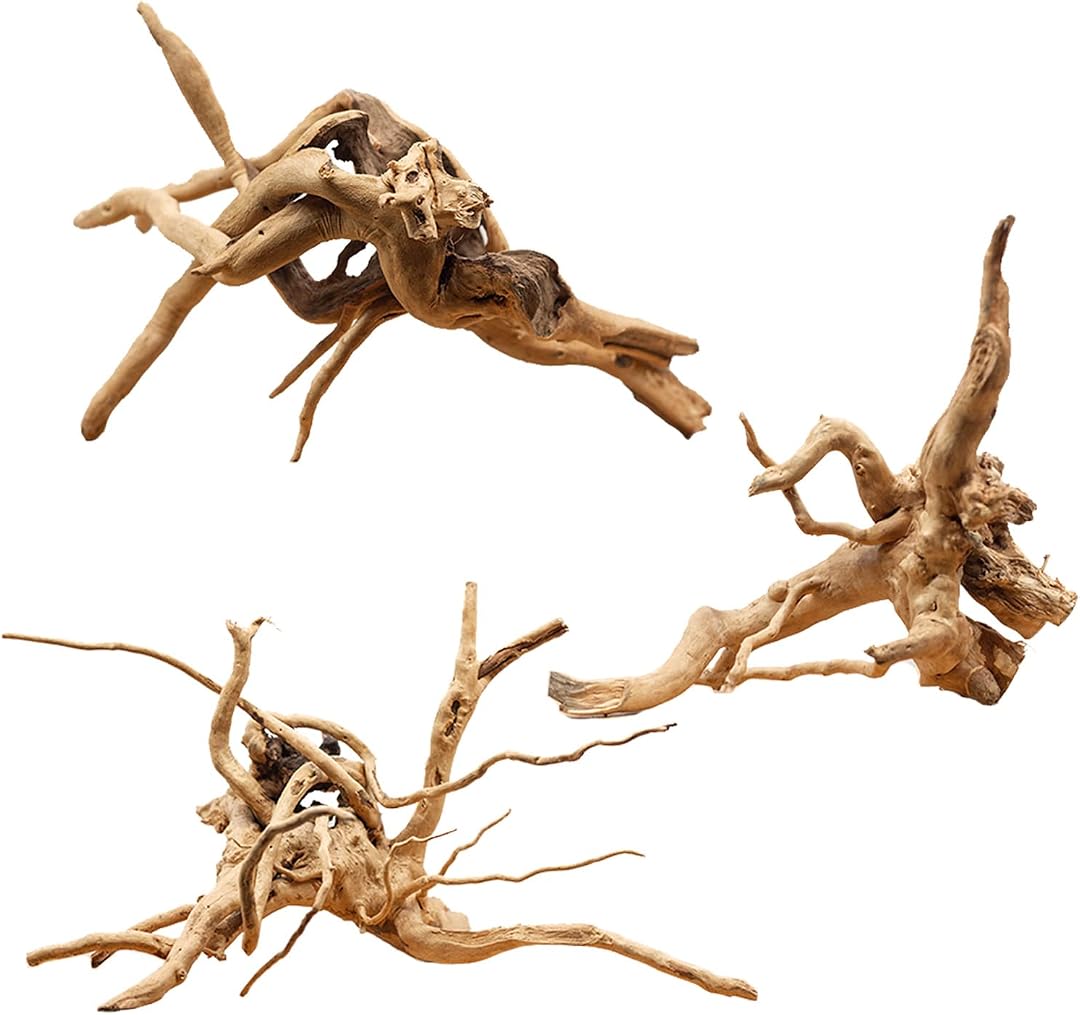 ★4.0
majoywoo Natural Spider Wood Branches
Check Price on Amazon ★4.0Water Parameters: Match the River, Not the Rumor
Soft, warm, and only mildly acidic — nowhere near the near-zero pH swings of blackwater tanks.
| Parameter | Target range | Why |
|---|---|---|
| pH | 6.0–7.0 | Clearwater tributary values, mild and stable |
| Hardness | 2–6 dGH | Soft Shield-drainage water |
| Temperature | 26–28 °C | Warm tropical shallows |
| Tannins | Minimal | Pre-soak wood; skip peat and leaf litter |
| Water changes | 30% weekly | Keeps clarity high and nitrates low |
Stocking a Fish-First Clearwater Community
The centerpiece is the eartheater sold in the trade as Geophagus sp. "Tapajos" — a group of five to six in 75 gallons or more, so they can form a natural hierarchy and sift sand together without stress. Because sand-sifting is the behavior the whole tank is designed around, stocking should start from the fish's needs outward; our fish-first stocking guide walks through that logic in detail. Round out the community with small, peaceful characins from clearwater Amazon tributaries and a group of sand-dwelling Corydoras — and confirm provenance with your supplier before claiming any "Tapajós" label. More ideas for community choices in best fish for aquascaped tanks.
Plants That Honestly Belong Here
This is the one biotope where restraint is the authentic choice. The Tapajós' bright sandbanks host scattered sword plants — Echinodorus species root in the marginal shallows — with Vallisneria where the current slows and Amazon frogbit drifting overhead, filtering the light. Cross-check any plant's origin and care needs against the Tropica plant database before buying, and for placement ideas browse our complete freshwater aquarium plant guide. Two or three species, kept to the edges, is all a clearwater tank needs — the sand is the star.
Frequently Asked Questions
Can I keep a Rio Tapajos biotope in a 55-gallon tank?
Not honestly. A proper group of five to six Geophagus sp. "Tapajos" needs the footprint of a 75-gallon tank to establish hierarchy and sift sand without constant conflict. In a 55-gallon, the eartheaters stress and the biotope concept falls apart. If 75 gallons isn't possible, choose a different biotope rather than a cramped one.
Why must the water stay clear — can't I add some tannins?
Because clear water is the Tapajós' defining trait. Tannins are the visual signature of blackwater rivers like the Negro; adding them here contradicts the habitat you're recreating. Pre-soak driftwood to stop leaching, skip peat and leaves, and run good mechanical filtration. The result should look like sunlit shallows, not tea.
Do I need CO2 or fertilizers for this setup?
No. With only a handful of undemanding plants at the margins — Echinodorus, Vallisneria, frogbit — a low-tech setup with moderate light and a complete liquid fertilizer dosed lightly is plenty. The sparse planting means nutrient demand stays low, and heavy dosing in a bright, open tank just invites algae on the sand.
What fish go well with Geophagus sp. "Tapajos"?
Peaceful, warm-water companions that won't outcompete the eartheaters: small clearwater-tributary characins for the midwater and a group of Corydoras for the sand. Avoid aggressive cichlids and fin-nippers. Ask suppliers for collection provenance — honest sourcing matters more in a biotope than in any other tank style.
How long before the tank looks "natural"?
Give it three months. The 4–6 week fishless cycle gets you chemically safe, but the lived-in look — roots darkening at the waterline, sand settling into ripples, plants rooting into the margins — develops slowly. Resist rescaping in the first two months; biotopes reward patience more than intervention.
Build it bright, keep it clear, and let the sand-sifters do the decorating. A Tapajós biotope is one of the few tanks that gets more convincing the less you fiddle with it.