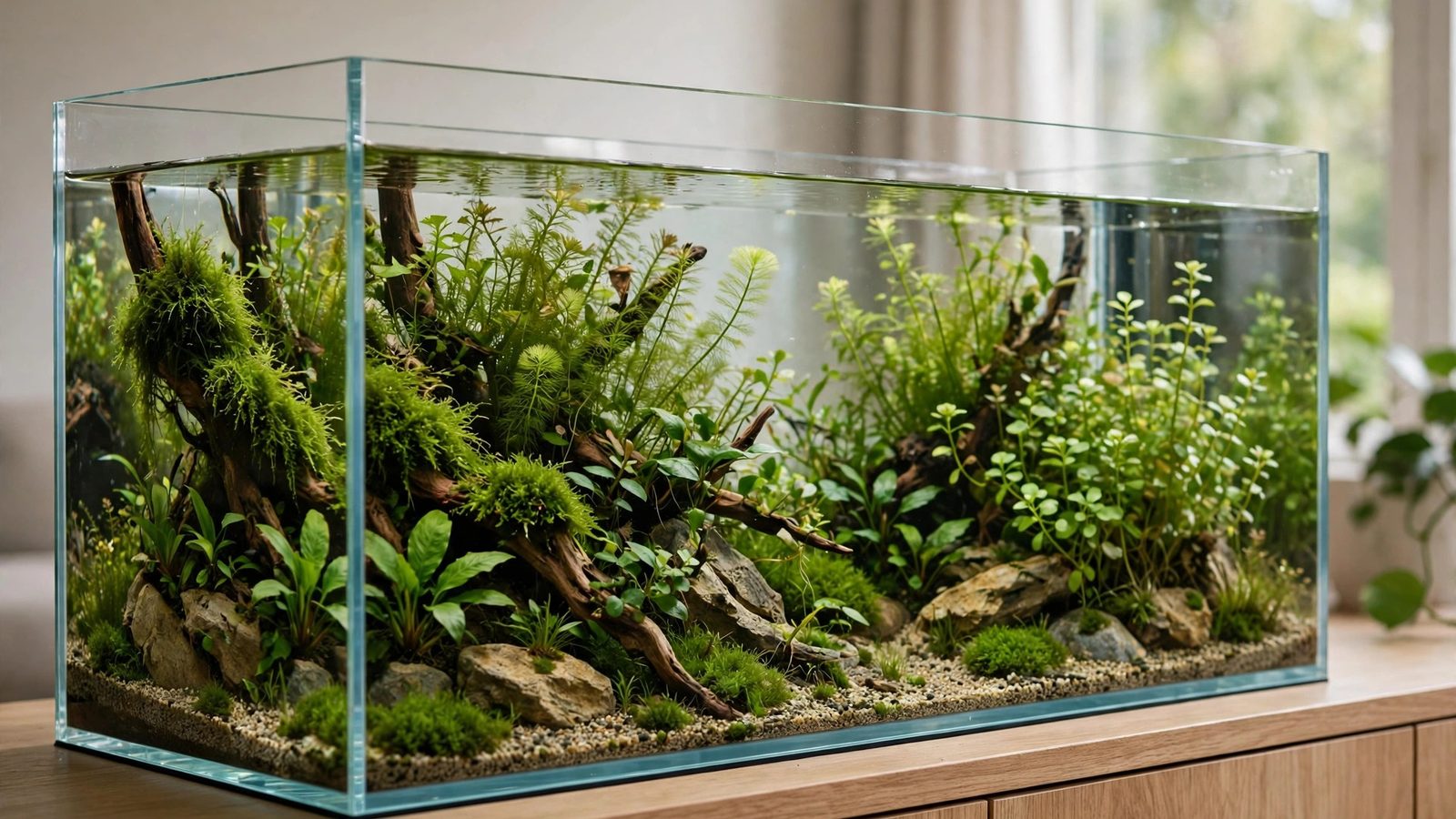
Walk into any aquascaping contest hall and every winning tank looks like a sheet of glass floating in mid-air — no black plastic frame in sight. That's the rimless tank, and it costs two to three times more than a standard rimmed aquarium of the same volume. If you're comparing rimless vs rimmed aquarium options for your next aquascape, the real question isn't which looks better. It's whether the premium glass, extra evaporation, and missing lid will make your daily life easier or harder once the plants are in and growing.
Your tank choice frames everything that follows — the layout you can build, the aquarium plants you pick for a fish-first tank, even the filter hardware that fits. Get this right once, and everything else snaps into place.
Rimless vs Rimmed Aquarium: The Head-to-Head Breakdown
A rimmed tank is the classic: glass wrapped in a plastic frame at top and bottom, usually with a lid. A rimless tank strips all of that away — bare glass panels joined by silicone, nothing above the waterline but air. The price gap is real: a 60-liter rimless low-iron tank often costs what a 120-liter rimmed kit costs. Here's the direct comparison:
| Feature | Rimless | Rimmed |
|---|---|---|
| Glass | Low-iron, ~91% light transmission, colorless edges | Standard float glass (some low-iron lines); slight green tint on edges |
| Structure | Silicone-held panels; rigidity from thicker glass (6–12 mm) | Plastic frame braces against bowing; thinner glass |
| Lid | Open top; glass lids clip on as accessories | Standard lid fits the frame; widely available |
| Evaporation | High — 1–2 L/day in a 60 L tank | Low — a lid cuts it by 80–90% |
| Look | Floating-cube aesthetic; nothing blocks the view | Visible frame; fine for planted tanks, less "gallery" feel |
| Cost (60 L) | ~$100–200, tank only | ~$40–80 tank only; full kits ~$60–120 |
| Best for | Display aquascapes, photography, contest entries | Beginners, fish rooms, jumpers, warm or AC rooms |
Why Rimless Looks So Much Better (and What That Clarity Costs)
Low-iron glass is the whole game. Standard glass throws a green tint on panel edges — invisible on a 10-liter tank, obvious on a 200-liter show tank. Low-iron panels stay nearly colorless, which matters when red plants sit against a pale sand foreground. ADA's Cube Garden, which launched the rimless era in 1994, is still the benchmark: handcrafted low-iron panels joined with premium silicone for nearly invisible seams.
That clarity costs you daily. Open-top water evaporates steadily — roughly 2–3 cm of water depth per week from a 60-liter tank in a dry room — leaving white mineral crust lines at the waterline. Glass scraping becomes a weekly habit, and most rimless owners keep a jug of distilled or RO water on hand for top-offs.
The Case for Rimmed: Bracing, Lids, and Your Wallet
That plastic rim does real structural work. It braces the tank against the outward bow of water pressure, which is why rimmed tanks can safely use thinner glass. Rimless tanks compensate with thicker glass and wider silicone joints, engineered from the start. Never de-rim a standard tank yourself; the seams aren't rated for it, and a seam failure is a flood.
The practical wins stack up fast. A lid means stable temperature in air-conditioned rooms, near-zero evaporation, no dust on the water surface, and total confidence with jumpers. Rimmed kits also bundle the unglamorous essentials — hood, lighting, sometimes a filter — at a price that leaves budget for plants, substrate, and proper aquascaping tools.
Rimmed isn't the aesthetic dead-end it used to be. Several manufacturers now ship low-iron rimmed tanks, and clear or low-profile rims exist for classic sizes like the 20-long. Pair one with glass lily pipes and hidden equipment, and the frame nearly disappears — the layout does the talking.
Which Tank Suits Your Aquascape Style?
Match the tank to the layout you've planned your aquascape around. Shallow tank aquascapes rely on unobstructed sightlines, and a rim would slice right through them; Iwagumi and nature-style layouts earn back the rimless premium every time you photograph the tank — no black bar across the frame.
Peninsula tanks deserve special mention: viewed from three sides, a rimmed frame reads as clutter from every angle, while rimless keeps the walk-around illusion intact (peninsula layout guide). Dutch and jungle tanks are viewed frontally and grow dense enough to hide rims — save the money for plants.
If you're still building fundamentals, a rimmed tank keeps the hobby forgiving: a lid against mistakes, minimal top-offs, and budget left over for the plants and hardscape that actually determine success (common beginner mistakes hurt less in a cheap tank). A rimless tank rewards a settled routine; it punishes a chaotic one.
 ★4.6
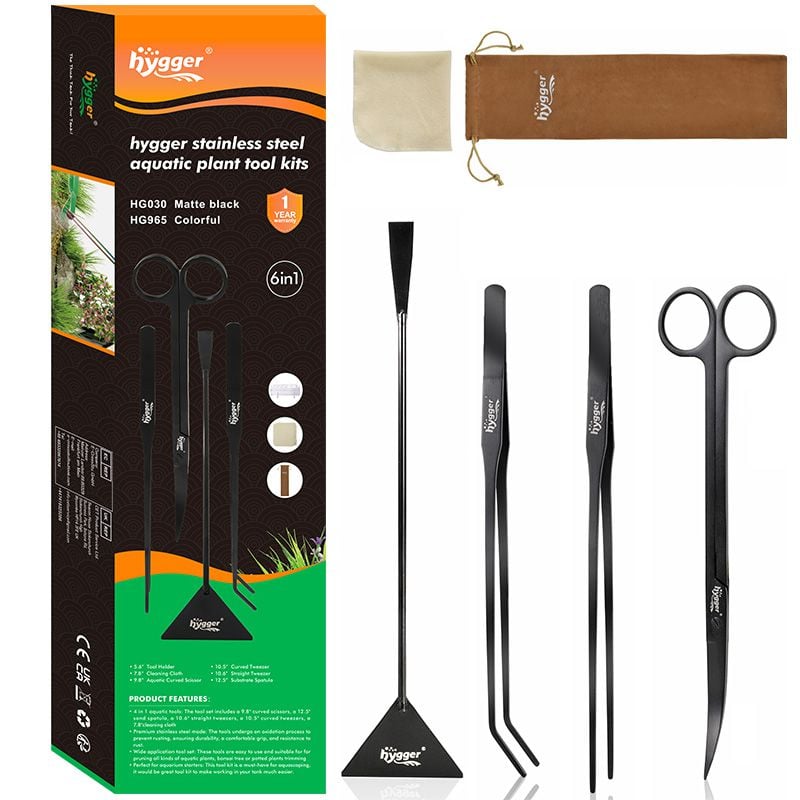
hygger 6-in-1 Long Aquarium Aquascaping Tools Kit
Check Price on Amazon ★4.6The Buying Decision: A Simple Framework
Choose rimless if: this tank is a display piece; you photograph your aquascapes; you keep a consistent maintenance routine; your stock isn't jump-prone; and the premium doesn't squeeze your plant and hardscape budget. Rimless also pairs well with low-tech planted setups — a slow-growing, low-maintenance showpiece.
Choose rimmed if: jumpers are on the stocking list; the room's temperature swings; you want a lid and minimal top-offs; you're aquascaping on a budget and every dollar should go toward plants and hardscape; or this is one more tank in a fish room where practicality beats gallery looks.
Middle path: a rimmed tank with a clear low-profile rim, or a rimless tank with a clip-on lid. The lid comes off in minutes for photography.
Frequently Asked Questions
Are rimless tanks structurally safe?
Yes, when bought rimless from the factory — they use thicker glass (6–12 mm depending on size) and wider structural silicone seams engineered to hold water without bracing. The only danger is de-rimming a tank built for a frame: those seams were never rated for unbraced pressure.
How much does a rimless tank evaporate compared to a rimmed one?
An open-top 60-liter rimless tank typically loses 1–2 liters per day — roughly 2–3 cm of water depth per week. A lid cuts that by 80–90%. Plan weekly top-offs with dechlorinated water between water changes, and give the waterline a quick wipe.
Is low-iron glass worth the extra cost?
For display aquascapes, yes — it removes the green edge tint of standard float glass, making plant colors and sand foregrounds look cleaner, especially in photographs. Below 40 liters the difference is subtle; above 100 liters it's dramatic. Note some rimmed tanks now offer low-iron panels too, so check before paying the rimless premium purely for clarity.
Can I put a lid on a rimless tank?
Yes. Most rimless lines sell clip-on glass covers or stainless hooks that sit the glass just inside the rim — ADA even includes them with larger Cube Garden tanks. Custom-cut acrylic sheets work for odd sizes. A lid tames evaporation and jumpers, but it sits visibly on the tank, so many owners use it only seasonally or at night.
Do rimless tanks need a special stand?
They need a perfectly level stand with full foam or mat support underneath — the same rule as rimmed tanks, but with less tolerance since there's no bottom frame distributing stress. Use a self-leveling foam pad, never bare wood or metal, and check level with a spirit level before filling, not after.
Which is better for a first planted tank?
A rimmed tank. The lid, lower evaporation, and far lower price remove the main beginner pain points, leaving budget for substrate, plants, and lighting — the things that actually determine success. Graduate to rimless for your second or third tank, once your routine is automatic.
Either choice can hold a beautiful aquascape — the glass is the stage, not the performance. A rimless tank makes a great layout look breathtaking; a rimmed tank keeps a great layout alive through your busiest weeks. Buy the tank that fits your routine, then spend your real energy on the plants.