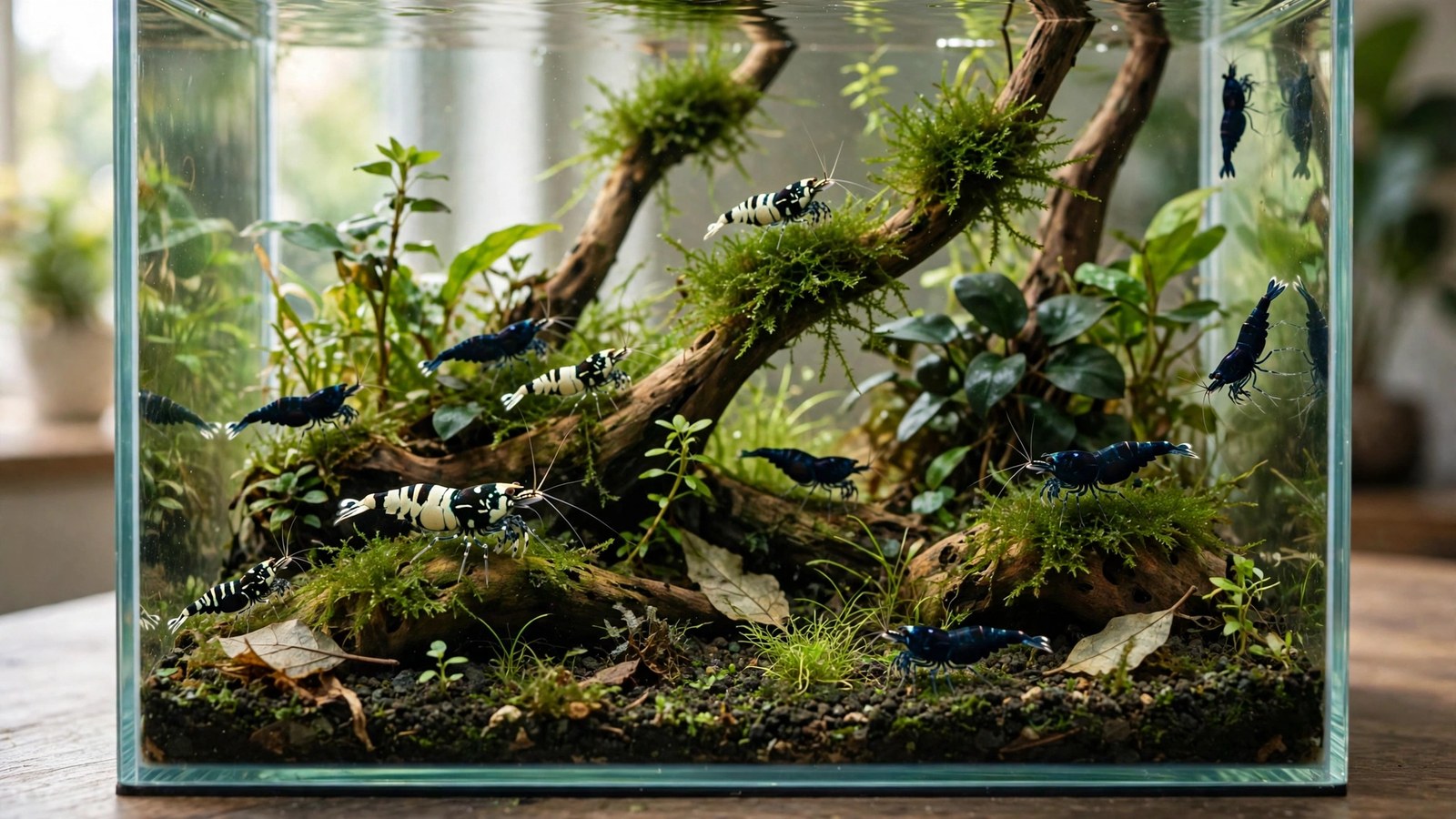
Under dim aquarium light, a shadow panda shrimp looks almost black — tiny inkblots grazing across green moss. Then one turns toward the light and the blue bleeds through. That slow reveal is the whole appeal: if you can give a delicate, high-grade Caridina a stable home, this Taiwan bee pays you back with one of the most striking contrasts in the hobby.
A shadow panda shrimp is the blue-black patterned morph of Caridina cf. cantonensis, selectively bred from black panda × blue bolt crosses. Expect adults of ~1–1.2", water at pH 5.8–6.8 with near-zero KH, active buffering soil, and remineralized RO water. Difficulty is intermediate–advanced: berried females carry eggs ~30 days, shrimplets hatch as miniatures eating only biofilm — a mature tank is non-negotiable.
Shadow Panda vs. Blue Bolt: the Distinction That Matters
Buyers mix these two up constantly, so get this straight before you spend money. The shadow panda is a dark, patterned shrimp — black with white panda markings and a blue sheen that intensifies with age. The blue bolt is blue-dominant overall: a much bluer shrimp from a different selection goal. Both are Taiwan bees from the same breeding projects, but they look and grade differently. If a listing's photos show mostly-blue shrimp with faint markings, you're looking at blue bolts. See our guide to the blue bolt's blue-dominant care profile — and our crystal red shrimp care guide for the family's other founding line.
Shadow Panda Shrimp Water Parameters
Caridina bees demand soft, acidic, stable water. The numbers below are the accepted target window; stability matters more than hitting the center of any range.
| Parameter | Target | Notes |
|---|---|---|
| pH | 5.8–6.8 | Held by active buffering soil, not chemicals |
| GH | 4–6 | Calcium/magnesium for molting |
| KH | 0–1 | Near zero; buffering soil consumes it |
| TDS | 90–150 ppm | Remineralize RO water to this range |
| Temperature | 68–78°F | Cooler end (70–72°F) is safest for breeding |
| Ammonia / nitrite | 0 ppm | Always — no exceptions |
| Nitrate | Under ~25 ppm | Keep low with water changes |
The practical recipe: active buffering soil, RO water remineralized with a bee-shrimp mineralizer to GH 4–6, and 10–20% weekly water changes with matching-temperature water. Drip-acclimate new shrimp for an hour or more — a sudden TDS swing can kill them even when every other number looks fine.
The Tank: a Planted Grazing Ground
A shadow panda tank is a shrimp-first planted tank. You need plants that feed a shrimp colony: mosses, fine-leaved stems, and rosettes whose surfaces grow the biofilm shrimplets survive on. Our planted shrimp tank setup walks through the layout in full.
Plants and hardscape
Moss is the single most valuable plant group in a bee-shrimp tank — Java moss, Christmas moss, and peacock moss all work. Add easy plants for grazing cover like anubias and bucephalanthus on driftwood. Leaf litter (dried Indian almond or guava) gives shrimplets shelter and grazing. If you fertilize, read our guide to shrimp-safe fertilizing first — skip anything copper-heavy.
Cycling and maturity
Cycle the tank fully, then run it planted for several weeks more before the first shrimp goes in. Biofilm — the invisible graze that carries newborn shrimplets — only develops on mature surfaces. A merely "cycled" but sterile tank will starve a colony even with perfect parameters. Our biofilm guide for shrimp tanks explains how to seed and judge it.
 ★4.7
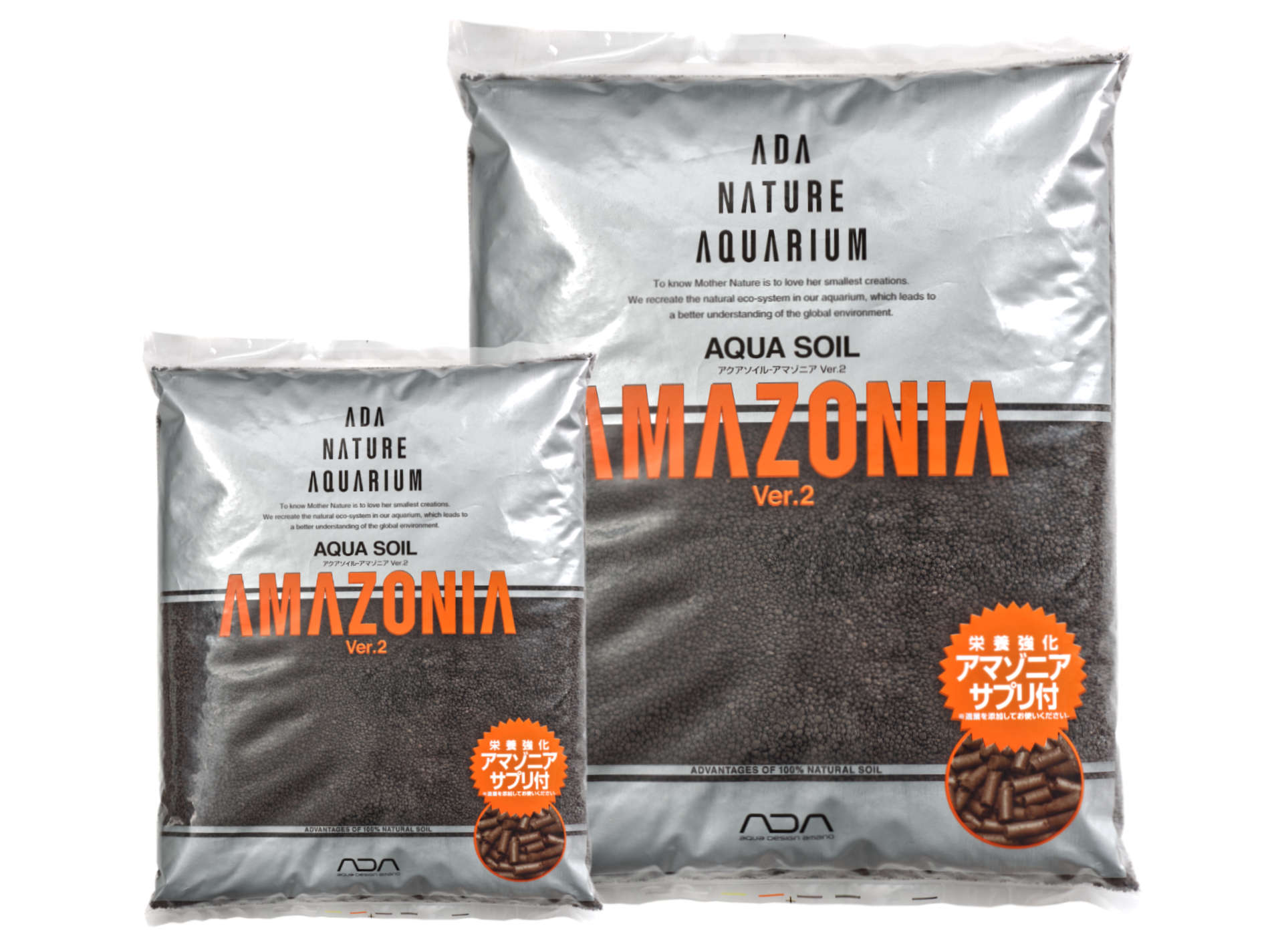
ADA Aqua Soil Amazonia Ver 2
Check Price on Amazon ★4.7Feeding: Less Than You Think
In a mature planted tank, shrimp graze constantly on biofilm and decaying leaf litter. Supplement with a quality shrimp pellet or powder only 2–3 times per week, in an amount they clear within 2 hours. Overfeeding pollutes the water and kills Caridina outright — uneaten food rotting under moss is an ammonia bomb in a small tank. Rotate a complete bee-shrimp food with blanched vegetables and a weekly protein treat for breeding females; remove leftovers after a few hours.
Breeding Shadow Panda Shrimp
Breeding follows the crystal-red method: berried females carry eggs for roughly 30 days, then release fully formed shrimplets — miniatures that eat nothing but biofilm at first. That is why tank maturity is the entire game. Keep temperatures at the cooler end (70–72°F), keep parameters boring and stable, and let the colony do the rest.
Shadow pandas interbreed freely with crystal reds, black pandas, and other Taiwan bees. If line purity matters — and at these prices it usually does — keep this a Taiwan-bee-only tank: mixing lines dissolves the shadow panda look within a generation or two. Species-only or gentle shrimp-only tank mates; no fish that pick off shrimplets.
Frequently Asked Questions
Are shadow panda shrimp good for beginners?
No — they are intermediate–advanced shrimp, not a first shrimp. They need soft acidic water (pH 5.8–6.8, KH 0–1) built from RO water on buffering soil, ammonia and nitrite at zero, and a mature biofilm-heavy tank. Start with cherry shrimp or crystal reds if you are new, then graduate to shadow pandas once you can hold stable parameters for months.
What is the difference between shadow panda and blue bolt shrimp?
Shadow pandas are dark and patterned — black bodies with white markings and a blue hue that deepens with age. Blue bolts are blue-dominant overall, much bluer across the whole body. Both are Taiwan bees from the same breeding projects but different selection goals, so they look and grade differently. Check listing photos closely before buying.
Do shadow panda shrimp need a heater?
Often not — they thrive at 68–78°F, and the cooler end (70–72°F) is safest, especially for breeding. Most indoor rooms keep a tank in this band without help. A heater only matters if your room drops below 65°F regularly; then use a small adjustable one with a thermostat, since sudden temperature swings stress Caridina more than steady cold.
How many shadow panda shrimp should I start with?
Start with 8–10 in a 10-gallon planted tank. That gives you a healthy male-to-female mix and enough genetic spread for a colony to establish without overloading a new system. More than that in an immature tank just means more mouths competing for biofilm that isn't there yet. Add the colony once, then let it grow.
Can shadow panda shrimp live with fish?
Adults usually survive alongside peaceful nano fish, but shrimplets become snacks — no fish is truly shrimp-safe when babies are tiny. If you want a breeding colony, keep the tank species-only or with shrimp only. A fish tank with shrimp is a display; a shrimp tank is a breeding project. Decide which you want before stocking.
Why do shadow panda shrimp die in the first week?
The usual causes are a tank too young to have biofilm, a TDS or temperature swing during acclimation, or ammonia/nitrite above zero. Drip-acclimate for at least an hour, match TDS of bag and tank, and only introduce shrimp to tanks that have been running planted for 6–8 weeks. If several die in week one, test TDS and water parameters before assuming disease.
Bringing It Together
The shadow panda shrimp rewards the keeper who does the unglamorous work first: buffering soil, remineralized RO water, a tank aged past 6 weeks, moss and leaf litter everywhere, and the discipline to feed sparingly. Give it that, and you get a colony whose blue deepens for months, breeding on the crystal-red cycle, in a planted tank that practically runs itself. Skip the foundation and you get an expensive lesson in Caridina sensitivity — taxonomy background for the curious is on the Caridina cantonensis reference page. Set the water, age the tank, and let the blue come to you.