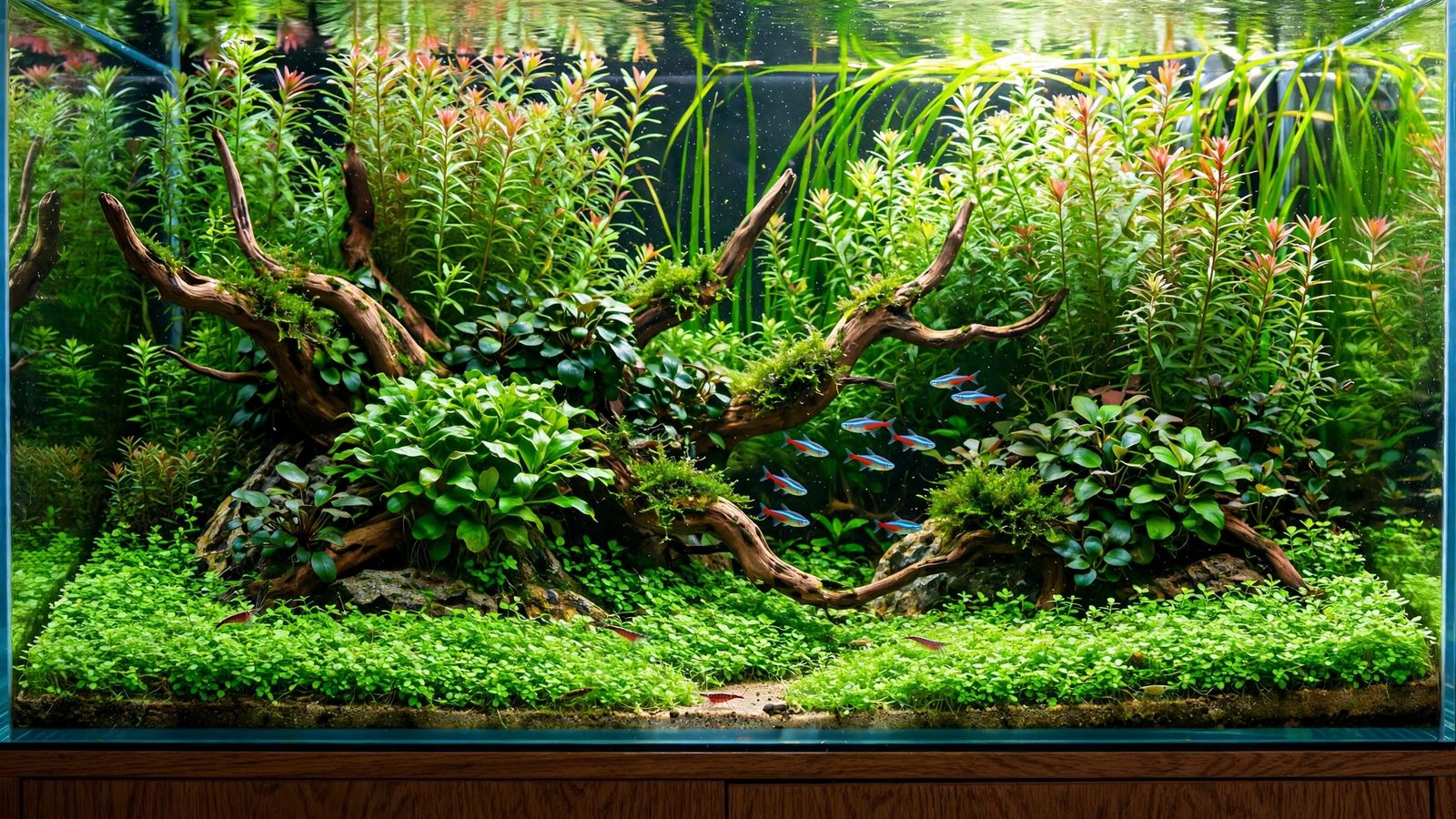
Every week, beginners carry an armful of gorgeous stems and carpets to the fish-store counter — and six weeks later they own a tank full of melting mush. The problem is almost never the light. The best planted aquarium plants are simply the ones matched to your tank's zones, your light level, and your CO2 setup, in that order. This guide shows you how to make that match before you spend a dollar.
Start With the Zone, Not the Species
Professional aquascapers never shop by plant name. They design in layers: a low carpet in front, mid-height anchors in the middle, and tall stems or swords in back. In a standard 12–16 inch tall tank, keep the foreground under 3–4 inches, the midground at 4–8 inches, and let the background take everything above 8. When every plant sits in its correct layer, even a cheap $70 plant order looks deliberate.
| Zone | Height target | Job in the layout | Proven examples |
|---|---|---|---|
| Foreground | Under 3–4 in | Carpet and frame | Dwarf hairgrass, Monte Carlo, dwarf sagittaria |
| Midground | 4–8 in | Anchor and transition | Anubias nana, Cryptocoryne wendtii, Staurogyne repens |
| Background | 8 in and up | Height and backdrop | Vallisneria, Rotala rotundifolia, Amazon sword |
Carpeting is where zone mistakes happen most: beginners plant dwarf hairgrass or Monte Carlo in low-light tanks with no CO2 and watch it rot. If you want a carpet without the hardware, read our rundown of foreground carpeting plants for beginners — dwarf sagittaria and Marsilea hirsuta carpet at a fraction of the light.
Match Planted Aquarium Plants to Your Light and CO2
Light is the single factor that decides your plant list. Growers measure it in PAR at the substrate, not at the glass lid. A basic LED kit on a 20-gallon long delivers roughly 15–30 PAR (low); a decent planted-tank light like a Fluval Plant 3.0 or Twinstar delivers 30–80 (medium); high-output fixtures near the surface push 80+ (high). CO2 tracks light: low-light plants thrive without it, medium-light plants grow faster with liquid carbon, and high-light carpets and red stems stall without pressurized CO2.
| Light level | PAR at substrate | CO2 need | What thrives |
|---|---|---|---|
| Low | 15–30 | None | Anubias, java fern, java moss, most cryptocorynes |
| Medium | 30–80 | Liquid carbon or DIY helps | Most stems: rotala, ludwigia, bacopa, water sprite |
| High | 80+ | Pressurized recommended | Carpets, red stems, Pogostemon erectus, toninas |
Before you buy, cross-check each candidate's light demand in Tropica's plant database — retail labels call almost everything "medium light," and the database tells you the truth. Plan your light around your plants, not the reverse: decide the fixture, estimate PAR, and only then write your shopping list.
Choose by Difficulty: Work in Tiers
Difficulty is shorthand for how much a plant punishes inconsistency. Easy-tier plants — anubias, java fern, vallisneria, and the whole family of hardy mosses you can compare in our guide to comparing aquarium mosses — grow in plain gravel under a stock light with zero CO2 and a splash of fertilizer. They are the right first order while you learn water changes and algae control. For a community tank full of them, our list of the easiest aquarium plants for a beginner community tank is the safest starting point.
Moderate-tier plants — most stems and heavy root feeders like Amazon swords — need a routine: nutrient-rich substrate or root tabs (Seachem Flourish Tabs, one per 4–6 inch radius, every 3–4 months), liquid fertilizer twice a week (NilocG Thrive, 1 pump per 10 gallons), and 30% weekly water changes. They reward you with fast, visible growth in 2–4 weeks.
Advanced-tier plants — carpeting species and red stems — need pressurized CO2 (about 1 bubble per second per 20 gallons, timed one hour before lights-on), high light, and temperatures held at 72–78°F. Skip this tier for your first six months. A tank of easy plants that thrives beats a tank of advanced plants that melts.
Three Ready-Made Plant Lists
Here is how the zone-light-CO2 method turns into actual shopping carts. Each list assumes a standard 20-gallon long (30×12×12 in) at 75°F, pH 6.8–7.4.
| Setup | Foreground | Midground | Background | Rough cost |
|---|---|---|---|---|
| Low-tech | Dwarf sagittaria runners | Anubias nana ×3, java fern ×2 | Vallisneria ×5, java moss on driftwood | $60–90 |
| Mid-tech | Marsilea hirsuta | Cryptocoryne wendtii ×3, Staurogyne repens | Rotala rotundifolia, Ludwigia repens | $100–140 |
| High-tech | Monte Carlo carpet | Bucephalandra, Alternanthera reineckii | Pogostemon erectus, Rotala 'Blood Red' | $130–180 + CO2 rig |
Two finishing touches belong on every list. First, floating plants: they shade the lower layers, drink excess nitrate, and calm new tanks faster than any gadget — start with the best floating aquarium plants for beginners and thin them weekly so they cover no more than a third of the surface. Second, study the masters: ADA's Nature Aquarium gallery shows exactly how the three layers compose at competition level — steal the layering, not the plant names.
 ★4.7
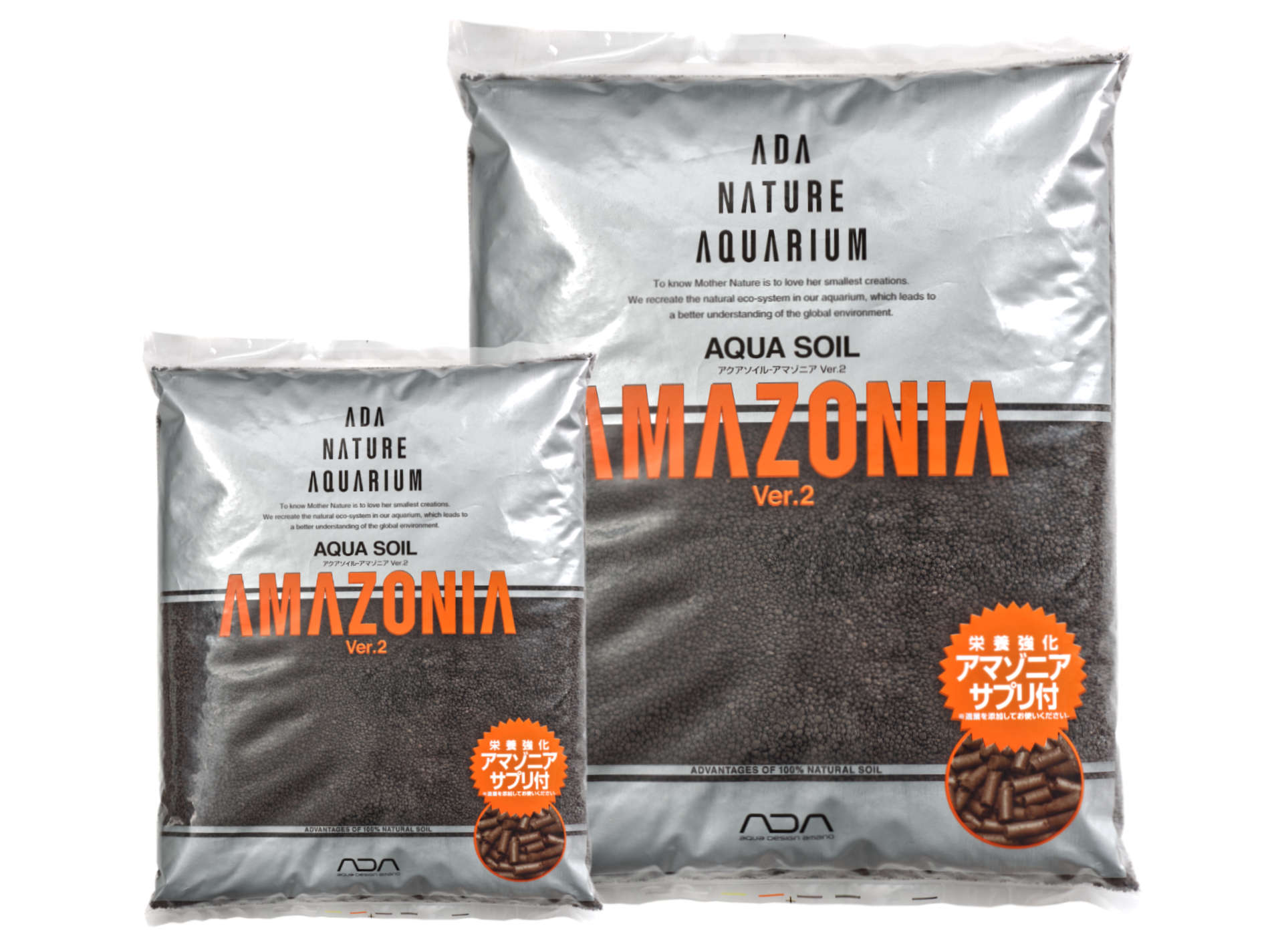
ADA Aqua Soil Amazonia Ver 2
Check Price on Amazon ★4.7Frequently Asked Questions
How many plants should I buy for a new planted tank?
Plant about 70% of your substrate on day one — roughly 12–18 portions for a 20-gallon. Heavy initial planting is the best algae prevention: growing plants outcompete algae for nutrients from the start. Buy stems in bunches of 5–8 and split them; space rosettes and carpets 1–2 inches apart so they fill in.
Do I really need CO2 for a planted aquarium?
No — but your plant list must match that decision. Anubias, java fern, vallisneria, cryptocorynes, and mosses all thrive with zero added CO2 in low to medium light. You need CO2 (pressurized, ideally) for carpeting plants like Monte Carlo and dwarf hairgrass, for most red stems, and for anything labeled high-light. Decide the CO2 budget first, then buy plants that fit it.
What is the easiest carpeting plant for beginners?
Dwarf sagittaria (Sagittaria subulata). It spreads by runners in plain gravel, needs only low to medium light, and wants no CO2 — it stays 2–4 inches tall under decent light. Marsilea hirsuta is the next step up for a finer carpet look, still without CO2. Skip dwarf hairgrass and Monte Carlo until you run pressurized CO2; without it they stall and melt.
Can I mix low-light and high-light plants in one tank?
Yes, if you design for it: put high-light plants directly under the fixture and low-light species like anubias and java fern in the shade beneath hardscape or floating plants. In practice this works best in medium light (30–80 PAR) — true high-light plants will stretch and fade in low light no matter where you place them, so don't buy them hoping placement will compensate.
How long does it take for a planted tank to look full?
Expect visible new growth in 2–4 weeks, a filled-in tank at 8–12 weeks, and a mature, balanced scape at 3–6 months. Stem plants are fastest (trim and replant tops every 2–3 weeks to double them); carpets are slowest — Monte Carlo takes 6–10 weeks to knit under CO2. Resist rescaping in the first month; plants spend it building roots you can't see.
That is the whole method: zones first, light second, CO2 third, difficulty last. Pick a tier, build the three layers, and give the tank a season to fill in. The best planted tanks rarely have the rarest species — they are the ones where every plant is in the right place, getting exactly what it needs.