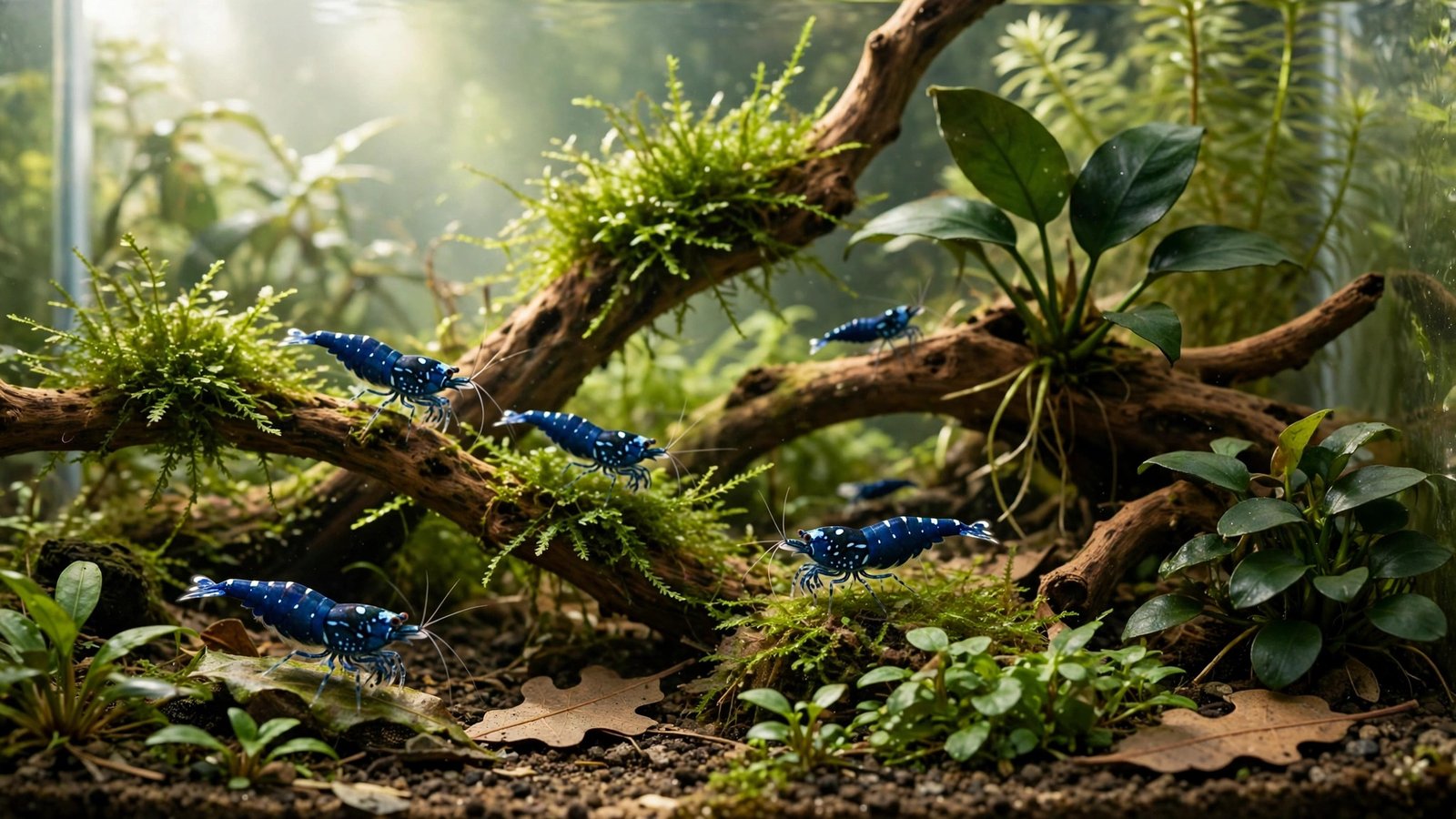
Most blue bolt shrimp die in the first month because someone put them in tap water. These icy-blue caridina don't just prefer soft water — they require reverse-osmosis water remineralized with a GH booster, and there is no tap-water shortcut. Get the water right and blue bolt shrimp are steady breeders.
In short: keep blue bolt shrimp in RO/DI water remineralized with a GH+ product to TDS 100–160, pH 5.8–6.5 (KH 0–1), temperature 68–74°F, in a mature planted tank with a sponge filter and an active buffering substrate. GH+ remineralization is mandatory, not optional. Leave molts in the tank for calcium, drip-acclimate new shrimp, and never dose copper-based medications.
Blue Bolt Shrimp Water Parameters: The Soft-Water Rules
Blue bolt shrimp care starts and ends with water. These Taiwan Bee caridina were selectively bred for that milky solid-blue shell, and like all caridina they need soft, acidic water. Stabilize the chemistry before the shrimp arrive.
The consensus parameters experienced keepers use:
| Parameter | Target | Why it matters |
|---|---|---|
| pH | 5.8–6.5 (range 5.5–6.8) | Acidic water matches wild caridina habitat |
| GH | 4–6 dGH | Calcium/magnesium for the shell; too low causes failed molts |
| KH | 0–1 dKH | Lets pH sit low and stable |
| TDS | 100–160 ppm | The one number to check before every water change |
| Temperature | 68–74°F (20–23°C) | Warmer shortens their 1–2 year lifespan |
| Ammonia/nitrite | 0 ppm | Fully cycled tanks only — caridina are less forgiving than neocaridina |
A quick note on sources: one retailer lists blue bolt shrimp at pH 6.8–7.5 and GH 7–8 — an outlier that contradicts the caridina consensus and would defeat the buffering-substrate + RO water approach. Keep your bolts in the soft, acidic range above.
RO/DI and GH+ remineralization: mandatory, not optional
Blue bolt shrimp cannot live in ordinary tap water. Most tap water carries KH that drags pH upward and minerals that push TDS past 200 — both lethal to caridina long-term. You need reverse-osmosis or deionized water, rebuilt with a shrimp-specific GH+ remineralizer (Salty Shrimp GH+ is the standard; use the GH-only version for bee shrimp).
The routine: mix RO water to TDS 100–160 ppm, and use only that for changes. A handheld TDS pen (under $15) is the most useful tool here. See Buce Plant's blue bolt shrimp parameter page for a second reference on caridina targets.
The parameters section mandates RO water remineralized to GH 4–6 — GH+ is the direct product fit: Salty Shrimp Bee Shrimp Mineral GH+ ★4.8.
The Right Tank: Mature, Mossy, and Sponge-Filtered
A 5-gallon tank is the workable minimum; 10 gallons is what most breeders recommend because more water resists the parameter swings that kill caridina. Cycle fully, then mature another 4–6 weeks — blue bolt shrimp graze on biofilm that only develops in an aged tank.
Equipment and layout that work:
- Filter: sponge filter, or a hang-on-back intake covered in fine sponge — shrimp fry die in uncovered intakes.
- Substrate: active buffering soil (ADA Amazonia, Fluval Stratum) holding pH in the low 6s — the pH engine of the setup. Our best substrates for shrimp tanks guide compares the options.
- Plants: moss-heavy planting — Java moss, Christmas moss, Subwassertang — plus floaters for cover. Moss is grazing surface and nursery at once. New to planting? Start with the easiest aquarium plants for beginners.
- Botanicals: Indian almond leaves, alder cones, cholla wood — tannins, biofilm food, and shrimplet shelter.
- Stocking: 10–12 shrimp in 10 gallons to start; they breed steadily once settled.
For the full tank build, see our lightly planted aquarium setup guide.
The Taiwan Bee Family: Blue Bolts and Their Sister Morph
Blue bolts are a selectively bred morph of the Taiwan Bee line of Caridina cantonensis — the same species complex as crystal reds, blacks, and pandas. Juveniles often start milky or icy and deepen into turquoise as they mature.
The consequence: all Taiwan Bees interbreed. Mixing blue bolts with crystal red shrimp, the red-and-white Taiwan Bee kills the solid-blue line within a generation or two — so keep blue bolts in a Bee-only or species-only tank.
If you're not ready for the full soft-water commitment, the tiger shrimp care guide covers a hardier caridina — a sensible stepping stone before Taiwan Bees.
Feeding, Molting, and the Copper Rule
Overfeeding — not hunger — is the usual mistake: uneaten food spikes TDS and invites planaria.
Molting is where blue bolt shrimp care succeeds or fails. They shed every 3–5 weeks, and each molt needs calcium from the water (your GH) and from food. Two rules:
- Leave the molts in the tank. Shrimp eat them to recycle calcium.
- Watch for the white ring of death. A bright white band where the shell split signals a failed molt — usually low GH or exhausted buffering substrate. Our white ring of death guide covers causes and rescue steps.
The copper rule: copper is lethally toxic to shrimp at doses harmless to fish. Never use copper-based medications in a shrimp tank, and choose copper-free plant fertilizers.
Drip Acclimation: Non-Negotiable for New Shrimp
Blue bolts ship in breeder water that almost never matches yours. Floating the bag ignores chemistry — and chemistry is what kills them. Drip acclimation (slowly dripping tank water into their container over 1–2 hours) lets them adjust to your TDS and pH gradually — read our drip acclimation guide for shrimp before your order arrives.
Breeding Blue Bolt Shrimp
Breeding blue bolts isn't a special technique — it's the reward for stable parameters. In a settled tank at 70–72°F, berried females appear within weeks, carrying 20–30 eggs for about a month before releasing shrimplets. Powdered fry foods boost survival in the first days.
Culling keeps the blue deep: juveniles that fade toward clear or brownish should be moved to a separate tank, or the line dilutes. A healthy colony of 50+ shrimp in a 10-gallon is a realistic first-year outcome.
Frequently Asked Questions
Can blue bolt shrimp live in tap water?
No. Almost all tap water has too much KH and TDS for caridina, which pushes pH up and causes failed molts and die-offs. Blue bolt shrimp need RO/DI water remineralized with a GH+ product to TDS 100–160. There is no tap-water workaround that works long-term.
Why do blue bolt shrimp die after a water change?
Usually TDS or temperature shock from a change that's too large or too different from tank water. Keep changes to 10–15%, match temperature within a degree, and confirm your change water reads the same TDS as the tank (100–160 ppm) before it goes in. Sudden swings trigger molting problems within days.
How long do blue bolt shrimp live?
About 1–2 years. Warmer tanks (74°F and up) accelerate their metabolism and noticeably shorten lifespan, which is why 68–72°F is the sweet spot for both longevity and breeding. A colony that breeds steadily outlives any individual shrimp, so a stable colony effectively lasts indefinitely.
Can I keep blue bolt shrimp with crystal red shrimp?
Physically yes — they share identical water parameters — but you shouldn't. They're the same species complex and will interbreed, producing muddy offspring and destroying both color lines within a generation or two. Keep blue bolts in a Bee-only or species-only tank for line purity.
What should I feed blue bolt shrimp?
Biofilm first — a mature tank feeds them around the clock. Supplement with shrimp pellets 2–3 times weekly, blanched vegetables weekly, and mineral-enriched foods when breeding. Feed tiny amounts; overfeeding raises TDS and causes more problems than light feeding ever will.
Are blue bolt shrimp good for beginners?
Honestly, no — they're intermediate to advanced. The RO/DI setup, remineralization routine, and sensitivity to parameter swings demand more equipment and discipline than neocaridina like cherry shrimp. Start with cherries or tiger shrimp, then step up to blue bolts once soft-water keeping feels routine.
Start With Water, Everything Else Follows
Blue bolt shrimp care looks intimidating — RO unit, remineralizer, TDS pen, buffering soil, mature biofilm. But once that foundation is in place, they graze, molt, breed, and deepen into that electric blue. Nail the water and they'll take care of themselves.