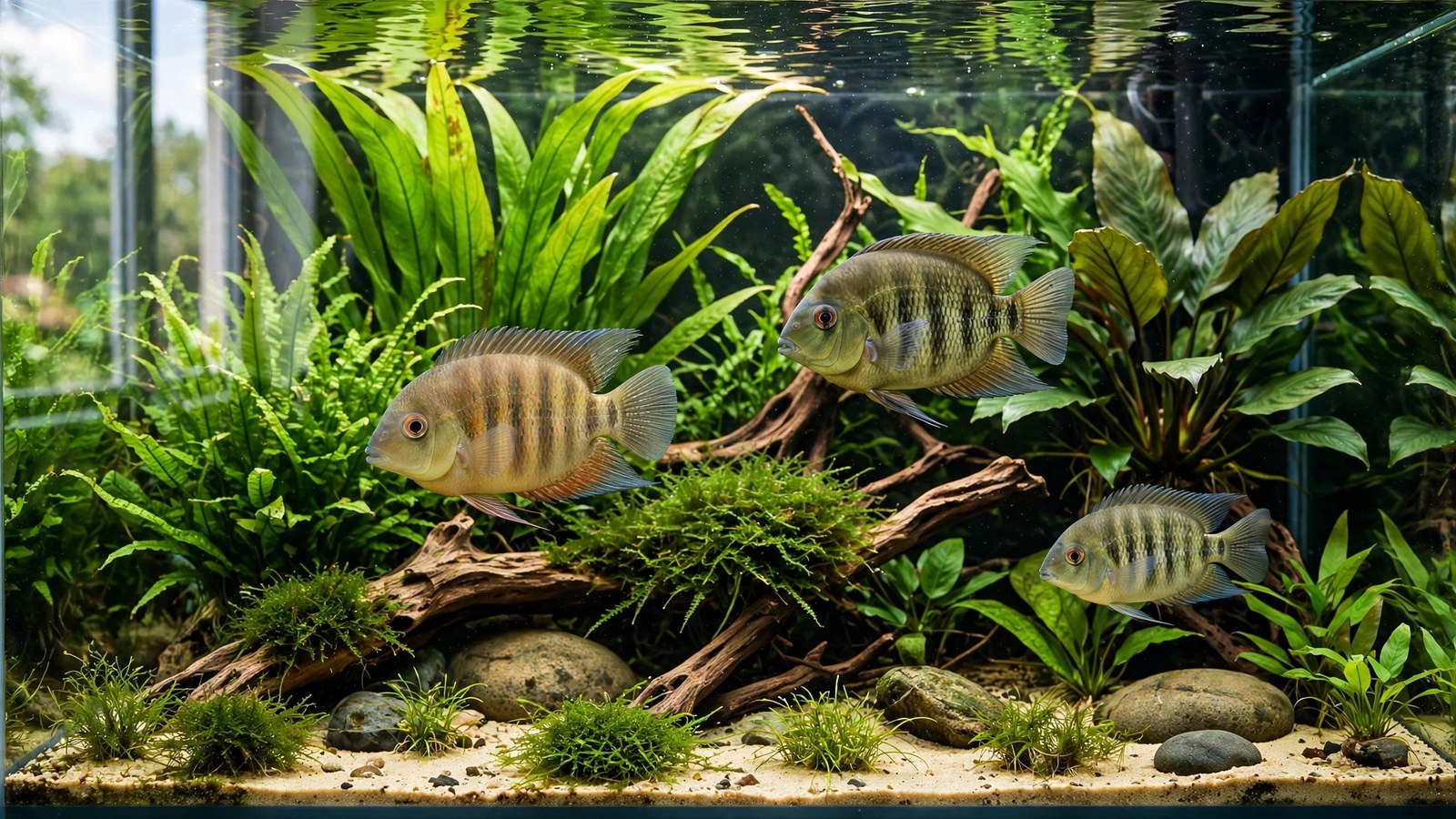
Most guides treat a severum planted tank like a doomed combo — a big South American cichlid plus delicate greenery. The truth is kinder: Heros efasciatus, the true severum, is one of the most peaceful large cichlids in the hobby, and with tough plants tied to driftwood, fine sand, and a 75-gallon minimum, it thrives in genuinely lush planted water. The gold severum in shops is just the domestic color morph of the same species. This guide covers the setup: tank, water, severum-proof planting, feeding, tankmates, and breeding.
Building a Severum Planted Tank That Survives
The design goal of a severum planted tank isn't "plants the fish can't touch" — it's a layout where the fish's habits stop mattering. Severums excavate pits and nibble soft leaves out of curiosity. Three tactics beat both habits: epiphytes on hardscape (Anubias and Java fern tied to driftwood or rock — no roots to uproot, leaves too tough to eat), potted swords (Amazon swords in clay pots or weighed baskets), and a planted partition (delicate background stems behind a driftwood-and-rock line the fish rarely crosses). Pick species from a fish-first guide to choosing aquarium plants, so everything is selected for fish compatibility, not just looks.
Tank Size and Water Parameters
Severums reach about 8 inches and are deep-bodied, so footprint beats height. One adult needs 75 gallons (48×18 inches); a pair needs 100+; breeding pairs are happiest at 120. Skip tall, narrow tanks — the fish reaches full size regardless.
| Parameter | Target | Notes |
|---|---|---|
| Temperature | 75–84°F (24–29°C) | Aim for 78–80°F; warmer speeds spawning |
| pH | 6.0–7.5 | Slightly acidic to neutral |
| Hardness | 4–15 dGH | Soft to moderately hard |
| Water changes | 30% weekly | Big fish = big waste |
| Filtration | Canister, 5–8× turnover | Point returns away from resting spots |
Water chemistry is the easy part — wild severums come from floodplains with wildly shifting conditions. Keep the tank stable, cycled, and dechlorinated, and match standard planted-tank water parameters; the severum adapts to either end of the range.
Aquascaping for a Digger: Sand, Driftwood, and Rock
Substrate is non-negotiable: fine sand. Severums mouth, sort, and spit substrate; gravel can injure their mouths. Two to three inches of pool-filter or aquarium sand lets them dig naturally, and it suits the warm, tannin-tinted water.
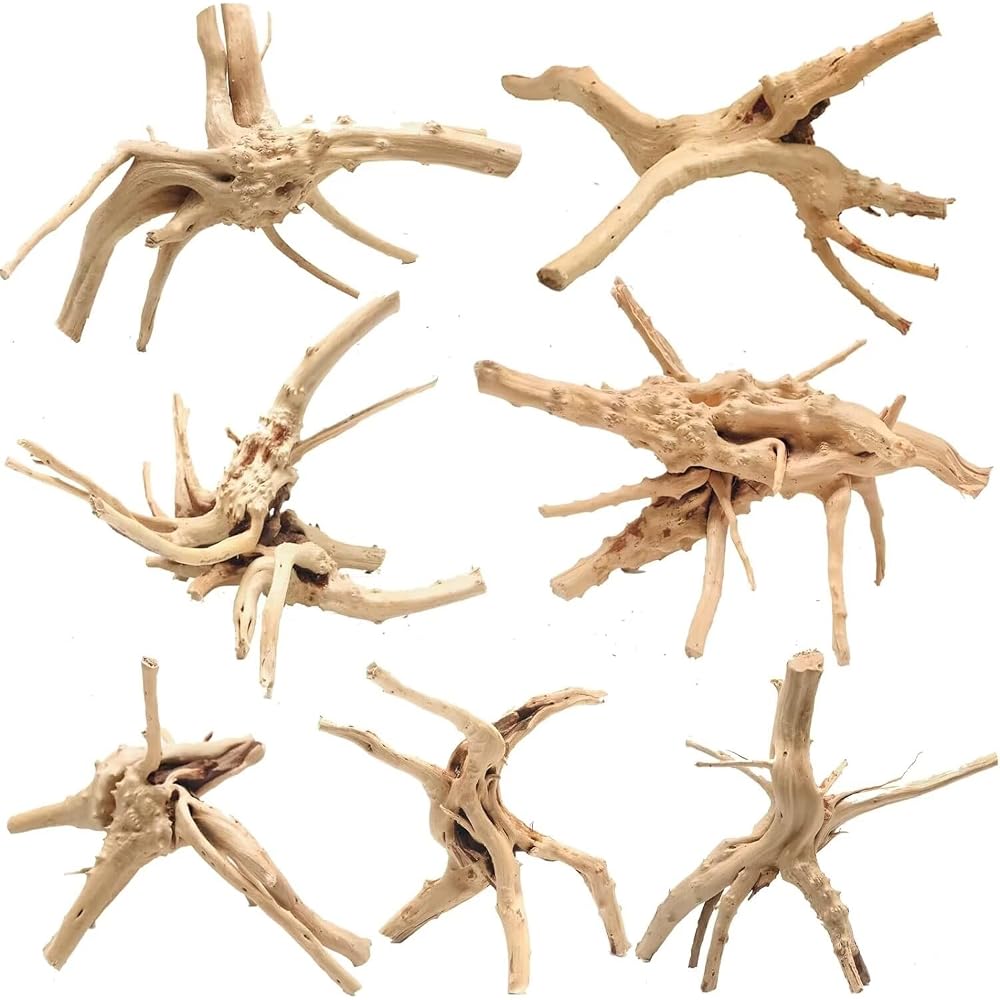
Driftwood does triple duty: gentle tannins that calm the fish, anchoring for epiphyte plants, and sight-line breaks for when breeding pairs turn territorial. Use two or three large pieces to form caves plus one clear cruising lane at the front. Set smooth river rocks as your planted partition — delicate plants behind it, tough plants everywhere else.
 ★4.2
Hamiledyi Natural Spider Wood Driftwood
Check Price on Amazon ★4.2Plants That Survive Severums (and Those That Don't)
Plant selection here is a toughness test. Leathery leaves and strong attachment win; fine soft foliage loses. The full aquarium plants for fish tanks selection guide covers alternatives, but this table is your quick reference.
| Plant | How to plant it | Survival |
|---|---|---|
| Anubias barteri / nana | Tied to driftwood or rock | Excellent |
| Java fern | Tied to hardscape | Excellent |
| Amazon sword | Clay pot or mesh basket | Good once established |
| Bucephalandra | Glued to rock | Excellent |
| Vallisneria | Behind the rock partition only | Risky — runners get exposed |
| Fine stem plants | — | Poor — shredded or uprooted |
Floaters deserve a mention: water lettuce and frogbit give the dappled overhead cover severums love, visibly calming them, and nothing on the surface gets eaten. For your first severum tank, stick to beginner-friendly plants — anything that survives a severum survives whatever you try next.
Feeding a Severum: Omnivore With a Veggie Streak
Severums are omnivores leaning herbivore — wild fish graze algae, detritus, and fallen fruit. Base the diet on a quality spirulina-enriched cichlid pellet, plus blanched greens two or three times a week: zucchini coins, deshelled peas, spinach.
Round out the week with one or two frozen treats (mysis shrimp, brine shrimp, bloodworms). Feed small amounts two to three times daily — only what vanishes in two minutes — and feed a little lean rather than generous, since big fish mean big waste. Free-swimming fry get newly hatched baby brine shrimp several times a day.
Tankmates That Work in a Planted Severum Tank
They rarely chase smaller fish — the risk runs the other way, since an adult will swallow neon-sized fish at night. Good companions: angelfish (the classic Amazon pairing), larger tetras like congos, and peaceful bottom-dwellers such as corydoras or bristlenose plecos, which double as a cleanup crew for your planted tank.
Avoid fin-nippers like tiger barbs (they'll harass the severum's fins until it retaliates) and anything tiny enough to fit in a severum's mouth. Choose companions reaching at least 2 inches adult size, and add the severum last so territories settle in its favor.
Breeding Severums in a Planted Tank
Breeding is the one moment the gentle temperament snaps — a bonded pair turns fiercely territorial around their flat rock. This is when a planted tank earns its keep: driftwood sight-line breaks and a big tank give the pair a defensible zone without evicting every plant.
Severums pair-bond and spawn as substrate spawners, cleaning a flat rock and depositing up to ~800 eggs. Both parents fan the eggs and guard the fry, which go free-swimming in about a week. Keep the digging zone clear of rooted plants, give fry baby brine shrimp, and use the breeding-tank plant setup approach: sparse plants in the spawning zone, dense cover at the edges.
For identification help (true Heros efasciatus vs. spot-marked Heros severus) and color-morph care, the Aquahoy severum cichlid care guide is a useful companion reference.
Frequently Asked Questions
Will severums eat all my plants?
No. They sample soft leaves and uproot loose stems, but consistently ignore leathery species like Anubias, Java fern, and Amazon swords. Tie epiphytes to driftwood and keep swords in pots, and the greenery survives indefinitely.
What size tank does one severum need?
75 gallons is the honest minimum for one adult, with a 48-inch footprint so a deep-bodied 8-inch fish can turn comfortably. A pair needs 100+ gallons; breeding pairs do best at 120. Severums grow slowly but reach full size — a 40-gallon "grow-out" is a temporary stop, not a home.
Is a gold severum a different species?
No — the gold severum is a domestic color morph of Heros efasciatus, the true severum, with identical size, temperament, and planting requirements.
Can I keep severums with angelfish?
Yes — it's a classic Amazon community pairing. Both are peaceful South American cichlids with overlapping water needs, and adult angelfish are far too large to be bothered. Just keep the severum well fed so curiosity never turns predatory.
Why is my severum digging pits in the sand?
Digging is normal foraging and courtship behavior, not a problem to fix. Breeding pairs dig most intensely just before spawning on their flat rock. Fine sand lets them do it safely — heavy digging in a bare tank just means the fish wants more cover, not that it's stressed.
The Bottom Line on Severums and Plants
A severum planted tank rewards one decision above all: build the planting around the fish's behavior instead of fighting it. Seventy-five gallons, fine sand, driftwood heavy with Anubias and Java fern, one flat rock — and a big, intelligent cichlid gliding through genuinely lush greenery.