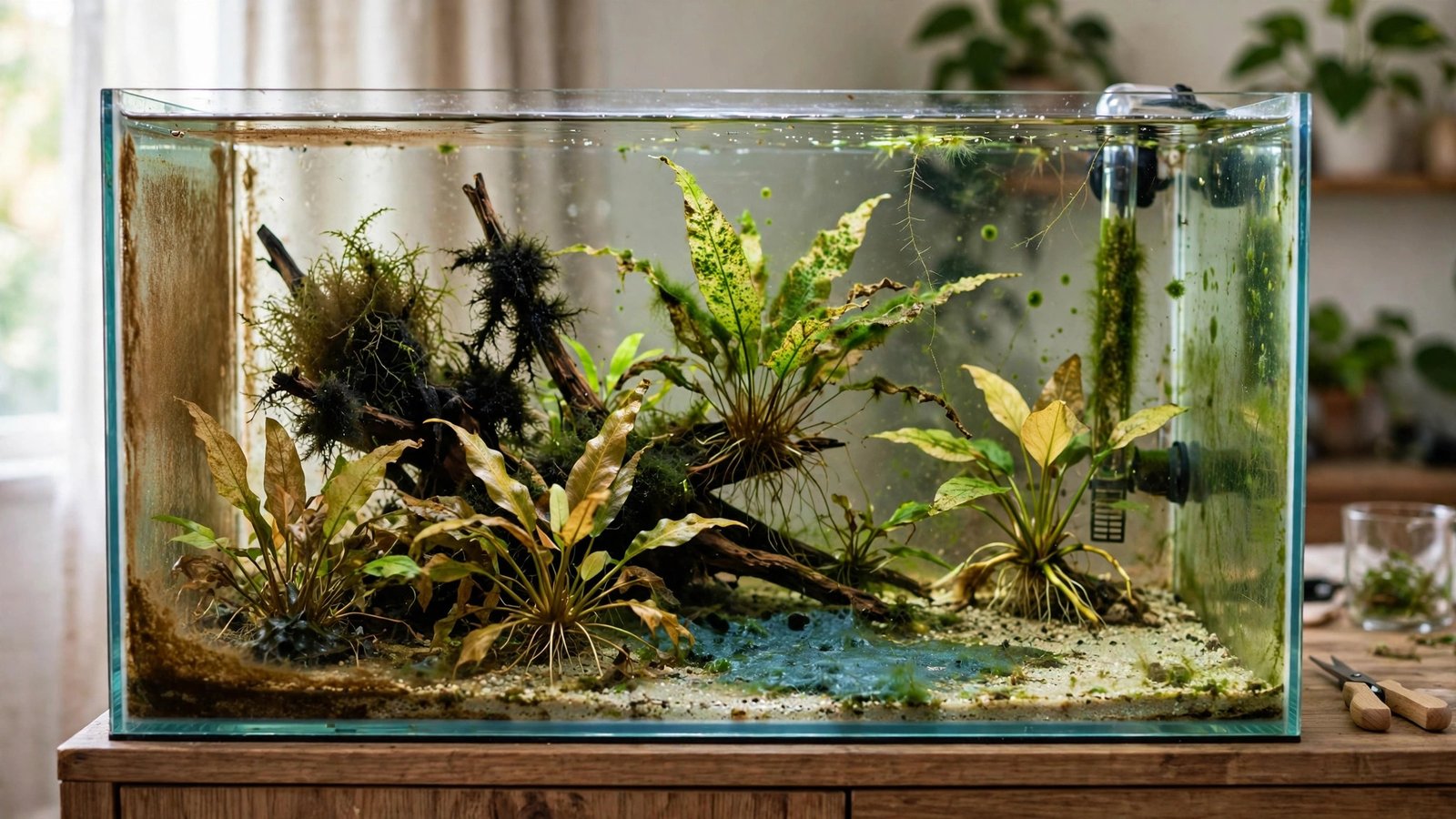
Every planted tank owner has a story about their first one — the Java fern that melted overnight, the algae bloom that swallowed a month of work, the expensive carpet that never carpeted. A first planted tank fails less often because the plants are hard and more often because the beginner repeats the same handful of beginner planted tank mistakes. The good news: every one of these errors is avoidable once you know what to watch for.
This guide walks through the classic errors that kill a first planted tank, why each one matters biologically, and what to do instead. Get these right and your first scape will be thriving by week eight instead of restarting at week six.
1. Skipping the Nitrogen Cycle
The single most common beginner planted tank mistake is adding fish and plants to brand-new water on day one. A new tank has no established colony of nitrifying bacteria, so fish waste becomes ammonia that burns gills and poisons livestock within days. Plants do absorb some ammonia, but a sparse starter planting cannot process the output of a fully stocked tank.
Cycle the tank before adding fish: add an ammonia source, monitor ammonia, nitrite, and nitrate with a liquid test kit, and wait until ammonia and nitrite read zero for several consecutive days. This takes two to six weeks. If you already stocked too early, daily partial water changes and a bacterial starter keep things survivable. Read the full walkthrough in our guide to cycling a planted tank before you add a single fish.
The fix for mistake #1: own a liquid test kit and actually use it: API Freshwater Master Test Kit.
2. Getting the Light Wrong
Lighting is the engine of a planted tank, and beginners tend to push it too hard. Blasting a basic LED for twelve hours a day does not grow plants faster — it grows algae faster. Algae is simply better than your plants at exploiting excess light, especially before the plants have rooted and established.
Start conservative: six to eight hours of light per day, on a timer so it is consistent. Increase duration or intensity only when plant growth is visibly healthy and algae is under control. Equally, too little light starves even easy plants — if stems stretch leggy toward the surface and lower leaves drop, the tank wants more light, not more fertilizer. And resist the urge to run the lights around the clock "to help the plants." Plants need a dark period to respire, just like they need the photoperiod to photosynthesize.
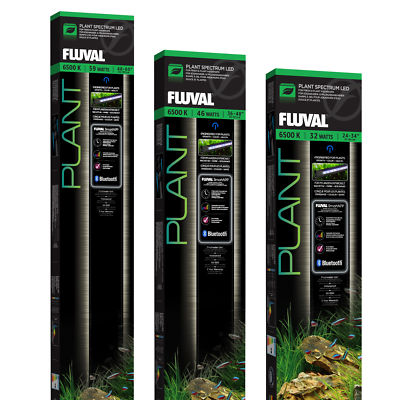
The fix for mistake #2: a dimmable, full-spectrum planted LED instead of the stock kit light: Fluval Plant 3.0 LED.
 ★4.3
Fluval Plant 3.0 LED Planted Aquarium Lighting, 22W
Check Price on Amazon ★4.33. Starving Plants of Fertilizer
Many beginners assume fish waste is enough fertilizer. It is not — not for most plants, and not once the tank is past the first month. Fish waste supplies nitrogen and phosphate but almost no potassium or iron, and none of the trace elements plants need. The result is classic deficiency patterns: pinholes in older leaves, yellowing new growth, stunted tips.
Use an all-in-one liquid fertilizer dosed weekly, following the product's label, and root tabs for heavy root feeders like swords and crypts. Dosing small amounts regularly beats occasional large doses. Nutrient-rich approaches like the Walstad method build that nutrition into the soil substrate itself, which is worth understanding even if you dose liquid fertilizer.
The fix for mistake #3: dose a balanced liquid fertilizer from day one: Seachem Flourish.
4. Choosing Plants That Don't Match the Setup
Walk into a shop, pick the prettiest bunches, and you will probably walk out with demanding species: Monte Carlo that needs high light and CO2, red stems that need intense lighting to stay red, carpet plants that want enriched substrate. In a low-tech tank without injected CO2, they melt within weeks, and the beginner concludes they "can't keep plants."
Match the plants to the hardware you actually own. With basic lighting and no CO2, lean on proven easy growers: anubias, Java fern, crypts, vallisneria, and hardy stem plants like anacharis and water wisteria. If you are running a simpler setup, starting with a low-tech planted tank and easy species is the fastest route to early success — upgrade to demanding plants only after the first tank is stable.
5. Substrate Too Shallow or the Wrong Type
Two inches of inert gravel looks fine, but heavy root feeders starve in it and stems pull loose at the slightest current. At the other extreme, a full nutrient-rich aquasoil bed with no cap in a beginner's hands can leach ammonia for weeks and fuel an algae farm before the cycle finishes.
Aim for two to three inches of depth, sloping slightly deeper at the back for visual depth. Nutrient-rich aquasoils reward you with explosive early growth but demand water changes during the ammonia-leaching phase; inert sand or gravel is more forgiving and works beautifully with root tabs. Beginners on a budget often do well with a dirted tank setup — organic potting soil capped with sand — which delivers nutrients at almost no cost if you cap it deeply enough.
6. Planting Incorrectly
How you place plants on day one decides whether they root or rot. The classic error is burying rhizome plants — anubias, Java fern, bucephalandra — in the substrate. Their rhizomes rot when buried, and the plant dies even though the leaves looked healthy at the shop. Tie or glue rhizome plants to hardscape instead.
Other planting errors pile up: leaving stem bunches bound with their metal weights so inner stems rot, spacing stems so tightly that no light reaches the lower leaves, and planting potted plants with the rockwool still wrapped around the roots. Remove pots, foam, and weights, rinse the roots gently, and plant stems individually with space between them. Give the tank a full planting from the start rather than two lonely stems in a corner — learn how many plants a new aquarium needs, because a densely planted tank outcompetes algae from day one.
7. Stocking Fish Too Fast and Too Many
An empty planted tank looks boring, so the temptation is to fill it with fish immediately. Every fish added before the bacteria colony is ready adds ammonia the system cannot process, and overstocking compounds the problem by generating more waste than the filter and plants can handle — no matter how good the scape looks.
Stock slowly: a few small fish at a time, a week or two apart, watching test-kit readings between additions. Keep the final stocking modest for the tank's volume; a lightly stocked tank is easier to keep balanced than a packed one, and the plants benefit from the gentler bioload. Remember that a planted tank's filter still needs to turn over the water several times per hour — plants supplement filtration, they do not replace it.
8. Neglecting Water Changes and Maintenance
The "balanced ecosystem" myth convinces beginners that planted tanks need no water changes. Even a well-planted tank accumulates dissolved organics, resets its minerals, and benefits from fresh water. Skipping changes lets nitrates climb, algae take hold, and trace minerals deplete.
Change twenty to thirty percent of the water weekly, siphoning visible debris from the substrate surface without uprooting plants. Trim stems regularly and replant the healthy tops — pruning is not optional cosmetics; it stimulates bushier growth and removes algae-prone old leaves. A written planted tank maintenance schedule turns this into habit instead of a chore you remember when something looks wrong.
9. Panic-Rescaping Every Week
When algae appears or plants melt, the beginner instinct is to tear everything up: move the hardscape, replant the stems, change the light schedule, swap the fertilizer — all in one weekend. Constant rescaping resets root systems, stirs up the substrate, releases trapped organics into the water column, and restarts the algae cycle you were trying to escape.
Change one variable at a time and give each change two to three weeks before judging it. Reduce the photoperiod first, since light is the biggest algae lever; then review dosing; then consider livestock like a small cleanup crew. A tank that looks rough in week three can look magnificent in week eight if you let the plants establish instead of restarting the clock every few days.
Your First 30 Days: Avoiding Beginner Planted Tank Mistakes
If the list above feels like a lot, reduce it to this: cycle before fish, light six to eight hours on a timer, dose fertilizer weekly, plant heavily from day one, change water weekly, and touch nothing else for a month. Most first-tank disasters trace back to impatience somewhere in that chain. A simple, well-stocked first planted tank shopping list also keeps you from buying gear you do not need and forgetting gear you do.
Beginners also worry about cost spiraling. It does not have to: see our planted aquarium cost breakdown to budget the first tank honestly before you buy.
Frequently Asked Questions
Why are my new aquarium plants melting?
Melting is usually transplant shock, not death. Farm-raised plants grow emersed (out of water) and must shed those leaves to grow submerged ones suited to your tank. Cryptocorynes are notorious for melting after any change. Leave the roots undisturbed, trim away fully melted leaves, keep parameters stable, and most plants push out new growth within two to four weeks.
How long should I run my planted tank lights each day?
Six to eight hours is the safe starting range for a new tank, controlled by a timer for consistency. Longer photoperiods mostly benefit algae until plants are established. Once growth is vigorous and algae is minimal, you can extend toward eight to ten hours. If algae blooms, shorten the photoperiod before changing anything else — light is the strongest lever you have.
Do I need CO2 injection for a beginner planted tank?
No. Plenty of beautiful tanks run for years without injected CO2 using easy plants, moderate light, and regular fertilizer. CO2 accelerates growth and unlocks demanding species, but it adds cost, complexity, and new ways for a beginner to go wrong — unstable CO2 causes more algae than no CO2. Master the low-tech fundamentals first, then add CO2 when you are ready for high-tech species.
Can fish waste really not fertilize my plants enough?
Fish waste supplies nitrogen and phosphate but lacks potassium, iron, and trace elements, so deficiencies appear even in stocked tanks. Think of waste as a partial fertilizer: helpful, but incomplete. A basic all-in-one liquid fertilizer fills the gaps, and root tabs handle heavy root feeders. Dosing remains necessary even in heavily stocked tanks.
How soon can I add fish to a new planted tank?
Only after the nitrogen cycle completes — typically two to six weeks, confirmed by test readings of zero ammonia and zero nitrite. Plant heavily from day one, since plants help process ammonia during the cycle, but do not use that as an excuse to skip cycling. Adding a few hardy fish at a time after the cycle finishes keeps the biology stable.
Start Simple, Stay Patient
Almost every beginner planted tank mistake has the same root cause: rushing. Rushing the cycle, rushing the stocking, rushing to fix algae with three changes at once. The hobby rewards the opposite instinct — set the tank up correctly, plant it generously, then give it weeks of steady routine before you judge the results. The tanks you admire online looked rough at week three too. Learn the fundamentals, avoid the errors above, and your first planted tank will be the one people assume is your fifth. For an authoritative second opinion on species selection, the Tropica plant database lists difficulty ratings for hundreds of aquarium plants, and 2Hr Aquarist offers research-backed guides on fertilization and algae control.