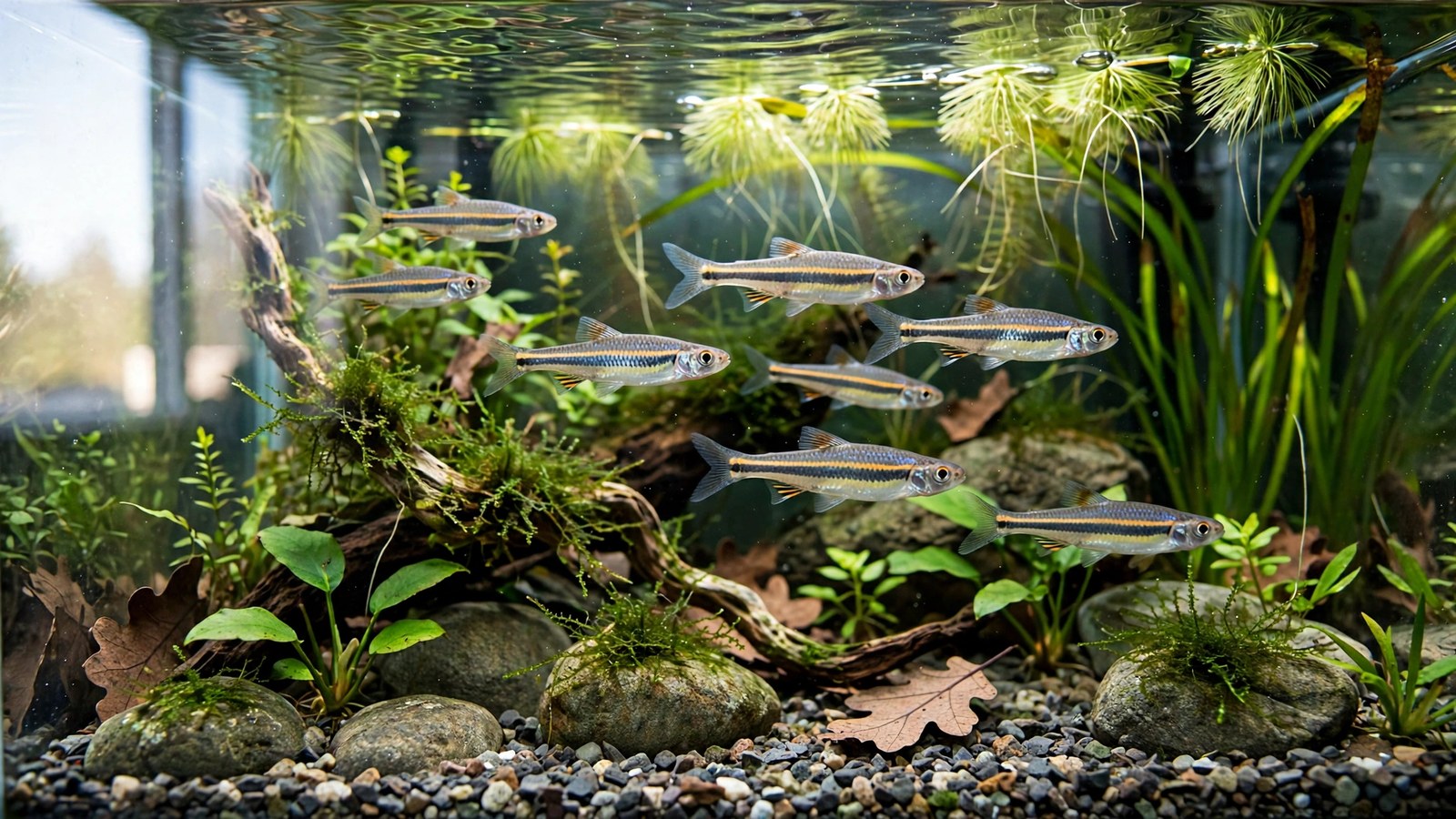
The most spectacular schooling display in cool-water aquaria belongs to a fish that has never seen a heater. A rainbow shiner planted tank runs unheated at 50–75°F with a gentle river current across smooth pebbles, housing a school of Notropis chrosomus — a North American native minnow whose males erupt into electric blue, purple, and fire-red breeding color. Here is how to build one.
A rainbow shiner planted tank is an unheated 20-gallon-long setup kept at 50–75°F with moderate river-style flow and oxygen-rich water. School 10+ shiners (Notropis chrosomus, Mobile River basin native) with smooth pebbles and cool-tolerant plants — anubias, java fern, hornwort. No heater, ever.
First, Get the Name Right: This Is No Rainbowfish
The name causes genuine confusion, so let's clear it up. The rainbow shiner (Notropis chrosomus, also Hydrophlox chrosomus) is a North American native minnow in the Leuciscidae family. Australia's rainbowfishes (like the Boeseman's rainbow tank setup) belong to Melanotaeniidae and need warm tropical water in the high 70s to low 80s.
Different families, different continents, different temperature regimes. If you bought your shiners expecting a tropical rainbowfish and installed a heater set to 78°F, rethink it — you have a coldwater native that evolved in southeastern U.S. streams. Treat it like one, and it will reward you with breeding color those tropical rainbows can't match.
The Coldwater Native Story
Rainbow shiners come from the clear, gravel-bottomed streams of the Mobile River basin — Alabama, Georgia, and Tennessee. They hold in riffles where water moves constantly and stays cool and oxygen-saturated. The trade fish are captive-bred, but cool water, flow, and oxygen make them behave like wild fish.
Outside breeding season the school is a shimmer of translucent gold-pink with a dark lateral stripe. Then spring arrives and the dominant males transform — heads flush electric blue-purple, noses turn red, fins flare with neon intensity. One of the hobby's most dramatic seasonal color shifts, triggered by good water, good food, and a proper school. For how flow affects cool-water setups, see the coldwater planted tank guide.
Your Rainbow Shiner Planted Tank: Parameters That Matter
The parameters behind this keyword heading are refreshingly forgiving. Rainbow shiners tolerate a wide band of cool water but do their best in the middle of it. Set your expectations from this table, then build the hardscape around it.
| Parameter | Target | Notes |
|---|---|---|
| Temperature | 50–75°F (10–24°C) | 60–72°F ideal; no heater, ever |
| pH | 6.5–7.8 | Neutral to slightly alkaline |
| Hardness | 5–15 dGH | Soft to moderately hard |
| Ammonia / nitrite | 0 ppm | High oxygenation required |
| Nitrate | Under 30 ppm | Plants + water changes |
| Tank footprint | 20 gal long (30″+) | Length beats height |
Cycle the tank fully before the school arrives — cool water holds more oxygen, but bacteria establish more slowly at low temperatures, so give the filter four to six weeks to mature.
River-Flow Hardscape: Pebbles, Driftwood, Current
Think riffle, not reef. Use smooth, fine-to-medium gravel or rounded pebbles — no sharp crushed rock; these fish graze the bottom and spawn over the substrate. Pile smooth river stones along one side to break the current into eddies, and add one or two driftwood pieces angled into the flow for structure and shelter.
Then add motion. A small powerhead or a canister filter with a spray bar aimed lengthwise down the tank creates the moderate, oxygen-rich current they evolved for. Aim for a gentle swaying of plants without pinning the fish to one end — a lively stream reach, not a whitewater chute. Turnover rates and placement are covered in the planted tank water flow guide.
Cool-Water Plants That Actually Thrive Here
Warm-water stems will sulk in an unheated tank, so choose plants that evolved for temperate streams. Anubias (barteri, nana) tied to driftwood, java fern anchored to stone, and floating hornwort are the workhorse trio: all tolerate 50–75°F easily and the hornwort doubles as a nutrient sponge that keeps nitrates low. Browse the broader selection logic in the aquarium plants for fish tank guide to build your full stocking list.
Plant in loose drifts along the current edges, leaving the center open as a swimming lane. Bright, high-rendering LED light makes the males' metallic blue sheen flash. For a sparse river look rather than a dense jungle, follow the principles of a lightly planted aquarium setup.
School Size and Feeding
Ten is the floor, not the ceiling. In groups of six or eight, rainbow shiners school nervously and the males rarely color up; at ten to fifteen, they settle into bold schooling, spar, and the males' spring display goes full throttle. A 20-gallon long holds twelve to fifteen adults comfortably.
Feed them like the drift feeders they are: small meals twice daily that stay suspended in the current — crushed micro-pellets, fine flake, and frozen daphnia or baby brine shrimp two or three times a week. Variety keeps the reds red and the blues blue. Feed only what the school finishes in two minutes; sinking leftovers rot fast in a cool tank.
Tank Mates: Temperate Only
Every tank mate must share the same three requirements: cool water, oxygen, and current. The classic pairing is white cloud mountain minnows — equally hardy, equally unheated, and their gold forms contrast beautifully with the shiners' blue. For the bottom, hillstream loaches are perfect: they demand the same flow and cool water and graze the stones without disturbing anyone.
Peppered corydoras and neocaridina shrimp work too — shiner mouths are too small to threaten adult shrimp. Keep tropical tetras, guppies, and warm-water gouramis out entirely: they need heat the shiners must never get.
Seasonal Temperature Management
An unheated tank follows your home's seasons — a feature, not a bug. Room-temperature summers in the low to mid 70s are perfect; breeding colors often peak as spring warming nudges temperatures upward. Past 78°F, increase surface agitation, open the lid, and run a small fan across the surface.
In winter, a cool house is fine: 55–60°F is well within their comfort zone. What harms fish is not cold but instability — never let a heater, direct sunlight, or a drafty window swing the temperature more than a few degrees in a day. For the species profile behind these ranges, check Aquarium Glaser's rainbow shiner species profile.
Frequently Asked Questions
Do rainbow shiners need a heater?
No — never. Rainbow shiners thrive at 50–75°F in an unheated tank, doing best around 60–72°F. A heater set to tropical temperatures is the most common keeper mistake, leading to washed-out color and weakened immunity.
How many rainbow shiners should I keep together?
Keep at least 10 in a 20-gallon long or larger; 12–15 is ideal. Smaller groups become shy, school poorly, and the males rarely develop their electric blue and red breeding colors.
Are rainbow shiners the same as rainbowfish?
No. Rainbow shiners (Notropis chrosomus) are North American native minnows (family Leuciscidae) needing cool, unheated water. Rainbowfishes (Melanotaeniidae) are Australian tropicals needing 75–82°F. Similar names; entirely different fish.
What plants survive in an unheated rainbow shiner tank?
Anubias, java fern, and hornwort are the reliable trio — all tolerate 50–75°F and need no special care. Java moss and cryptocorynes also work. Skip warm-water stems and anything rated tropical-only.
Can rainbow shiners live with white cloud minnows?
Yes — one of the best pairings in the hobby. Both are peaceful, schooling, unheated-water cyprinids sharing the same temperature range, flow preferences, and diet. Hillstream loaches make an equally compatible bottom-dwelling addition.
Build It for the River, Get the Rainbow
A rainbow shiner planted tank asks for almost nothing — no heater, no CO2, no exotic gear — and returns one of the hobby's great seasonal spectacles. Give the school cool, moving, oxygen-rich water over smooth pebbles, plant the edges with undemanding species, and let the males' spring transformation reward you.