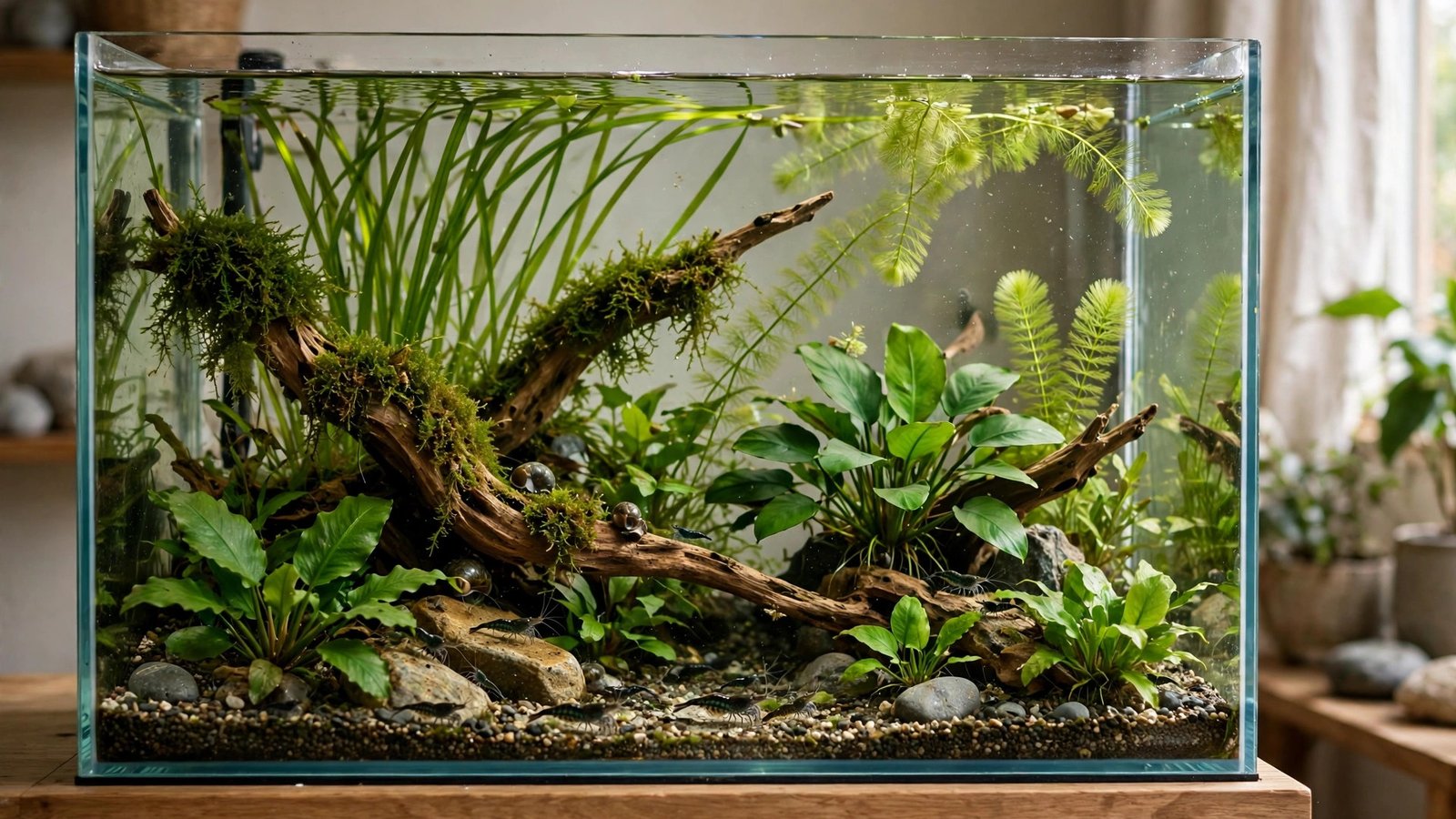
Most aquarists treat a heater as mandatory tank furniture — plug it in, set 78°F, never think about it again. But a whole category of planted tanks thrives with no heater at all, and once you know which plants and fish actually prefer cooler water, a cold water planted tank becomes the cheapest, simplest, and most forgiving setup you'll ever run. This guide walks you through the coldwater method from an empty tank to a lush, balanced, heater-free aquarium.
What "Coldwater" Actually Means in a Planted Tank
"Coldwater" is a fuzzy term, and pinning it down saves you from the single most common no-heater mistake: stocking a tank that merely feels cold to you but is actually warm to the animal in it. In hobby terms, a coldwater planted tank holds 60–72°F (16–22°C) year-round without any heating equipment, following your room's ambient temperature. That is distinctly cooler than a tropical tank's 75–80°F, and distinctly warmer than a true temperate pond that can dip into the 50s.
Why does the distinction matter? Metabolism in fish and plants is temperature-driven. Below about 68°F, tropical species like neon tetras and bettas become sluggish and lose immune function — they do not "tough it out," they slowly die. Temperate species evolved for exactly this range: white cloud mountain minnows spawn in spring water in the low 60s. Cool water also holds more dissolved oxygen and CO2, which is why a heaterless tank with good plant mass resists the green-water blooms and algae spirals that plague warm, over-lit beginner tanks.
One clarification before we go further: skipping the heater is not the same as going full low-tech or filterless. A coldwater tank is a specific temperature method, and it works best paired with a deliberately low-tech build. If you are still weighing whether to heat at all, read our guide on whether a planted tank actually needs a heater for the climate-by-climate breakdown — this article picks up where that decision ends.
Coldwater vs. Tropical: What Changes When You Skip the Heater
Dropping the heater changes more than your power bill. Here is the honest comparison:
| Factor | Coldwater planted tank | Tropical planted tank |
|---|---|---|
| Equipment cost | Lower — no heater, often no CO2 | Higher — heater, thermostat, often CO2 |
| Running cost | Very low; light + filter only | Moderate; heater is the biggest power draw |
| Plant growth speed | Slower but steadier | Faster, especially with CO2 |
| Algae pressure | Lower — cooler water, slower nutrient cycling | Higher — warm water accelerates everything |
| Species choice | Narrower, temperate-only | Very wide |
| Seasonal stability | Depends on room; AC rooms are the risk | Heater buffers seasonal swings |
| Forgiveness of mistakes | High — slow metabolism, fewer crashes | Lower — warm water amplifies errors |
The real trade-off is simple: you give up speed and tropical species diversity, and in exchange you get a tank that costs almost nothing to run and tolerates beginner mistakes gracefully. That is why coldwater builds are such a strong fit for an low-tech planted tank setup — the same slow-and-steady philosophy applies to both.
The Coldwater Plant Palette
Not every aquarium plant tolerates 65°F. Tropical stunners like Rotala macrandra or Limnophila aromatica will stall, melt, and rot in a coldwater tank, and no amount of fertilizer fixes a temperature mismatch. The plants below are the workhorses — all of them grow actively at 60–72°F, and most are fast enough to outcompete algae during the cycling phase.
| Plant | Type | Min temp | Role in the scape |
|---|---|---|---|
| Java fern (Microsorum pterotoides) | Epiphyte | 60°F | Attach to wood/rock; bulletproof in cool water |
| Anubias barteri / nana | Epiphyte | 64°F | Midground anchor; slow but steady |
| Hornwort (Ceratophyllum demersum) | Floating/stem | 50°F | Fast nutrient sponge for cycling |
| Anacharis (Elodea densa) | Stem | 50°F | Background wall; grows in near-freezing water |
| Java moss | Moss | 60°F | Carpet-ish cover on hardscape |
| Cryptocoryne wendtii | Rosette | 64°F | Midground; plant it and leave it alone |
| Vallisneria spiralis | Background | 60°F | Tall grass; runners fill the back fast |
| Bucephalandra spp. | Epiphyte | 64°F | Accent plant for wood; slow premium look |
| Duckweed / frogbit | Floater | 60°F | Light control; remove handfuls weekly |
| Water sprite (Ceratopteris thalictroides) | Stem/float | 64°F | Quick fill-in; doubles as fry cover |
How to arrange them
Coldwater tanks look best a little wild — dense, layered, pond-edge inspired. Plant 60–70% of the substrate on day one; cool-water growth is too slow to fill a sparse tank quickly, so you front-load the plant mass. Put hornwort and anacharis in the back as your fast growers (your algae insurance), vallisneria along the sides, crypts and anubias midground, and java fern and buce on the wood up front. A modest floater cover — no more than 30% of the surface — dims the light and keeps algae in check.
One legal note worth taking seriously: anacharis and some other cool-water pond plants are invasive species in many US states. Never dump trimmings or tank water into waterways — bag them and trash them. The USGS Nonindigenous Aquatic Species database can confirm whether a plant is a concern in your state. For verified care details on individual species, the Tropica plant database lists temperature ranges and difficulty for hundreds of species.
Equipment Checklist: What a No-Heater Tank Actually Needs
The heater is gone, but everything else stays. Cutting equipment beyond the heater is the classic false economy of no-heater builds.
- Tank: 20 gallons or larger. Bigger water volumes swing temperature slowly; a 5-gallon unheated bowl can drop 6°F overnight in a cool room. If you are set on a small tank, keep it in the warmest room you have and monitor daily — small unheated volumes are the least forgiving.
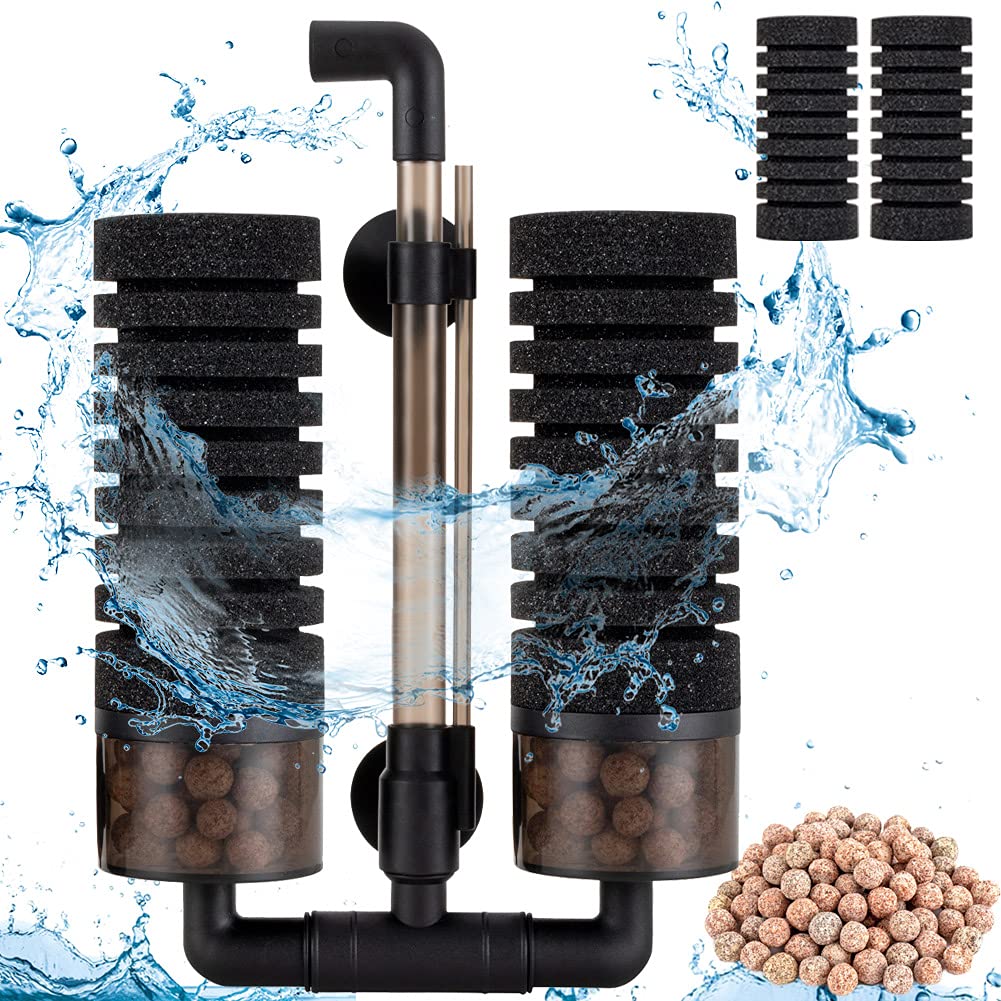
- Filter: Yes — a gentle hang-on-back or sponge filter sized for your tank. Beneficial bacteria colonize slower in cool water, so you need more surface area, not less.
- Light: A full-spectrum LED on a timer, 6–8 hours daily to start. Cool water plus strong light is still an algae recipe if the photoperiod runs wild.
- Substrate: Nutrient-rich soil capped with sand, or plain inert gravel with root tabs under the heavy root feeders (crypts, vallisneria).
- Thermometer: A stick-on or digital thermometer is non-negotiable. "My room feels warm" is not a measurement. Check it against the ideal planted tank water parameters and confirm your tank actually holds 60–72°F through a cold snap before stocking.
- Heater (backup?): Keep a small one in a drawer. You may not need it for nine months of the year, but if a winter storm knocks out your heating, it is the cheapest insurance in the hobby.
Step-by-Step: Setting Up Your Coldwater Planted Tank
- Place and level the tank. Pick an interior wall away from windows, radiators, and AC vents. A room that stays 65–75°F year-round is ideal; the tank will run a few degrees cooler than the room.
- Add substrate. Lay 1–1.5 inches of aquasoil or organic potting soil (mineralized, no perlite), cap with 1–2 inches of fine gravel or coarse sand. Slope it slightly higher at the back.
- Hardscape, then plant dry. Arrange wood and rock, then plant everything before adding water — roots seat properly and crypts do not float up. Plant at the 60–70% density target from the palette above.
- Fill slowly. Lay a plastic bag or plate over the substrate and pour onto it. Cold tap water is fine — no need to pre-warm anything. Dose a dechlorinator.
- Start the filter and light. Filter runs 24/7 from day one. Light on a timer: 6 hours daily for the first month, then extend to 7–8 if plants are thriving and algae is absent.
- Cycle with the silent method. Cool water grows beneficial bacteria slowly, so lean on plants instead of chemicals. Our silent cycling guide covers this exactly: dense fast growers absorb ammonia directly while the bacterial colony builds over 4–6 weeks. Test ammonia and nitrite weekly; do not add fish until both read zero for a full week.
- Water changes during cycling. 25–30% weekly with temperature-matched tap water. Coldwater plants are sensitive to sudden temperature shocks from cold water changes — let the bucket sit until it is within 2°F of the tank.
- Stock lightly, then wait. Add your first small school in week 5–6 if parameters are stable. Feed sparingly for the first two weeks — uneaten food in a cool, slow-metabolism tank fouls water faster than you expect. Follow our first-month week-by-week guide for the adjustment period.
 ★4.2
hygger Double Sponge Filter
Check Price on Amazon ★4.2Best Livestock for a Coldwater Planted Tank
Temperate species only — this is the rule that cannot be bent. "Hardy tropical" fish like guppies are sometimes suggested for unheated tanks, but "survives" is not "thrives," and a 64°F winter night will stress them badly.
| Species | Temp range | Tank min | Notes |
|---|---|---|---|
| White cloud mountain minnow | 60–72°F | 10 gal | The classic. Schools beautifully, breeds in plants. See our white cloud minnow tank build. |
| Zebra danio / leopard danio | 64–74°F | 20 gal | Active swimmers; need horizontal space |
| Cherry shrimp | 60–72°F | 5 gal | Excellent cleanup crew; breed readily in cool water |
| Amano shrimp | 60–75°F | 10 gal | The best algae eaters in the hobby |
| Nerite snail | 65–80°F | 5 gal | Algae machine; will not breed in freshwater |
| Goldfish (fancy) | 65–72°F | 30+ gal | Gorgeous but destructive — plant only tough species like anubias and java fern; read our planted goldfish guide first |
| Axolotl | 60–64°F | 20 gal | Amphibian, not fish; bare or sand bottom only; full details in our planted axolotl setup |
| Hillstream loach | 68–75°F | 20 gal | Needs high flow and oxygen; a coldwater specialty |
Start with one school (8–10 white clouds or danios) plus a shrimp-and-snail cleanup crew. That is a full bioload for a newly cycled cool tank. Add a second species only after two stable months.
Frequently Asked Questions
Do I really not need a heater in a coldwater planted tank?
Correct — that is the whole point of the method. If your room stays above roughly 60°F year-round, temperate plants and fish do not need supplemental heat. The one exception is a true winter emergency: if your home heating fails and the room drops below 55°F for days, use the backup heater from your drawer. A thermometer on the glass, checked daily in winter, is your early-warning system.
Can I keep tropical plants in an unheated tank?
Not reliably. Most tropical species stall below 70°F and melt below 65°F, and the failure looks like a nutrient deficiency — which sends people chasing fertilizers for a temperature problem. Stick to the coldwater palette in this guide. If you love a specific tropical plant, that is your signal to heat the tank instead.
Will a coldwater tank take longer to cycle?
Yes, somewhat. Beneficial bacteria reproduce slower in cool water, so a classic fishless cycle can take 6–8 weeks instead of 4. This is why the silent cycle — cycling with heavy plant mass instead of an ammonia dose — is the recommended method here. Fast growers like hornwort and anacharis absorb ammonia directly, making the bacterial timeline far less critical.
Can I mix coldwater and tropical fish if the tank is "warm enough"?
No — this is the most common stocking mistake. A tank held at 74°F by room heat is tropical, not coldwater: your white clouds will live shorter, less colorful lives, and it still is not warm enough for true tropicals. Pick a lane. Coldwater means temperate species only, tropical means a heater and tropical species only.
Does a coldwater tank need CO2?
No. Cool water naturally holds more dissolved CO2 than warm water, and the slow-growth plant palette does not demand supplementation. Most coldwater tanks thrive with liquid carbon or nothing at all. If you later want faster growth from the same plants, CO2 works fine at these temperatures — but it is optional, not required.
How do I keep the temperature stable in winter?
Three things: tank size (20+ gallons resists swings), placement (interior wall, away from windows and exterior doors), and a lid or partial cover to cut evaporative cooling. Monitor with a thermometer; if your room reliably dips under 60°F at night, either move the tank to a warmer room or admit it is a tropical tank and install a heater. Do not let pride freeze your fish.
The Payoff: A Tank That Practically Runs Itself
A finished coldwater planted tank is the closest thing the hobby has to a self-sustaining ecosystem. The plants grow at a measured, manageable pace. The fish behave the way nature intended at their native temperatures. Your power bill barely notices the tank exists. Give it its first month of attentive cycling, keep the room reasonable, and it will reward you with years of low-maintenance green.