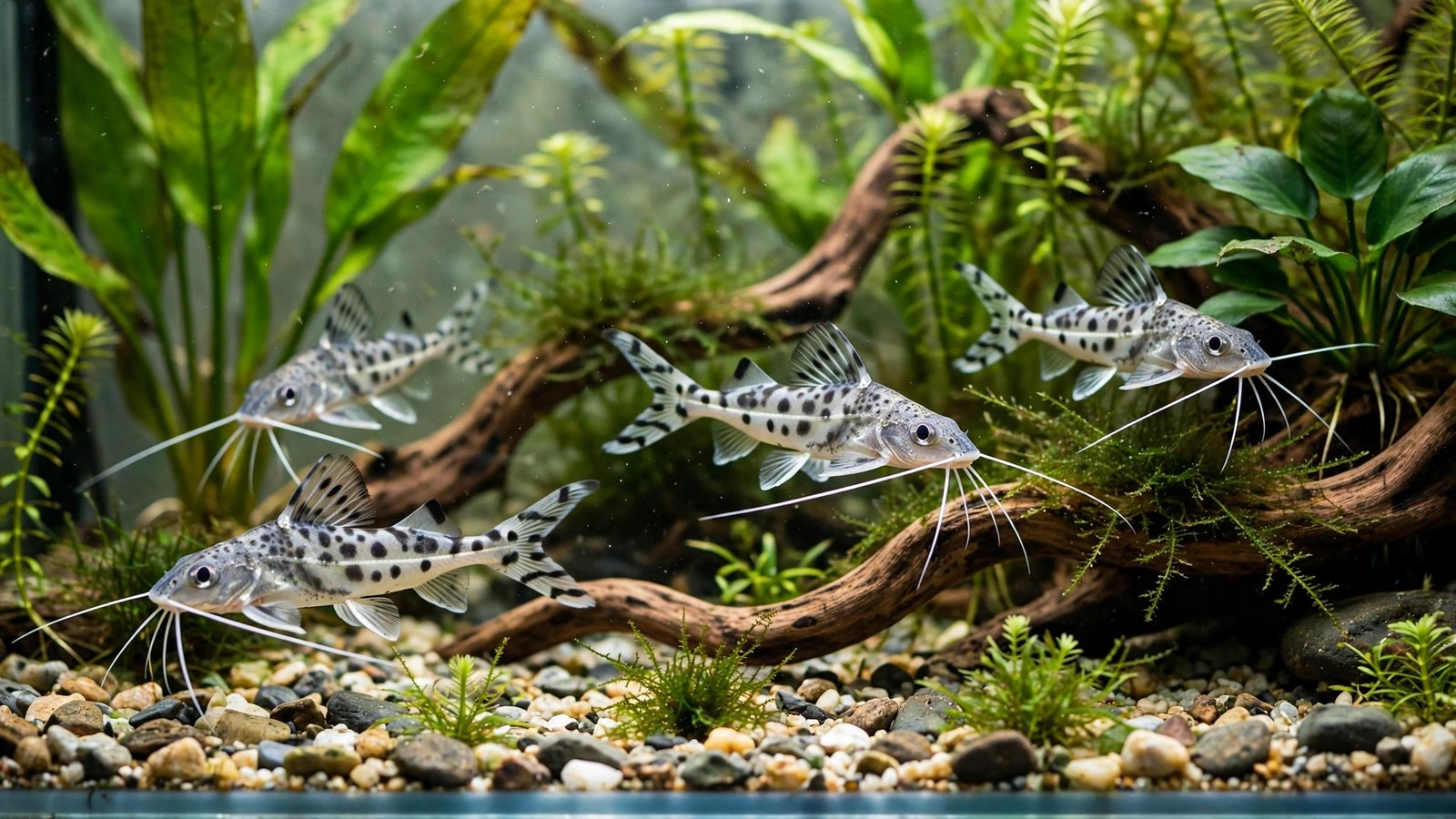
Many aquarists lose their pictus catfish before the fish ever gets comfortable — not to disease, but to two beginner mistakes: a tank far too short for an animal that sprints, and tankmates small enough to vanish overnight. A pictus catfish planted tank, done right, is one of the most alive aquariums you can own: six spotted catfish bursting out of the plants at dusk while your aquascape stays intact. This guide covers tank size, water, dig-proof plants, and the tankmate rule that keeps small fish safe.
Why a Pictus Catfish Planted Tank Works So Well
Pimelodus pictus is a social, energetic catfish from South America's fast-flowing rivers, recognizable by its silver body, black spots, and whisker-like barbels. In the wild it weaves through submerged wood, hiding by day and hunting after dark. A planted tank recreates that habitat — see our guide to aquarium plants selected with fish needs first for the selection philosophy behind this approach.
Tank Size: The Number-One Beginner Mistake
The single most common reason pictus catfish die young is an undersized tank. A pictus reaches about 5 inches, but the real issue is speed: these fish are sprinters. A 20-gallon long is a coffin for them, no matter how clean the water.
For a shoal of 3–4 pictus, a 55-gallon tank (48 inches long) is the absolute minimum. For the full shoaling experience with 5–6 fish, step up to a 75-gallon tank — the extra floor space lets them form the synchronized swimming groups they're famous for. Our 75-gallon planted tank build walkthrough covers filtration and scape layout for a tank this large.
Water Parameters for Pictus Catfish
Pictus are more forgiving than their delicate looks suggest. Unlike many catfish that demand soft, acidic water, they handle a pH of 7.0–8.0 and even moderately hard water — handy if your tap water runs alkaline. Keep temperature between 74–79°F (23–26°C), ammonia and nitrite at zero, and nitrates under 40 ppm.
| Parameter | Target | Notes |
|---|---|---|
| pH | 7.0–8.0 | Moderately hard water tolerated |
| Temperature | 74–79°F (23–26°C) | Avoid swings over 2°F |
| Ammonia / nitrite | 0 ppm | Cycle the tank first |
| Nitrate | < 40 ppm | Weekly 30% water changes |
| Current | Moderate–strong | A powerhead mimics their river habitat |
Cycle the tank completely before your pictus arrive — they're sensitive to ammonia spikes despite their hardiness. A canister filter rated above your tank's volume handles the waste of active, well-fed catfish; see the canister filter guide for planted tanks for sizing.
Plants That Survive Pictus Catfish
Pictus dig. Constantly. They nose into the substrate hunting for morsels, and anything lightly rooted gets excavated within days — delicate carpets and newly planted stems don't survive. Build your planting around three strategies:
- Deep-rooted swords: Amazon swords (Echinodorus bleheri) and other Echinodorus anchor strongly once established and tolerate being bumped.
- Rhizome plants on hardscape: Java fern and Anubias tied or glued to driftwood can't be dug up at all.
- Floating cover: Water sprite or frogbit dims the light, which pictus prefer, and no fish can uproot it.
Plant rooted species before adding the fish, and let them establish 3–4 weeks. For the selection principles behind pairing plants with livestock, the Aquarium Plants for Fish Tanks: The Fish-First Plant Guide covers this fish-first approach. Keep planted tank water parameters suitable for both livestock and plants, since pictus prefer slightly harder water than many soft-water species.
Substrate, Hardscape, and Hiding Spots
Fine sand is non-negotiable. Pictus feed with their barbels pressed to the bottom, and coarse gravel abrades those sensitive whiskers until the fish stops feeding properly. A smooth, dark sand protects barbels and shows off the spotted pattern. Compare options in the best substrate for planted tanks: 7 options compared guide — for pictus, pool-filter sand or fine river sand wins outright.
Pictus hide by day; without cover, they wedge behind filters and stay stressed. Provide:
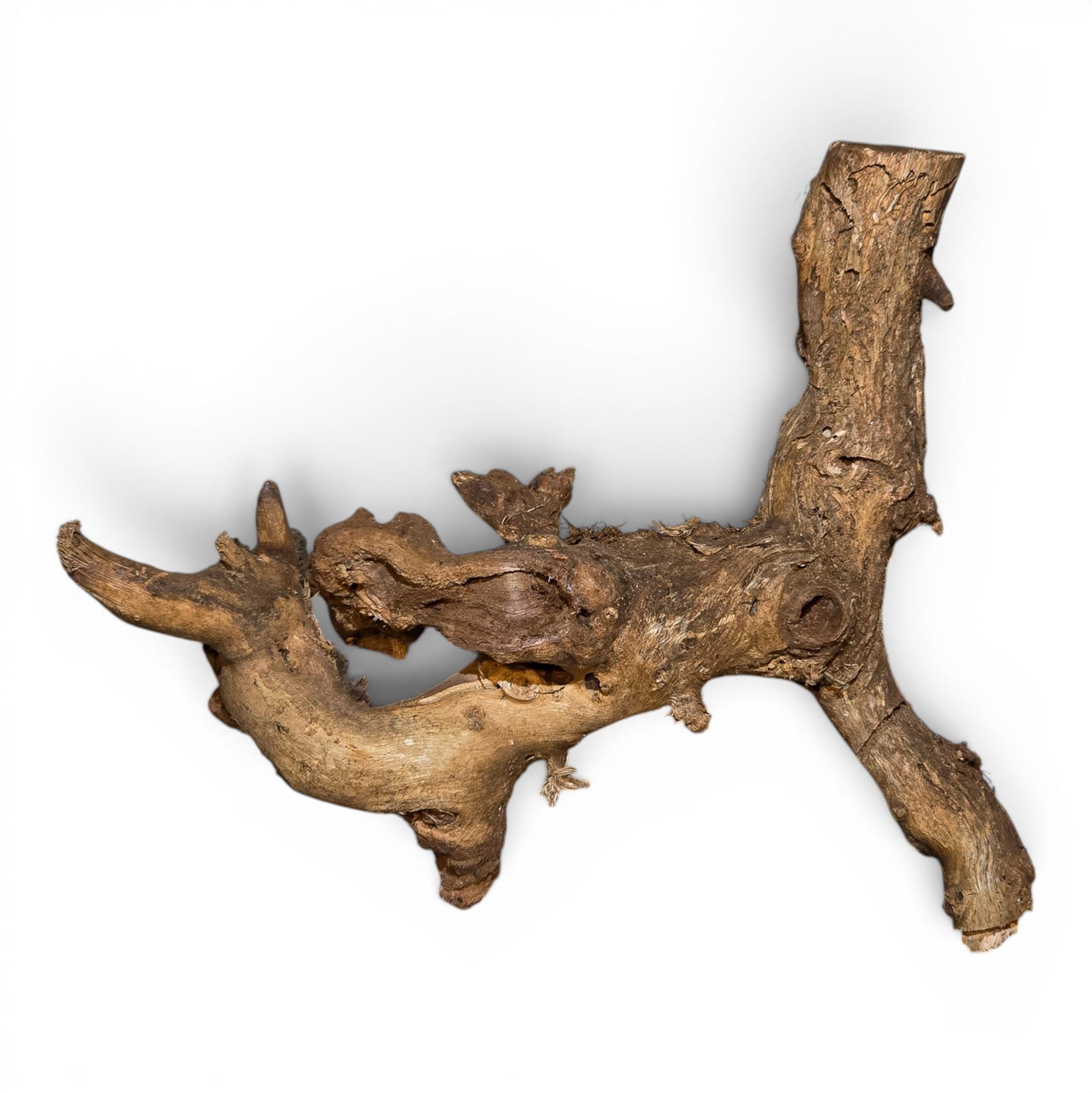
- Driftwood caves: two or three large pieces forming shaded gaps — one territory per fish.
- Smooth river stones: arranged as low overhangs; avoid sharp slate edges.
- Weighted wood: soak or bolt down driftwood so digging doesn't topple it.
 ★3.9
Fluval Mopani Driftwood
Check Price on Amazon ★3.9Tankmates: What Survives and What Gets Eaten
Pictus are peaceful toward fish they can't swallow — and predators toward everything else. They hunt by night, which is why aquarists discover their neon tetras missing at dawn. The rule: if it fits in a pictus's mouth, it eventually becomes dinner.
| Safe tankmates | Why they work |
|---|---|
| Silver dollars, large rainbows | Too big to eat, occupy mid-water |
| Plecos (bristlenose, sailfin) | Armored bottom dwellers |
| Medium cichlids (firemouth, severum) | Size and attitude keep them safe |
| Large tetras (congo, diamond) | Deep-bodied; can't be swallowed |
Pictus scatter food while digging, so they do well with a larger cleanup crew. Our cleanup crew guide for planted tanks lists options that won't become pictus prey.
Feeding a Nocturnal Carnivore
Flake food barely registers with pictus — feed sinking, meaty foods about an hour after lights-out:
- Sinking carnivore pellets (primary staple) — 1–2 small pinches per fish.
- Frozen bloodworms or blackworms — 3–4 times per week, thawed first.
- Frozen brine shrimp or mysis — rotation for variety.
- Occasional blanched vegetables — they nibble but don't rely on them.
Skip a day weekly; pictus overeat easily. Drop food near their hideouts so they find it fast after emerging.
Health and Handling: Respect the Spines
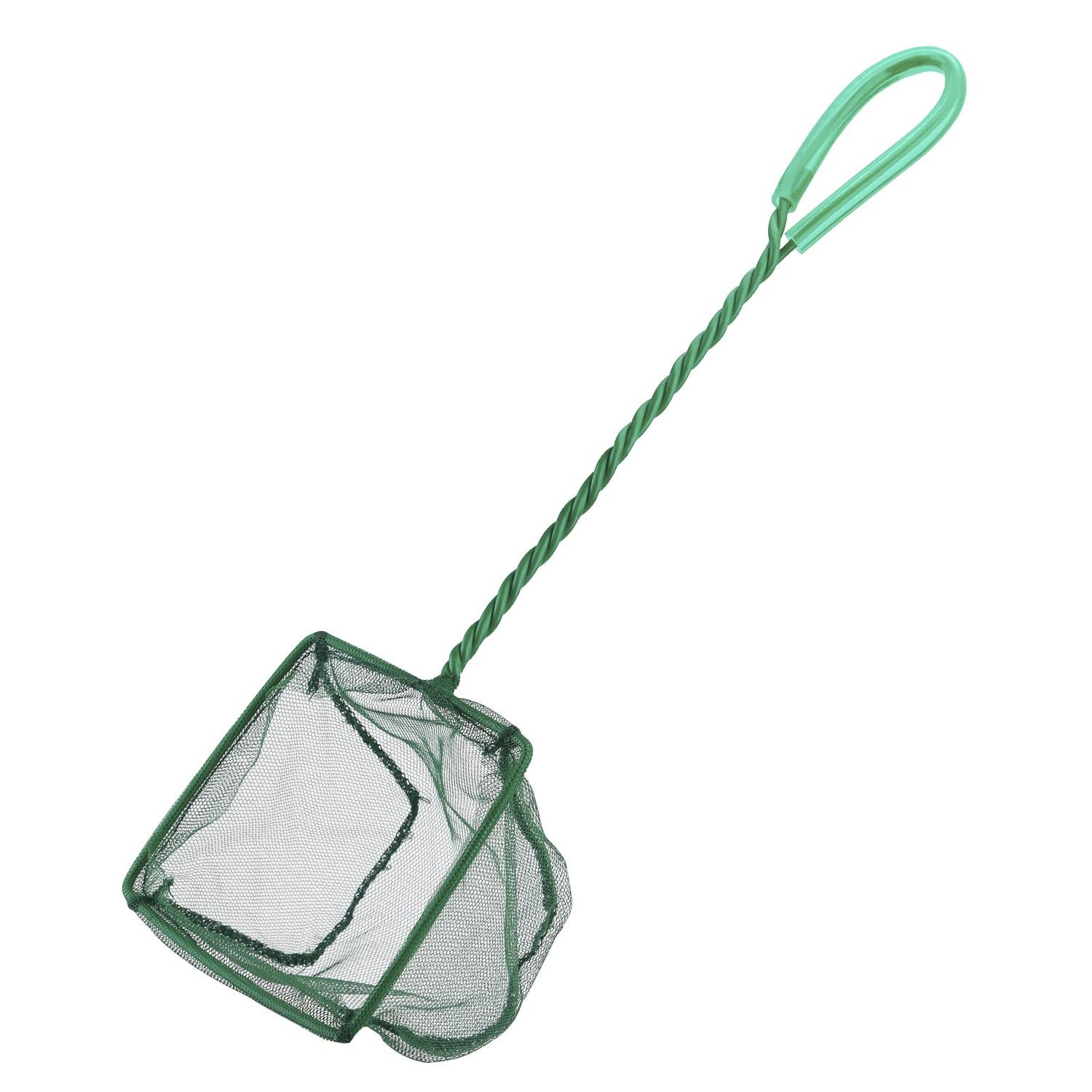
Pictus catfish carry mildly venomous spines on their dorsal and pectoral fins. A sting is painful, like a bee sting. Serious reactions are uncommon in healthy adults, but people with sting allergies should take extra care and avoid handling. It is most likely during netting. Never use a standard mesh net; pictus tangle instantly and injure themselves thrashing. Use a large, fine-mesh net or coax the fish into a container. (Species profile: pictus catfish care.)
Otherwise pictus are hardy: watch for ich after stressful moves, quarantine new arrivals 2–3 weeks, and expect an 8–10-year lifespan.
 ★4.6
Pawfly 4" Aquarium Shrimp Net
Check Price on Amazon ★4.6Frequently Asked Questions
How many pictus catfish should be kept together?
Keep a minimum of 3, with 5–6 the sweet spot. Singles become shy, stressed, and prone to hiding permanently. A 55-gallon holds 3–4 comfortably; a 75-gallon holds 6. Provide one hideout or cave territory per fish to prevent daytime squabbling.
Will pictus catfish uproot my plants?
They dig constantly, so lightly rooted stems and carpets get excavated. Deep-rooted plants like Amazon swords survive once established, and rhizome plants like Java fern and Anubias on driftwood can't be dug up at all. Plant everything 3–4 weeks before adding the fish, and skip delicate foreground carpets.
Can pictus catfish live with neon tetras?
No. Neon tetras fit easily into an adult pictus mouth — most aquarists lose them within weeks. If it fits in their mouth, it becomes dinner. Choose tankmates too deep-bodied to swallow: Congo tetras, silver dollars, medium cichlids, and armored plecos.
What size tank does a pictus catfish need?
Minimum 55 gallons with 48 inches of length for 3–4 fish; a 75-gallon is ideal for 5–6. Pictus reach about 5 inches but are powerful sprinters, so horizontal swimming room matters more than volume. A 20 or 30-gallon leads to stunted, stressed fish regardless of water quality.
Are pictus catfish spines dangerous?
Pictus carry mildly venomous dorsal and pectoral spines — a sting feels like a bee sting — painful, and while serious reactions are uncommon in healthy adults, people with sting allergies should take extra care. Avoid standard mesh nets, which tangle their spines; use a fine-mesh net or guide them into a container.
A Nocturnal Showpiece Worth the Setup
A pictus catfish planted tank rewards patience: a long tank, sand, driftwood to vanish into by day, and plants they can't excavate — and you get a nightly show no other catfish offers. Add the shoal last, feed after dark, keep small fish out.