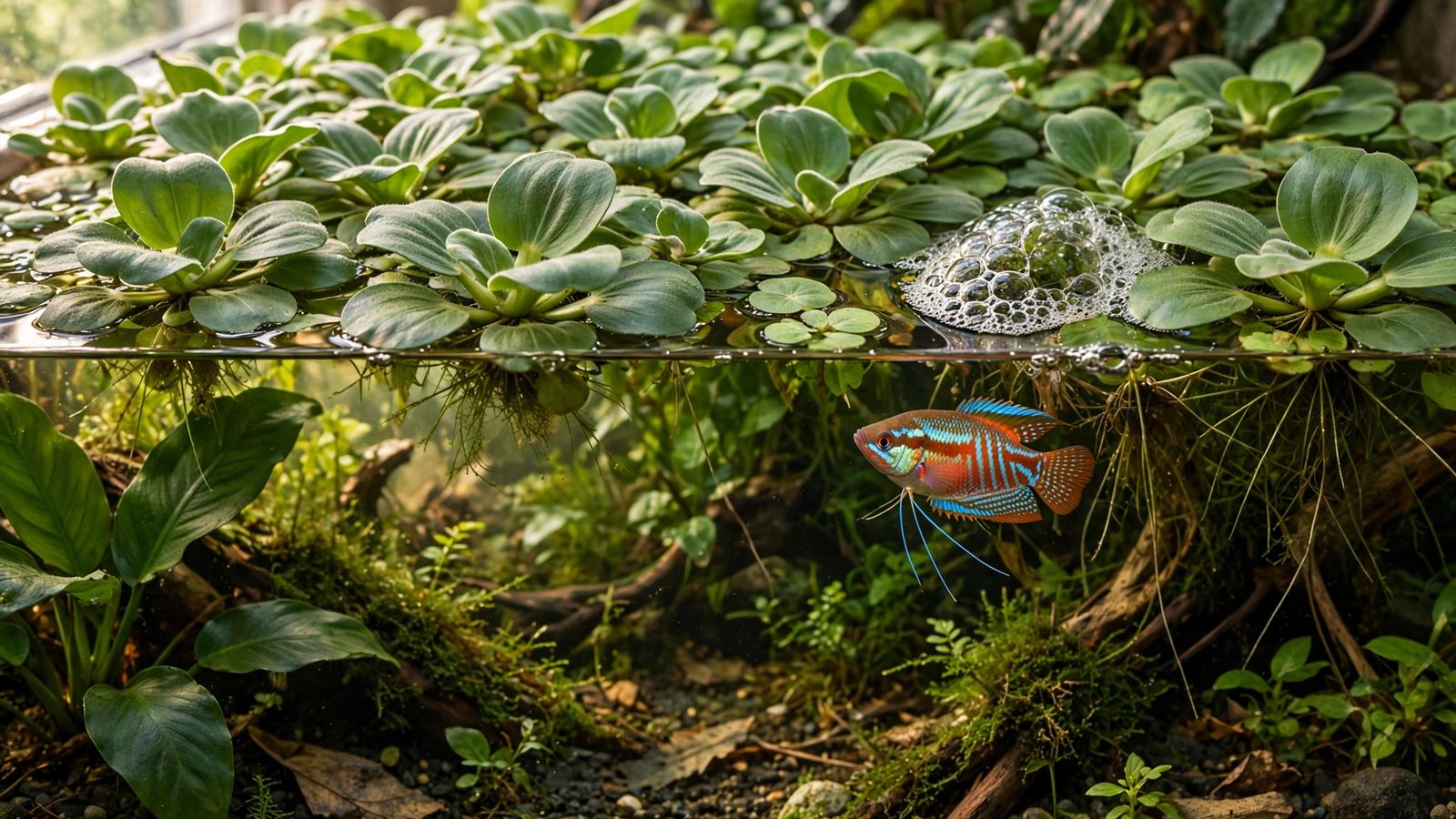
Most people set up a gourami tank the way they would any community tank — a few stems in the back, some gravel, done. Three months later the males are pale, skittish, and nobody has ever blown a bubble nest. The best aquarium plants for gourami tanks solve a very specific problem: these fish evolved in slow, heavily vegetated Southeast Asian waters where floating leaves and broad-leafed plants provide the cover they need to display, court, and breed. Get the planting right and the tank transforms — colors intensify, shy species come out of hiding, and males may reward you with a foam nest at the surface within weeks.
Why gourami tanks need a different planting strategy
Gouramis are labyrinth fish: they breathe atmospheric air at the surface as well as oxygen through their gills. In the wild — the rice paddies, floodplains, and oxbow lakes of Southeast Asia — the surface is never open water. It's a ceiling of floating vegetation. A gourami that surfaces through unprotected open water in nature gets eaten. That instinct doesn't disappear in a glass box, and it's the single biggest reason planted gourami tanks outperform bare ones.
The plant layout also directly affects breeding behavior. Male gouramis build bubble nests — rafts of saliva-coated air bubbles, sometimes reinforced with plant fragments — under which the male courts the female and places the eggs. A male won't invest energy in nest-building on a glassy, exposed surface. He needs a clump of floating plants or a broad leaf near the surface to tuck the nest against, somewhere currents won't shred it in minutes.
Then there's flow. Gouramis are slow, deliberate swimmers with long ventral feelers they use to explore. Strong filter current stresses them and blows bubble nests apart. Plant with low flow in mind: dense clusters that baffle current, tall stems that break up sightlines, and floating mats that damp the surface ripple from filters.
The best floating plants for gourami tanks
Floating plants are the single highest-impact addition you can make. They diffuse overhead light (gouramis squint under bright open lighting), provide the surface cover that triggers natural behavior, and absorb excess nitrates. Five worth your money:
| Plant | Growth rate | Root length | Best for | Difficulty |
|---|---|---|---|---|
| Amazon frogbit (Limnobium laevigatum) | Fast | Short (2–5 cm) | Best all-rounder; round leaves gouramis love nosing through | Easy |
| Dwarf water lettuce (Pistia stratiotes 'dwarf') | Fast | Medium (5–10 cm) | Nest anchoring; rosettes cradle bubble nests beautifully | Easy–medium |
| Water sprite (Ceratopteris thalictroides) | Very fast | N/A (fine foliage) | Fry refuge; lacy fronds males weave into nests | Easy |
| Salvinia minima | Very fast | Short | Surface shading; pairs well with frogbit | Easy |
| Red root floater (Phyllanthus fluitans) | Medium | Short | Visual drama; red roots under soft light | Medium |
Amazon frogbit is the safest first pick. It reproduces fast enough to replace losses, its 2–4 cm round leaves tolerate occasional surface disruption, and gouramis of every species thread through it comfortably. Corral it to 40–60% of the surface with airline tubing if your filter pushes it around — full coverage blocks gas exchange and starves lower plants of light.
Dwarf water lettuce deserves special mention for bubble-nest builders. Males frequently build nests tucked directly under a lettuce rosette, and the dangling roots host infusoria — microscopic first food for gourami fry. Use the dwarf variety under 200 liters; the standard form grows enormous and shades everything below.
Water sprite is the two-for-one plant. Floating it forms a lacy mat that fry vanish into; planted in substrate it becomes a tall, feathery background stem. It's a heavy nutrient feeder, doubling as your nitrate scrubber. If you only buy one floating plant, make it water sprite.
Compare floating species in our floating plants for beginners guide, and cross-check growth data against the Tropica plant database.
Regulation check: dwarf water lettuce and salvinia are restricted or noxious in several US states — confirm your local rules before buying, and never release aquarium plants into waterways.
Broad-leaf anchor plants: the backbone of a gourami tank
Once the surface is handled, broad leaves do the heavy lifting below. In the wild, gouramis weave through sword-plant beds and rest on anubias leaves. Broad leaves serve three functions: nest anchors near the surface, territorial landmarks that reduce male aggression, and resting platforms for fish that hover without swimming.
| Plant | Placement | Leaf size | Why gouramis like it |
|---|---|---|---|
| Anubias barteri | On wood/rock (rhizome exposed) | 10–20 cm | Tough leaves; males anchor nests to undersides |
| Anubias nana | On wood/rock | 5–8 cm | Perfect scale for dwarf and honey gourami tanks |
| Amazon sword (Echinodorus grisebachii) | Background | 20–50 cm | Classic wild-habitat look; tall leaves reach the surface |
| Java fern (Microsorum pterotoides) | On wood/rock | 15–30 cm | Undemanding; broad fronds break up sightlines |
| Tiger lotus (Nymphaea zenkeri) | Midground | 10–25 cm | Lily-pad leaves float at the surface — ideal nest sites |
Anubias is practically designed for gourami tanks. Tie it to driftwood with cotton thread, keep the rhizome above the substrate, and leave it alone. The leaves last for years and never need the high light or CO2 that stress your fish. Anubias nana fits 40–60 liter dwarf gourami setups; Anubias barteri suits pearl or blue gourami tanks of 100 liters and up. Our plant placement guide shows how to position rhizome plants on hardscape.
Amazon swords bring the wild-habitat feel. In a 120+ liter tank, two or three swords in the back corners create the tall, arching canopy gouramis associate with safety. They are heavy root feeders — push one root tab under each plant every 2–3 months. In smaller tanks they outgrow the space, so choose a compact cultivar like Echinodorus 'Reni'.
Tiger lotus is the secret weapon for bubble-nest success. Its floating lily-pad leaves sit right at the surface, and males treat the underside of a lotus leaf like prime real estate. One lotus per 60–80 liters is plenty; prune surface leaves you don't want, because it will cover the whole tank if you let it.
Swords and tiger lotus are heavy root feeders; tabs sustain the big leaves gouramis need: root tabs like Seachem Flourish Tabs.
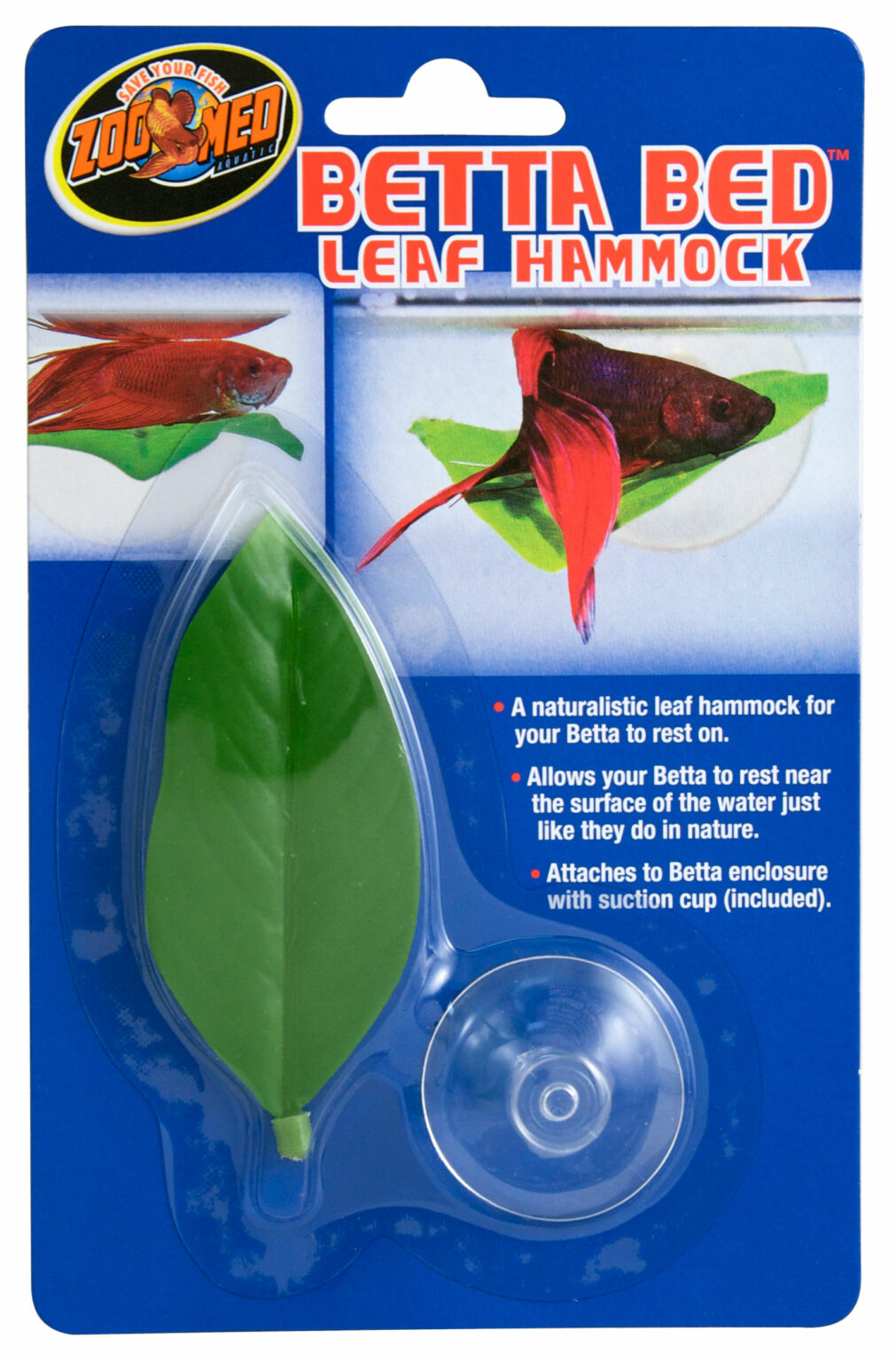
Gouramis rest on broad leaves near the surface; the leaf hammock gives them one instantly: a leaf hammock.
 ★4.5
Zoo Med Betta Bed Leaf Hammock
Check Price on Amazon ★4.5Midground and backdrop plants for structure
With floaters overhead and broad leaves on the hardscape, fill the middle and back with plants that create depth and break sightlines between territorial males. Keep the palette simple — three to five species total reads far more natural than a botanical garden.
Cryptocoryne wendtii is the midground workhorse. It grows 10–20 cm tall, tolerates the low-to-medium light gouramis prefer, and its bronze and green varieties give color contrast without CO2. Plant in groups of five to seven — crypts look sparse as singles. Expect a "crypt melt" (leaves dissolve) in the first two weeks; leave the roots and new growth emerges within a month.
Vallisneria spiralis makes a superb background for pearl and blue gourami tanks over 100 liters. Its ribbon leaves sway gently in low flow and reach the surface, where gouramis use them as vertical landmarks. One caution: vallisneria spreads by runners aggressively in rich substrate, so pull strays monthly or it colonizes your midground.
Java moss tied to branches gives fry and shy honey gouramis a textured refuge and hosts the micro-fauna that gourami fry graze on. Trim it every 4–6 weeks or it traps detritus and browns in the center.
For choosing midground species by tank size, see our roundup of midground aquarium plants.
Plants to avoid with gouramis
Not every popular aquarium plant belongs in a gourami tank — the conflicts usually come down to flow, light, or temperament:
- Delicate carpeting plants (HC Cuba, Glossostigma): need high light, CO2, and strong flow — the opposite of what gouramis want.
- Fast, brittle stems (Cabomba, Myriophyllum): gouramis' probing feelers break the fragile whorls, leaving debris that clogs filters.
- Large root feeders in small tanks: full-size Amazon swords in a 40-liter dwarf gourami tank crowd out everything within six months.
- Hornwort under stress: Ceratophyllum sheds needles when stressed, fouling the still surface gouramis need clean.
- Plants needing cold water: anything with a sub-22 °C ceiling conflicts with the 24–28 °C range gouramis thrive in.
Tank layout for bubble-nest success
If breeding — or just natural behavior — is the goal, arrange the tank around the nest site rather than treating it as an afterthought:
- Calm the surface first. Baffle the filter outflow with a sponge or spray bar aimed at the glass. The top 10–15 cm of water should barely ripple. If a floating frogbit leaf drifts steadily in one direction, flow is too strong.
- Cluster floaters in one corner. Use an airline-tubing ring to keep 30–40% of your frogbit or lettuce in a calm corner, away from the filter — this becomes the nest zone.
- Anchor a broad leaf nearby. Position an anubias on tall driftwood or a tiger lotus leaf within 10–15 cm of the floater cluster. Males often start the nest under the leaf and expand it into the floaters.
- Give the male a territory boundary. A tall sword or vallisneria clump 20–30 cm away creates a visual wall that reduces his defensiveness toward tankmates.
- Keep it warm and shallow-feeling. 26–27 °C encourages breeding condition; a water depth of 25–35 cm shortens the male's patrol route between nest and foraging.
Condition the pair with live or frozen foods — daphnia, brine shrimp, bloodworms — for 7–10 days before expecting nest-building. The female needs dense planting to retreat to; males can harass relentlessly in open tanks. Water sprite thickets and java moss corners give her the escape routes that prevent injury.
After spawning, the male guards the nest alone. Remove the female to avoid constant chasing, and consider a dedicated 40-liter breeding tank if you want fry to survive — most community tankmates eat gourami eggs within hours. Our guide to spawning-friendly plants covers fry refuge planting in more depth.
Many of these low-flow, heavily planted principles transfer to other calm-water setups — our betta tank planting guide covers a closely related species with similar surface-cover needs, and the same moss-and-floater refuges work in shrimp tanks. For a zero-fertilizer approach, see plants that don't need fertilizer.
Corrals keep floaters in a calm corner so the male's bubble nest stays intact: floating plant corral rings ★3.9.
Frequently Asked Questions
How many plants does a gourami tank need?
Aim for 60–70% of the tank footprint planted, with floating cover over 40–60% of the surface. In a 60-liter tank that's roughly: one floater cluster, three to five anubias on wood, one crypt group, and one background sword or stem cluster. Sparse tanks keep gouramis perpetually skittish — you can always thin later.
Do gouramis eat aquarium plants?
Healthy gouramis rarely damage plants. They may nibble algae off leaves, and males sometimes tear small fragments to weave into bubble nests — that's normal and harmless. If leaves are being eaten outright, the culprit is almost always a tankmate (goldfish, silver dollars, large plecos), not the gouramis. Tough-leaved species like anubias and java fern are essentially gourami-proof.
Can I keep gouramis in a high-tech CO2 tank?
It's possible but compromises both. High-tech tanks need strong flow and bright light, which stress gouramis and prevent bubble nests. If you must combine them, use a larger tank (150+ liters) so one end can be a low-flow planted zone with a baffle, run CO2 modestly, and pick pearl gouramis — they tolerate more activity than dwarfs. Honestly, a dedicated low-tech gourami tank looks better and keeps healthier fish.
Why isn't my male gourami building a bubble nest?
Check three things in order: surface calm (any current shreds nests — baffle the filter), floating cover (he needs an anchor — add frogbit or water lettuce in a corralled corner), and condition (feed frozen bloodworms and daphnia for a week; underfed males don't breed). Below 25 °C most species won't bother. If everything checks out and he's still not building, he may simply be young — males under 6–8 months often lack the instinct.
What's the best plant setup for dwarf gouramis specifically?
Scale everything down and soften it. Dwarf gouramis max out around 6–7 cm and are shyer than pearls, so use anubias nana, fine floaters like salvinia or frogbit, water sprite thickets for hiding, and crypt wendtii as midground. A 40–60 liter tank is ideal — skip tall background plants and keep flow near zero with a sponge filter. Honey gouramis follow the same recipe and are even more peaceful.
Do gourami tanks need fertilizer or CO2?
No — and adding them often creates more problems than it solves. The plants recommended here (anubias, java fern, crypts, swords with root tabs, floaters) all thrive in low-tech setups. A simple all-in-one liquid fertilizer at half dose once a week is plenty; full dosing in a low-flow tank just feeds algae. CO2 injection is unnecessary, and the surface agitation it requires works against bubble-nest building.
Set up the habitat, and the fish do the rest
A gourami tank is one of the few setups where the plants genuinely change the animals' behavior. Floating cover turns skittish fish into confident displayers; broad leaves give males the anchors they need for bubble nests. Low flow, warm water, and dense sightline breaks turn aggression into courtship. None of it requires expensive gear — a sponge filter, a bag of root tabs, frogbit, anubias, and a tiger lotus will get you 90% of the way there. Plant dense, keep the surface calm, and give your gouramis two weeks to realize they're home.