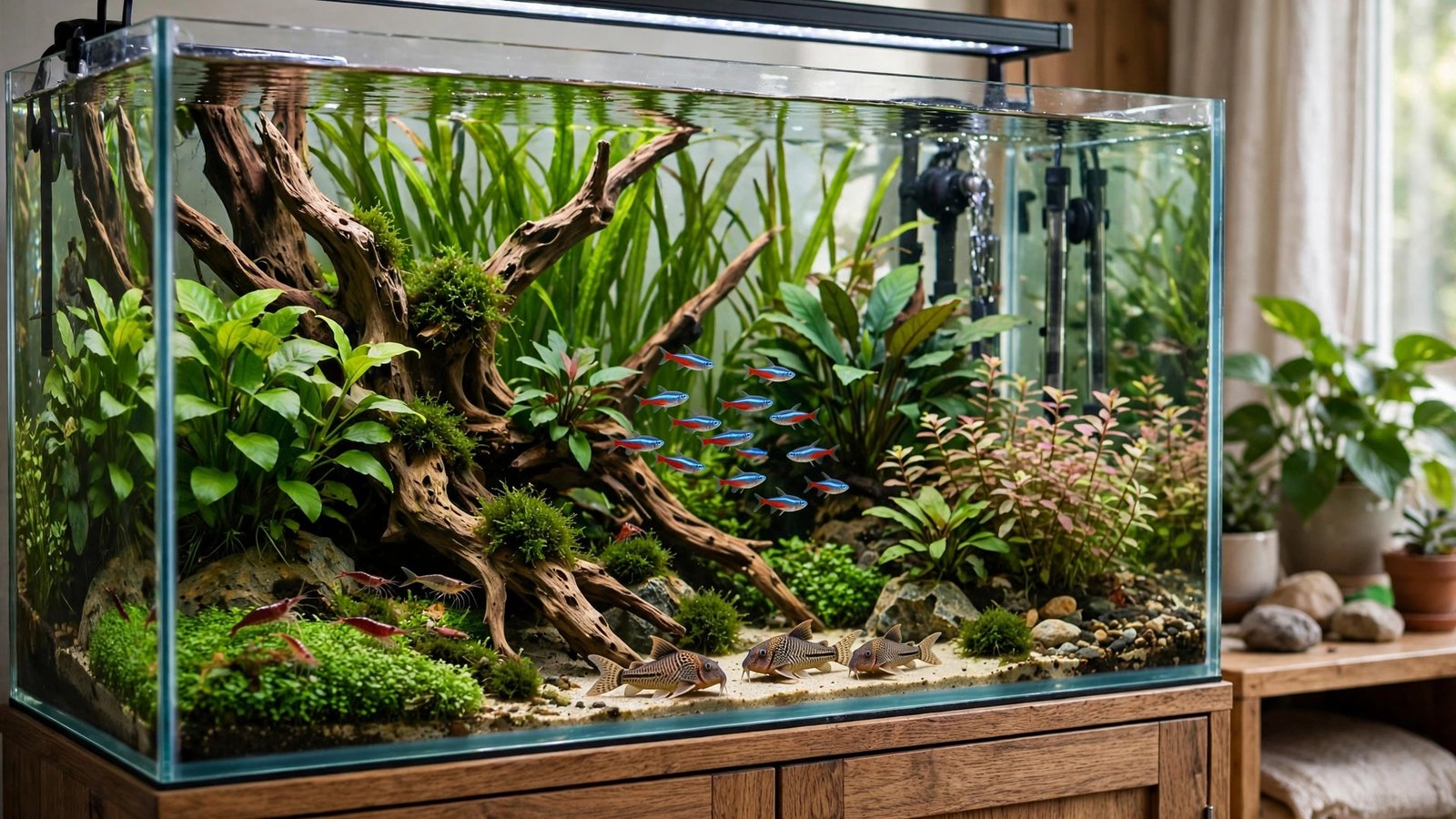
The most expensive mistake in a 55 gallon planted tank is buying everything twice — the dim kit light first, then the real one; the hang-on-back filter first, then the canister; the "plant substrate" that turns out to be painted gravel. A 55-gallon is the most forgiving large tank a beginner can start with: its 48-inch footprint leaves room for a genuine aquascape, while its 21-inch depth is shallow enough that one good LED bar reaches the carpet. By the end of this guide you will have a complete build list, exact lighting and CO2 targets, a zone-by-zone plant plan with real quantities, stocking numbers that work, and the six-week timeline from empty glass to thriving jungle.
This is the tank size where planted aquariums get serious — big enough for schooling fish to school, stable enough that one missed water change doesn't crash the system. Let's build it right the first time.
Equipment List for a 55-Gallon Planted Tank
A 55-gallon rewards buying the right gear once. The narrow 13-inch width makes filter choice matter — 5–6× hourly turnover keeps dead spots (and the algae that loves them) from forming along the back glass. If you're torn between this footprint and a shorter, wider tank, our 40-gallon breeder planted tank setup walks through the trade-offs.
| Component | Recommended spec | Why it matters |
|---|---|---|
| Light | 48-inch full-spectrum LED bar, 90–120 W, dimmable | One bar at 8–10 in above the rim hits 40–60 PAR at the 21-inch substrate |
| Filter | Canister rated 250–300 GPH with spray bar | 5–6× hourly turnover; spray bar spreads flow across the long tank |
| Heater | 200–250 W adjustable, placed near filter outflow | Even heat in a 4-foot tank; hides beside the canister intake |
| CO2 system | 5 lb cylinder, dual-stage regulator, in-line diffuser | An in-line diffuser on the canister outflow dissolves CO2 far better than an in-tank diffuser on a 4-foot tank |
| Substrate | ~30 L aquasoil (3–4 nine-liter bags) | Nutrient-rich base for root feeders; buffers pH slightly acidic |
| Timer + test kit | Digital timer; liquid ammonia/nitrite/nitrate/pH kit | Consistent photoperiod and honest cycle readings — strips lie |
Hardware typically lands between $450 and $800 before plants and fish, with the light and CO2 system eating half of it. That sounds steep until you price the alternative: the "cheap kit" route almost always ends with buying both of those items a second time.
Lighting a 55-Gallon: PAR Targets and Fixture Placement
At 21 inches of water plus a few inches of air gap, a light that feels bright at the surface can deliver a dim 20 PAR at the substrate — enough for anubias, hopeless for a dwarf hairgrass carpet. Aim for 40–60 PAR at the substrate: the sweet spot where most stems color up and carpets spread, without the knife's-edge algae management that 80+ PAR demands.
One quality 48-inch LED bar mounted 8–10 inches above the rim (on risers or a hanging kit) gets you there. Running it at full blast on day one is the classic beginner error — see our beginner planted tank mistakes guide for why maximum light on a new tank is algae's favorite invitation. Start at 60–70% intensity with a 6-hour photoperiod, then step up to 7–8 hours over the first month as plants root in.
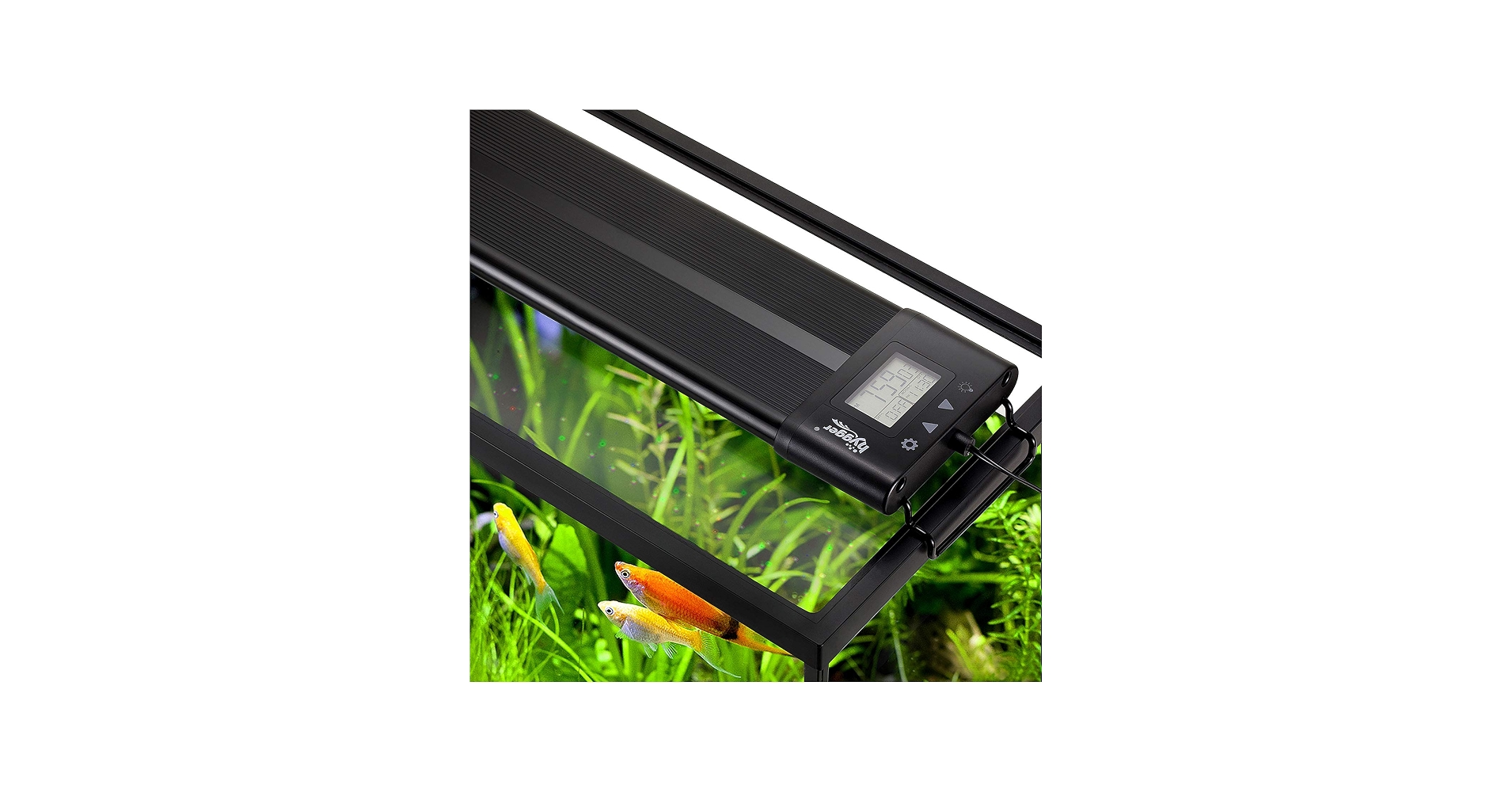
A sunrise/sunset ramp (15–30 minutes each end) isn't a luxury on a 4-foot tank — it stops fish from startling and gives you a civilized viewing window in the evening. Most modern LED bars include a ramp in their app; if yours doesn't, a $15 digital timer with two on/off programs does the job.
 ★4.4
hygger 957 Auto On Off LED Aquarium Light
Check Price on Amazon ★4.4Substrate: How Much and Which Type
Do the math before you shop: 48 × 13 inches of footprint at 3 inches deep is about 1,870 cubic inches — roughly 30 liters. That's three to four 9-liter bags of aquasoil. Slope it: 2 inches at the front glass rising to 3.5–4 inches at the back. The slope adds visual depth and gives background stems the root zone they need.
Aquasoil (ADA Amazonia, Fluval Stratum, UNS Controsoil) is the straightforward choice: it feeds root-feeding plants for 12–18 months and buffers pH into the 6.5–6.8 range most tropical plants prefer. It also leaches ammonia for the first 2–3 weeks — which kick-starts your cycle.
CO2 on a 55-Gallon: The Conservative Playbook
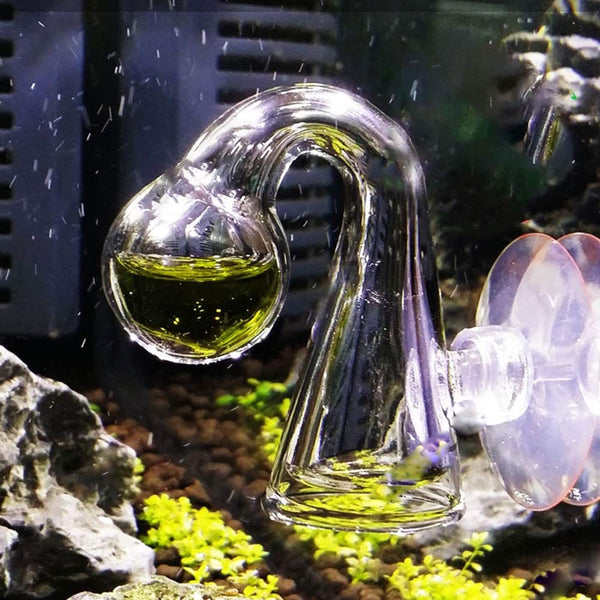
CO2 is the difference between plants that survive and plants that thrive at this depth — but it demands respect. Fish gasping at the surface is the hard limit, and you stay far from it with one rule: start low and observe livestock. Begin at 1 bubble per second, switched on 2 hours before lights-on and off 1 hour before lights-out. Raise it by half a bubble per second every three days, watching fish behavior each evening, until your drop checker reads lime-green at lights-on.
A 5 lb cylinder at 1–2 bubbles per second lasts roughly 3–5 months. Aim for a 1.0 pH drop from degassed tap water to peak CO2 as your long-term target.
Going low-tech instead? Skip the cylinder, dose a liquid carbon supplement at the bottle's daily rate, and choose easy plants (anubias, java fern, crypts, vallisneria). Growth will be slower and carpets thinner — an honest trade, not a failure.
 ★4.6
FZONE Glass CO2 Drop Checker Kit
Check Price on Amazon ★4.6The 55 Gallon Planted Tank Plant Plan: Foreground, Midground, Background
A 55-gallon looks empty with sparse planting and magnificent with heavy planting — there is no middle ground at this scale. Plant 70% of the substrate on day one: fast-growing stems in the background outcompete algae while the tank matures, and you can swap them for showpiece plants in month three. For the fiddly work of getting store-bought stems into the substrate without them floating up, our 20-gallon planted tank setup walks through the technique step by step.
| Zone | Plants | Quantity for 55 gal | Notes |
|---|---|---|---|
| Foreground | Dwarf hairgrass, Monte Carlo, micro sword | 8–10 pots total | Plant in 1-inch grids; needs the full 40–60 PAR to carpet |
| Midground | Anubias nana petite, Bucephalandra, Cryptocoryne wendtii, Java fern | 5–6 rhizome portions + 4–5 crypt pots | Tie rhizomes to wood/rock — never bury them |
| Background | Rotala rotundifolia, Ludwigia repens, Vallisneria, Amazon sword, water wisteria | 30–40 stems + 2 swords | Stems are your algae insurance in month one; trim and replant tops |
Hardscape first, plants second: two or three pieces of driftwood and a handful of dragon stone or seiryu stone give the planting zones something to anchor around. Cross-check every species against Tropica's plant database for true height and light requirements — store labels are optimistic about both.
Stocking Your 55-Gallon Planted Tank
The golden rule of stocking a planted tank: schools, not singles. One rummy-nose tetra looks lost; forty of them moving as a ribbon across four feet of aquascape is the entire reason to own this tank. Keep total adult fish length around 50–55 inches and you'll stay comfortably within the filter's capacity with weekly maintenance.
A proven community for this volume: 40–50 cardinal or rummy-nose tetras (or a 25/25 split of two species), a centerpiece pair — angelfish or honey gouramis — and a bottom crew of 12 sterbai corydoras. Add 8 otocinclus no earlier than month three, when soft algae has had time to establish, and 10–15 amano shrimp as the cleanup crew. For a sense of how the same schooling logic scales down, see the stocking section of our 10-gallon planted tank setup.
Add fish in waves, two to three weeks apart: tetras first (hardiest of the bunch), centerpiece fish second, bottom crew third. Each wave is a mini-cycle — test ammonia 48 hours after every addition and hold the next wave if you see anything above zero.
Fish Compatibility: What Works and What Doesn't
Plants change the compatibility math: dense stems and wood break sightlines, which calms semi-aggressive fish — but some species are simply wrong for a planted tank. Angelfish will eat cherry shrimp and small neons; keep amanos (too big to be eaten) or pick honey gouramis instead. Common plecos grow to 18 inches and bulldoze aquascapes — a bristlenose does the same algae job at 5 inches.
Corydoras are ideal planted-tank citizens: they sift the substrate surface without uprooting established plants, and sterbai tolerate the 78–80°F this stocking prefers. Avoid goldfish (cold water, plant shredders), red-tailed sharks (territorial), and large cichlids (they redecorate). When in doubt, one peaceful schooling species in big numbers beats three "interesting" species in awkward handfuls.
Cycling Timeline: Weeks 1–6
A planted 55-gallon cycles differently from a bare tank: the plants themselves consume ammonia, which softens the process — but the bacterial colony still needs its full month. Dose liquid ammonia to 2 ppm (fishless cycle) or rely on aquasoil leach plus a bacterial starter. The same fishless method works on any size — it applies identically to a 5-gallon nano setup.
Weeks 1–2: Substrate, hardscape, and water in; filter and heater running. Dark start or a dim 6-hour photoperiod. Ammonia will spike from the aquasoil — this is cycle fuel, not a problem. No livestock, no fertilizer yet.
Weeks 3–4: Plant heavily. Start CO2 at 1 bubble per second and begin a lean all-in-one fertilizer dose (half the bottle's recommendation — the aquasoil is still feeding roots). Test ammonia and nitrite every other day; nitrite typically peaks around week 3.
Weeks 5–6: When ammonia and nitrite read zero for three consecutive days and nitrates are present, the tank is cycled. Do a 50% water change, then add the first school — half the tetras. Feed lightly for the first week and test ammonia 48 hours after stocking.
Weekly Maintenance Schedule
Stability is a schedule, not a personality trait. A 55-gallon planted tank asks for about 45 minutes a week — skip two weeks and the algae will send its regards.
| Frequency | Task | Details |
|---|---|---|
| Daily | Feed + glance check | Feed once (what fish eat in 60 seconds); confirm CO2 and filter are running |
| Weekly | 30–40% water change | Gravel-vacuum open areas; dose all-in-one fertilizer after refilling |
| Weekly | Glass + trim | Scrape viewing panels; trim fast stems before they shade everything below |
| Monthly | Filter maintenance | Rinse mechanical media in old tank water — never tap water |
| Monthly | Test + deep check | Full parameter test; inspect heater, CO2 tubing, and diffuser for wear |
Trimming is the maintenance most beginners skip: untrimmed stems shade their own lower leaves, which melt, rot, and feed the exact algae bloom you were avoiding. Cut stems at the midpoint, replant the healthy tops, compost the leggy bottoms.
Frequently Asked Questions
Can I run a 55-gallon planted tank without CO2?
Yes, but choose the plant list for it. Without injected CO2, stick to anubias, java fern, crypts, vallisneria, and mosses — all grow well at 20–30 PAR with a liquid carbon supplement and an all-in-one fertilizer. Skip carpets and red stems; they stall and invite algae in low-CO2 water. Growth runs roughly half the speed of an injected tank, so plant just as densely on day one and give it two months.
How many fish can a 55-gallon planted tank hold?
A comfortable community is 50–55 inches of adult fish: for example, 40–50 small tetras (each ~1.5 inches), a pair of angelfish or three honey gouramis, and 12 corydoras. Plants and a 250–300 GPH canister give you more biological headroom than a bare tank, but overstocking still shows up as chronic nitrate creep and algae. Add fish in waves two to three weeks apart, testing ammonia after each wave.
What light is strong enough for a 21-inch-deep 55-gallon?
One 48-inch full-spectrum LED bar in the 90–120 W range, mounted 8–10 inches above the rim, delivers 40–60 PAR at the substrate — the target zone for carpets and colorful stems. Kit lights bundled with tank combos typically manage half that. Start any new fixture at 60–70% intensity with a 6-hour photoperiod and ramp up over the first month; full blast on day one is the fastest route to an algae farm.
How much does a 55-gallon planted tank setup cost?
Expect $450–$800 for hardware (tank and stand, LED bar, canister filter, heater, CO2 system, substrate, test kit), plus $150–$250 for plants and hardscape and $100–$200 for the initial fish stocking. The light and CO2 system are half the hardware budget — buying them right the first time is cheaper than upgrading a dim kit light and a weak filter three months in.
How long before I can add fish to a new 55-gallon planted tank?
Plan on 5–6 weeks. Aquasoil leaches ammonia for the first 2–3 weeks, which feeds the bacterial colony; planting heavily in week 3 speeds things along since plants consume ammonia directly. Add the first fish only after ammonia and nitrite test at zero for three consecutive days. Rushing this timeline is the single most common cause of new-tank livestock losses.
Your First 90 Days
Day one is hardscape and water; week two is planting day; week six is the first school of tetras; month three is when the otocinclus move in and the background stems get their first serious sculpting. Keep the water changes weekly, the CO2 conservative, and the trimmers sharp, and your 55-gallon will only get better from here.