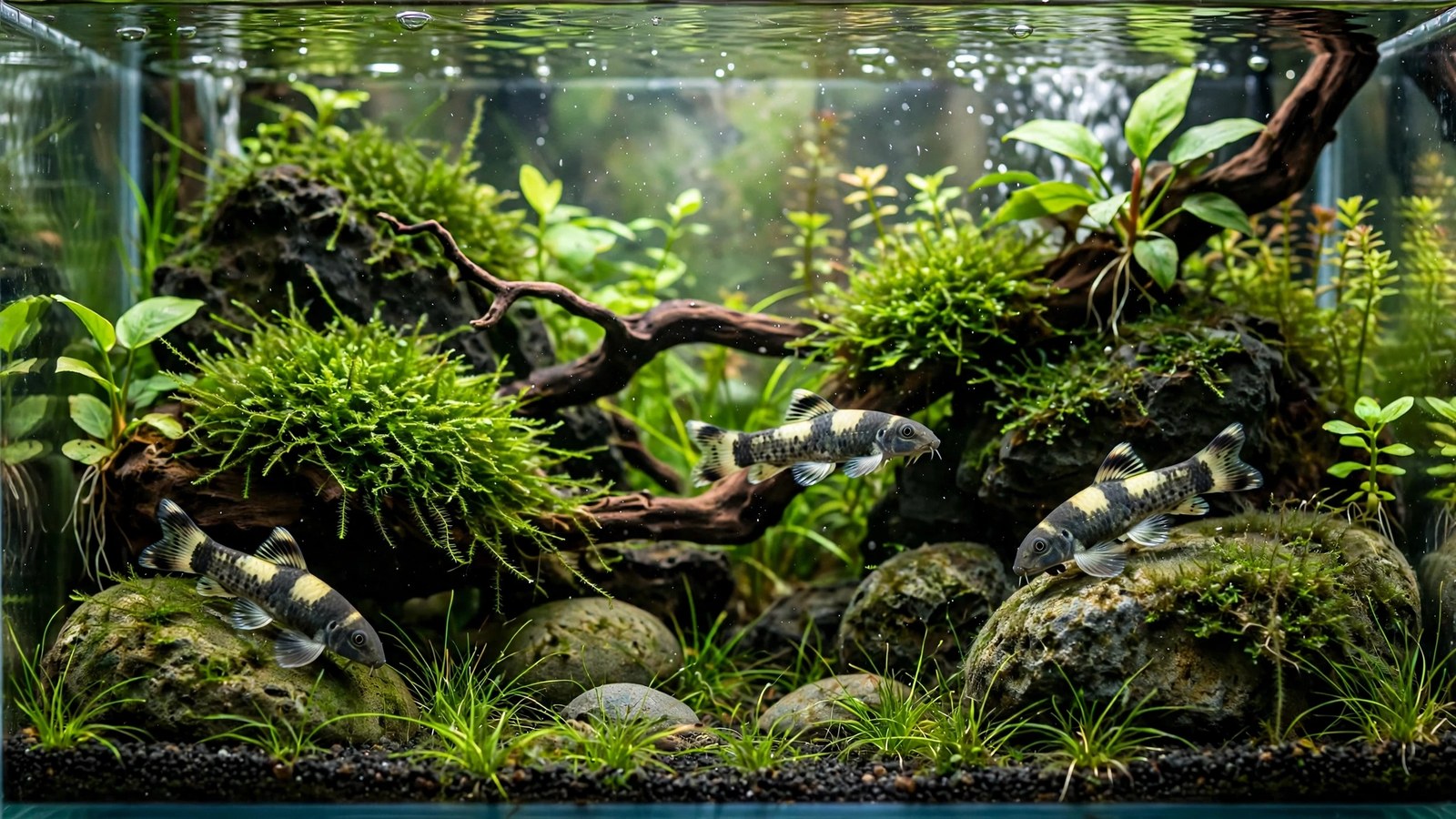
Most "algae eaters" strip-mine your plants or give up on algae once fish food hits the water. The panda garra is the rare exception — a Myanmar hill-stream grazer that scrapes rocks clean for hours while ignoring your leaves. Building a panda garra planted tank is less about the plants and more about the river: flow, oxygen, smooth stone, and a mature biofilm layer waiting on day one.
Designing Your Panda Garra Planted Tank: The High-Flow River Layout
The ideal panda garra planted tank is a river-bank cross-section: smooth, fist-sized river stones over fine gravel or sand, a few driftwood branches, and plants anchored in the calmer margins. The fish live on the rocks, not in the plants — so give them expansive grazing surfaces and let greenery frame the scene. Choose plant picks that survive a grazing algae-eater: anubias, Java fern, and bucephalandra tied to stone and wood, plus hardy stems like vallisneria that root firmly and shrug off sucker-mouth landings.
Flow is the soul of the setup. Aim for 8–10× turnover per hour — a 20-gallon tank wants a filter plus a small circulation pump pushing 160–200 GPH combined. Sweep the outflow along the stone field so detritus never settles on grazing surfaces, and keep surface agitation visible at all times. Panda garra come from oxygen-saturated water and fade in still, warm tanks; our breakdown of water flow and circulation for planted tanks covers pump placement in more detail.
 ★4.2
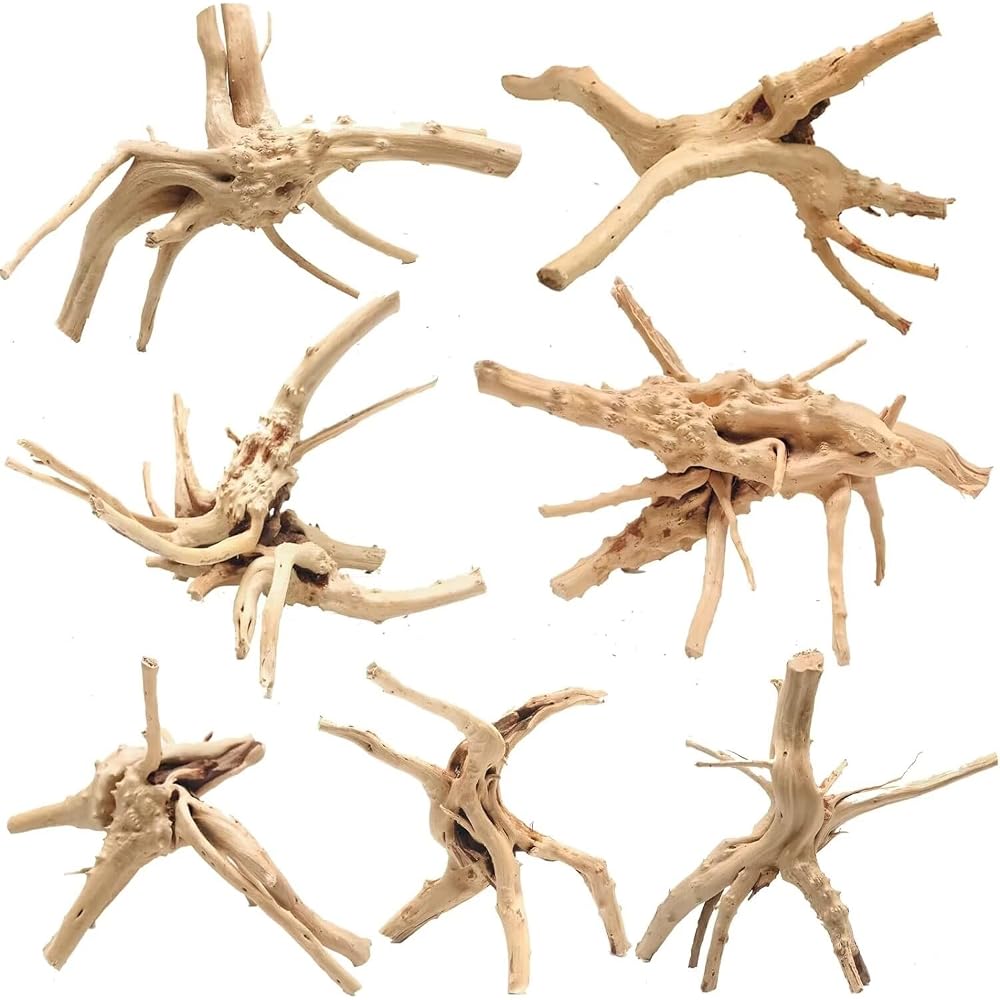
Hamiledyi Natural Spider Wood Driftwood
Check Price on Amazon ★4.2Biofilm Before Fish: The Maturation Rule
This mistake kills more panda garra than any disease. A freshly scaped tank has nothing to graze — bare stone, sterile glass, and a fish that evolved to lick life off rocks all day. Run the tank planted for at least 8–12 weeks before the group arrives, letting algae dust the stones and diatoms film the glass. A tank that looks "a little too algae-covered" to a new keeper is a stocked buffet to Garra flavatra.
When you buy, get the whole group of 5–6 at once from one source. Singletons get territorial and moody; small groups spread the posturing out, and you'll see natural sparring — quick, harmless tail-flicks over favored stones — instead of one fish sulking behind the filter.
Water Parameters and Tank Setup
Panda garra are forgiving about chemistry but strict about stability, temperature, and oxygen. Cooler is better — sustained temperatures above 79 °F shorten their lifespan and reduce dissolved oxygen exactly when their hill-stream metabolism needs it most.
| Parameter | Target | Notes |
|---|---|---|
| Temperature | 72–75 °F | Tolerates 71–79 °F; avoid heat spikes |
| pH | 6.5–7.5 | Stable matters more than exact |
| Hardness (GH) | 4–12 dGH | Adaptable; fine in moderate hardness |
| Ammonia / nitrite | 0 ppm | Mature filter, fully cycled |
| Nitrate | Under 20 ppm | Weekly 25–30% water changes |
| Flow / oxygen | High | Visible surface agitation always |
One clarifying note: the panda cory (Corydoras panda) is a completely different fish — a South American bottom-dweller for still water. Never cross-reference care guides between the two.
Feeding: Grazers Need Supplements
In a mature tank the fish graze 6–8 hours a day, but even an algae-covered tank runs lean for a group of six. Supplement 2–3 times weekly with half an algae wafer per 2–3 fish, dropped on a flat stone for the morning graze. Blanched zucchini or cucumber slices, weighted to the substrate, disappear overnight. Keep the diet plant-heavy — rich feeding dulls their grazing drive.
The Escape Artist Problem
Panda garra climb. In the wild they scale wet rocks between pools; in your home that means exploring filter intakes, heater cords, and any gap wider than a pencil. An open-top river scape is a beautiful idea and a dead fish waiting to happen — a tight-fitting lid with every cable notch sealed is non-negotiable here. Check gaps after every maintenance session.
The Honest BBA Verdict: Will They Eat Black Beard Algae?
You deserve a straight answer: panda garra graze soft green algae, brown diatoms, and green spot algae enthusiastically — but they are not a black beard algae cure. Established BBA's tough, bristled structure defeats their mouthparts. If BBA is your problem, treat the cause (CO₂ instability, excess light, organic buildup) with our black beard algae removal guide — buy the fish because you want a delightful hill-stream grazer, not a medicine.
Tank Mates for the River Scape
Choose tank mates that appreciate the same cool, fast water. Panda garra are peaceful but boisterous, and their constant grazing annoys slow, long-finned fish that want a calm tank.
| Tank mate | Compatibility | Why |
|---|---|---|
| White cloud mountain minnows | Excellent | Same cool, high-flow preference |
| Hillstream loaches | Excellent | Shared habitat; see our hillstream loach planted tank setup notes |
| Zebra danios | Good | Fast enough to ignore the bustle |
| Cherry shrimp | Caution | Adults fine; shrimplets may be snacks |
| Bettas, gouramis | Avoid | Warm, still-water fish; wrong habitat |
| Slow bottom dwellers | Avoid | Garra will outcompete them for food |
Panda garra suit cool, fast rivers — if your water runs warm and still, pick the fish that matches the water you have, and double-check your numbers against planted tank water parameters before committing.
Frequently Asked Questions
How many panda garra should I keep together?
Keep five to six in a 20-gallon or larger tank. Smaller numbers turn males territorial and stressed — a lone garra fixates on tank mates or hides. A proper group spreads the ritual sparring across several fish and lets the natural grazing-rock behavior play out the way it does in wild Myanmar hill streams, where the fish feed shoulder to shoulder.
Are panda garra safe with aquarium plants?
Yes — fully plant-safe. Their sucker mouths are built for rasping biofilm off hard surfaces; they do not chew, uproot, or damage leaves. Attach epiphytes like anubias and Java fern to stone and wood and they will clean around them untouched.
Do panda garra eat black beard algae?
Not reliably. They graze soft green algae, diatoms, and green spot algae well, but mature black beard algae is too tough for their mouthparts. Treat BBA through CO₂ stability, light control, and manual removal instead of relying on any fish.
Can panda garra live in a low-flow planted tank?
They will survive but not thrive. Aim for 8–10× tank-volume turnover per hour with visible surface agitation — a powerhead or spray bar along the back wall works well. High flow keeps dissolved oxygen near saturation, which hill-stream fish evolved for. In still, warm water they turn lethargic and disease-prone, so treat flow as non-negotiable, not decoration.
Why did my panda garra jump out of the tank?
Escaping is instinct, not panic — wild garra climb wet rocks between pools, so any waterline gap is an invitation they cannot resist. Fit a tight-fitting lid with no open corners, seal cable notches with foam or mesh, and keep the waterline an inch below the rim. Re-check outflows, filter cutouts, and lid gaps after every maintenance session, because that is when most escapes happen.
What do panda garra eat besides algae?
Supplement grazing with sinking algae wafers two to three times weekly, plus blanched zucchini, cucumber, or shelled peas offered on a veggie clip. Even an algae-covered tank runs lean for a full group of five or six, so scheduled feeding keeps their bellies rounded and their grazing behavior active. Skip protein-heavy foods — their long gut is built for plant matter and biofilm, not bloodworms.
A panda garra planted tank rewards the patient aquarist: mature the river, seal the lid, feed the grazers, and you'll get one of the hobby's most watchable algae crews — panda-striped rock-climbers working the stones while your plants grow untouched. Also see the Seriously Fish species profile for Garra flavatra for wild-habitat detail.