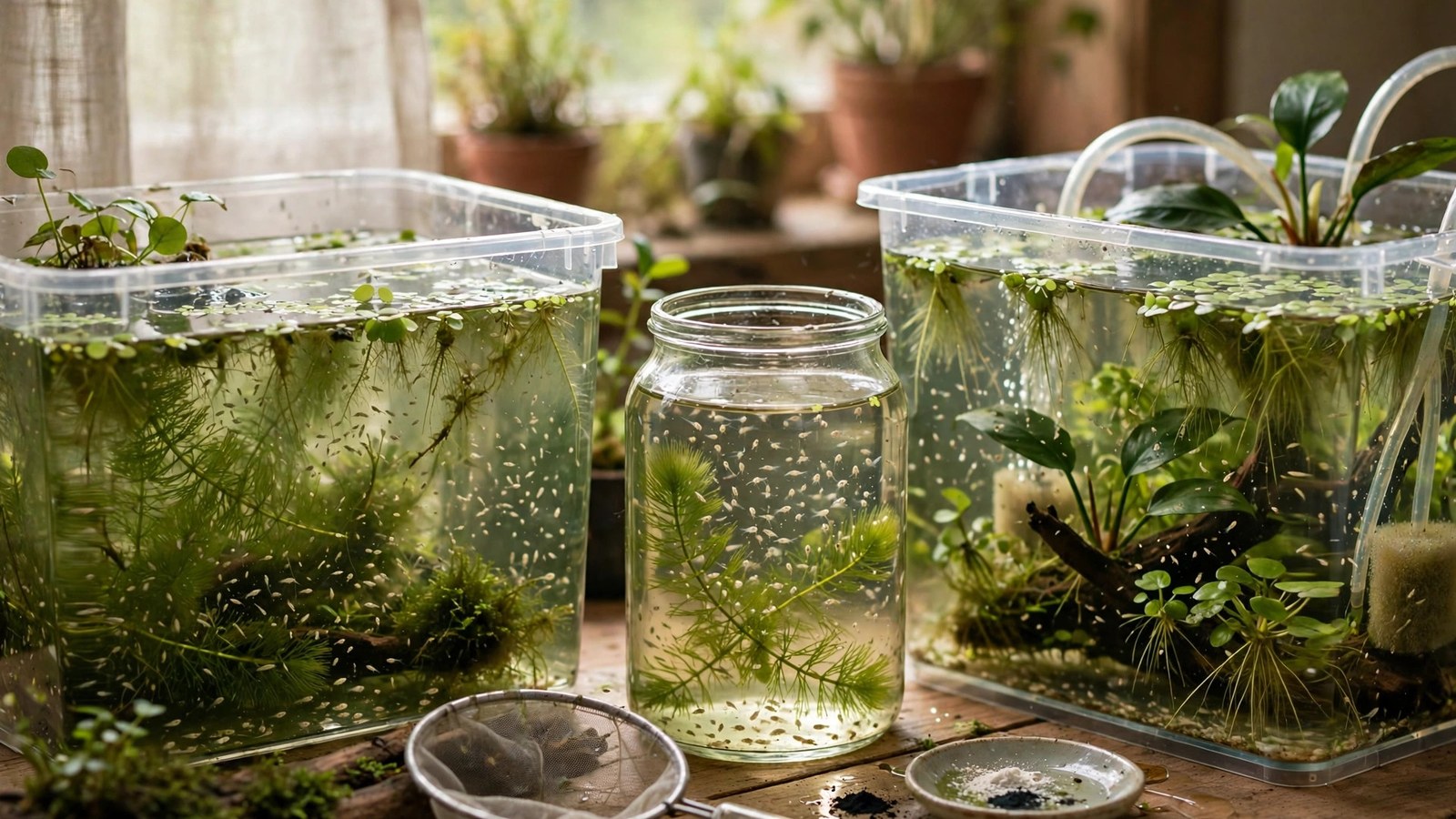
Most live-food cultures fail one simple test: the water gets too warm. Daphnia stall and crash once a room pushes past 28 °C — exactly when fry tanks need food most. Moina, their smaller warm-water cousins, do the opposite: they breed fastest at 26–30 °C, and a pinch-sized starter becomes a self-renewing food supply in under two weeks. This moina culture aquarium guide covers setup, feeding, harvesting, and crash prevention. (Weighing the cold-water option? Our Daphnia Culture Aquarium Guide covers that route.)
The short answer: Set up a 10–20 litre bucket of dechlorinated water at 24–30 °C, add 100–300 live moina, and feed tiny daily doses of green water, a pinch of baker's yeast, or rice bran. Change 20–30% weekly, harvest from day 7–10, and keep a backup culture. At 26–30 °C moina produce a new brood every 3–5 days — about twice the reproductive tempo of daphnia in warm water.
Starting a moina culture aquarium: containers and water
You don't need an aquarium — a plain food-grade bucket beats a glass tank. Wide, shallow containers win: moina feed in the top few centimetres, and surface area drives the gas exchange that keeps water stable without equipment. A 10–20 litre tub buffers feeding mistakes; under 5 litres swings too fast for beginners.
Fill with dechlorinated tap water or old aquarium water. Aged tank water is ideal — it already carries a whisper of infusoria, so the moina arrive to a set table. If you scoop water or plants from an established tank, check for hitchhikers first; our guide to identifying aquarium snail eggs shows what to look for.
Temperature is where moina earn their reputation. Daphnia prefer 18–24 °C and fade as rooms heat up; moina keep reproducing at 24–30 °C and tolerate brief spikes to 33–34 °C. In cooler rooms, a small heater set to 26 °C keeps production steady.
Feeding your moina culture
Moina are filter feeders — they strain suspended particles, so feed must stay suspended, not sink. The three proven feeds:
| Feed | Dose (per 10 L) | Notes |
|---|---|---|
| Green water (live Chlorella) | Top up until faintly green, like weak tea | Best nutrition; grow it in a sunlit bottle |
| Baker's yeast | A matchstick-head pinch dissolved in water, daily | Cheapest; highest overfeeding risk |
| Rice bran / spirulina | A fingertip pinch, every 1–2 days | Supplement; spirulina boosts fish colour |
The golden rule: feed so little the water clears within a few hours. If it's still cloudy next morning, you overfed — skip feeding and do a small water change. Uneaten yeast rots, bacteria bloom, oxygen drops, and the culture crashes within 48 hours. Feed less than feels right: if the water clears within an hour and the tub is visibly swarming, nudge the dose up.
Change 20–30% of the water weekly, siphoning gently from the bottom. Match the new water's temperature — cold top-ups cause a population dip. For a deeper reference on culture parameters, the Aquarium Breeder moina profile and culture guide is worth bookmarking.
Harvesting moina for fry and nano fish
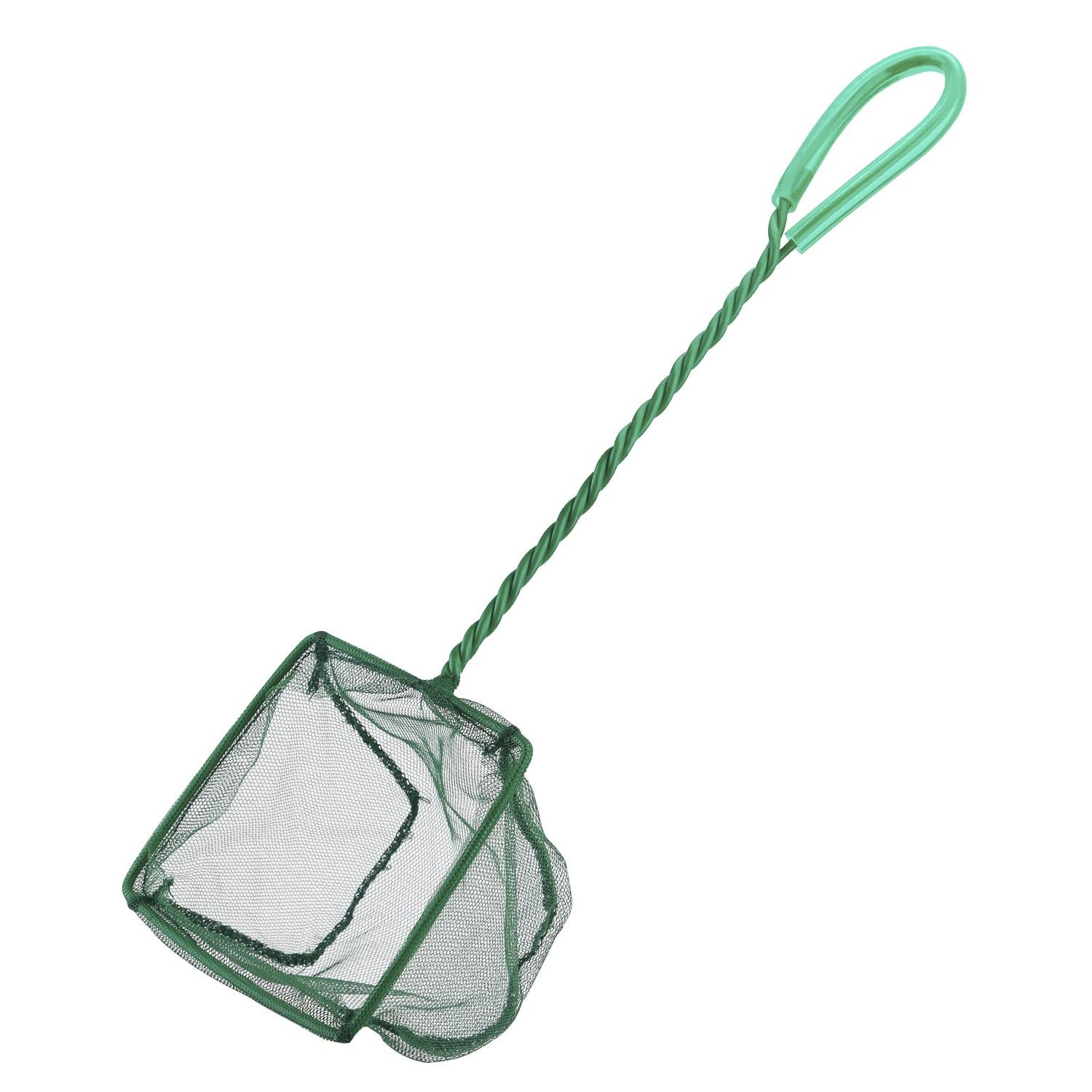
By day 7–10 the water should shimmer — thousands of specks darting in short hops. Scoop with a fine brine-shrimp net (50–100 micron mesh), rinse the catch in clean water, and feed directly.
At 0.4–1 mm, moina fill the gap between infusoria and baby brine shrimp — the classic transition food for fry too big for microorganisms but too small for larger prey. Newborn guppy fry raised in a planted tank take moina immediately, and the movement triggers hunting instincts powdered food never does. Nano species like the emerald dwarf rasbora in a planted tank treat a cloud of moina like a feast they evolved for.
Harvest up to a third of the visible population at a time; a healthy tub rebounds in 2–3 days at warm temperatures. Never strip a culture bare — if one tub can't meet demand, split it into a fresh container rather than over-harvesting. Even larger community fish enjoy the occasional dose; a blue gourami in a planted tank will happily pick through moina as a treat.
 ★4.6
Pawfly 4" Aquarium Shrimp Net
Check Price on Amazon ★4.6Preventing culture crashes
Every moina keeper eventually faces a crash: milky water, the swarming stops, a sour smell. Nearly all trace back to three preventable causes:
- Overfeeding. Cloudy water that doesn't clear in hours means bacterial bloom. Stop feeding for a day, change 30–40% of the water, resume at half the dose.
- Oxygen collapse in heat. Warm water holds less oxygen; a dense culture plus rotting food can suffocate overnight. A tiny air stone on low — or a wider container — solves it.
- Population overshoot. An unharvested tub eats itself out of food and busts. Regular harvesting is population control, not just feeding your fish.
Moina vs daphnia: which should you culture?
| Trait | Moina | Daphnia |
|---|---|---|
| Adult size | 0.4–1 mm | 1–3 mm |
| Best temperature | 24–30 °C | 18–24 °C |
| Heat tolerance | Thrives; tolerates 33–34 °C spikes | Crashes above ~28 °C |
| Reproduction (warm) | New brood every 3–5 days | Slower; heat-stressed |
| Best for | Fry, nano fish, warm climates | Medium fish, cooler rooms |
In warm regions — or any home without summer air conditioning — moina is the more reliable culture. Many breeders run both seasonally: daphnia for the cool months, moina for the warm ones.
Live food is only half of a thriving tank. Moina-fed fish show their best colours in a well-planted environment — our Aquarium Plants for Fish Tanks: The Fish-First Plant Guide covers building that habitat, and the easiest aquarium plants for a beginner community tank are the natural starting point for the fry tank your moina will feed.
Frequently Asked Questions
How long until I can harvest my moina culture?
First light harvest 7–10 days after seeding at 26–30 °C, full production by week three. Below 22 °C the same culture may take three weeks to peak. No growth after two warm weeks means a weak starter — source a fresh one rather than waiting.
What is the best food for a moina culture?
Live green water (Chlorella) is the gold standard — closest to their natural diet and hardest to overfeed with. Baker's yeast is the cheapest alternative: a matchstick-head pinch per 10 litres daily. Whatever you use, the water should clear within a few hours of feeding.
Can moina live in my aquarium, or only in the culture tub?
They survive in aquariums but won't sustain a breeding population — fish eat them faster than they reproduce, and filters remove them. That's a feature: dose moina in as a live treat and let the tub do the breeding. Escapees graze algae and detritus briefly, which is harmless.
Why did my moina culture crash suddenly?
Almost always overfeeding: uneaten yeast fuels a bacterial bloom that strips oxygen overnight. Signs are milky water and a sour smell. Stop feeding, change 30–40% of the water, add gentle aeration. Keep a backup culture so one crash never starves your fry — resting eggs in the sediment often restart a "dead" tub.
Moina or daphnia — which is better for fry?
Moina, for most fry. At 0.4–1 mm they're small enough for newborn livebearer and nano-fish fry, and they breed fastest exactly when fry tanks run warmest (26–30 °C). Daphnia suit larger fry and cooler rooms. If your room regularly exceeds 26 °C, moina is the safer single culture.
Start small, harvest for months
A moina culture asks almost nothing — a bucket, a windowsill, a pinch of yeast a day — and returns the highest-impact upgrade you can give growing fish: real, moving, living food. Set up two tubs this weekend; by the time your next fry are free-swimming, dinner will be waiting.