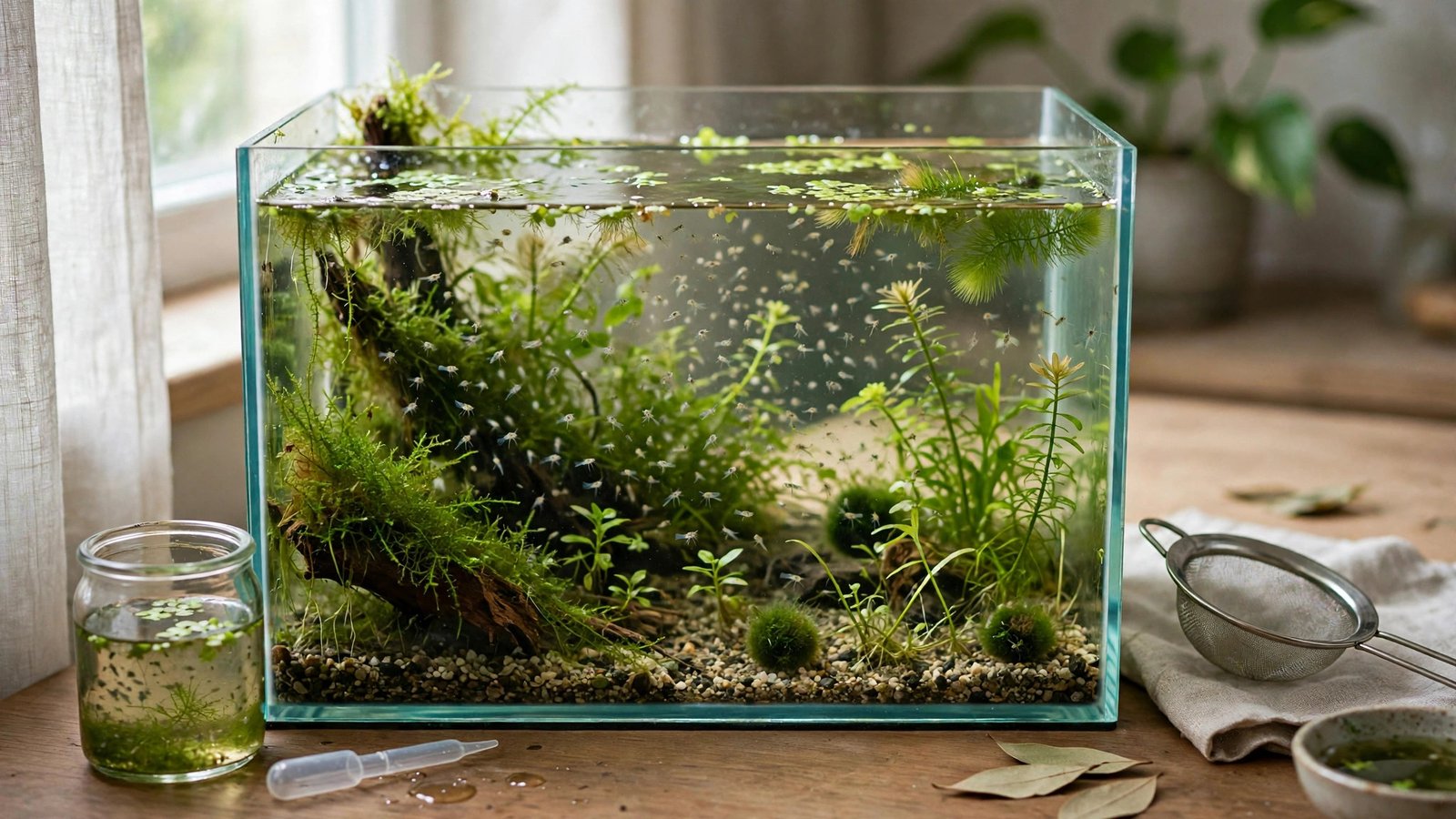
Live daphnia twitch and dart, flipping a predator switch in your fish that no flake ever will — tetras strike like tiny hawks, fry grow faster, even picky eaters start hunting. A living daphnia culture aquarium produces endless premium live fish food for almost nothing. Here's how to build one.
Why Live Daphnia Beats Freeze-Dried Food
Daphnia magna and Daphnia pulex are filter-feeding crustaceans the size of a sesame seed — the closest thing to wild fish food most aquarists can produce at home. They graze on microalgae all day, packing themselves with protein and color-boosting carotenoids, and feeding them live delivers every nutrient intact; freeze-drying degrades the fats and pigments that make daphnia valuable.
Behavior matters too. Drifting live daphnia triggers chase-and-gulp sequences no flake can imitate, and breeding pairs fed live food come into condition faster. Once you've seen the effect on the fish in your planted tank, dried daphnia feels like serving a photograph of dinner.
Building Your Daphnia Culture Aquarium
A daphnia culture aquarium is not a display tank — it's a tiny ecosystem with one job: turning microscopic food into swimming fish food. Keep that purpose in mind and the setup choices become obvious.
The container
Anything food-safe and wide beats tall: a 10-gallon storage tub, a cheap tank, even a 5-gallon bucket for a first attempt. Wider means more surface area for gas exchange and light; bigger is more stable. Keep it separate from your display tanks — fish eat daphnia far faster than they reproduce.
Water, light, and gentle aeration
Fill with dechlorinated tap water or water siphoned from a healthy tank — planted-tank-safe water parameters (pH 6.5–8.0, zero ammonia and nitrite). Run a gentle air stone or sponge filter on low; daphnia hate strong currents. Give 12–16 hours of bright light daily: light grows their food algae, and daphnia gather near light, which eases harvesting.
Getting your starter culture
Buy a live starter from a retailer, club auction, or hobbyist (affiliate slot: daphnia starter cultures) — 50–100 animals of mixed sizes. Skip wild pond-collected daphnia; they can carry hydra and parasites. Float the bag to equalize temperature, pour it in, and don't harvest for the first 2–3 weeks.
Feeding Your Colony: Green Water, Yeast, and Spirulina
Daphnia eat whatever drifts in the water column — three proven feeds:
- Green water (best). Fill a clear jug with dechlorinated water, add a pinch of plant fertilizer, and park it in full sun for a week. The pea-soup algae is daphnia's natural diet and grows the most robust colonies (affiliate slot: green-water and phyto feed starters).
- Baker's or brewer's yeast. Dissolve a small pinch in warm water and drizzle it in until the culture water is faintly cloudy. Cheap and widely available — see this daphnia culturing guide for long-term feeding observations.
- Spirulina powder. A pea-sized amount dissolved in water delivers protein, vitamins, and carotenoids in one shot.
The golden rule beats any schedule: feed only when the water has cleared. After feeding, the water should cloud faintly and clear within a day. Still cloudy after 24 hours? You overfed — skip a day or two. Feed a new culture twice a week, a dense colony daily. Hungry daphnia in clear water hold fine for a day or two; overfed daphnia in rotting water die by morning.
Daphnia Culture Parameters at a Glance
Here's the full operating window:
| Parameter | Ideal range | Notes |
|---|---|---|
| Temperature | 65–75°F (18–24°C) | Most critical factor; near 20°C is the sweet spot |
| pH | 6.5–8.0 | Neutral water; avoid swings on top-ups |
| Light | 12–16 hours daily | Grows food algae; daphnia gather in lit areas |
| Aeration | Gentle | Air stone or low sponge filter; strong flow harms them |
| Water changes | 25% twice a week | Screen the siphon intake to avoid accidental harvest |
| Feeding trigger | Water fully clear | Cloudiness past 24 hours means overfeeding — wait |
| Harvest rate | Up to 25% every few days | Leave juveniles and egg-bearers to keep the engine running |
| Container minimum | 5 gallons | 10–20 gallons recommended for stability |
Harvesting Without Crashing the Colony
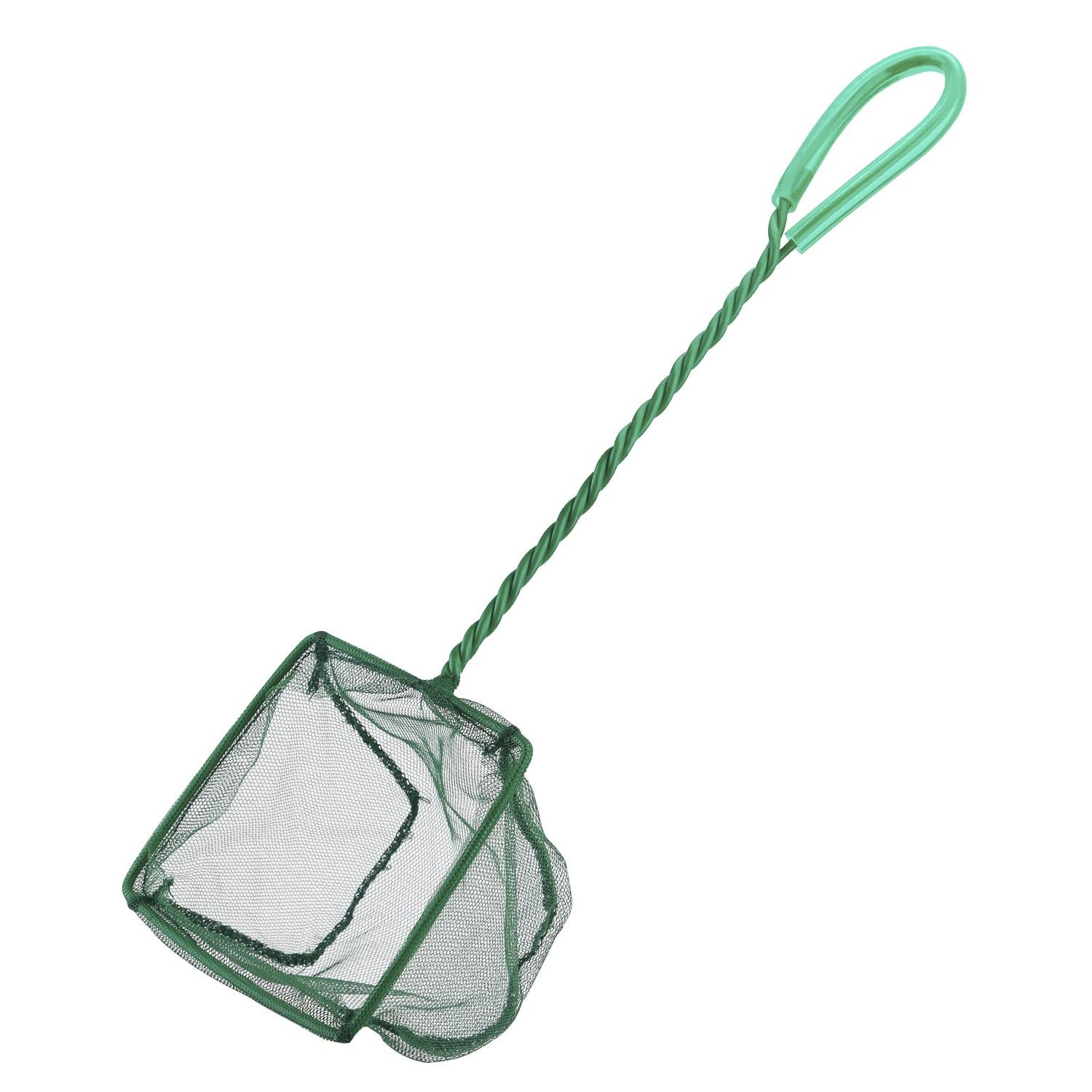
Once the culture is 2–3 weeks old and visibly alive with darting specks, start harvesting. Dim the light and wait — daphnia rise toward the surface. Scoop gently from the top half with a fine-mesh brine shrimp net (affiliate slot: fine-mesh harvest nets), rinsing the net in clean water first.
Never take more than 25% in one go, and leave the smallest daphnia — juveniles are next week's harvest. For tiny fry, strain the catch through a coffee filter. Feed immediately; daphnia die quickly in a net. For the very smallest fry, a DIY baby brine shrimp hatchery pairs well — BBS for week one, graded daphnia as fry grow.
 ★4.6
Pawfly 4" Aquarium Shrimp Net
Check Price on Amazon ★4.6Crash Prevention: Five Rules That Matter
Every crashed culture comes down to one of these, and they're all avoidable:
- Overfeeding. Excess food rots and ammonia spikes. The clear-water rule is your seatbelt.
- Temperature swings. Heat kills faster than cold — above 80°F (27°C), reproduction stops and die-offs start.
- Oxygen crashes. Dense cultures can out-breathe a weak air supply overnight, especially after feeding. Keep aeration running 24/7.
- Chlorine and chemicals. One untreated tap-water top-up can nuke the colony. Dechlorinate every drop and keep sprays away.
- Overpopulation without harvest. A colony left to explode starves itself. Regular harvesting is maintenance, not just feeding.
Dissolved organics are the silent sixth killer. If culture water stays yellow despite water changes, a few hours of chemical polishing resin like Seachem Purigen can strip them — but only on a mature colony, since Purigen also strips the micro-food daphnia eat.
Feeding Daphnia to Your Fish and Fry
Live daphnia suit almost anything that fits them in its mouth: tetras, rasboras, guppies, bettas, and small cichlids. For conditioning breeders, feed twice daily for 2–3 weeks — your breeding guppies will produce noticeably stronger drops of fry.
For fry rearing, daphnia are a bridge food: newly hatched fry need a microworm culture for fry first, then screened small daphnia from about a week old. Keep your breeding tank near the culture bucket so feeding is a 30-second scoop-and-drop. Pair the habit with the freshwater aquarium plants complete guide to keep the whole tank thriving.
Frequently Asked Questions
How long until I can harvest from a new culture?
About 2–3 weeks from seeding at roughly 68°F (20°C) with regular feeding. Daphnia reproduce asexually — each adult releases live young every few days — so 50–100 starters can become thousands fast. Don't harvest at all in the first two weeks; let the founders build.
Why is my culture water green but my daphnia are disappearing?
Dark green water with no daphnia means nothing is eating the algae — suspect a temperature spike, an oxygen crash, or chlorine in a recent top-up. Do a 50% dechlorinated water change, restore aeration, wait a few days for stability, then re-seed fresh.
Yeast or green water — which is better daphnia food?
Green water is best: their natural diet, the most robust colonies, and free in sunlight. Yeast is the most convenient and works well as backup. Most long-term keepers use both — green water as the base, yeast or spirulina for cloudy weeks.
Do daphnia cultures smell?
A healthy culture smells like nothing or faintly like a pond. A strong rotten smell means overfeeding and decay — the warning sign before a crash. Skip feeding for a day or two, do a 25% water change, and halve your feed amounts.
A daphnia culture is windowsill farming: sunlight and a pinch of yeast in, endless premium live fish food out. Start with a 10-gallon tub, feed only when the water clears, harvest modestly and often — and your fish will reward you with brighter color and fry that grow like weeds.