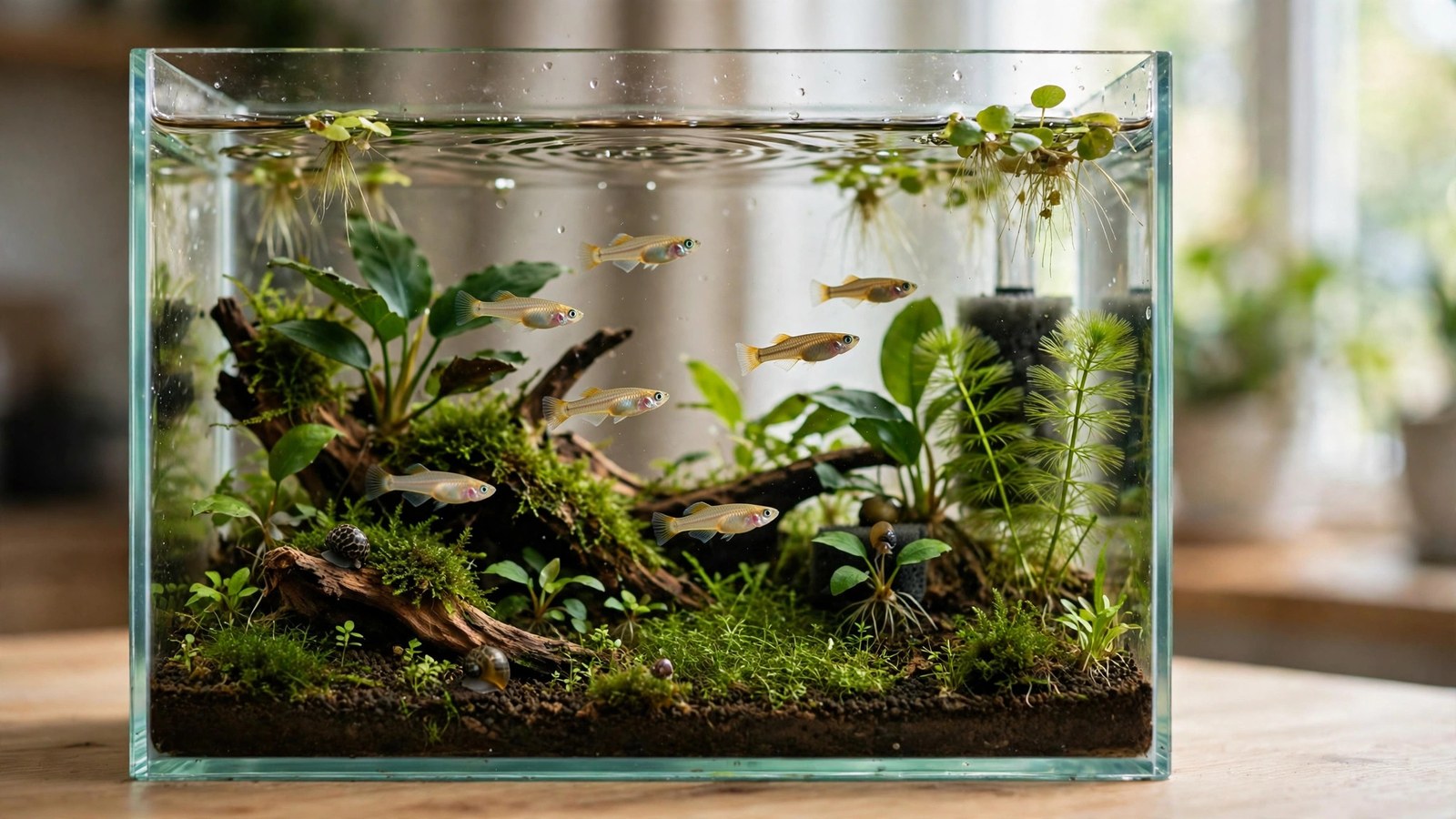
Picture a lush planted tank with no heater humming on the back. That's the promise of a medaka ricefish planted tank: the Japanese ricefish (Oryzias latipes) is one of the few aquarium species that genuinely prefers life cool, staying active and colorful in room-temperature water. Where tropical fish demand 76–80 °F on the dot, medaka cruise happily in the 60s and low 70s, breed readily, and thrive in unheated patio tubs all summer. If you're choosing plants for a small fish colony, this fish-first guide to aquarium plants is a useful companion.
Medaka Ricefish Planted Tank: The 5-Step Build
The classic beginner mistake is treating medaka like tropical fish — heater on, temps cranked, warm-water plant palette. Everything below assumes cool water, because that's where these fish color up best, live longest, and spawn most readily. Seriously Fish's medaka species profile notes that permanent warm conditions likely shorten their lifespan — skipping the heater is good husbandry, not laziness. A low-tech planted tank setup is exactly the right complexity band: simple filtration, easy plants, no CO2 to babysit.
Step 1 — Pick a wide footprint
Medaka patrol horizontally near the surface, so a wide, shallow tank beats a tall column of water. A 10-gallon with an 18 × 12 inch base suits 8–12 fish; a 5.5-gallon works for 6–8, but test parameters weekly in small volumes. Use a glass cover or a thick floater mat as a jump guard — startled medaka can leap.
Step 2 — Dark substrate, simple hardscape
Dark sand or dark aquasoil is the single biggest color booster — golden, orange, and blue-tinged strains glow over it, while pale gravel washes them out. Inert sand with root tabs grows cool-water plants just fine if your scape leans on floaters and epiphytes. One small driftwood piece or a few smooth stones breaks sight lines, because males hold tiny temporary spawning territories. Keep the bed 1–1.5 inches deep.
Step 3 — Plant the rice-paddy layout
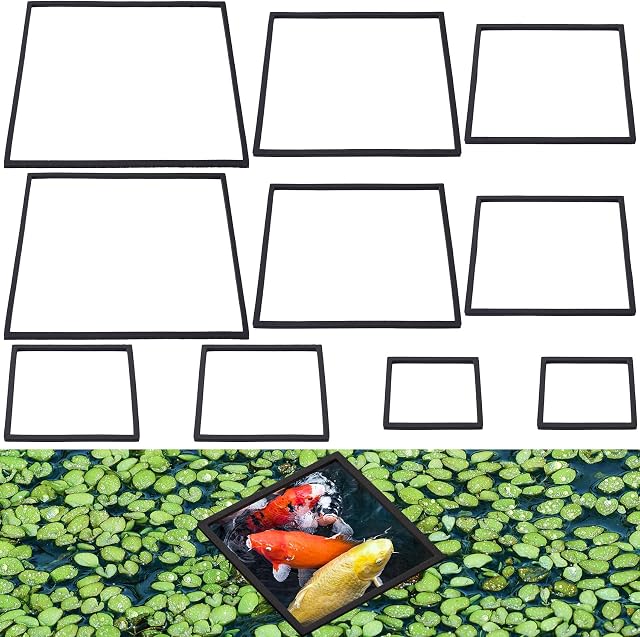
Anchor the scape with floaters covering a third to half of the surface — dwarf water lettuce, frogbit, or red root floaters give shade, security, and a hunting ground. Corral them with an airline-tubing ring so submerged plants still get light; a beginner floating-plant guide helps you match species to your light. Underneath, plant fine-leaved, cool-tolerant species that double as spawning media: hornwort, guppy grass, java moss, and water sprite. Leave open swimming lanes — a lightly planted layout with open space matches their behavior better than a wall-to-wall jungle.
Step 4 — Gentle filtration and cool-water parameters
Medaka evolved in still paddies and hate strong current. A small sponge filter is the gold standard: gentle flow, fry-safe, and a grazing farm of microorganisms. Run the light 6–8 hours daily on a timer; don't blast past the floaters — the plants below are shade-tolerant by design.
| Parameter | Target | Notes |
|---|---|---|
| Temperature | 61–72 °F (16–22 °C) | Brief ~59–86 °F OK |
| pH | 6.5–8.5 | Stability first |
| Hardness | 5–25 dGH | Most tap water is fine |
| Ammonia / nitrite | 0 ppm | Cycle first |
| Nitrate | Under 40 ppm | Floaters absorb it |
| Water changes | 25% weekly | Match temp closely |
 ★3.9
PAGOW Floating Plant Corral Rings
Check Price on Amazon ★3.9Stocking, Feeding, and the Egg-Thread Trick
Buy at least 8 medaka — they school tighter and color up better in numbers. Aim for about one male to two females; males are slimmer with elongated, filamentous fin rays, while ripe females look rounder. Release them in dim light and expect them to hug cover for a day or two before patrolling.
Medaka are micropredators, so food must fit a tiny mouth. Feed a high-quality micro pellet or crushed flake twice daily — whatever isn't gone in two minutes is too much — plus frozen or live treats 2–3 times a week: newly hatched brine shrimp, daphnia, and microworms are devoured enthusiastically. The small-pinch routine in a chili rasbora setup transfers nearly one-to-one.
Breeding is what hooks most keepers. In good condition, females produce egg batches every few days and carry the sticky cluster hanging from the belly on fine threads for hours before brushing them onto fine-leaved plants or a yarn spawning mop. Check mops daily and move egg-laden ones to a small container of the adults' tank water. Fry take powdered fry food, infusoria, or newly hatched brine shrimp; grow them out 3–4 weeks before returning them, and keep very different-aged juveniles apart.
Seasonal Care and the Outdoor Tub
The cool-water superpower shows across the seasons. Spring and autumn, an unheated indoor tank simply tracks room temperature. Summer is the one season needing a plan: if the room climbs past 80 °F for days, move the tank to a cooler wall, float a sealed frozen-water bottle during heat waves, or shift the colony outside.
The outdoor tub deserves a detour as the most fun way to keep ricefish. A 15–20 gallon tub or half-barrel on a patio — dechlorinated water, sand bed, thick floater mat — becomes a self-sustaining rice paddy from late spring to early autumn. Medaka devour mosquito larvae, breed in the long daylight, and you watch the colony from above, the traditional viewing angle. Bring them in when nights approach 50 °F. The gentle-filtration approach in an ember tetra nano tank applies here too, minus the heater; Endlers setups offer the livebearer counterpart to medaka's egg-laying charm, while celestial pearl danio tanks share the cool-water, heavy-cover playbook.
Frequently Asked Questions
Do medaka really need no heater at all?
Correct — no heater in a normally heated home. Medaka are most comfortable at 61–72 °F (16–22 °C) and tolerate brief swings from about 59 °F to 86 °F. Constant tropical warmth can shorten their lifespan, so room temperature is the sweet spot, not a compromise.
How many medaka for a 10-gallon planted tank?
Aim for 8–12, with roughly twice as many females as males. Medaka school tighter and color up better in groups of 8 or more, and a 10-gallon footprint gives them comfortable surface-patrolling room. Smaller groups survive, but shy, washed-out fish are the usual result — numbers are the cheapest color enhancer you can buy.
What plants are best for a medaka tank?
Floating plants first — dwarf water lettuce, frogbit, or red root floaters covering 30–50% of the surface recreate the rice-paddy canopy medaka love. Below them, fine-leaved hornwort, guppy grass, java moss, or water sprite thrive unheated and catch the females' drifting egg clusters.
How do I collect and hatch medaka eggs?
Drop yarn spawning mops in the tank, check daily, and move egg-laden mops to a small container of the adults' tank water. Eggs hatch in 7–21 days depending on temperature. Feed fry powdered food, infusoria, or newly hatched brine shrimp, and separate very different-sized juveniles.
Can medaka live in an outdoor tub year-round?
They thrive outdoors from late spring through early autumn, eating mosquito larvae and breeding freely. Bring them inside when nights consistently approach 50 °F — only deep, freeze-proof ponds hold them through temperate winters. Float the bag for an hour so the temperature shift doesn't stress the colony on moving day.
Can medaka live with shrimp or other fish?
They're peaceful, but cool-water needs rule out most tropical tankmates. Cherry shrimp and snails are ideal companions. For maximum breeding, keep medaka species-only — adults eat their own free-swimming fry. Dense planting lets a few fry survive, but a grow-out tub is far more productive.
The Cool-Water Payoff
A medaka ricefish planted tank gets simpler the more you understand it: no heater to buy or replace, plants that flourish in tap water, and a colony that rewards you with morning spawning rituals and pearl-strung bellies. Start with a wide tank, a sponge filter, dark sand, and a floating-plant canopy.