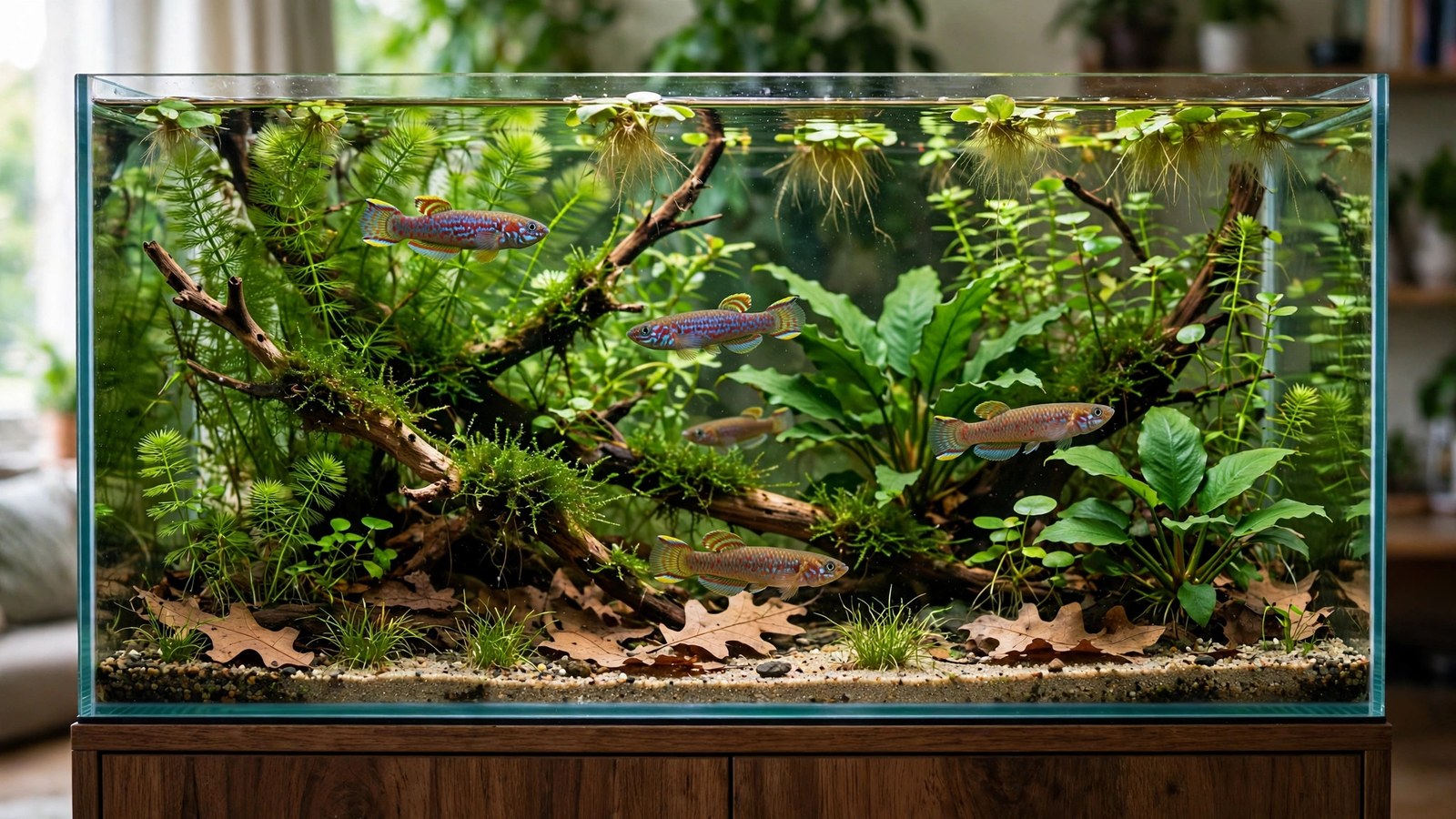
Most killifish force a choice: hardy or beautiful. The lyretail refuses the trade. Male Aphyosemion australe trail fins that split into two red-edged points, like a lyre, over an olive body speckled in crimson — yet they ask less of you than a betta. Give them a lyretail killifish planted tank modeled on a West African forest stream and you get daily spawning on a yarn mop, fry in two weeks, and one of the hobby's most satisfying breeding projects.
The short answer: the lyretail killifish (Aphyosemion australe) is a non-annual killifish that lives 2–3 years, thrives in a 10-gallon planted tank at 72–75°F and pH 6.0–6.8, and lays eggs on spawning mops daily. Breeders typically report eggs hatching in about 12–14 days at 74°F, with a productive pair laying dozens of eggs per week.
Why the Lyretail Is the Classic Beginner Killifish
Killifish carry a reputation for difficulty they mostly don't deserve. Annual species demand peat incubation and live one frantic season — brilliant fish with a shelf life. The lyretail is the opposite: years of life, breeding that asks only for a yarn mop, and forgiveness for beginner sins. Start with the right aquarium plants for your fish tank setup and the fish handle the rest.
The male's tail is the visual hook: the caudal fin splits into two tapered points like a lyre, edged in deep red. Females are smaller, amber-toned, plain-finned — buy trios, not single males. Two males in ten gallons means one displays and the other hides.
Building the Tank: Forest-Stream Setup
Forget the bright, CO2-pumped aquascape. Lyretails come from slow, tannin-stained forest streams in Gabon and Cameroon: a lightly planted aquarium setup with dark substrate, leaf litter, driftwood, and a canopy of floaters. Low light, shaded corners, gentle flow from a sponge filter.
| Parameter | Target | Notes |
|---|---|---|
| Tank size | 10 gallons minimum | A 20-long fits a trio plus nano mates |
| Temperature | 72–75°F (22–24°C) | Cooler than most tropicals; usually no heater needed |
| pH / hardness | pH 6.0–6.8, 3–8 dGH | Indian almond leaves or driftwood do the acidifying |
| Filtration | Air-driven sponge filter | Gentle flow keeps eggs and fry in place |
| Lighting | Low, dimmed by floaters | 8–10 hours; canopy mimics the forest floor |
Plant the perimeter, leave the center open, and let floaters cover half the surface. That one step cuts jumpiness, deepens male color, and cools the tank a degree or two.
 ★4.8
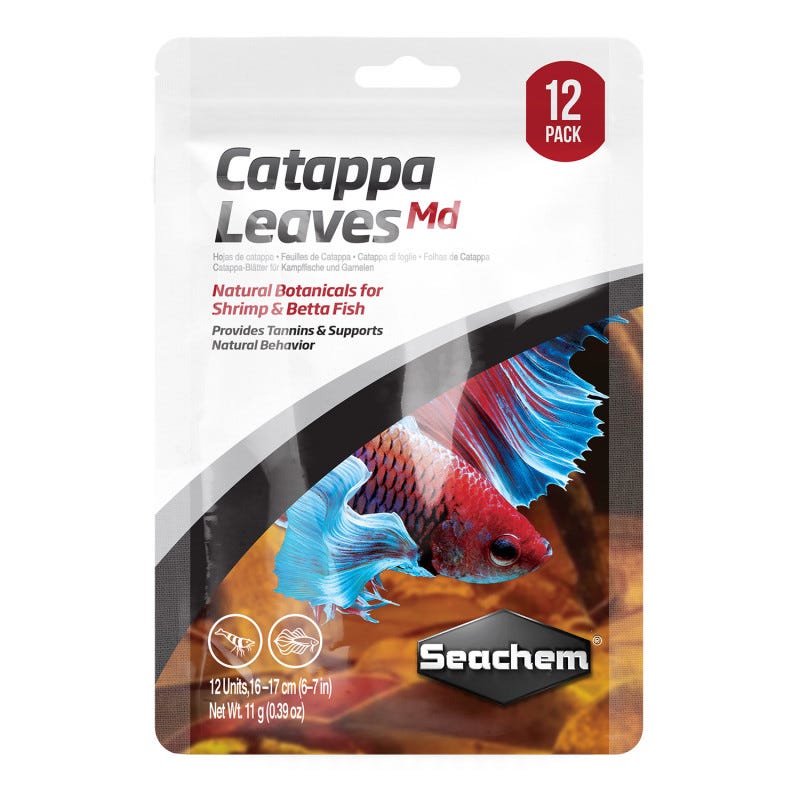
Seachem Catappa Leaves 12-pack
Check Price on Amazon ★4.8Spawning Mops and Peat: The Breeding Setup
Lyretails are perpetual egg-scatterers — a pair lays a few eggs on a mop every day for months. The whole breeding program: give them the medium, harvest the eggs, hatch them in a dish.
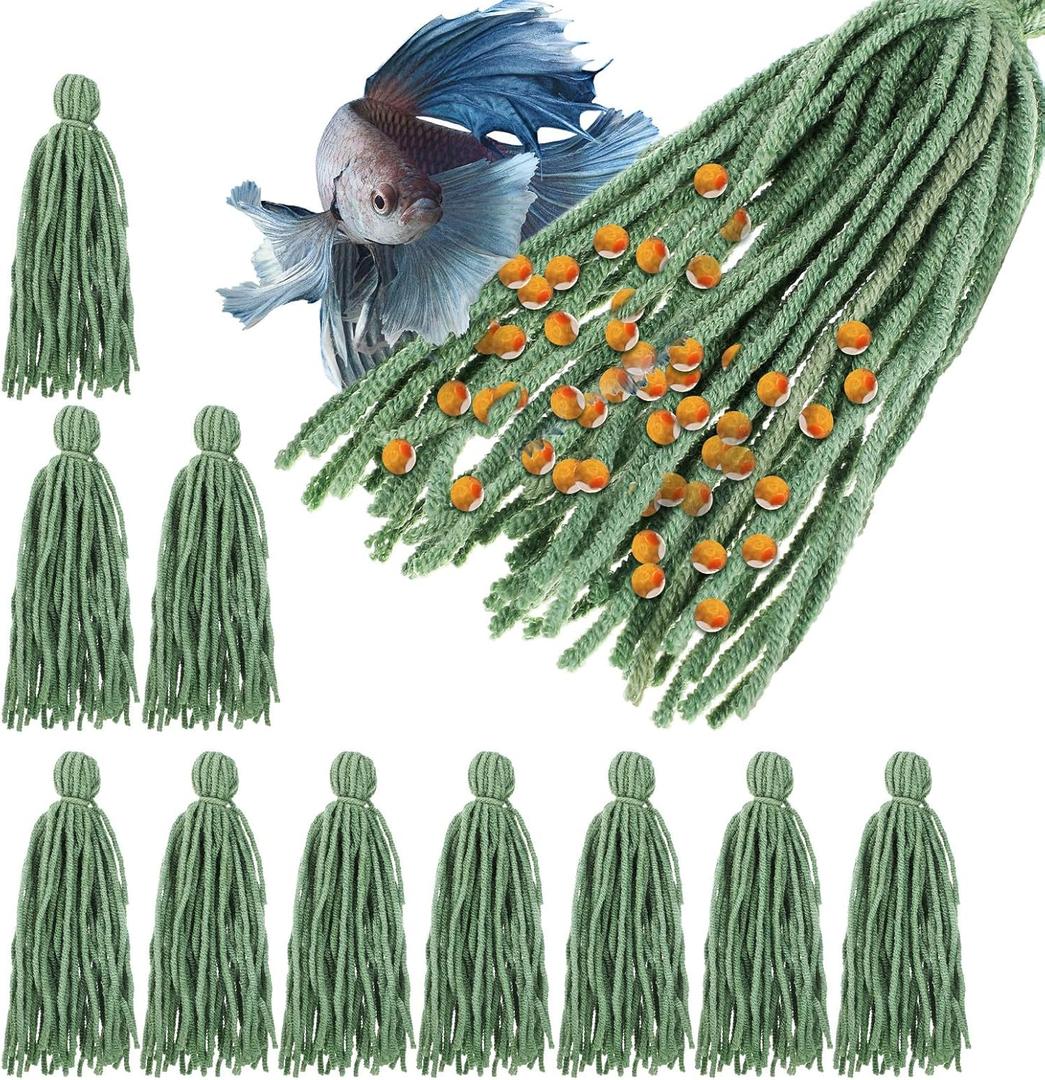
The mop method. Tie 20–30 strands of boiled dark-green acrylic yarn (6 inches) to a floating cork ring, or sink a second mop. Each morning, tease the strands apart over a white dish and pick out the translucent 1mm eggs. Lyretail eggs stay wet the whole time — drying kills them.
The peat-fiber method. Sink a shallow box of boiled peat fiber in a corner for three days, then pull it and sort eggs from the fibers — pairs often prefer it to yarn.
Hatch in a shallow dish of tank water at 74°F with a drop of methylene blue per cup. Eyes appear by day 7; hatching takes 12–14 days. Feed fry microworms for a week, then baby brine shrimp — most breeders report a productive pair yielding dozens of fry a month under steady feeding.
 ★3.8
Spawning Mops for Fish
Check Price on Amazon ★3.8Plants That Work Hardest in a Killifish Tank
Killifish tanks ask plants to do jobs, not just look pretty. Fine-leaved species catch scattered eggs, and floating plants create the shade that makes males display.
| Plant | Role | Placement |
|---|---|---|
| Java moss | Egg-catching mesh; fry refuge | Loose clumps in breeding corners |
| Hornwort | Egg-scatter cover; fast nutrient uptake | Floating bunches |
| Water sprite | Fry hideout; surface shade | Floating or mid-ground |
| Frogbit / salvinia | Surface canopy | Floating, ~50% coverage |
| Java fern, anubias | Low-light structure | Tied to driftwood |
Contrast its close cousin: the gardneri killifish planted tank shares the genus and beginner angle, but gardneri is larger and bolder while australe is smaller, more delicate, and more shade-dependent. Plant this tank thicker.
Feeding: Live Food Unlocks the Color
Lyretails survive on flakes; they shine on live food. Dry-fed fish plateau — washed-out tail edges, half-hearted spawning. Two weeks of live food changes the fish: reds intensify, males display constantly, females plump with eggs.
Keep it simple: daphnia in a bucket, microworms in oatmeal, baby brine shrimp in a 2-liter bottle. Feed small amounts twice daily, one live food per feeding, with a quality micro-pellet as backup. That's the difference from the rachovii killifish setup — rachovii's frantic annual life demands constant feeding, while australe rewards steady, moderate live feeding across years.
Tank Mates and the One-Male Rule
Lyretails are peaceful with anything they can't eat. The danger is male-to-male: two males in a small tank spar until the loser stops eating. Keep one male with two or three females; in a 20-long you can run two trios with a plant wall between territories.
Good companions: ember tetras, chili rasboras, pygmy corydoras, otocinclus, cherry shrimp (adults are safe; shrimplets become snacks). Avoid fin-nippers like tiger barbs and serpaes — they shred the lyre tail. The blue gularis killifish tank houses a West African giant that would eat a lyretail without noticing — match sizes in killifish communities. Keep a tight lid and lower the waterline an inch.
Lifespan: Years, Not Seasons
Annual killifish live 8–12 months and die no matter what you do. Lyretails live 2–3 years, and pairs breeding from six months can produce fry for most of their adult lives — the killifish breeding story on a timeline that lets you enjoy the fish.
Plan the colony, not just the tank: a grow-out tub for each month's fry, surplus rehomed to your local club early, aging males retired to a dense tank where they don't compete. A trio bought this year becomes a self-sustaining line next year.
Frequently Asked Questions
Are lyretail killifish good for beginners?
Yes — they are the classic beginner killifish. They tolerate normal beginner mistakes, live 2–3 years rather than one season, and breed on spawning mops with no special gear. The two real requirements are soft, acidic water and live food a few times a week.
Can I keep two male lyretails together?
Not in a small tank. Males fight until the subordinate stops eating and fades. Keep one male with two or three females per 10 gallons. In a 20-long with a dense plant wall, two trios can work — but be ready to separate a bullied male.
How long do lyretail killifish eggs take to hatch?
12–14 days at 74°F in tank water. Unlike annual killifish eggs, lyretail eggs must stay wet — drying kills them. Harvest mops daily and incubate the eggs in a shallow dish of tank water with a drop of methylene blue to stop fungus.
What is the difference between lyretail and gardneri killifish?
Both are Aphyosemion beginner killifish, but the lyretail (A. australe) is smaller and more delicate, with the ornamental lyre-shaped male tail, and wants heavier shade and planting. Gardneri (A. gardneri) is larger, bolder, and more tolerant of open water. For a classic shaded display tank, pick the lyretail.
Your Lyretail Killifish Planted Tank in Three Weekends
Weekend one: set the 10-gallon with dark substrate, driftwood, leaf litter, and a sponge filter; plant the perimeter and cover half the surface with floaters. Weekend two: dial in soft, acidic water and add your trio — one male, two females. Weekend three: drop in a spawning mop and start your daphnia culture. Within a month you'll be harvesting eggs daily. For species authority, check the American Killifish Association species resources and the Seriously Fish profile for Aphyosemion australe.