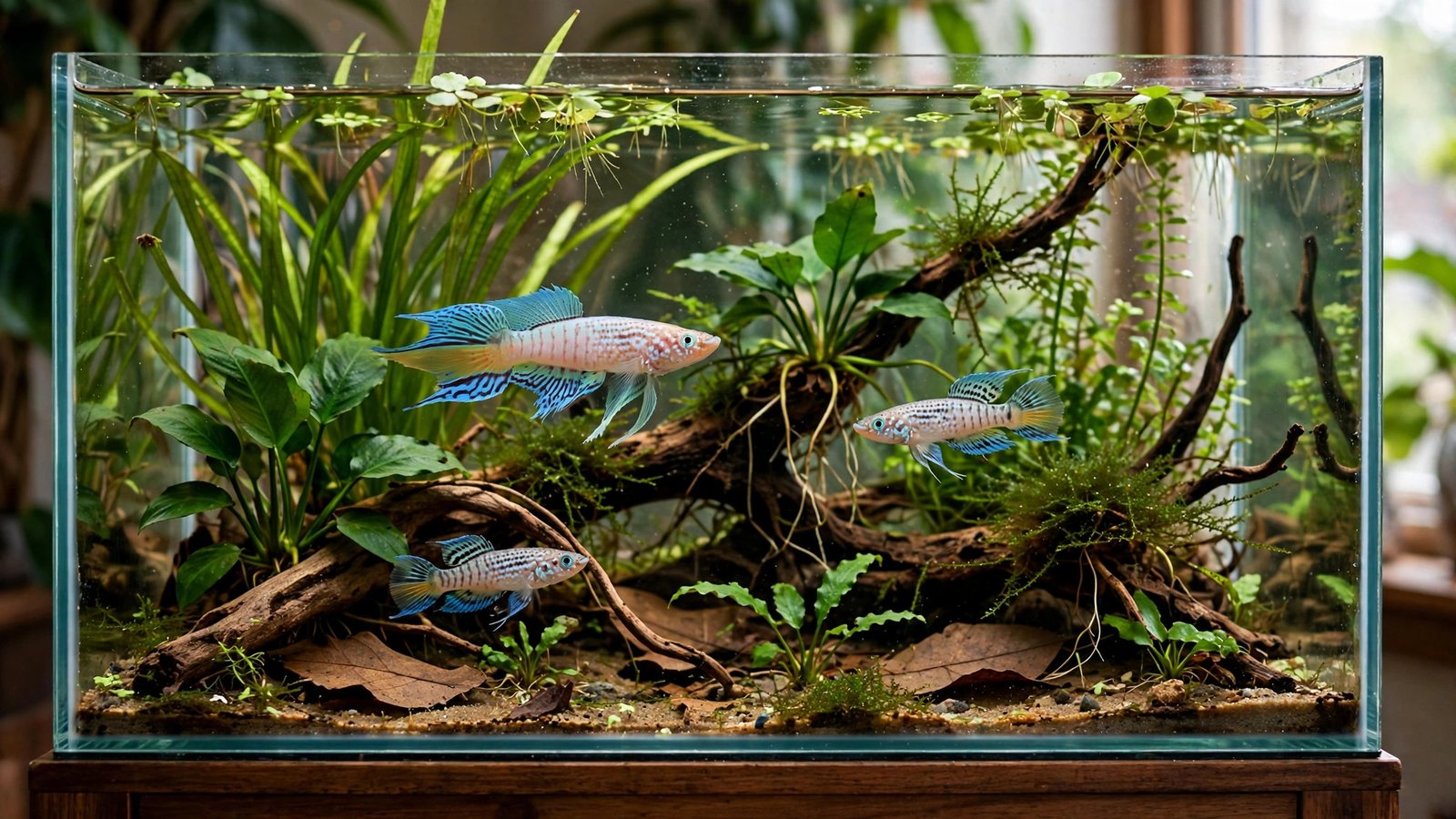
Most killifish fit in a nano tank — and then there is the blue gularis. Fundulopanchax sjoestedti grows to 13 centimeters, claims the mid-water column as its territory, and hits the lid hard if you forget it can jump. A blue gularis killifish planted tank is built around that: twenty gallons or more, one male, a floating-plant canopy, and a gapless lid.
A species-only tank of 20 gallons or more, one male with two to three females, a floating canopy of frogbit or water lettuce, and a tight lid — blue gularis are powerful, repeated jumpers. Unlike annual killifish such as Nothobranchius rachovii, Fundulopanchax sjoestedti is a non-annual substrate spawner whose eggs hatch in water, never needing a peat-storage drought. Males reach 13 cm — roughly triple a clown killifish — making it one of the largest killifish kept in the hobby.
Planning a Blue Gularis Killifish Planted Tank: Size and Layout
A 10-gallon nano that suits a clown or gardneri killifish leaves a 13-centimeter territorial male nowhere to patrol and females no escape. Start at 20 gallons with a 24-inch-plus footprint: the male paces a territory while the females hold the other end. A 20-gallon planted tank setup with plants weighted to the sides and back leaves the central lane open — this fish cruises constantly, and a clear middle keeps its confidence up.
Break the line of sight: driftwood with anubias, a broad-leaf sword or two, and Vallisneria in the corners let females vanish during courtship. Leave the front third open — you will watch the middle of the tank.
One Male, Always: Managing Territoriality
One male per tank — full stop. In a 20-gallon tank a second male gets harassed until it is hiding, starving, or jumping. Keep two or three females so courtship pressure spreads instead of landing on one exhausted fish.
The only workaround is demanding: 40 gallons or more with a dense planted barrier down the middle can let two males hold opposite ends — but keep a spare tank ready. Tankmates follow the same logic: anything small enough to fit in this predator's mouth is prey. Species-only is the setup that works on the first try.
Plants: The Floating Canopy Does the Heavy Lifting
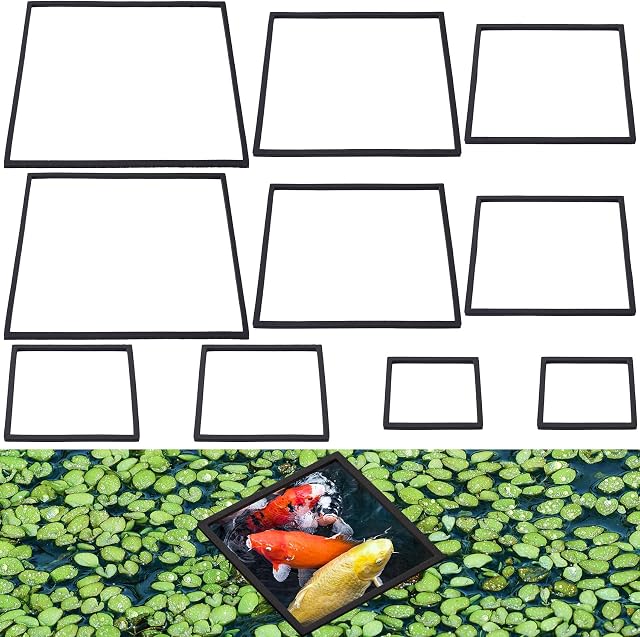
Blue gularis come from shaded West African forest pools — a floating-plant canopy recreates that, diffusing light to the levels the fish prefers and calming its jumping. The best floating plants for a surface-cover layer — frogbit, water lettuce, salvinia — all work; frogbit's long roots double as mid-water cover. Keep the canopy over about two-thirds of the surface.
Below the canopy, plant for structure: this fish does not dig, so choose tough, broad-leaf plants that tolerate lower light. The fish-first plant selection guide applies: pick plants that serve the fish — cover, spawning surface, sight-line breaks. Anubias and Java fern on driftwood, Java moss (your spawning surface), swords as anchors, Cryptocoryne in the corners.
 ★3.9
PAGOW Floating Plant Corral Rings
Check Price on Amazon ★3.9Water Parameters: Stable and Unglamorous
Blue gularis is forgiving on chemistry — aggression and jumping punish you, not pH. Clean water, steady mid-twenties temperature, small regular changes.
| Parameter | Range | Notes |
|---|---|---|
| Temperature | 24–26 °C (75–79 °F) | Lower end when conditioning breeders |
| pH | 6.5–7.5 | Stability beats exactness |
| Hardness | 5–12 dGH | Avoid very hard water |
| Ammonia / nitrite | 0 ppm | Mature filter, no cycling shortcuts |
| Nitrate | Under 20 ppm | Change 25–30% weekly |
| Flow | Gentle | Sponge filter or baffled output |
Quarantine new plants and wild-collected decor before they go in — a 13-centimeter fish is an investment, and a plant quarantine routine is cheap insurance against hitchhikers.
Feeding a Predator, Not a Community Fish
Your blue gularis will stare at flake food with open contempt — take the hint. This obligate carnivore is built for live prey: brine shrimp, daphnia, grindal or white worms, chopped earthworm, bloodworm. A one-food diet is how killifish lose color and breeding condition; frozen brine shrimp, mysis, and bloodworm make the practical staple once the fish learns they are food.
Feed once or twice daily, only what is eaten in two to three minutes. New arrivals sometimes refuse everything but live food for the first week — have a brine shrimp hatchery or daphnia culture running before the fish arrives. Color is your report card: a well-fed male glows metallic blue with red fin edging.
Spawning: Peat, Moss, and a Non-Annual Lifecycle
The blue gularis is not an annual killifish: annuals like Nothobranchius rachovii need peat eggs stored dry and re-wet months later, while Fundulopanchax sjoestedti eggs hatch in water within 14–21 days. Never pull the spawning medium to "dry-store" it — you will kill the embryos.
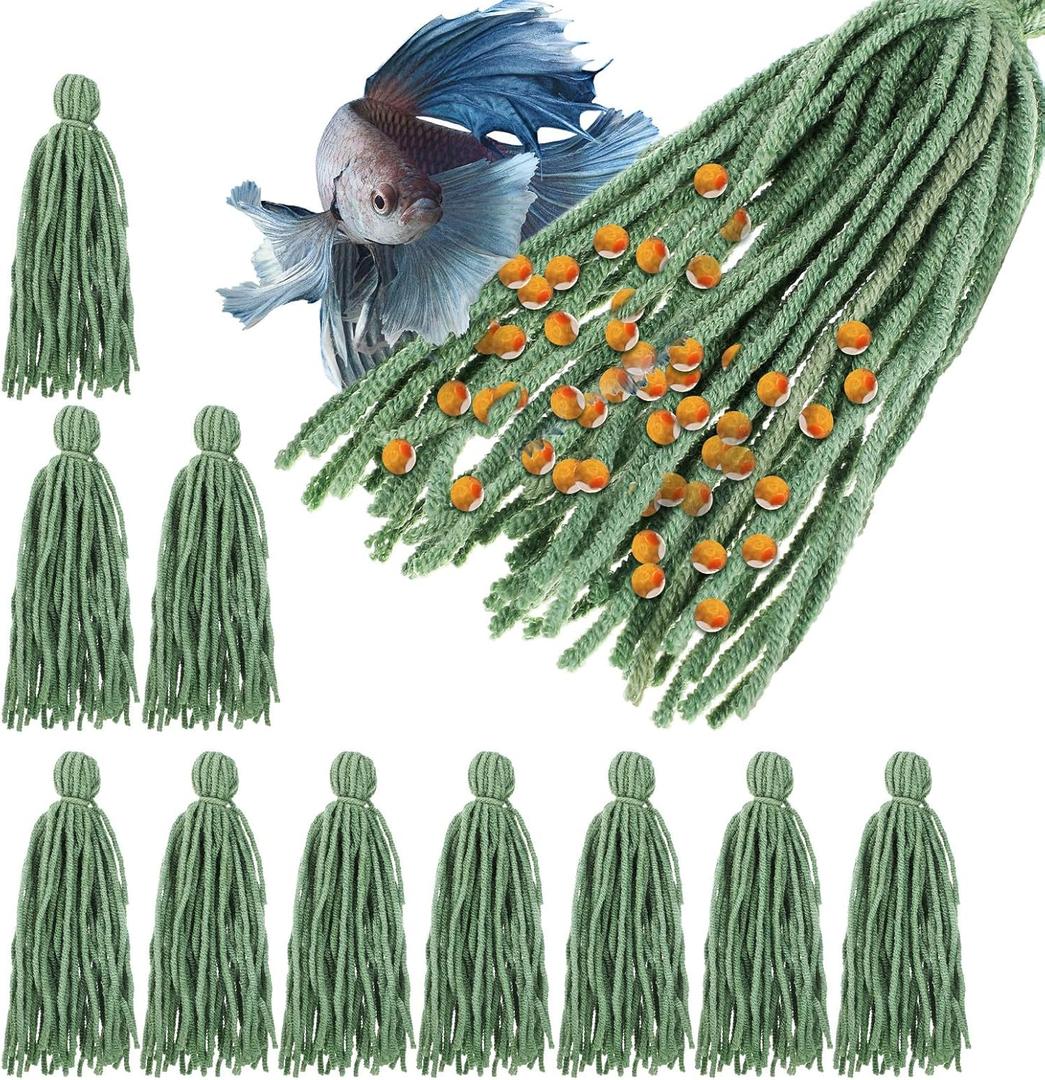
Setup is simple: dense Java moss or a dark wool spawning mop in a shaded corner. The male drives the female into it through the morning; check the moss every few days and move the tiny clear eggs to tank water with a drop of methylene blue. Fry take newly hatched brine shrimp immediately. The gardneri killifish setup covers Fundulopanchax gardneri — this fish's smaller, calmer cousin in the same genus.
 ★3.8
Spawning Mops for Fish
Check Price on Amazon ★3.8Jump-Proofing: The Lid Is Part of the Tank
Blue gularis are explosive jumpers — startled, courting, or hunting, they launch, and a lost fish on the carpet is the classic keeper tragedy. A lid is not optional. Seal the gaps everyone misses: filter cutout, heater-cord corners, the slot where lid meets filter box. Open-top planted tanks and committed jumpers are a bad match — rimless open tops are beautiful and wrong for this fish.
A frogbit root mat cushions a fish that would otherwise hit glass, and the canopy calms jump-prone behavior — but both are mitigation, not a lid. Check the cutouts monthly: plastic warps and foam compresses.
Frequently Asked Questions
Is the blue gularis an annual killifish?
No — Fundulopanchax sjoestedti is a non-annual substrate spawner; eggs hatch in water within 14–21 days. Annuals like Nothobranchius rachovii need peat eggs stored dry for months, but drying sjoestedti eggs kills them. Expect about 3–4 years in good care — several times a true annual's lifespan.
Can I keep two male blue gularis together?
Not in a standard 20-gallon — two males fight until one is hiding, starving, or jumping. In 40 gallons or more with a dense planted barrier down the middle, two males can sometimes hold opposite ends, but keep a spare tank ready.
Do blue gularis killifish really jump that much?
Yes — they are among the most committed jumpers in the hobby, and carpet rescues are the classic blue gularis story. Use a tight lid and seal every gap: filter cutouts, heater cord slots, back corners. A floating canopy calms the fish, but it is mitigation — the lid is the protection.
Can blue gularis live with other fish?
Species-only is the reliable answer: anything small enough to fit in a 13-centimeter predator's mouth is prey, and tankmates add stress during courtship. Before you experiment, study the Seriously Fish species profile for Fundulopanchax sjoestedti, which documents real-world spawning behavior and water parameters.
What should I feed a blue gularis?
Live and frozen meaty foods: brine shrimp, daphnia, grindal or white worms, chopped earthworm, bloodworm. Frozen brine shrimp, mysis, and bloodworm make the practical staple once the fish learns they are food. Flake is an afterthought at best. Feed once or twice daily, only what is eaten in two to three minutes.
The Giant Earns Its Tank
A blue gularis is not a fish you squeeze into an existing setup — it is a fish you build a tank around. Twenty gallons, one male's territory, a dim canopy overhead, a lid with no gaps — and in return, a 13-centimeter predator in full breeding dress patrolling a tank clearly made for it.