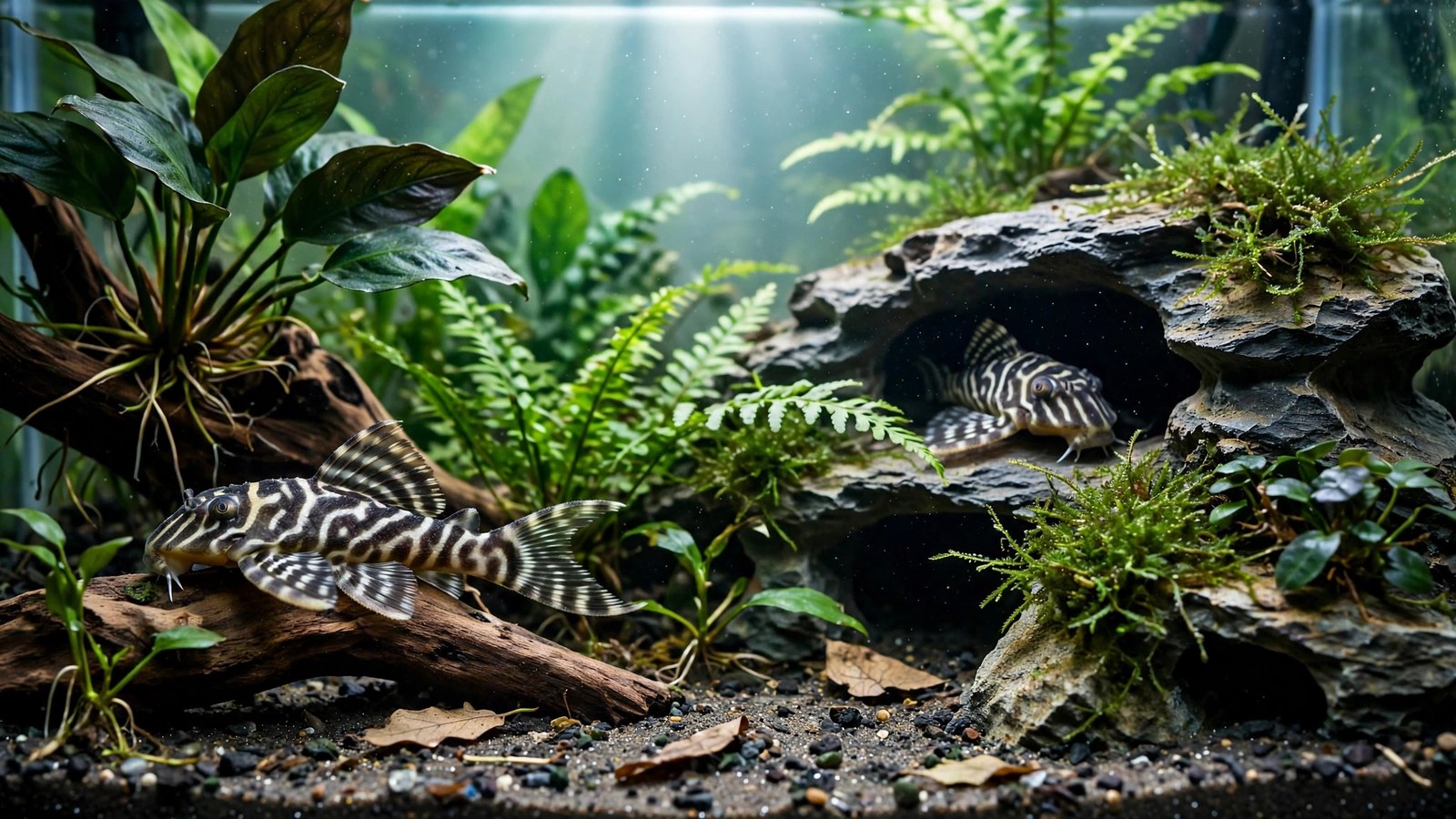
The costliest mistake in pleco-keeping is buying a king tiger pleco to clean your algae — then watching it quietly starve while the glass stays spotless. The L066 is no janitor: this nocturnal carnivore wants warm, oxygen-rich water, sinking meaty foods, and more caves than plecos in the tank. It's also completely plant-safe, which makes it one of the finest showcase plecos for a planted aquarium — as long as you build the tank around its needs.
A king tiger pleco (Hypancistrus sp. L066) is a 4.5–5.5-inch nocturnal carnivore that thrives in a 30-gallon planted tank at 82–84°F, pH 5.8–7.4, with more caves than plecos and a diet of sinking carnivore pellets plus frozen bloodworm or brine shrimp — it will not clean algae. Citable fact: its 10–15 year lifespan outlasts most small tetras roughly threefold, so cave layout and long-term tank-mate compatibility matter more than its modest size suggests.
The cave-first aquascape
Design around hiding spots first and plants second. The king tiger pleco is peaceful toward dissimilar fish but territorial with its own kind — two L066s in a cave-poor tank will bicker nightly. The rule is simple: more caves than plecos, at least two per fish, so a subordinate always has somewhere to retreat.
Use ceramic pleco caves or stacked slate, with one cave entrance facing moderate current — wild Hypancistrus choose hides in fast, oxygenated water. Wedge driftwood between cave clusters to break sightlines; a blocked line of sight buys more peace than an extra cave in the open.
Then plant around the hardscape. Pair the cave layout with the best plants for a planted aquarium that tolerate warm water — anubias and java fern tied to the wood above the caves make a shaded, naturalistic lair. For the floor, choose a sand-safe substrate for barbels: fine sand or smooth, rounded gravel, since the pleco's barbels constantly taste the bottom as it forages.
King tiger pleco water, tank, and feeding parameters
A warm-water, high-metabolism fish needs life-support, not extras: warmer water holds less oxygen, so strong flow and surface agitation are what make 82–84°F safe.
| Parameter | Target | Notes |
|---|---|---|
| Tank size | 30 gal (single) · 40 gal (pair) | Footprint beats height; caves need floor space |
| Temperature | 78–86°F (best 82–84°F) | Below 78°F, digestion and immunity decline |
| pH / GH | 5.8–7.4 · 2–10 dGH | Soft, slightly acidic to neutral |
| Turnover | 10–20x per hour | Canister + wavemaker or spray bar |
| Diet | Sinking carnivore pellets, frozen bloodworm, brine shrimp | Nocturnal feeder — food goes in after lights out |
| Adult size / lifespan | 4.5–5.5 in · 10–15 years | A decade-plus commitment |
Feed sinking carnivore pellets as the staple, plus frozen bloodworm or brine shrimp 2–3 nights a week. Drop food near cave entrances after lights out, when the pleco is active and faster tank mates have settled — daytime feeding means the tetras eat and the L066 gets leftovers. It may rasp driftwood, but that's incidental fiber-grazing, not nutrition.
Tank mates that share warm, flowing water
Pick calm, dissimilar fish that tolerate 82–84°F and won't compete for cave floors at night. The pleco ignores anything that doesn't look like another pleco.
| Tank mate | Why it works | Watch for |
|---|---|---|
| Cardinal / rummy-nose tetras | School midwater, love warm soft water | Ideal dither fish |
| Harlequin rasboras | Peaceful, heat-tolerant | School 10+ so they ignore the bottom |
| Dwarf cichlids (rams, apistos) | Share the warm, cave-adjacent biotope | Each species needs its own cave cluster |
| Corydoras | Peaceful, different bottom niche | Feed sinking food in a separate zone |
| Adult shrimp | Useful cleaners the pleco ignores | Shrimplets at risk during night foraging |
Skip other cave-dwelling bottom feeders that trigger territorial disputes, and fin-nippers that harass a slow nocturnal fish. For a second pleco personality rather than a second L066, a clown pleco planted tank companion works — different genus, different niche. For planting, pick fish-first plant choices that hold up under warm, high-flow conditions.
Plants that hold up in L066 conditions
The plant list is defined by the pleco's water: warm, oxygenated, moderately fast-moving. Hardy epiphytes win — they anchor to wood and rock above the cave line and shrug off current.
- Anubias — the backbone. Tie rhizomes to driftwood over the caves; tough leaves the pleco can't damage.
- Java fern — handles 82–86°F and flow; plantlets on old leaves fill gaps free.
- Crinum calamistratum — dramatic, flow-tolerant bulb plant; unpalatable and unbothered by foragers.
- Bucephalandra — slow-growing color accents for cave-adjacent rock.
Skip delicate stems that melt in sustained 84°F water. Cross-check sizes and temperature ranges in Tropica's plant database before buying. Weighing another Hypancistrus for a similar scape? The zebra pleco planted tank guide covers the L046's nearly identical cave-and-flow needs.
Weekly maintenance for a warm, high-flow tank
Warm water accelerates everything — metabolism, waste, bacterial activity — so this tank needs a stricter routine than a cool community setup.
- 30% water change weekly. Non-negotiable at 82–84°F; warm water's lower oxygen capacity leaves little margin for waste.
- Gravel-vac open sand around (not inside) the caves — the pleco forages there nightly.
- Clean pre-filters every 2 weeks. 10–20x turnover loads media fast; clogged flow starves the tank of oxygen.
- Feed deliberately. Sinking pellets after lights out, 5 nights a week; frozen food 2–3 nights. A plump belly means the routine works.
Frequently Asked Questions
Will a king tiger pleco eat algae in my planted tank?
No. Despite the "pleco" name, the L066 is a carnivore — it eats sinking pellets, frozen bloodworm, and brine shrimp, and ignores algae on glass and leaves entirely. Buying one for algae control is the most common cause of slow starvation in this species. If you want a genuine algae eater, get a bristlenose pleco; feed your king tiger pleco meaty foods after lights out instead.
How many caves does one king tiger pleco need?
At least two caves per pleco, and always more caves than plecos in the tank. L066s are peaceful toward other species but territorial with their own kind, so a subordinate needs somewhere to retreat at night. Face caves into moderate current, break sightlines with driftwood between them, and each fish will claim a favorite within days.
Can a king tiger pleco live in a 20-gallon tank?
No — 30 gallons is the realistic minimum for one adult, 40 for a pair. A proper L066 setup needs multiple cave territories with floor space between them, plus room for 10–20x turnover. A cramped tank also makes 82–84°F water harder to keep stable and oxygenated, which this species won't forgive.
Will a king tiger pleco eat or uproot my plants?
No — it's fully plant-safe. The L066 neither eats live plant tissue nor bulldozes substrate like larger plecos; it forages gently with its barbels. The only real constraint is temperature: choose warm-water, flow-tolerant species like anubias, java fern, and Crinum calamistratum over delicate stems that melt at 84°F.
Why is my king tiger pleco always hiding?
It's nocturnal — daytime hiding is normal, not a problem. A healthy L066 emerges after lights-out to patrol and forage, then retreats by morning. Worry only if it hides at night too, refuses food, or shows a sunken belly: that points to bullying, poor water, or starvation. A dim red flashlight lets you observe it without disturbance.
A decade-plus centerpiece worth building for
A king tiger pleco won't clean your tank, but it offers something better: a striking cave-dweller that patrols your planted aquascape nightly for 10–15 years. Give it the cave-first setup it deserves — warm, flowing, oxygen-rich water, meaty food after dark, plants that thrive in the same conditions — and the L066 becomes the quiet centerpiece of a tank that looks as good at midnight as at noon.