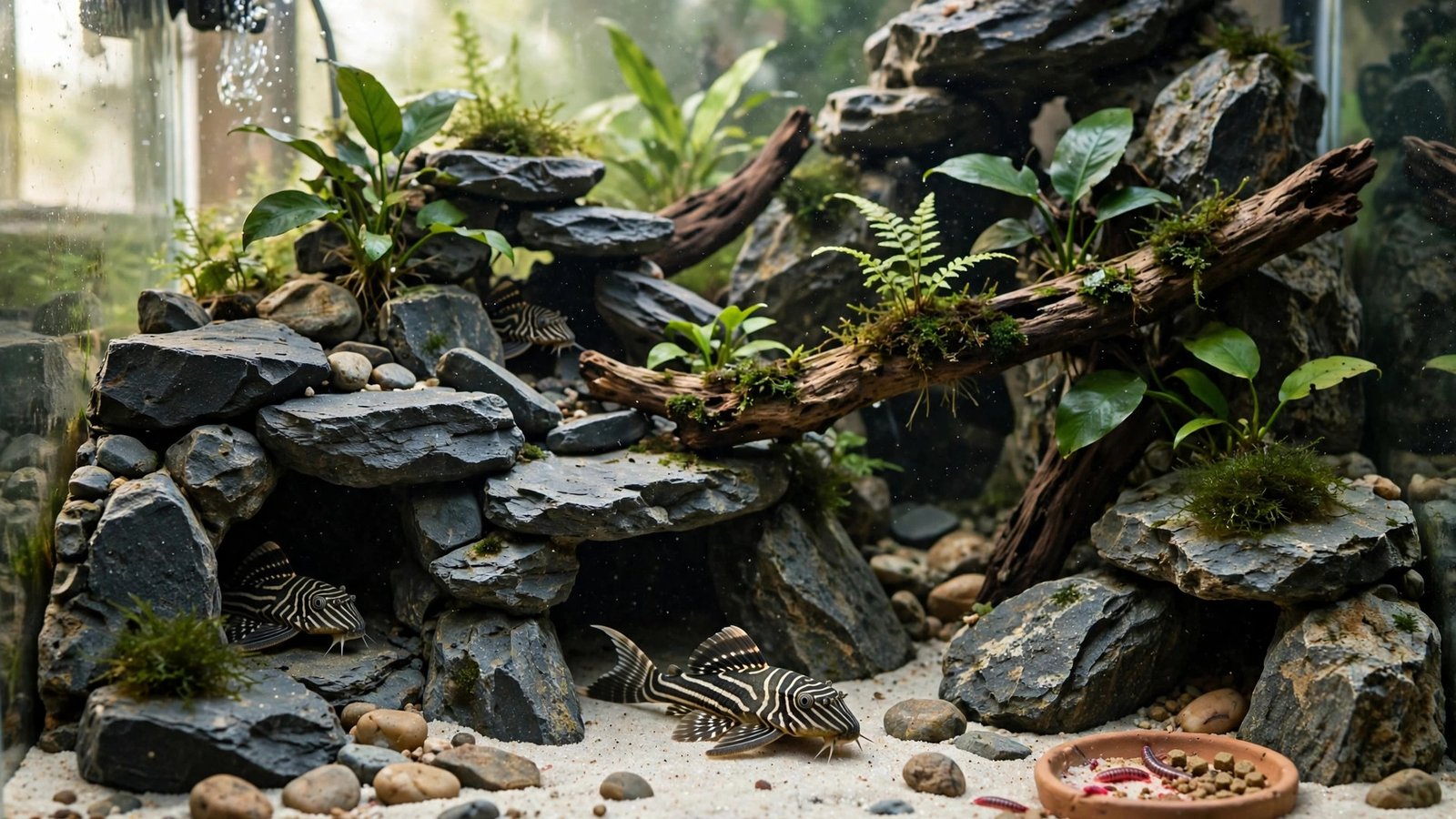
The most expensive mistake in this hobby costs about $195 and eats algae wafers — which is exactly the problem. The zebra pleco (L046, Hypancistrus zebra) is the most beautiful catfish ever pulled from the Rio Xingu, and it's a carnivore. Feed it like a bristlenose and it starves slowly, no matter how gorgeous the tank is. This guide builds a zebra pleco planted tank around that truth: a rocky Xingu shoreline of caves, dim light, and meaty food delivered after dark.
Can a zebra pleco live in a planted tank? Yes — Hypancistrus zebra thrives in planted tanks built like its Rio Xingu home: rocky caves for each fish, water at 79–88 °F and pH 6.0–7.5, and a carnivorous diet of bloodworms, brine shrimp, and sinking carnivore pellets (not algae wafers). Keep light subdued for its nocturnal habits and plant tough, rooted or attached species it can't disturb.
The zebra pleco planted tank: Rio Xingu habitat, carnivore diet & cave setup
In the wild, Hypancistrus zebra lives between rocks in the fast, oxygen-rich shallows of Brazil's Rio Xingu — grazing invertebrates from crevices, not algae from glass. Your planted tank should be a Xingu shoreline in miniature: a sand bed, stacked rockwork with one cave per fish, and plants tucked into the margins where a shy nocturnal catfish won't bulldoze them. Start by choosing fish-tank-suitable plants the way our Aquarium Plants for Fish Tanks guide lays out — hardy, attached species first, stems later.
Build the caves first, then the aquascape
Ceramic pleco caves are the single most important purchase in this setup. Males claim a cave and breed inside it; without tight-fitting caves, you get stressed fish and no spawning behavior. Place caves among stable rockwork (slate, granite, or smooth river stone), with sandy substrate throughout so bellies and barbels stay undamaged.
Purpose-built ceramic pleco caves from a pleco-specialist maker — zebra plecos will not breed without tight caves: ceramic pleco breeding caves ★4.6.
Diet: the myth-bust that matters most
The number-one cause of death in this species is well-meaning starvation. Zebra plecos will not touch your algae — unlike the algae-grazing bristlenose pleco in a planted tank or the wood-rasping clown pleco planted-tank setup, this fish evolved to hunt meaty invertebrates. Feed frozen (thawed) or live bloodworms, blackworms, and brine shrimp, plus a quality sinking carnivore pellet 3–4 nights a week. Drop food after lights-out near the cave entrances, when the fish actually emerge. The Hypancistrus zebra species profile on Seriously Fish backs up this meaty-diet picture and the species' rocky, oxygen-rich Xingu habitat.
Plants that survive a zebra pleco tank
Good news: zebra plecos don't eat plants — the risk is physical, not dietary. They excavate sand under cave entrances and rearrange loose substrate at night. Plant accordingly: attach epiphytes (Anubias, Java fern, Bucephalandra) to rock and wood, use heavy potted or deeply rooted rosettes (Cryptocoryne, sword plants) away from the cave zone, and skip delicate carpeting plants near digging sites. Because the lighting stays subdued for these nocturnal fish, low-demand species are both sufficient and preferred — the subdued-lighting end of our aquarium lighting guide is exactly this tank's lighting plan. For the broader logic of which species stand up to fish and digging bottom-dwellers, see our notes on choosing aquarium plants for a fish tank.
Planting layout for a 20-gallon
| Zone | What goes there | Why |
|---|---|---|
| Rear corners | Anubias barteri, Java fern on rock | Attached — nothing to uproot |
| Mid-ground margins | Cryptocoryne wendtii, Crypt. beckettii | Deep-rooted, tolerates low light |
| Background | Amazon sword or Vallisneria | Anchored deep, out of the digging zone |
| Cave aprons | Nothing — bare sand | Keeps cave entrances clear and observable |
Water, tankmates & breeding behavior
The Xingu runs warm and soft, and captive-bred zebras expect the same: 79–88 °F, pH 6.0–7.5, with clean, oxygenated water — a small canister filter with spray-bar return mimics the current they come from. Stock the mid-water column with peaceful tetras or pencilfish that won't steal cave food; avoid boisterous bottom-dwellers that contest caves. Pairs and trios spawn inside tight caves when water is warm and food is rich: the male guards eggs at the cave mouth for roughly 7 days until fry emerge.
| Parameter | Target |
|---|---|
| Temperature | 79–88 °F (26–31 °C) |
| pH | 6.0–7.5 |
| Ammonia / nitrite | 0 ppm — zebras punish sloppy cycling |
| Water changes | 25–30% weekly, matched temperature |
| Tankmates | Small tetras, pencilfish, hatchetfish — nothing nippy |
If you're also considering a same-batch cave spawner on a nano scale, the peacock gudgeon planted-tank guide covers a much cheaper cave-breeding fish with similar spawn-inside-a-cave behavior.
Buying zebra plecos: captive-bred only, and why the price is what it is
Hypancistrus zebra is CITES-listed and its Brazilian habitat was permanently altered by the Belo Monte dam — wild imports are restricted and ethically fraught. The species is now classified Endangered, with the dam's impact on its Xingu range documented on its Zebra pleco species overview. The responsible route is captive-bred stock from a known breeder or specialist shop, with juveniles around $195 each. Quarantine new arrivals 3–4 weeks, offer caves on day one, and confirm they're eating meaty foods before mixing them with tankmates.
Frequently Asked Questions
Do zebra plecos eat algae?
No. Despite the name "pleco," the zebra pleco (L046, Hypancistrus zebra) is a carnivore that eats bloodworms, blackworms, brine shrimp, and carnivore pellets. It will not clean your glass or eat algae wafers as a diet. If you want algae control in a planted tank, a bristlenose pleco is the right fish — a zebra pleco will starve on veggie-based food.
What size tank does a zebra pleco need?
20 gallons is the realistic minimum for a pair or trio, with at least one cave per fish and stable rockwork on sand. Add roughly 5 gallons per extra zebra pleco. Breeding groups (1 male, 2–3 females) do best in 30+ gallons where each male can hold a separate cave territory without constant conflict.
Can zebra plecos live with other fish?
Yes, with small, peaceful mid-water fish like ember tetras, neon tetras, or pencilfish. Avoid anything that competes for bottom territory — other cave-dwellers, boisterous loaches, or fin-nippers. Keep the mid-water school modest (8–12 fish) so most of the sinking food reaches the plecos instead of being intercepted.
How do zebra plecos breed in a planted tank?
Give each male a tight-fitting ceramic cave sized so he can just squeeze in — he lures a female inside, she lays eggs, and he guards them for about 7 days until fry emerge. Triggers: warm water (84–88 °F), excellent water quality, and heavy feeding on bloodworms and brine shrimp for 2–3 weeks beforehand.
Are wild-caught zebra plecos legal to buy?
Wild Hypancistrus zebra from Brazil's Rio Xingu is CITES-listed and export is heavily restricted; legal specimens are overwhelmingly captive-bred. Always buy from breeders or specialist shops that can name their breeding line, expect to pay around $195 per juvenile, and quarantine new fish for 3–4 weeks before adding them to your display tank.
Will zebra plecos destroy my plants?
No — they don't eat plants at all. The only risk is physical: they dig sand around cave entrances and can uproot loose plants at night. Use attached epiphytes (Anubias, Java fern), deeply rooted Cryptocoryne, and bare sand aprons around each cave. Under subdued lighting, low-demand plants look natural and need no CO2.
Done right, it's two displays in one: a calm, softly lit aquascape by day and a Xingu rock-shore that comes alive after lights-out. Build the caves, feed the carnivore, buy captive-bred.