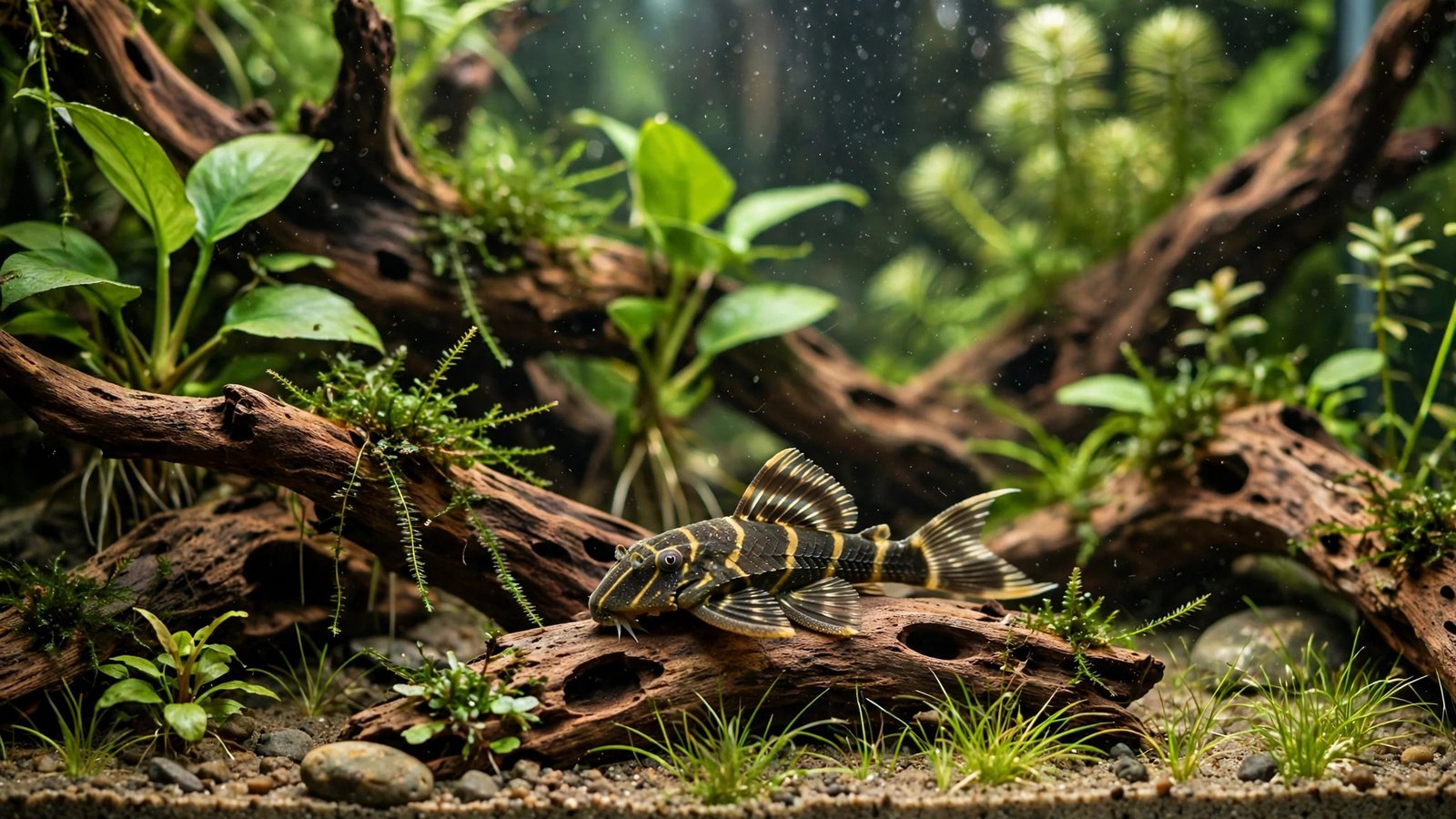
Most "pleco disasters" in planted tanks start the same way: someone buys a tiny striped clown pleco to clean algae, then watches it ignore the glass and rasp their driftwood into sawdust. That fish is not broken — it is a wood-eater doing what nature designed. This guide shows you how to build a clown pleco planted tank around the chewing: driftwood chosen to be eaten, plants tough enough to survive it, and night feeding that keeps your wood-eater thriving for 10–12 years.
In short: a clown pleco planted tank is built around driftwood first and plants second. Panaqolus maccus (L104) is a wood-eating dwarf loricariid from the tannic Apuré and Cojedes basins of Venezuela and Colombia that rasps fiber and lignin from submerged wood. Give it a 20-gallon tank, several driftwood pieces, tough epiphytes, smooth substrate, 73–82°F water, and night feedings of vegetables and wafers — and the chewing becomes enrichment, not destruction.
Why the Clown Pleco Chews Wood, Not Algae
The costly mistake is buying one as an algae-eater. The clown pleco is a wood-rasping fish: its mouthparts scrape submerged wood, and wood fiber is the backbone of its nutrition. Wild fish live in driftwood tangles along tannic riverbanks, grazing biofilm and wood by night. It may nibble soft algae, but it will never clean your glass — and one kept without wood to chew is malnourished.
The sawdust tells you everything. Fine, pale wood dust under a favorite perch means the pleco is feeding well. One that produces no dust, or grazes in daylight, is usually underfed — healthy specimens are strictly nocturnal. The Panaqolus maccus species profile confirms the essentials: 8.8 cm maximum, L-numbers L104, L162, and LDA22, from wood-choked Venezuelan and Colombian rivers.
Setting Up a Clown Pleco Planted Tank Step by Step
Build around three anchors: wood, hiding places, and shade. Clown plecos are shy and light-averse, so shade at least a third of the tank with floating plants or overhanging hardscape, and give every fish its own cave — coconut hides, slate lean-tos, and driftwood hollows all work. A second cave ends the nighttime territorial shoving males dish out.
| Parameter | Target |
|---|---|
| Tank size | 20 gal minimum per fish |
| Temperature | 73–82°F (23–28°C) |
| pH / hardness | 6.8–7.6, ≤10 dGH |
| Lighting | Low–moderate, with shaded zones |
| Filtration | Gentle–moderate, sponge-covered intakes |
Substrate matters more here than in most setups: these fish rasp along the bottom all night, so use smooth sand or rounded gravel that will not abrade barbels — the best substrate for planted tanks roundup covers barbel-safe options that still grow plants. Check your planted tank water parameters weekly, since tannins and wood debris nudge pH down over time.
Choosing Driftwood Your Pleco Can Actually Eat
Not all driftwood is food. Your clown pleco needs wood it can rasp into — dense enough to last months, chewable enough to yield fiber. Keep two to three pieces: one being chewed, one resting and regrowing biofilm, and rotate every few months.
| Wood type | Suitability | Notes |
|---|---|---|
| Malaysian driftwood | Excellent | Dense, long-lasting; pre-soak 1–2 weeks for tannins |
| Mopani | Excellent | Very dense; sinks at once but leaches tannins hard at first |
| Manzanita | Good (shelter) | Hard branching — better as cover than food |
Skip grapevine (moldy, soft-rots underwater) and resinous softwoods. Boil new pieces 1–2 hours and soak until the water runs mostly clear — some tea tint will remain, which clown plecos prefer.
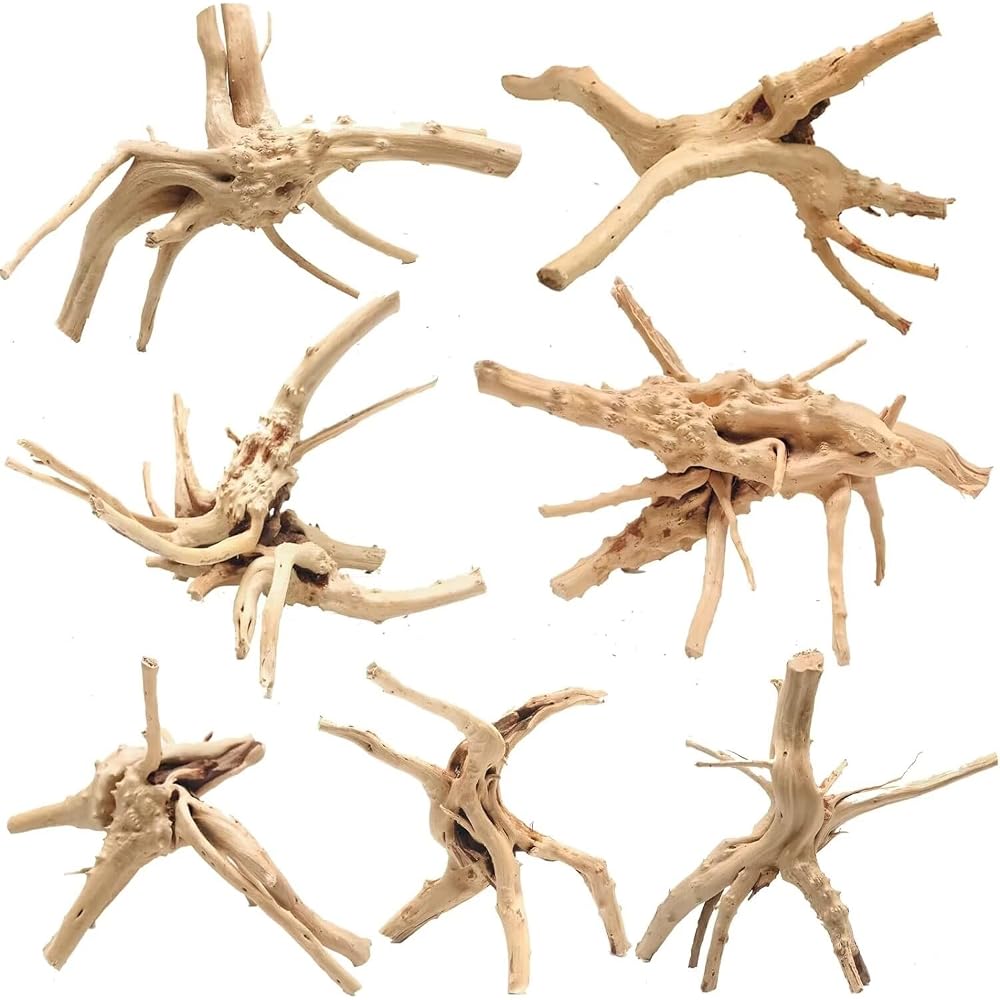 ★4.2
Hamiledyi Natural Spider Wood Driftwood
Check Price on Amazon ★4.2Plants That Survive Constant Chewing
Keep plants off the menu and out of the chewing zone. Clown plecos rasp wood, not leaves — but they bulldoze anything delicate next to their favorite perch. Tie slow-growing epiphytes to hardscape with cotton thread or cyanoacrylate gel, and let the wood be the garden:
| Plant | Why it works | Placement |
|---|---|---|
| Anubias barteri nana | Thick, bitter leaves plecos ignore | Tied to driftwood or stone |
| Java fern | Tough rhizome, unpalatable texture | Tied to wood, mid-tank |
| Bolbitis heudelotii | Leathery fronds, slow and sturdy | Tied to wood in shaded flow |
Never bury a rhizome — tied or glued with roots exposed is the rule. For rooted plants, keep sturdy rosettes like Amazon swords far from the wood on root tabs, and see the guide to aquarium plants for fish tanks for species that pair well with bottom-dwellers.
Feeding the Wood-Eater: Beyond Driftwood
Driftwood is the staple, not the whole diet — and clown plecos are nocturnal, so feed after lights-out. Two to three evenings a week, clip blanched zucchini, cucumber, or shelled peas to a veggie clip near the wood; remove leftovers within 24 hours. On alternate nights, drop one sinking algae wafer per pleco — Hikari Algae Wafers are a reliable standby. A spoonful of Repashy Morning Wood gel food, set overnight twice a week, supplies concentrated fiber. FishLore's clown pleco care profile agrees: wood first, supplemented with vegetables and wafers.
Tankmates and Weekly Maintenance
Clown plecos are peaceful to a fault. Stock calm tetras, rasboras, and small danios, plus shrimp and snails as part of your planted tank cleanup crew. Skip fin-nippers and pushy bottom-dwellers that steal caves.
Change 30–40% of the water weekly: tannins, wood dust, and nightly feeding add up fast. Rinse mechanical media in old tank water, but never scrub the driftwood — its biofilm is food. A simple planted tank maintenance schedule keeps everything in check, and most beginner planted tank mistakes with plecos trace back to skipped water changes or forgetting that wood is a dietary requirement, not decor.
Frequently Asked Questions
Will a clown pleco eat my aquarium plants?
Almost never on purpose — it rasps wood, not leaves. Damage near driftwood is usually mechanical, from the fish bulldozing stems while chewing its perch. Use tough epiphytes like Anubias tied to hardscape, keep soft plants away from the wood, and plantings survive years of nightly chewing.
Does a clown pleco actually eat algae?
Only incidentally, while grazing wood or glass — it will never clean a tank; algae control is bristlenose territory. Reframe its job: your clown pleco is a wood-maintenance specialist that keeps driftwood biofilm-grazed, producing fine, healthy wood dust as proof it is feeding well.
How many clown plecos can I keep in a 20-gallon planted tank?
One comfortably, or a pair with two caves and two wood pieces on opposite ends. Males are territorial about their chosen hide, so each fish needs its own refuge. Add roughly 10 gallons per extra pleco — nighttime shoving means too few caves.
Do I need to feed a clown pleco if my tank has driftwood?
Yes — wood is the staple, not the complete diet. Supplement two to three times weekly with blanched zucchini on a veggie clip, sinking algae wafers, and a wood-based gel food like Repashy Morning Wood. Daytime foraging signals underfeeding; a well-fed clown pleco eats almost only at night.
Is it normal for my clown pleco to turn driftwood into sawdust?
Completely normal — a sign of a healthy, feeding fish. Clown plecos grind wood to extract fiber, and the fine pale dust beneath their perch is the proof. Vacuum it weekly; only worry if chewing stops while the fish grows thin.
A Tank That Works With the Chewing
Stop fighting the fish's nature and design around it: wood to eat, shade to hide in, tough plants on the hardscape, and food after dark. Do that, and you get one of the most characterful bottom-dwellers in the hobby — quietly turning driftwood into sawdust for a decade or more.