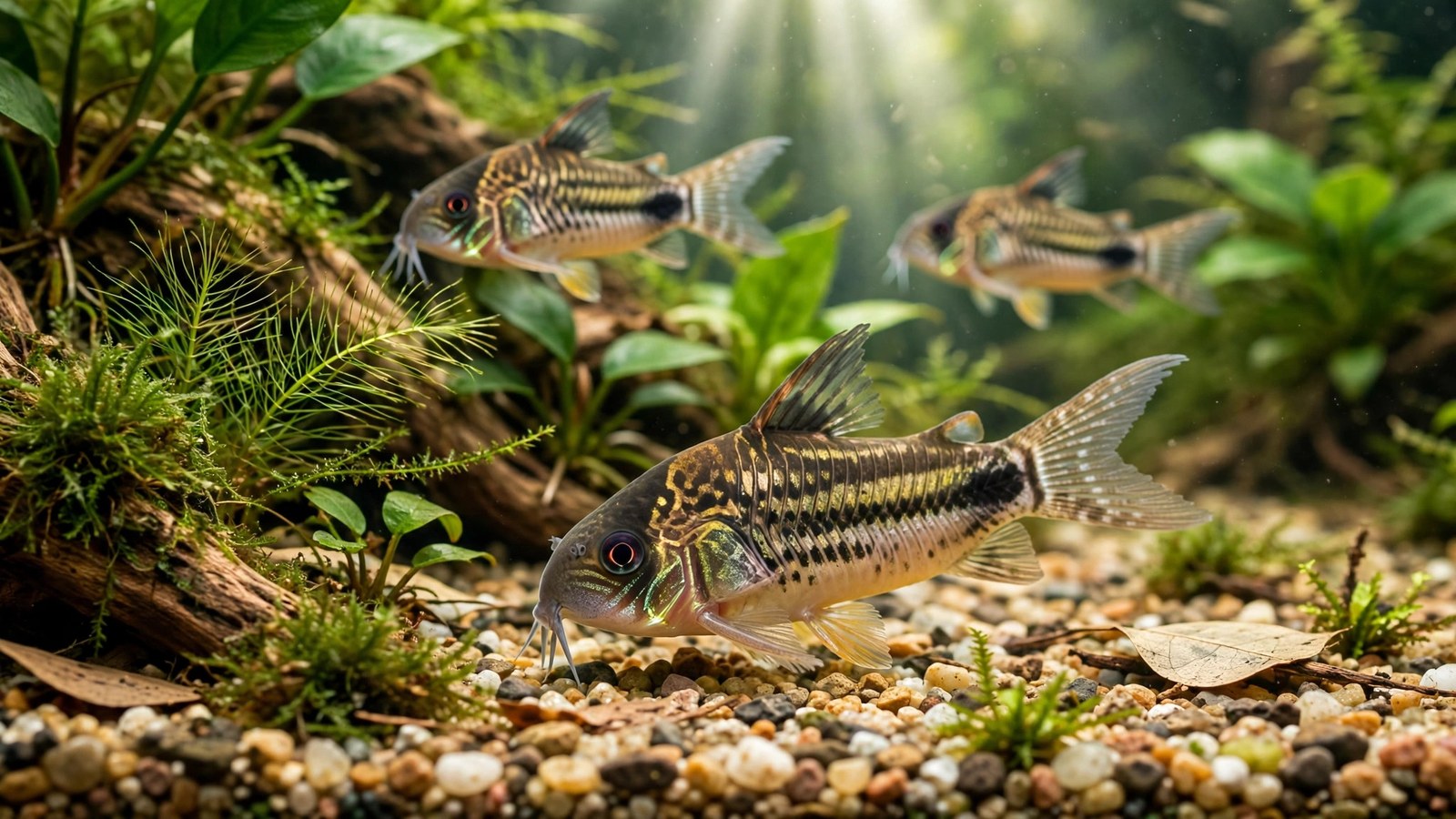
The first cory you should buy is the one the shop's cory wall underrates. Past the pandas and sterbais sits a bin of small, mottled brown fish labeled simply "elegans cory" — Corydoras elegans, the hardy, peaceful schooler that shrugs off beginner mistakes other corys punish. An elegans cory planted tank is the setup it deserves: a low-light, sand-bottomed community tank where a school of six or more forages through the plants — and this guide covers exactly that tank.
In short: an elegans cory planted tank is a low-light 16-gallon (or larger) aquarium with fine sand, gentle planting, and a school of at least six Corydoras elegans — the mottled, 5 cm bottom-dweller famous for forgiving beginner mistakes. Key fact: the 2024 reclassification of Corydoradinae moved it to the new genus Gastrodermus, so trade listings now call it Gastrodermus elegans — same fish, new label.
The Naming Truth: Corydoras Elegans Is Gastrodermus Elegans Now
Know what name to search before you buy. The 2024 reclassification of Corydoradinae moved this species to the revived genus Gastrodermus, making it Gastrodermus elegans — The Wet Spot's current listing uses the new name explicitly. Most shop tanks still read "Corydoras elegans" or just "elegans cory," the form keepers search for, so this guide uses C. elegans throughout. For authoritative data, see the Seriously Fish species profile for C. elegans and FishBase's Corydoras elegans summary.
Building your elegans cory planted tank: low-light setup
This is a fish-first tank, and the layout follows the fish. Elegans corys patrol the bottom constantly, noses down, sifting sand through their gills: sand underfoot, plant mass at the back and sides, open sand lanes in front. Read the companion guide to choosing aquarium plants around bottom-dwelling corys before shopping for greenery.
Use soft, rounded fine sand — play sand or aquarium river sand — 2–3 cm deep. Sharp or coarse gravel abrades barbels over months, the slow, quiet way bottom-dwellers fade in otherwise fine tanks. Already own gravel? Cap it with sand; the corys only touch the top layer.
Pick plants that forgive low light, because the fish prefer it: java fern and anubias on driftwood, crypt wendtii along the back, floating frogbit to dim the surface. This is a low-tech planted tank setup — no injected CO2. Aim for 20–40 PAR at the substrate; under dim water the fish forage by day.
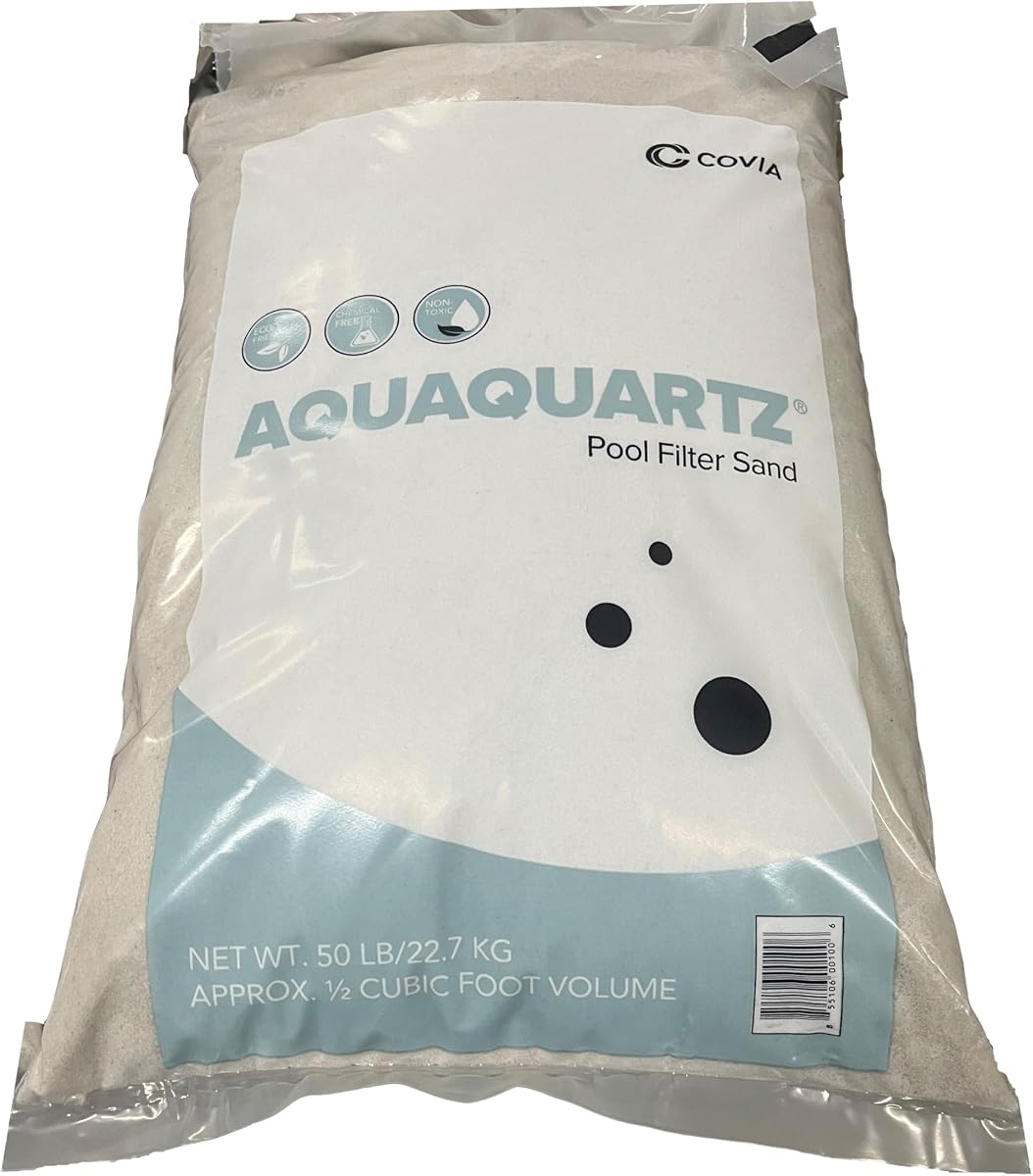
Covia AquaQuartz Pool Filter Sand
Check Price on AmazonWater Parameters That Actually Matter
Elegans corys tolerate the full breadth of typical tap water and forgive the two beginner sins — missed water changes and weak filtration. But stability beats any single number: a steady 7.4 beats a swinging 6.8, so stop chasing pH.
| Parameter | Working range | Target |
|---|---|---|
| Temperature | 22–27 °C (72–81 °F) | 24–25 °C, stable within 1 °C |
| pH | 6.0–7.8 | Whatever your tap holds steady at |
| Hardness | 2–15 dGH | Soft to moderately hard, any |
| Ammonia / nitrite | 0 ppm, always | Cycle fully before the school goes in |
| Nitrate | Under 40 ppm | 25–30% weekly water changes |
| Flow | Gentle | Sponge filter or baffled HOB with a pre-filter sponge |
Skip the fancy filter. A sponge filter or a hang-on-back with a pre-filter sponge over the intake matches the fish: gentle flow that won't blast the sand, and an intake that won't chew up the eggs they scatter on glass and leaves in morning spawning flurries. Maintenance is 25–30% weekly water changes — non-negotiable, because uneaten bottom food decays fast and these fish live nose-down in whatever sits on the sand.
Feeding the School: Sinking Food After Lights-Out
The classic beginner mistake: feeding the tank, not the bottom. Elegans corys rarely contest food at the surface with faster fish, so whatever your tetras get, the corys get the scraps — and scraps are not a diet. The staple is a quality sinking omnivore pellet or mini wafer, dropped once daily after the lights dim, when these crepuscular foragers eat before shrimp and snails strip the sand.
Supplement twice weekly with frozen daphnia, brine shrimp, or bloodworm, plus one weekly vegetable offering — a blanched zucchini slice or algae wafer, since wild elegans corys graze aufwuchs and detritus, not pure protein. Rotate two pellet brands plus frozen food; a single flake diet dulls their pattern and invites bloat.
Tank Mates and the Dither-Fish Effect
Elegans corys are peaceful toward everything they can't fit in their mouths — shrimp colonies, snails, small tetras, rasboras, honey gouramis, all safe. The interesting dynamic runs the other way: with no midwater fish, they stay shy under the driftwood all day. Add a confident school of dither fish — neon tetras are the classic — and the corys read the tank as safe, foraging openly within days.
Bottom-dweller companions need more care. A second cory species is lovely, but two bottom species double the bioload on the same sand — size the filter and water changes for it. Avoid large or aggressive bottom fish that bulldoze the school off its feeding lanes.
Elegans Cory vs. the Other Beginner Corys
Not every "easy cory" is easy for the same reasons. Elegans wins on hardiness and price; its cousins win elsewhere — and the forgiving trio can be recommended without caveats.
| Species | Size | Care temperament | Best for |
|---|---|---|---|
| Elegans cory (C. elegans) | ~5 cm | Forgiving, adaptable, inexpensive | The confident beginner's first school |
| Peppered cory (C. paleatus) | ~6.5 cm | Very hardy, cooler-water tolerant | Unheated or room-temp tanks |
| Bronze cory (C. aeneus) | ~7 cm | Bulletproof, breeds readily | Breeders, larger communities |
| Schwartzi cory (C. schwartzi) | ~6 cm | Wild-caught, careful settle-in | Experienced keepers, spotted specialists |
| Duplicareus cory (C. duplicareus) | ~5 cm | Softer water, Rio Negro-style | Blackwater biotope builders |
Frequently Asked Questions
How many elegans corys should I keep together?
Six is the absolute minimum; eight to ten is where the magic happens. In small groups these fish hide, but a proper school forages openly across the sand in a loose, synchronized line — the entire visual payoff of the species. Headcount is what matters, because security for a cory is measured in noses down at once.
Can elegans corys live on gravel instead of sand?
They can survive on smooth, rounded gravel but won't thrive on it long-term. Elegans corys sift substrate through their gills, and coarse or sharp gravel abrades their barbels over months until the whiskers they feed with are worn stubs. Fine sand preserves natural sifting and keeps barbels intact. Already graveled? Cap it with 2–3 cm of sand.
Do elegans corys need a heater?
In most homes, yes — a small adjustable heater set to 24–25 °C is the safe default. They tolerate 22–27 °C, so a stable warm room can work, but rooms swing colder overnight and with seasons, and stability matters more than the exact number.
Why is it called Gastrodermus elegans in some shops?
The 2024 reclassification of Corydoradinae moved this species from Corydoras to the revived genus Gastrodermus, making it Gastrodermus elegans. Wholesalers like The Wet Spot adopted the new name, but most local shops still label tanks "Corydoras elegans." Same fish — buy confidently under either name, and search both for care data.
Will elegans corys eat my shrimp?
Adult shrimp are completely safe, and a breeding colony thrives alongside a cory school. They may pick off a newborn shrimplet they stumble across, but they are not hunters — dense moss and plant cover keep shrimplet survival high. Corys and dwarf shrimp are one of the hobby's most reliable peaceful pairings.
The elegans cory asks for almost nothing — sand, a school, dim light, food that reaches the bottom — and returns ten mottled fish moving as one mind across the plants. Start here, and every cory after it will feel like an old friend in a new pattern.