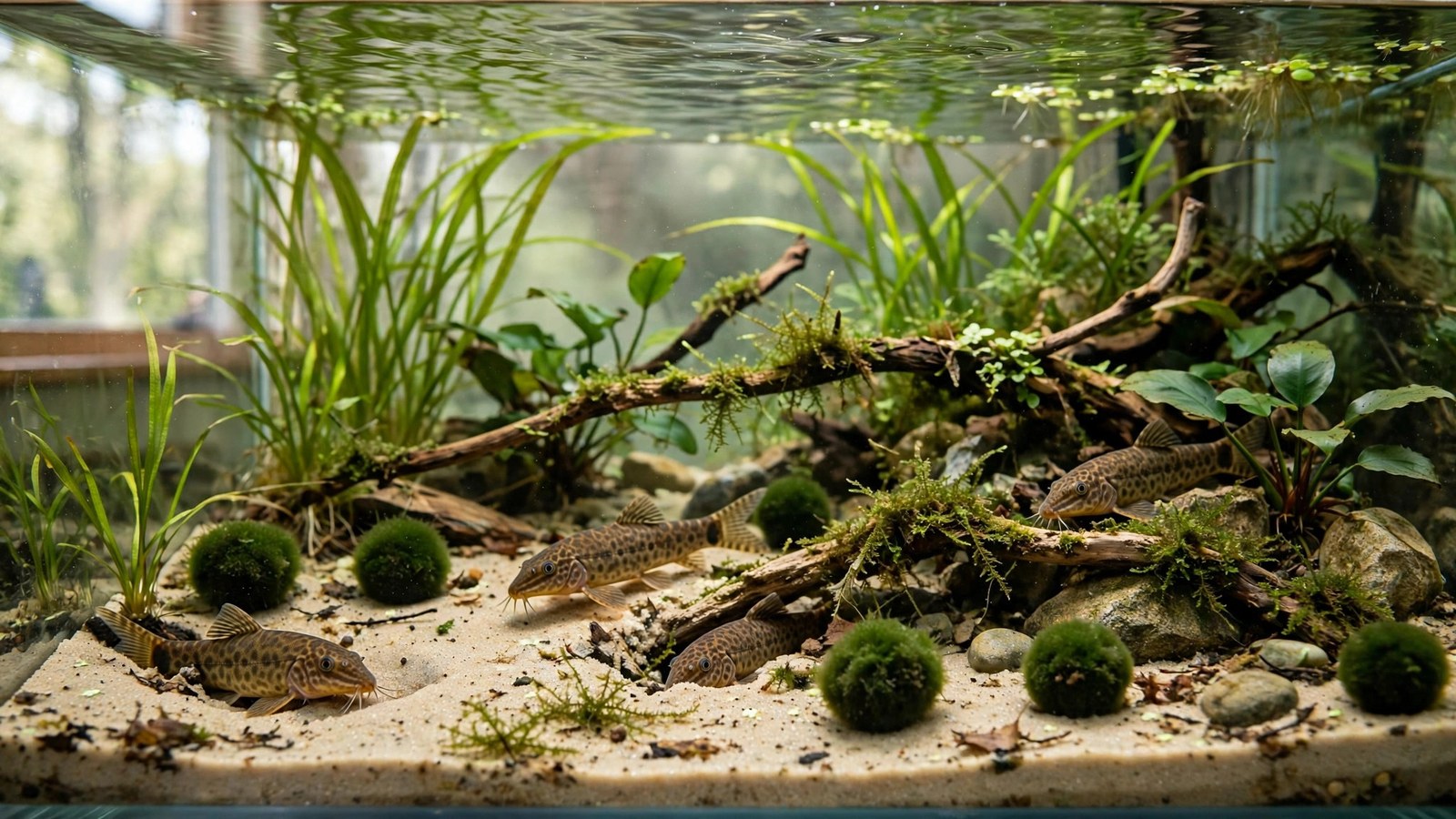
Some fish dig a little. A dojo loach redecorates your whole aquarium overnight, then naps half-buried in the sand like nothing happened. A dojo loach planted tank that survives its residents is built for a coldwater bulldozer: no heater, deep soft sand, and plants that survive a burrowing loach instead of delicate rooted stems. Get those three right and the tank practically runs itself.
Why the Dojo Loach Plays by Different Rules
The dojo — also called the weather loach — comes from East Asia's slow streams, rice paddies, and muddy ponds. Its eel-like body carries six silt-sifting barbels and a metabolism tuned to cold water — it endures winters that would kill a neon tetra.
That hardiness is the whole setup in a sentence. Nearly every planted-tank guide assumes a tropical community at 74–80°F. Dojos want water up to 20°F cooler and burrow like a dog digging a garden — build for the burrower, not the tropical template, and everything clicks.
Setting Up Your Dojo Loach Planted Tank
Start with tank size, because this species is chronically underestimated: that cute 3-inch juvenile grows to 8–10 inches and gets thick. A trio needs a 40-gallon breeder minimum; a 55-gallon gives the floor space they'll actually use. Prioritize footprint over height — dojos cruise the bottom.
Skip the heater. Room temperature sits squarely inside their 50–77°F range — zero heating cost, forever. Instead, give them oxygen: a hang-on-back or canister filter with good surface agitation (a clip-on fan across the surface shaves off a few degrees in summer). Aim chemistry at the plants' preference (dojos accept pH 6.5–8.0); the planted tank water parameters guide has the full breakdown.
Sand, Not Gravel: The Substrate That Lets Them Burrow
Dojos burrow — they dive into soft substrate until only the head pokes out and sleep like that. Gravel blocks this and scrapes their scaleless skin and barbels. Fine sand is the only answer.
Go 2–3 inches deep: enough for a full-body dive, shallow enough to stay clean. Pool filter sand is the sweet spot — uniform, pre-washed, heavy enough to settle fast after excavations. Rinse until the water runs clear. For thicker planted beds, adapt the deep-substrate method — just keep the burrowing zone sand-capped so loaches never hit raw soil.
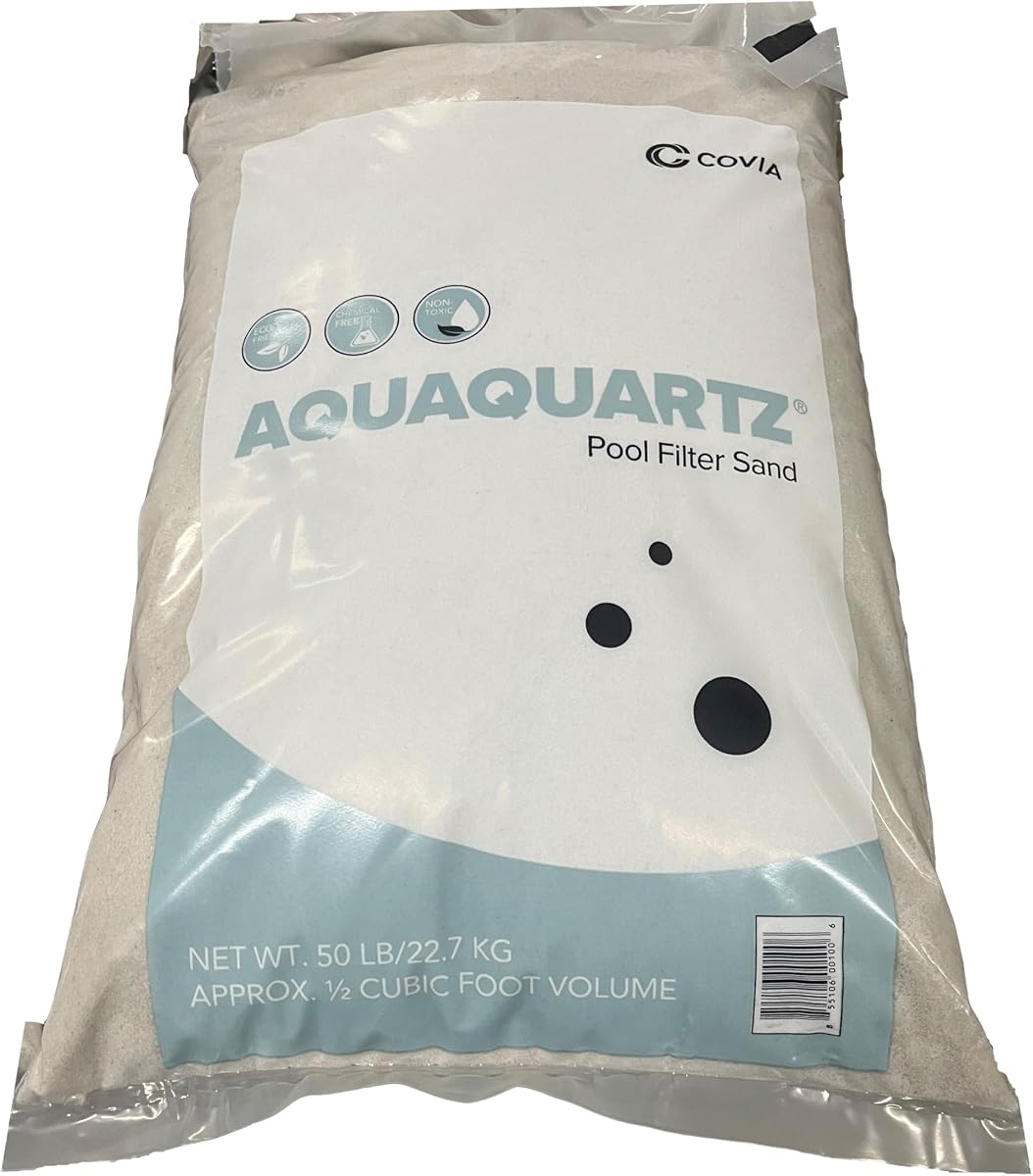
Covia AquaQuartz Pool Filter Sand
Check Price on AmazonDig-Proof Planting: What Actually Survives a Burrower
The planting doctrine: nothing freshly rooted in open sand survives. A dojo plows through a new carpet like a toddler through a sandcastle — so attach greenery to things the loaches can't move.
Epiphytes are your foundation. Anubias, Java fern, and Bucephalandra tied to driftwood or rock are loach-proof. Floaters are your second pillar. Amazon frogbit and water lettuce shade the tank (dojos prefer dimmer light) and absorb nitrates with no root zone to disturb. Potted plants are your third. Swords and crypts in heavy pots with pebble caps give lush structure that survives excavation. Stock from hardy beginner plants for a coldwater tank rather than tropical showpieces.
| Plant | How to mount it | Coldwater hardy? |
|---|---|---|
| Anubias (any variety) | Tie or glue to driftwood/rock | Yes |
| Java fern | Tie to hardscape | Yes |
| Amazon frogbit / water lettuce | Float on the surface | Yes |
| Cryptocoryne / Amazon sword | Heavy pot, pebble cap | Yes (most varieties) |
The Weather Trick, Explained
Dojos earned the name "weather loach" honestly. When barometric pressure drops ahead of a storm, many keepers report frantic behavior — racing, looping, swimming vertically. Japanese farmers once kept them in bowls as living barometers.
Occasional air-gulping on calm days is also normal — dojos can breathe intestinally through their gut. The warning sign is constant surface-gasping by every fish, which points to low oxygen or poor water quality, not weather.
Escape Artists: Lids Are Not Optional
Ask any dojo keeper their scariest story and it involves a floor: these fish launch out of surprisingly small gaps and push up loose lids.
Use a lid with zero gaps: glass canopies with plastic back strips, or tight custom-cut mesh. Seal every cutout around filter intakes and cords with foam — a dojo fits through a gap the width of its head. For this species the verdict in the open-top-versus-lid tradeoffs is settled: sealed top, always.
Coldwater Tank Mates That Actually Work
If it needs tropical heat, it's out. If it thrives in the 60s and 70s, it's a candidate. Dojos are deeply peaceful — they don't eat tank mates or chase — so compatibility comes down to temperature overlap and bioload.
| Tank mate | Temp range | Notes |
|---|---|---|
| White cloud mountain minnows | 60–72°F | The classic pairing; active mid-water schoolers |
| Goldfish (fancy or single-tail) | 65–75°F | Perfect overlap; see these goldfish-proof planted tank ideas |
| Rosy barbs | 64–72°F | Hardy, colorful, peaceful in groups of 6+ |
| Hillstream loaches | 68–75°F | Grazers on rock and glass; no competition |
Keep dojos in groups of three minimum — they're social and bolder in a pile, often sleeping tangled together. For a different coldwater centerpiece, try the coldwater axolotl planted setup — but never house the two together, since an axolotl will try to eat anything moving past its mouth.
Gold vs Albino: Picking Your Color Morph
Stores usually carry three: wild-type mottled brown/olive, golden, and albino — same species, identical care, purely aesthetic. Goldens glow against dark sand and plants, the favorite for planted setups. Albinos are light-sensitive, so they appreciate the dim lighting dojos prefer anyway. Wild-types are camouflage masters that vanish into the substrate. Pick the one you'll enjoy watching for a decade.
Frequently Asked Questions
Do dojo loaches need a heater?
No — that's their biggest selling point. Dojos thrive at 50–77°F, covering normal indoor temperatures year-round, so the tank runs unheated with zero equipment cost. Only add cooling, like a clip-on fan, if water pushes past 78°F in summer heat.
Will dojo loaches destroy my plants?
Only plants rooted in open substrate — and it's uprooting, not eating. Dojos don't browse leaves; they bulldoze. Tie epiphytes like Anubias and Java fern to driftwood, float your frogbit on the surface, and pot rooted plants with pebble caps. Built this way, the tank stays lush for years.
How many dojo loaches should I keep together?
Three minimum, in at least a 40-gallon breeder. Dojos are social and bolder in groups — singles hide constantly and stress easily. Adults reach 8–10 inches, so each extra loach needs real floor space; a 55-gallon comfortably holds 4–5. Size the tank for the adult, not the juvenile.
Why does my dojo loach go crazy before a storm?
This is the famous "weather loach" behavior: many dojos turn hyperactive — racing, looping, swimming vertically — when barometric pressure drops ahead of storms. It's genuine and widely reported. Occasional frantic episodes are normal; constant distress points to water quality instead.
Can dojo loaches live with goldfish?
Yes — one of the best pairings in the hobby. They share the same cool temperature range, both are peaceful, and dojos clean up food goldfish miss. Go big: a fancy goldfish plus a dojo trio needs 55–75 gallons minimum, with sand substrate and strong filtration for the combined bioload.
Can I keep a dojo loach in an outdoor pond?
In temperate climates, yes — they're cold-hardy pond fish. But they're invasive in parts of the US and Australia, so check local regulations first and never let pond water or fish reach natural waterways. For most keepers, a large unheated indoor tank is the responsible choice.
The Burrower's Tank Is Worth It
A dojo tank asks you to give up a few tropical habits — the heater, the gravel, the freshly planted carpet — and hands back a low-cost coldwater ecosystem with fish that recognize you and nap half-buried in the sand. Build it their way once, with Loaches Online's weather loach profile as your reference. Just mind the lid.