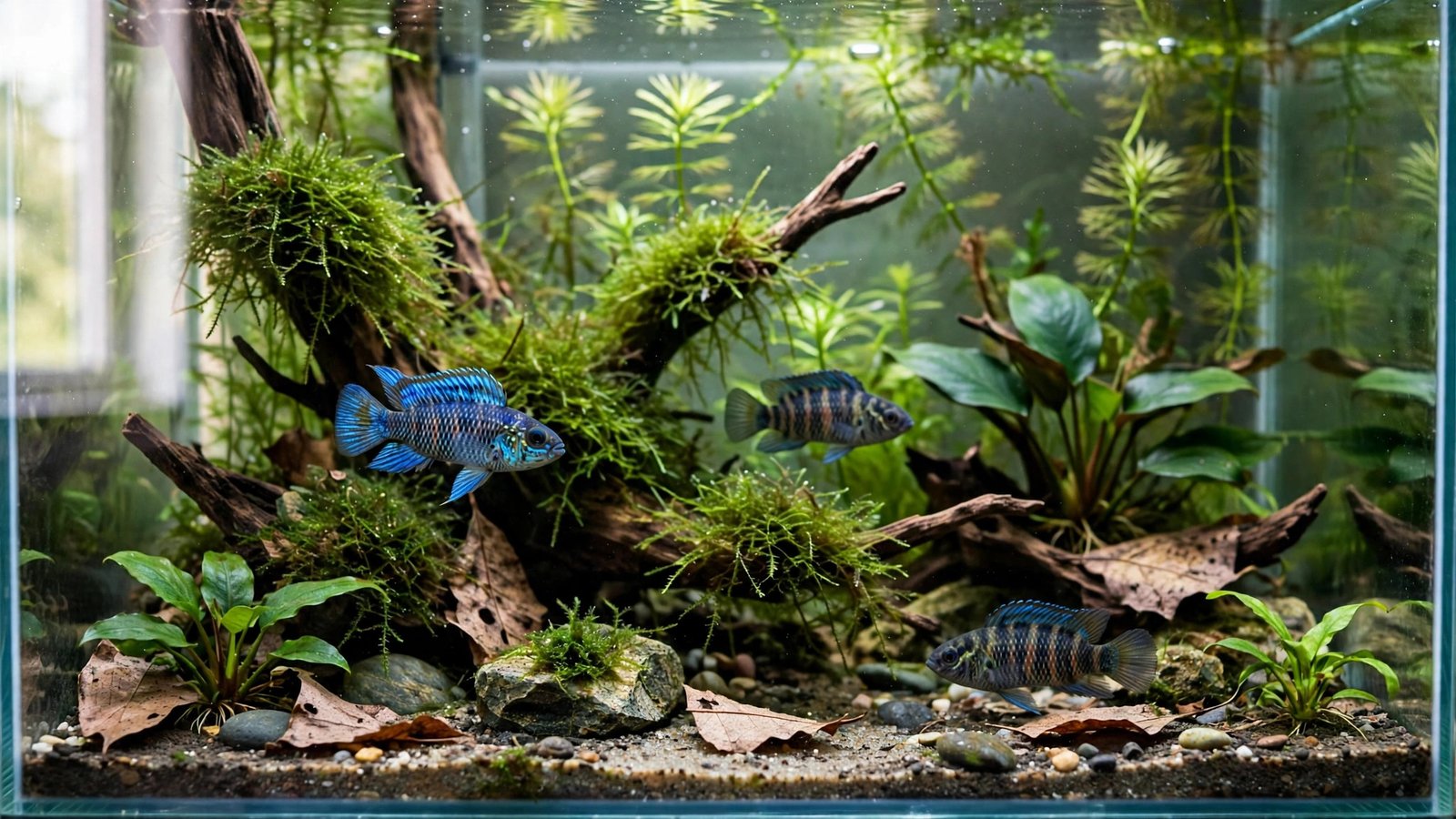
A fish that changes color with its mood, stalks food like a miniature panther, and quietly outgrows half the tanks it is sold for — that is the blue badis. Get the setup right and you get a bold, iridescent hunter; get it wrong and you get a gray, hiding fish that starves politely. Here is the setup that gets it right.
First, the mix-up that ruins more setups than anything else: blue badis is Badis badis, a wholly different genus from scarlet badis (Dario dario) — bigger, bolder, not interchangeable. Give it thick plant cover that calms shy fish, tight territories, and live food, and the chameleon color shows do the rest.
Get the Identity Right First
Shop listings still blur the two badis, and the confusion is expensive. The scarlet badis (Dario dario) is a true nano fish under an inch — a different animal, covered in our scarlet badis planted tank guide. The blue badis (Badis badis) arrives at 1–1.5 inches but males reach about 3 inches (7.5 cm) and hold real territories — treat it as a small centerpiece fish, not a nano extra. The Seriously Fish species profile for Badis badis confirms the size range, Ganges-basin origins, and habitat notes worth reading before you buy.
How a blue badis Uses Your Planted Tank
Watch a settled blue badis and the chameleon name makes sense: males flash iridescent blue when displaying, feeding, or courting, then wash to gray-brown when startled. Mood made visible — heavy planting makes those shifts dramatic instead of anxious.
Males claim a territory around a favorite cave or overhang, defending it against rival males and ignoring everything else. Females stay smaller and subdued. New fish hide for a week or two, then flip: the same fish patrols openly and begs at the glass. Still gray after three weeks? Suspect bright light, thin cover, or a boisterous tank mate — the fish-first plant guide shows how to fix cover fast.
Tank Size, Footprint, and Water
One blue badis suits a well-scaped 10-gallon; a trio or pair wants a 20-gallon long with broken sightlines. Footprint beats height, and gentle filtration — a baffled hang-on-back or sponge filter — matches their slow-backwater origins.
| Parameter | Target | Notes |
|---|---|---|
| Tank size | 10 gal+ solo; 20 gal+ group | Long footprint preferred |
| Temperature | 72–80°F (22–27°C) | Stability matters more than the exact number |
| pH | 6.0–7.5 | Avoid chasing extremes |
| Hardness | Soft to moderately hard | Tolerates a range; acclimate slowly |
| Flow | Low–moderate | Baffle HOBs; sponge filters ideal |
| Water changes | 30% weekly | Non-negotiable with live-food feeding |
Scaping for a Shy Micro-Predator
Think in layers: plant mass for cover, hardscape for territory boundaries, leaf litter for the hunting floor. Start with easy beginner plants for cover — fast stems at the back, a broad-leaf anchor mid-ground, floaters to dim the light. Then add two or three small caves, driftwood with an overhang, and a thin layer of dried botanicals.
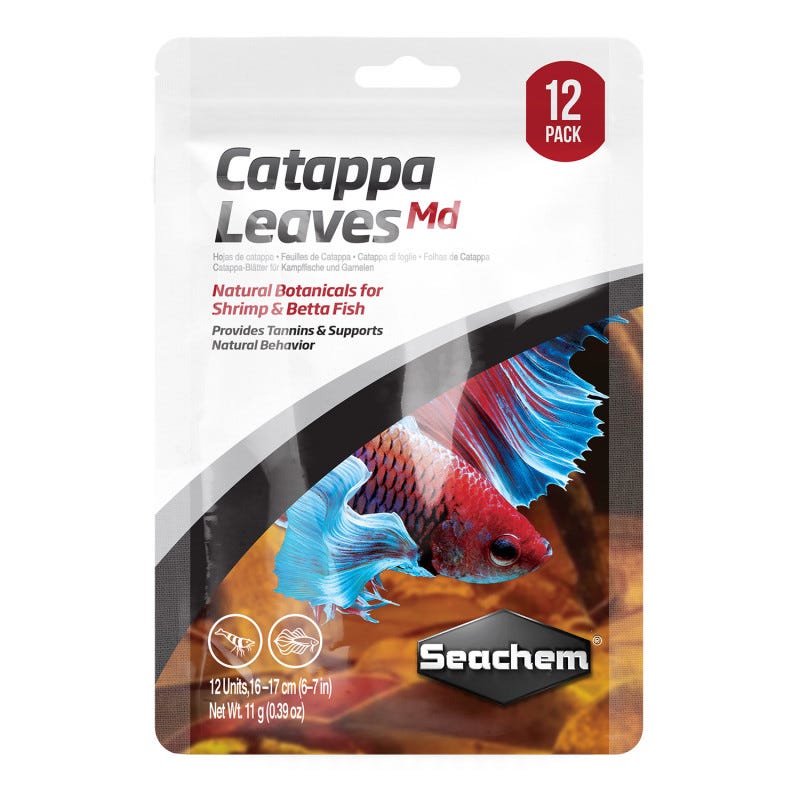
As botanicals break down they release tannins that tint the water tea-colored, so the badis feels less exposed and shows more color. Check the Tropica plant database for light and size data on your plant picks, and keep the front third open sand or fine gravel — that is the arena where the badis hunts.
 ★4.8
Seachem Catappa Leaves 12-pack
Check Price on Amazon ★4.8Feeding: a Hunter, Not a Flake Eater
Feeding is the skill gate of this species: blue badis are micro-predators wired to strike moving prey, and most never learned dry food is food. Baby brine shrimp (live or frozen), daphnia, microworms, and chopped frozen bloodworms are the core diet — two small meals a day, only what vanishes in two to three minutes. Micro pellets work only with training: alongside live food for weeks first, never as the sole diet.
Watch the belly, not the clock: slightly rounded after feeding and steady weight gain over the first month means the diet is working. A pinched forehead, or a fish that spits flakes back out, means slow starvation — get live food in immediately. Live-food feeding makes waste, so the 30% weekly water change is the price of a fat, blue, confident fish.
Tank Mates (and the Shrimplet Truth)
Good neighbors are peaceful, small, and slow at the food dish: ember tetras, chili or harlequin rasboras, celestial pearl danios, and pygmy corydoras. They use the upper water column, leave the caves alone, and double as dither fish that unlock the badis's confidence. Avoid fin-nippers and anything big enough to eat it or pushy enough to starve it — most barbs, large tetras, and bettas. For a gentler centerpiece in the same footprint, see our dwarf gourami planted tank guide.
On shrimp: be honest. Adult cherry shrimp can coexist in dense planting, but every shrimplet is prey — this is a predator tank, not a shrimp-breeding tank. Snails (nerites, ramshorns) are safe cleanup. If shrimp breeding is the goal, a peaceful honey gourami planted tank suits a thriving colony far better.
Frequently Asked Questions
Can a blue badis live in a 10-gallon planted tank?
Yes — one blue badis is comfortable in a well-scaped 10-gallon with dense plants, two caves, and gentle filtration. Footprint beats volume, so a standard 10-gallon beats a tall cube. For a pair or group, use a 20-gallon long so each male holds a territory without constant conflict.
Will blue badis eat my cherry shrimp?
Adults usually survive in heavy planting, but shrimplets will be hunted — blue badis are micro-predators and baby shrimp are ideal prey. Expect colony recruitment to drop near zero. If breeding shrimp is the goal, keep the badis solo or choose a peaceful gourami.
Are blue badis and scarlet badis the same fish?
No — different genera. Blue badis is Badis badis, reaching about 3 inches (7.5 cm) and holding territories; scarlet badis is Dario dario, a true nano fish under an inch. The blue badis is bigger, bolder, and needs more space and meatier food.
Will blue badis eat flake or pellet food?
Usually not at first — blue badis strike moving prey and many never learned dry food is edible. Feed live or frozen micro-foods (baby brine, daphnia, microworms, chopped bloodworms) as the staple. Micro pellets can be trained in over weeks alongside live food; dry food alone will slowly starve the fish.
How many blue badis can I keep together?
One male per territory — in a 20-gallon long with broken sightlines and multiple caves, keep one male with two or three females, or two males at opposite ends. Two males in a 10-gallon will fight relentlessly; females are peaceful together, so a harem-style group beats multiple males.
Worth Keeping?
A blue badis planted tank asks for three things: the right identity (Badis, not Dario), the right food (live, not flakes), and the right landscape (cover plus caves, not an open box). Give it those and you get one of the most interactive small fish in the hobby — a hunter that recognizes you and flashes blue on cue.