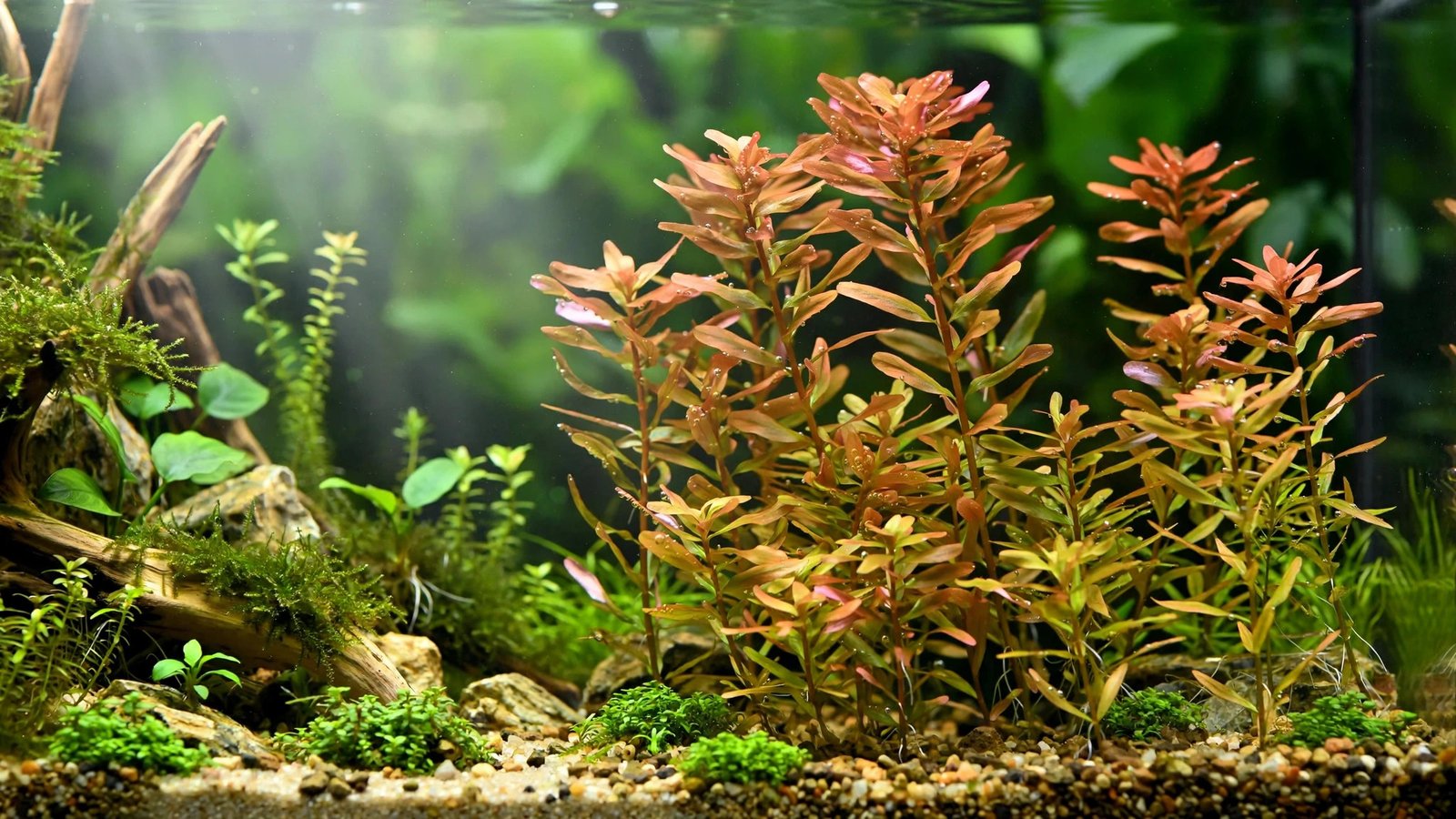
Most red stem plants demand high light, heavy CO2, and near-perfect dosing before they show a hint of color — and they punish every mistake with melted tips. Rotala rotundifolia 'Orange Juice' breaks that pattern: it blushes into a glowing citrus-orange gradient at the tips even in medium light, making it one of the friendliest "color plants" you can grow. This Rotala Orange Juice care guide gives you the light, CO2, and fertilizer numbers that push its colors from olive-green to sunset orange.
Getting Started with Rotala Orange Juice care
Rotala rotundifolia 'Orange Juice' is a cultivar of the classic Rotala rotundifolia, selected for the way its upper leaves and growing tips flush orange rather than pink. The base stays green, the middle transitions through gold, and the tips glow orange — a three-zone gradient no other Rotala produces. It will live on standard rotundifolia care (the species care baseline), but the orange you bought it for needs deliberate effort: strong-ish light, steady CO2, and lean-but-complete fertilizer dosing.
Your first job is placement. 'Orange Juice' grows upright to 20–40 cm tall, so it belongs in the midground of tall tanks or the background of shallow ones, planted in groups of 8–12 stems. A lone stem looks spindly; a cluster becomes a color anchor. It also ranks comfortably among the best plants for a planted aquarium where fast stem color is wanted without high-tech difficulty — it forgives the mistakes that melt fussier reds.
Light: The Color Equation
Light is the single biggest lever on color. At 30–40 PAR the plant grows but stays dull green. The orange shift begins around 50 PAR and intensifies up to about 100 PAR, beyond which gains flatten while algae risk climbs. Six to eight hours of light per day is the sweet spot for most tanks.
| Light level (PAR) | Daily hours | Expected color |
|---|---|---|
| 30–40 (low) | 6–8 | Olive green, leggy growth |
| 50–80 (medium–high) | 6–8 | Gold tips, orange flush on top leaves |
| 80–120 (high) | 6–7 | Deep citrus orange from mid-stem up |
If your tips stay green after two weeks at 60+ PAR, the usual culprit is shading: the upper leaves color only where light reaches them, so stems buried behind hardscape stay pale. Give the cluster a clear line of light and the color returns within days.
 ★4.6
NICREW ClassicLED Plus planted aquarium light
Check Price on Amazon ★4.6CO2 and Fertilizer
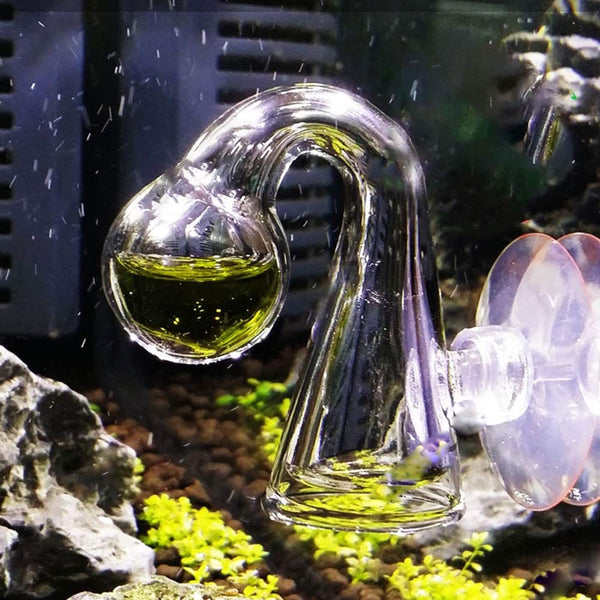
You can technically grow 'Orange Juice' without injected CO2 — it is listed among the easiest aquarium plants for beginners — but it behaves like two different plants with and without it. Without CO2, expect slow, leggy stems with mostly green tips. With a stable 6–10 mg/L (a 1.0–1.2 pH drop from degassed water), stems thicken, internodes shorten, and the orange intensifies because new colored tips are pushed constantly.
Keep nutrients complete but restrained. Rotalas color best slightly limited in nitrate relative to phosphate, but zero nitrate invites melting. Aim for these targets:
| Parameter | Target |
|---|---|
| Nitrate (NO3) | 5–15 ppm |
| Phosphate (PO4) | 1–2 ppm |
| Potassium (K) | 10–20 ppm |
| Iron (Fe) | 0.1–0.2 ppm |
| Temperature | 22–26 °C (72–79 °F) |
| pH | 6.0–7.2 |
| GH | 3–8 dGH |
Iron deserves special attention. It does not create the orange — light does that — but iron deficiency shows up as pale new growth that reads as washed-out rather than vivid. Dose chelated iron twice weekly at the low end of your fertilizer line's recommendation; never double-dose to chase color, since excess iron feeds algae without making the plant more orange.
 ★4.6
FZONE Glass CO2 Drop Checker Kit
Check Price on Amazon ★4.6Planting, Trimming, and Propagation
Plant each stem 2–3 cm apart with tweezers — close enough to read as a group, loose enough that light reaches the lower leaves. Press stems 2–3 cm deep into nutrient-rich substrate; floating stems survive for weeks but never color well, since the whole point is rooted growth under strong light.
Cut stems at mid-height where you want the next branching to start, and replant the cuttings beside the originals. The rooted bases resprout two side shoots each, so 8 stems become 24 tips within a month. When the base gets bare every 2–3 months, pull the plant, trim the tops, and replant only the fresh heads. For the finer points of stem-plant trimming and rolling replant cycles, see the 2hr Aquarist guide to trimming and replanting aquarium plants.
How 'Orange Juice' Compares to Other Rotalas
Rotala cultivars look alike in store tubes but behave differently in your tank — here is how the common ones compare:
| Cultivar | Signature color | Light needs | Difficulty |
|---|---|---|---|
| 'Orange Juice' | Citrus orange tips | Medium–high | Easy–medium |
| 'Blood Red' | Deep crimson | High | Medium–hard |
| 'Nanjenshan' | Red-tipped green | Medium–high | Medium |
| 'Bonsai' (indica) | Orange-red (small leaves) | Medium–high | Medium |
'Orange Juice' is the easiest of the colored Rotalas to get right — it is noticeably more forgiving than 'Blood Red', which needs genuinely high light and aggressive iron to hold its crimson, and it grows faster than 'Bonsai' or 'Nanjenshan'. If you want a red/orange theme, it pairs beautifully with the pink-tipped standard rotundifolia or with the soft green-gold of Ludwigia ovalis beside it for contrast.
Troubleshooting Common Problems
Green tips despite good light: check shading, then nitrate — above 20 ppm the plant stays comfortably green. Bring it into the 5–15 ppm window and orange returns within a week.
Melting lower leaves: usually flow or shading, not nutrients. Open up the cluster, make sure water moves through it, and refresh root tabs every 2–3 months in inert substrate.
Leggy stems with long internodes: light is too weak. Raise PAR or move the cluster to a brighter spot — no fertilizer fixes stretched growth.
Stunted, curled new growth: classic CO2 instability. Stabilize injection first — fluctuating CO2 damages new tips faster than steady-but-low CO2.
Frequently Asked Questions
Does Rotala 'Orange Juice' need CO2?
It survives without injected CO2, but color and density suffer. Without CO2 you get slow, leggy green stems; with a stable 6–10 mg/L (about a 1.0–1.2 pH drop) the plant grows fast, bushes out, and develops its signature orange tips. If you only want a green filler plant, skip the CO2 — but buy a cheaper green stem instead.
How fast does 'Orange Juice' grow?
With CO2 and medium–high light, expect 1–2 cm per week — fast enough to need trimming every 10–14 days. Without CO2 it drops to a few millimeters per week. Every cut stem doubles into side shoots, so one healthy cluster can stock a second tank within two months of trimming and replanting.
Why are my 'Orange Juice' tips green instead of orange?
The three usual causes, in order: insufficient light (needs 50+ PAR at the tips), shading from taller plants or hardscape, and high nitrate above 20 ppm, which keeps the plant comfortably green. Fix light and placement first, then bring nitrate into the 5–15 ppm range. The color shift takes about 7–14 days once conditions are right.
Is 'Orange Juice' a beginner-friendly plant?
Yes, mostly. It is easy to keep alive — wide pH and temperature tolerance, and it grows without CO2. But the orange tips need medium–high light and steady fertilizer. If you are brand new, grow it green first to learn trimming, then raise the light to chase the color.
Can 'Orange Juice' grow emersed?
Yes. Like most Rotalas it transitions easily to emersed growth, where it grows faster with round green leaves but loses the orange coloration. Keep emersed plants humid and trim them back, or they will sprawl over neighboring plants quickly — it roots very readily.
Give 'Orange Juice' decent light, steady CO2, and a trimming schedule, and it rewards you with the easiest warm color in the hobby — a glowing citrus gradient no plain green filler can imitate. It is a cultivar, not a project: plant a group, keep the numbers steady, and let the orange come to you.