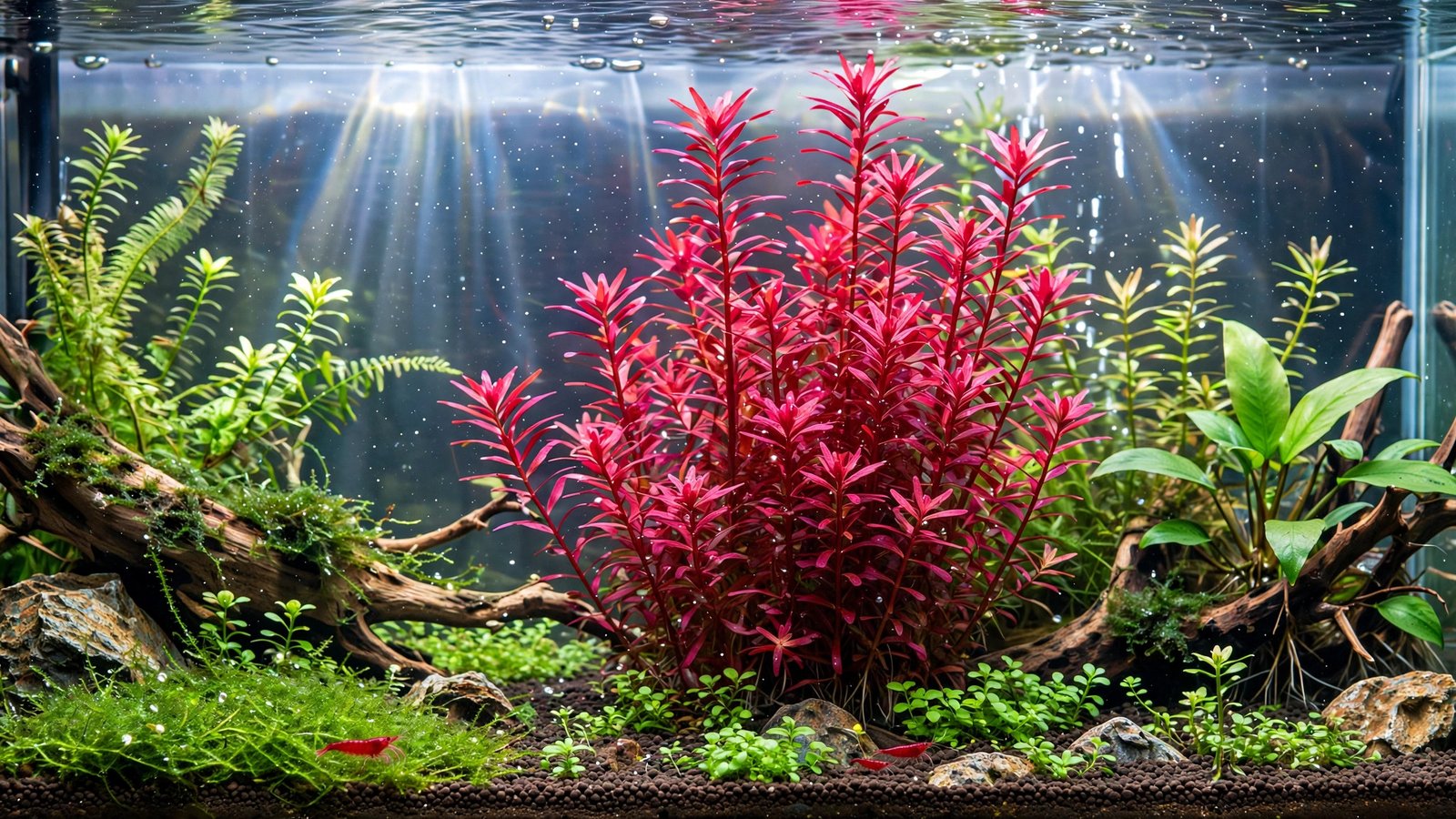
Your tissue-culture cup arrived glowing crimson — and three weeks later your Rotala 'Blood Red' is fading to a washed-out orange-green. This is the most common frustration with this cultivar, and it is almost always fixable. Solid rotala blood red care comes down to four levers: light intensity, CO2, iron, and nitrate limitation. This guide shows you how to set each one so the plant keeps the deep, almost purple-red color that made you buy it.
What 'Blood Red' is — and how it differs from the plain species
Rotala rotundifolia 'Blood Red' is a cultivated variety of Rotala rotundifolia selected for intense crimson coloration. The plain species is a hardy, adaptable stem plant whose leaves range from green to pinkish; 'Blood Red' produces far more red pigment under the right conditions. Like Ludwigia repens, it is a red stem plant whose color is earned through strong light and lean nitrates — not granted by genetics alone.
The trade-off: 'Blood Red' is pickier. The species shrugs off moderate light and no CO2; the cultivar reverts to green-orange when conditions slip. Most disappointment comes from treating it like the species. It will grow in a low-tech tank — but it will not look like the shop photo. Commit to the four levers below and it will.
Rotala blood red care: the four levers of deep red color
Red coloration comes from anthocyanin pigments the plant makes partly as sun protection. Intense light triggers them, lean nitrates slow green chlorophyll so the red shows through, CO2 keeps growth vigorous enough to color every new leaf, and iron is a required building block for pigment synthesis.
1. Light intensity — the biggest lever
Aim for high light: roughly 50+ PAR reaching the leaves, 7–8 hours a day. Under medium light, 'Blood Red' grows fine but stays green-orange, with only the topmost leaves blushing red. Raise intensity and the color creeps down the stems. If algae settles on the upper leaves, shorten the photoperiod before dimming — excess duration, not intensity, is usually the culprit. If you are unsure what your fixture delivers, read our guide to how much light aquarium plants really need.
2. CO2 — the stabilizer
CO2 at 25–30 ppm (light-green drop checker) speeds growth so red leaves appear faster and keeps the plant healthy enough to hold color down the stem. Without CO2 the plant still grows, but new leaves emerge pale and take weeks to redden — if they ever do. Start CO2 an hour before lights-on and keep it steady; fluctuating CO2 causes more algae than moderately high, stable CO2.
3. Nitrate limitation — the classic red-plant trick
At 20+ ppm nitrates, 'Blood Red' pumps out chlorophyll-rich green growth and the red vanishes. Keep nitrates lean — 5–10 ppm — and new leaves come in deep red. But do not drive nitrates to zero: starved plants stall and melt. Aim for "lean but not empty" by dosing a balanced fertilizer at half label rate and testing weekly for the first month. Our article on whether aquarium plants really need fertilizer explains how to read what your tank actually needs instead of dosing blindly.
4. Iron — the pigment building block
Iron feeds the enzymes that build anthocyanin pigments. Target 0.1–0.5 ppm Fe through a chelated iron supplement dosed a few times per week; many all-in-one fertilizers include iron, but red-heavy tanks often need a small extra dose. Pale or yellowish-white new growth while old leaves stay green signals iron shortage — distinct from nitrate-driven greening, where the whole plant shifts green evenly.
 ★4.6
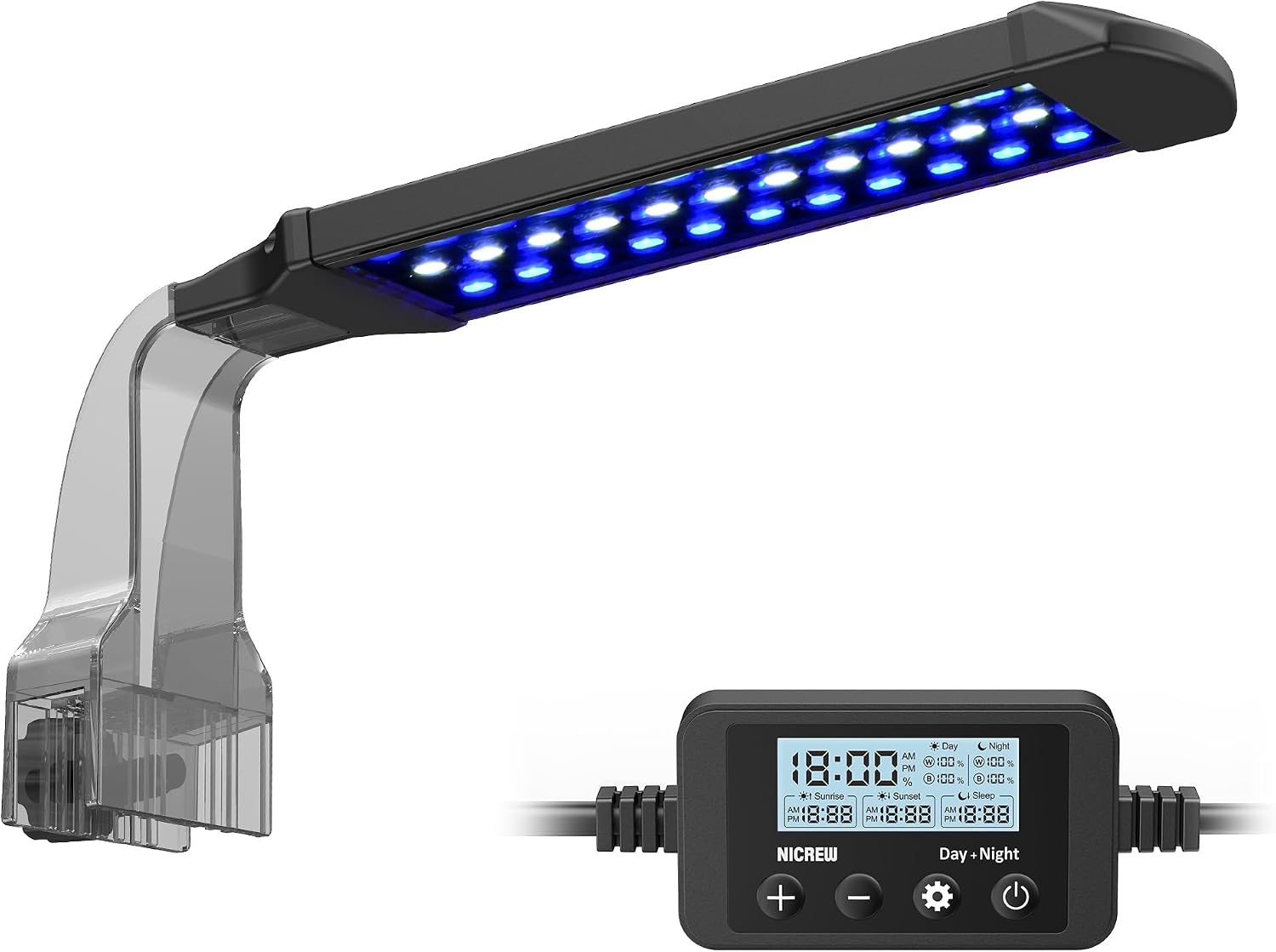
NICREW ClassicLED Plus planted aquarium light
Check Price on Amazon ★4.6Planting, trimming, and propagation
Plant each stem individually, 1–2 cm apart, pushing the bottom node a centimeter or two into the substrate. A planted clump looks fuller on day one but rots its inner stems within weeks; separated stems each root and form a proper stand.
Trim every 2–4 weeks using trim-and-replant: cut each stem halfway, discard the leggy bottom, and replant the colorful top. Rooted bottoms sprout side shoots, but those rarely match the top's color, so most aquascapers replant tops only. Every trimmed top is a new plant — healthy stems root within a week, and one tissue-culture cup becomes a full background stand in two to three months.
Buying your Rotala 'Blood Red'
Buy a tissue-culture cup when you can. Tissue-culture plants arrive pest-free, snail-free, and algae-free, which matters for a plant you will trim constantly — any hitchhiking algae gets spread around the tank with every cut. Potted emersed-grown stock is cheaper and fine, but expect a two-to-three-week transition as emersed leaves melt and submersed growth takes over; the new submersed leaves are the ones that color up.
Buy the supporting supplies at the same time: a chelated iron fertilizer if your current fertilizer is iron-light, and — if you run a basic kit LED — a stronger full-spectrum fixture, since light is the one input that decides whether this cultivar earns its name. One cup suits most tanks under 100 liters; buy two for larger backgrounds.
Frequently Asked Questions
Why is my Rotala Blood Red turning green?
Too much nitrate plus too little light. High nitrates push chlorophyll production that masks red pigments, and under moderate light the plant makes little red pigment anyway. Raise light intensity, bring nitrates to 5–10 ppm, and new growth should come in red within two to three weeks. Old green leaves will not change — only new growth shows the improvement.
Does Rotala Blood Red need CO2?
It grows without CO2 but rarely shows deep red. In low-tech tanks expect a soft orange-red on top leaves and green lower stems. At 25–30 ppm CO2, growth is faster, color deeper and more stable, and red extends further down each stem. For the intense crimson of the shop photos, treat CO2 as required.
Can I grow it under a basic kit LED?
You can grow it, but not keep it red. Stock kit lights deliver low to medium PAR, under which 'Blood Red' survives but fades to green-orange. Holding the deep red needs roughly 50+ PAR at the substrate — usually a dedicated planted-tank light. Without an upgrade, place the plant directly under the brightest point of your current light.
How fast does it grow?
Fast for a red stem plant: 2–5 cm per week under high light with CO2, slower without. Plan on trimming every two to four weeks with the trim-and-replant method. A single tissue-culture cup can fill a background section in two to three months under good conditions.
Why are the lower leaves melting and stems going bare?
Usually self-shading: as the canopy thickens, lower leaves lose light and the plant abandons them — trim and replant tops regularly to reset this. If lower leaves melt rapidly across the whole stand, check nitrates; at zero the plant cannibalizes old leaves. Keep nitrates lean (5–10 ppm), not absent.
Is it harder than other red plants?
It sits in the middle. It is more demanding than Alternanthera reineckii, which holds red under moderate light, but far easier than notoriously fussy reds needing soft water and extreme light. With CO2 and a decent light already running, 'Blood Red' is one of the most rewarding red stems you can grow.
The bottom line
'Blood Red' rewards a specific recipe: high light, steady CO2, lean nitrates, consistent iron. Get those four levers right and it is one of the most striking background plants in the hobby — a wall of deep crimson few other stems can match. Set the levers, trim regularly, and let the new red growth tell you it is working.