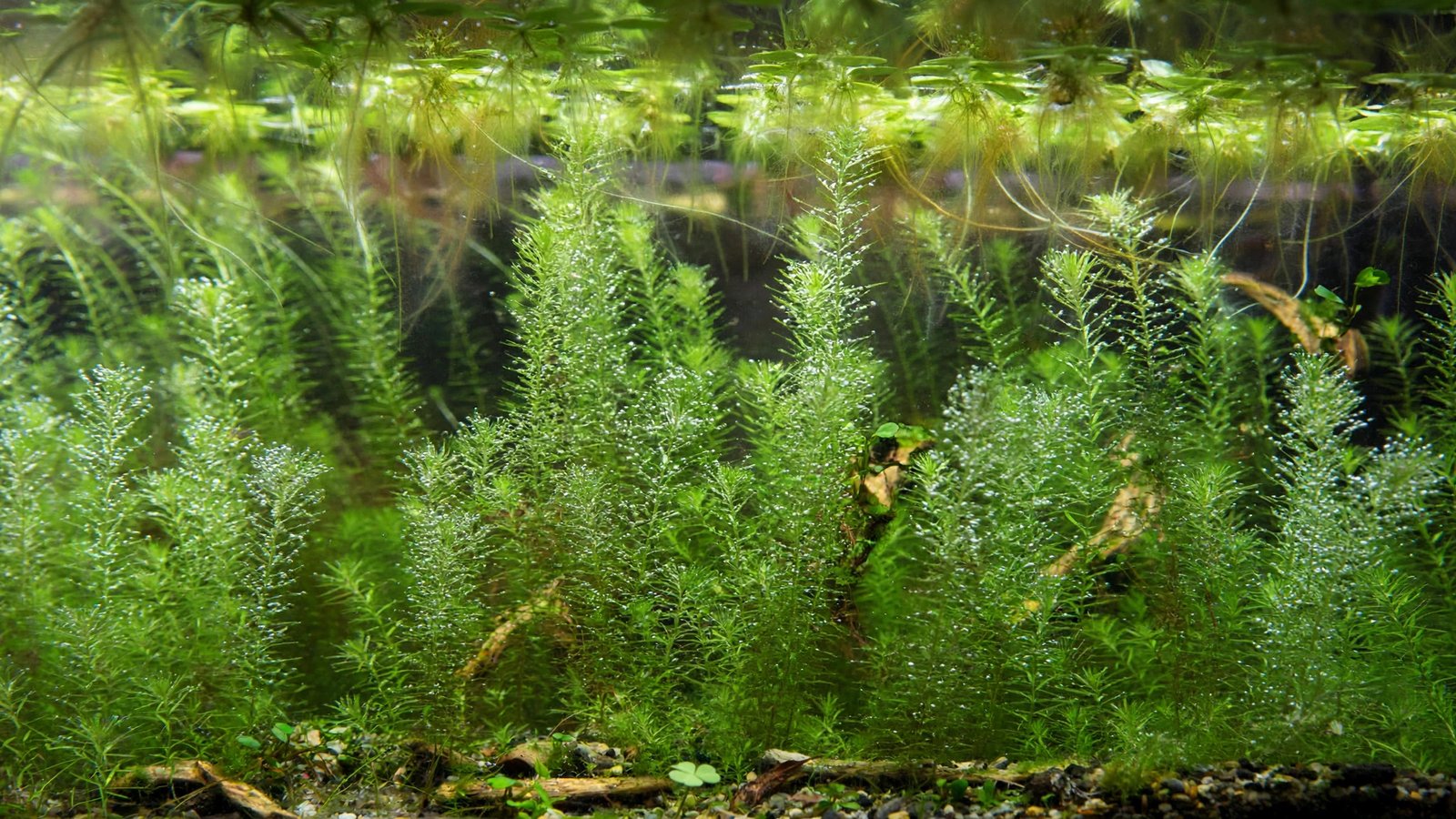
Watch the newest tips of your stems: if they fade to ghost-white within a week of planting while everything else still looks green, most growers panic and dump in more fertilizer. Don't — those bleached tips are the entire reason mayaca fluviatilis care has a cult following. Stream bogmoss is the aquarium's canary plant: it broadcasts an iron shortage days before any other plant, and long before a test kit would catch it.
In this guide you'll learn to read that white-tip signal, dial in the soft, acidic water it comes from, and shape its feathery stems into lush midground hedges — an unusual midground texture pick for scapes beyond the usual rotala lineup.
Mayaca Fluviatilis Care: Reading the Iron Signal
Iron is an immobile nutrient: the plant can't move it from old leaves to new ones. So when iron runs short, the newest growth suffers first — and in stream bogmoss the symptom is unmistakable. Shoot tips fade from bright green to pale lime, then to a near-translucent white. No other common stem plant shows it this early, which is why experienced growers keep a clump as a living test kit.
Read the signal precisely. Uniformly pale tips mean iron; pinholes with yellow edges mean potassium; yellowing on the oldest leaves means nitrogen. When it's iron, dose a chelated iron supplement (Fe-DTPA beats Fe-EDTA in harder water) to roughly 0.1–0.3 ppm Fe after your weekly water change, and push iron-rich root tabs under the group.
In hard, alkaline water, iron precipitates out and becomes unavailable no matter how much you dose. Persistent white tips sometimes mean "fix the water," not "add more iron." If you've wondered whether aquarium plants really need fertilizer, stream bogmoss is the living proof: sometimes they need one micronutrient, delivered in the right water. Its closest soft-water cousin, Tonina fluviatilis, shares the same picky relationship with iron.
The Blackwater Rivulet It Calls Home
Stream bogmoss grows wild in quiet rivulets, seepage areas, and pond margins from the southeastern United States to South America — shallow, slow, tannin-stained water under dappled shade. Reproduce that, and the plant practically runs itself.
| Parameter | Target range | Notes |
|---|---|---|
| Light | 20–35 PAR | Medium; dimmer turns it leggy, stronger invites algae |
| pH | 5.5–6.8 | Keeps iron bioavailable |
| GH | 3–8 dGH | Soft ideal; tolerates medium-hard water |
| KH | 1–4 dKH | Low carbonate keeps pH soft and stable |
| Temperature | 20–27°C (68–80°F) | Suffers in cold rooms and very hot tanks |
| Flow | Gentle | Strong current flattens the delicate stems |
A few catappa leaves or alder cones nudge the water toward the tea-colored softness it evolved in, and their humic acids keep iron available longer. Botanicals aren't mandatory — nutrient-rich aquasoil plus consistent water changes does most of the work. Tropica's Mayaca fluviatilis profile confirms the essentials: soft flexible stems, bright narrow leaves, medium light demand, and the famous pale-shoot iron warning.
CO2: It Grows Without, It Glows With
Here's the honest version most product pages skip. Stream bogmoss will grow in a low-tech tank — it won't melt — but without CO2 it stays lankier, greens up more slowly, and takes 8–12 weeks to knit into a hedge. With CO2 it branches eagerly below every trim and becomes the dense, cloud-like bush you see in contest tanks.
| No CO2 (low-tech) | With CO2 (15–25 mg/L) | |
|---|---|---|
| Growth speed | Slow–moderate | Fast; weekly trims in peak season |
| Habit | Taller, more open | Compact, densely branched |
| Time to a full hedge | 8–12 weeks | 4–6 weeks |
| Iron demand | Lower, but white tips still appear first | Higher — fast growth burns iron quickly |
| Algae risk | Moderate on slow new tips | Low if light stays 20–35 PAR |
Running low-tech? Keep nitrates around 10–20 ppm and don't compensate with extra light — without CO2, more light mostly grows algae on the plant's fine leaves. Another fine-textured stem with the same honest low-tech character is Limnophila sessiliflora, a good background companion behind your bogmoss hedge.
The Dutch-Hedge Trim: From Wisps to Bush
Mayaca's soft, willingly-branching stems make it a natural for the Dutch-style hedge: a tight, cloud-like block of fine texture contrasting with broad-leaf plants. Plant a group of 5–8 stems about 2 cm apart — single stems look lost, groups look intentional. Strip the leaves off the lowest 5 cm of each stem before planting so buried foliage doesn't rot.
Let the group reach 12–15 cm, then cut flat across the top with curved trimming scissors. Each cut wakes two or more side shoots just below it, so the block doubles in density with every trim. Replant the healthy tops (8–10 cm cuttings root in 7–10 days), discard the brown bases, and repeat every 2–3 weeks in a CO2 tank. Within two trim cycles, one shop portion has become a thicket — and every cycle after that is free plants. This is the same top-trim-and-replant rhythm that shapes Rotala rotundifolia into classic Dutch streets, and the dense-block goal it shares with Didiplis diandra, the true "water hedge".
 ★4.6
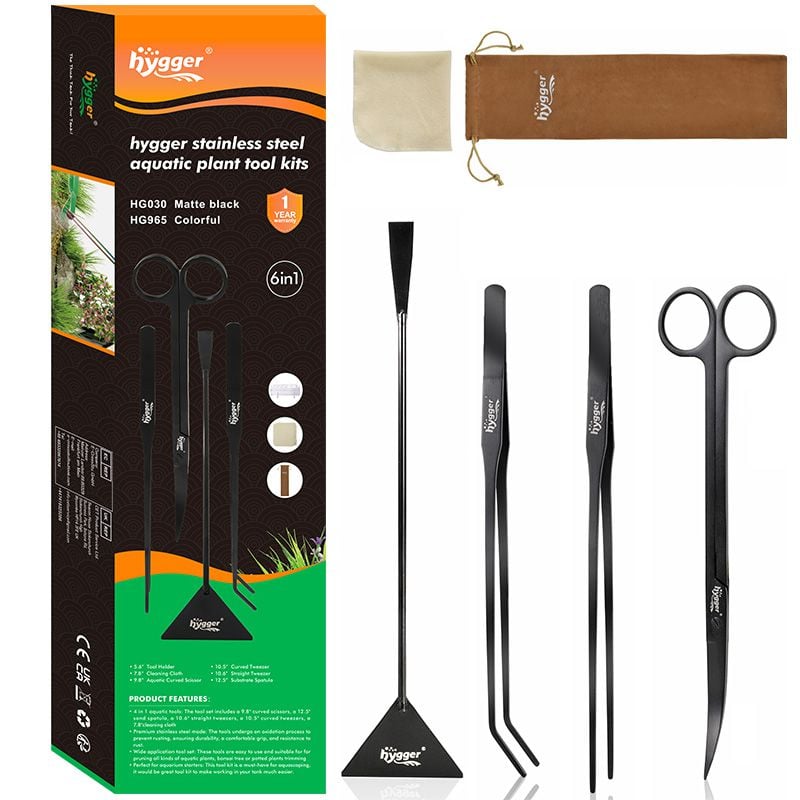
hygger 6-in-1 Aquascaping Tools Kit
Check Price on Amazon ★4.6Where It Earns Its Keep: Nanos, Shrimp, and Fry
In a large tank, stream bogmoss is a midground texture plant — set it between your foreground carpet and background stems and let its fine needles soften the transition. In a nano tank, it's the star: a 20-liter cube with one well-trimmed hedge looks deliberate and expensive. Pair it with a bolder midground texture like Blyxa japonica, or let it rise behind a low foreground of Staurogyne repens.
The shelter value is real. A dense stand is a maze shrimplets and fry can navigate but larger fish can't — shrimp colonies breed bolder with a thicket to retreat into. The soft, non-toxic foliage is safe for betta fins too.
Frequently Asked Questions
Why are the shoot tips of my Mayaca fluviatilis turning white?
White or pale new shoot tips are the classic early sign of iron deficiency — iron can't move from old leaves to new ones, so new growth suffers first. Dose a chelated iron supplement to about 0.1–0.3 ppm Fe after your next water change; fresh growth should green up within two weeks. If it doesn't, check pH: iron locks out in hard, alkaline water.
Can Mayaca fluviatilis grow without CO2?
Yes. It survives and grows in low-tech tanks, but expect a slower, lankier plant that takes 8–12 weeks to form a dense hedge instead of 4–6. Keep light at 20–35 PAR and nitrates near 10–20 ppm — without CO2, extra light mostly grows algae on the fine leaves.
How much light does stream bogmoss actually need?
Around 20–35 PAR — solidly medium light. Below that, stems stretch and take on a bleached look that's easy to confuse with iron deficiency. Above that without CO2, the fine leaves become an algae magnet. Pale plus leggy points to light; pale but compact points to iron.
How do you propagate Mayaca fluviatilis?
Snip 8–10 cm tops, strip the leaves from the lowest 5 cm, and plant the cuttings about 2 cm apart. They root within 7–10 days and each branches into a new clump. Every hedge trim is a propagation event — one shop portion can stock several tanks within two months.
Is stream bogmoss safe for shrimp and bettas?
Yes — the foliage is soft, non-toxic, and fine enough to shelter shrimplets and fry from larger tankmates. One caution: Tropica warns that bundled (non-tissue-culture) stems can carry pesticide residues, so quarantine new bunches in a plant-only tank with twice-weekly water changes for two weeks first.
The Canary Is Worth Keeping
Most plants tell you something's wrong only after the damage is done. Stream bogmoss whispers first — a pale tip here, a fading shoot there — giving you days to correct course. Plant it in soft, acidic water at medium light, trim it into the hedge it wants to become, and you'll get two rewards: a beautiful midground, and a living dashboard for your tank's iron levels.