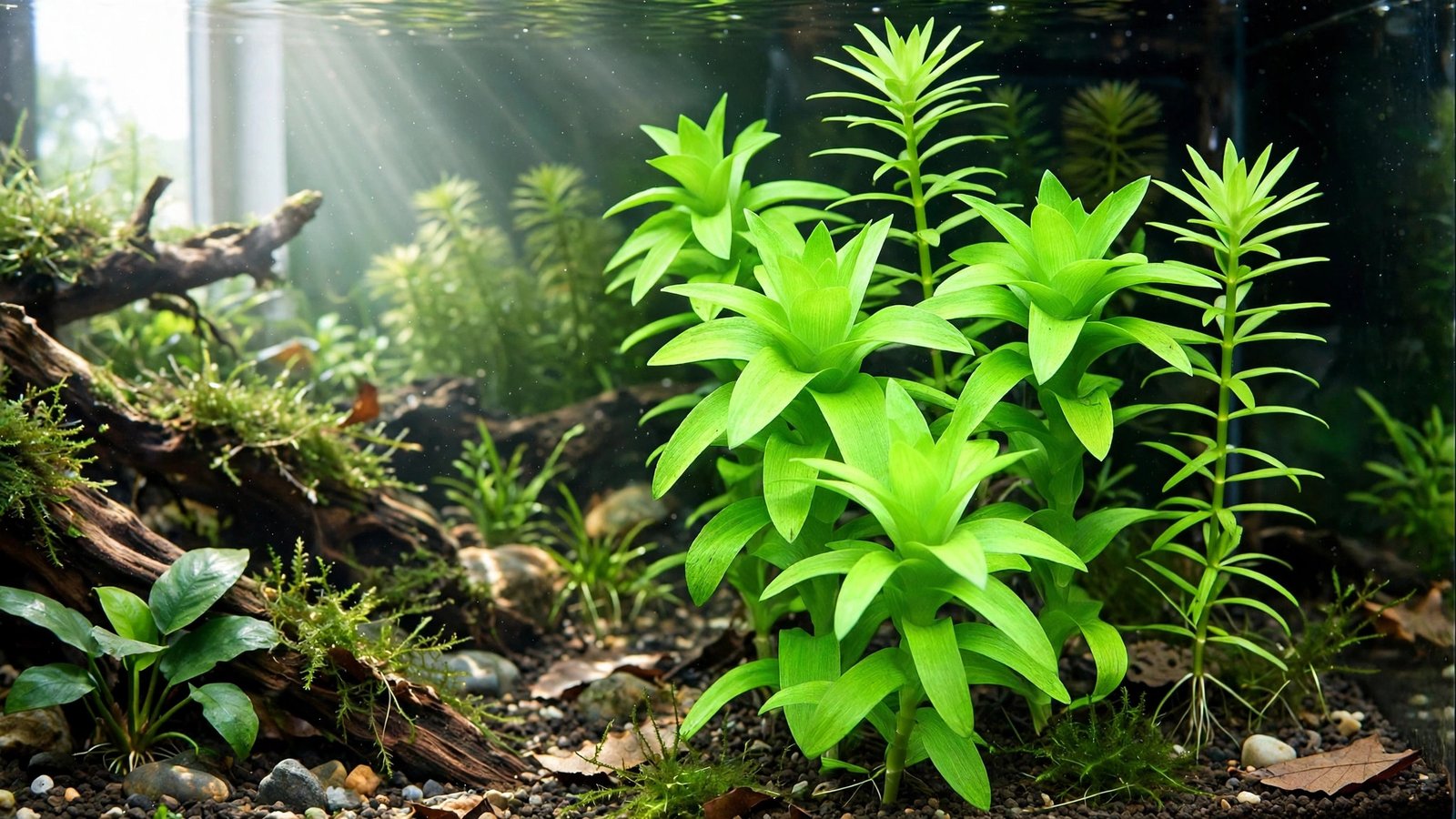
Tonina fluviatilis care separates the aquascaping tourists from the committed. This slender, needle-leaved stem plant is one of the true collector plants of the hobby — a soft-water specialist with near-zero tolerance for hard water and a reputation for melting at the slightest insult. Grown well, though, it is magnificent: fine, whorled foliage forming dense grassy bushes that glow under strong light, the kind of texture that makes Dutch-style stem arrangements look effortless.
There is no sugarcoating it: this is a high-tech plant. It wants soft, acidic water, real CO2 injection, strong lighting, and a nutrient-rich substrate — miss any of those and it will tell you quickly. But every demand is knowable and repeatable. Below is everything the plant needs, ranked by importance, plus the troubleshooting fixes that actually work in real tanks.
What Is Tonina Fluviatilis?
Tonina fluviatilis belongs to the pipewort family (Eriocaulaceae), making it a relative of plants like Eriocaulon rather than of true grasses. Wild populations grow in the soft, acidic, slow-moving waters of tropical South and Central America — streams and marshes where the water is essentially rain-soft above a rich bed of organic sediment. That origin explains almost everything about its aquarium behavior.
The plant grows as an upright stem with fine, needle-like leaves in tight whorls, giving each stem a miniature bottle-brush look. Under good conditions it branches freely into dense bushes used as a midground or background accent — the classic "plant street" effect in Dutch layouts. Mature stems reach 15–30 cm, and the foliage develops a vivid light-green to slightly golden tone that photographs beautifully.
Its "rare" reputation comes from genuine difficulty plus delicate shipping, so healthy stock is not always available. You will usually find it as tissue-culture cups — good news, since tissue culture is pest- and algae-free and adapts quickly if your water is right. (For an independent reference on how major nurseries classify and grade these plants, Tropica's aquarium plant database is a reliable starting point.)
Tonina Fluviatilis Care: Quick Facts
| Parameter | Target range |
|---|---|
| Difficulty | Advanced |
| pH | 5.5 – 7.0 (best at 6.0 – 6.8) |
| GH / KH | Very soft; GH 1–6 dGH, KH 0–4 dKH |
| Temperature | 20 – 28 °C, best around 22 – 26 °C |
| Light | Moderate to high |
| CO2 | Recommended; most hobbyists treat it as required |
| Substrate | Nutrient-rich aquasoil or enriched base |
| Growth rate | Moderate |
| Placement | Midground or background, in groups |
Tonina fluviatilis does not bend for low-tech setups — it simply stops growing and melts. Every section below is ranked by how much it matters, starting with the single biggest dealbreaker: water hardness.
Water Parameters: Soft and Acidic or Nothing
Water chemistry is the number-one reason this plant dies in home aquariums. It evolved in water with almost no dissolved minerals, and in hard, alkaline tap water its leaves stunt, growing tips deform, and the plant dissolves over a few weeks no matter how much light or CO2 you provide.
- pH: 6.0 – 6.8 is the sweet spot; 5.5 – 7.0 is tolerable. Active buffering aquasoil plus CO2 injection usually lands a tank in this range naturally.
- GH: 1 – 6 dGH. Very hard tap water (12+ dGH) is a genuine blocker.
- KH: 0 – 4 dKH, keeping the pH in the acidic range.
- Temperature: 20 – 28 °C; growth is steadiest in the low to mid-20s.
If your tap water is hard, the honest fix is remineralized RO (reverse-osmosis) water — many successful keepers run 100% RO remineralized to around 4–5 dGH with a shrimp-safe mineralizer. Mixing RO with tap also works if your tap is not extreme. Use liquid drop tests, not strips; you need real GH and KH numbers for this plant.
Stability matters as much as the numbers. Large water changes with different chemistry, pH crashes from exhausted buffering soil, and swings from inconsistent CO2 all stress the plant badly. It is another soft-water specialist in the same boat as Utricularia graminifolia: get the water right first, and everything else gets easier.
Lighting: Moderate to High, No Shortcuts
Tonina fluviatilis needs real light — moderate to high intensity, roughly 50+ PAR at the substrate, or a quality LED fixture run at 70–100% over a shallow-to-medium tank. Under weak lighting the lower leaves drop, stems get leggy and pale, and the bushy habit never develops. This is not a plant for a stock kit-light aquarium.
Even coverage matters more than raw brightness. In thick groups the inner stems shade each other and rot from the bottom up, so leave visible gaps when planting and do not place Tonina in the shadow of hardscape or overhanging broad-leaf plants. A 7–9 hour photoperiod is plenty; longer hours mostly grow algae.
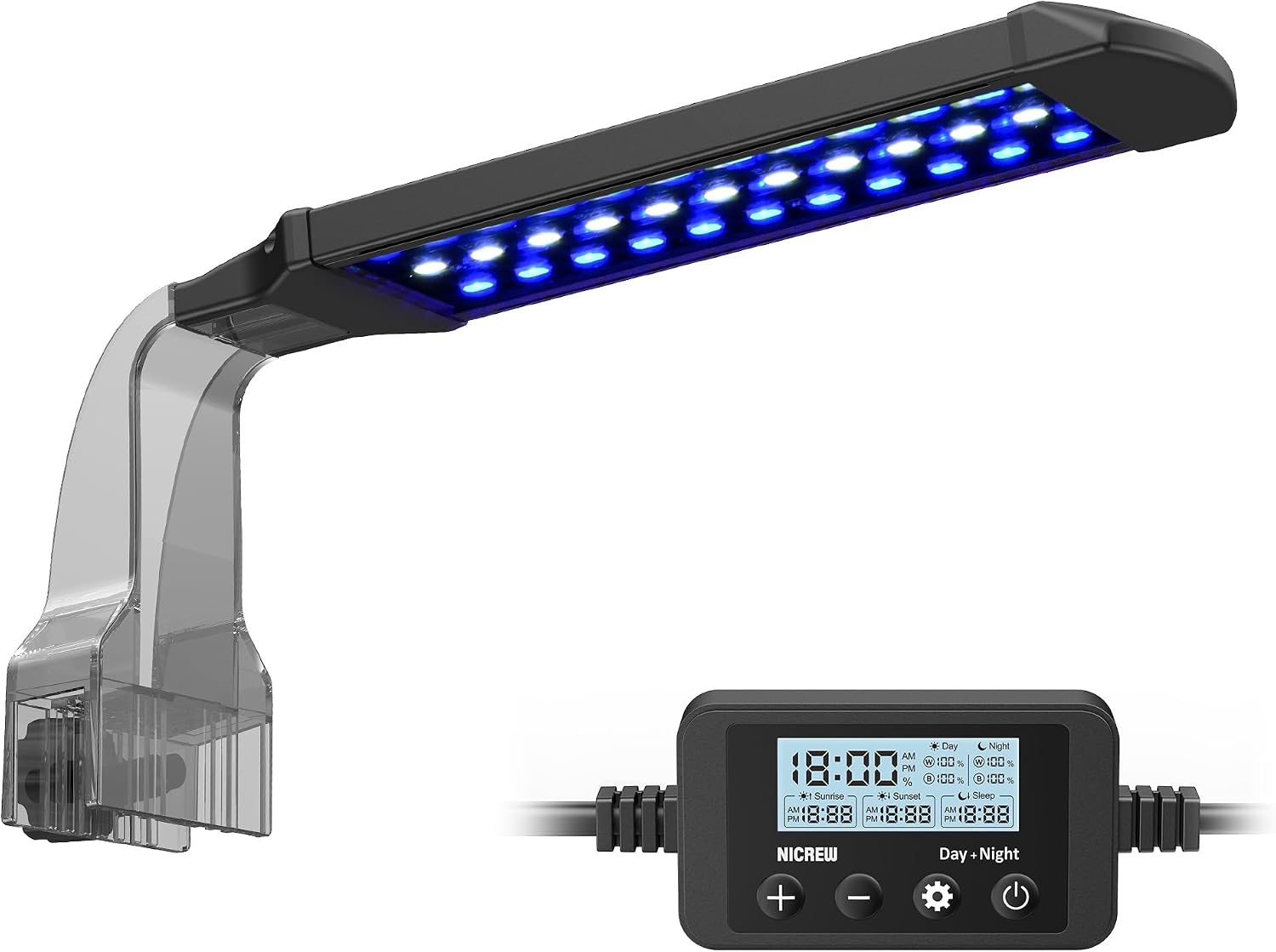
Moderate-to-high light with no shortcuts: high-output lighting like the NICREW ClassicLED Plus.
 ★4.6
NICREW ClassicLED Plus planted aquarium light
Check Price on Amazon ★4.6CO2 Injection: Effectively Required
Most hobbyists who keep this plant successfully treat CO2 injection as non-negotiable — it joins the ranks of CO2-hungry stems like Rotala wallichii. Without added carbon, growth stalls, tips stunt, and the plant becomes an algae magnet. Liquid carbon products are not a substitute here.
Aim for roughly 25–35 ppm of dissolved CO2, verified with a drop checker sitting in a stable lime-green during the photoperiod. Start CO2 about an hour before lights-on, stop it an hour before lights-off, and keep the level stable day to day — this plant punishes fluctuation with melted tips and sudden leaf loss. Good diffusion and gentle flow carrying CO2-rich water through the stem group matter more than a high bubble rate.
Substrate and Fertilization
Tonina fluviatilis is a genuine root feeder that wants nutrient-rich aquasoil or an enriched base under inert substrate. Fresh aquasoil also buffers pH down into the acidic range — two needs met by one product. As the soil exhausts its buffering over a year or two, push root tabs near the stem bases.
Water-column fertilization matters too, but a leaner approach beats an aggressive one here: a balanced all-in-one at standard dose is plenty. Pale new growth usually means iron or micronutrient shortage; stunted, deformed tips point at calcium or magnesium issues — correct those with small targeted doses rather than flooding the tank with minerals, since the plant wants soft water.
One useful diagnostic: lots of aerial roots sprouting from stem nodes often means the substrate is exhausted and the plant is hunting nutrients in the water column. Not automatically a crisis, but combined with slowed growth it is your cue to add root tabs.
Soft-water rare stem needs rich, soft aquasoil: a soft aquasoil like Fluval Stratum.
Gentle water-column feeding for a demanding stem: Seachem Flourish dosed gently.
How to Plant Tonina Fluviatilis
Most Tonina arrives as a tissue-culture cup. Rinse the gel off under lukewarm water, divide the plug into portions of 2–4 stems, and plant each about 2–3 cm apart with fine tweezers, pushing the base 2–3 cm into the substrate. That spacing feels sparse but is deliberate — cramming stems together is the fastest route to shaded, rotting bottoms.
Expect an adjustment period: emersed-grown plantlets often melt their old leaves over the first week or two as submerged-form growth emerges. If stems and tips stay firm and green, leave it alone — new growth within 1–2 weeks means it is settling in. Remove only stems that go translucent and mushy. Give new plantings the same consideration as any fine-leafed stem: planting stems with breathing room pays off in faster, cleaner establishment.
Trimming and Maintenance
Trim by topping and replanting the healthy tops. When a stem reaches your target height, cut it 5–8 cm above the substrate and replant the top; the rooted base usually sprouts two or more side shoots below the cut, which is how dense bushes form. Discard only the ratty lower sections.
Trim little and often rather than shearing hard — removing more than about a third of the height at once can shock this species. The same topping and replanting rhythm used for Rotala stems works perfectly. Every 3–4 weeks, also thin the group: pull bare, leafless poles, replant fresh tops, and let the bush renew itself.
Common Problems and How to Fix Them
- Sudden melting after planting: Usually transition melt. If tips stay firm, wait two weeks. If everything turns to mush within days, suspect hard water or a CO2 crash.
- Lower leaves dropping, bare stems: Low light or overcrowding. Increase light, thin the group, and replant tops so light reaches the base.
- Stunted, twisted growing tips: Calcium/magnesium deficiency in very soft water, or unstable CO2. Check GH first, then CO2 consistency.
- Growth stalls completely: Work the hierarchy in order: water hardness, CO2 stability, light, nutrients. Nine times out of ten the answer is in the first two.
- Algae on the fine leaves: The whorled foliage catches thread and hair algae easily. Fix the underlying imbalance (usually CO2 fluctuation or excess light duration) rather than scrubbing leaves, which damages them.
- Potted stock never establishes: Nursery-grown emersed pots sometimes never make the transition. Tissue-culture stock adapts far more reliably — switch sources if pots keep failing.
Where to Buy Tonina Fluviatilis
Look for tissue-culture cups from reputable aquarium plant retailers — the most reliable form, free of pests and algae. Potted or bunched stems can work, but inspect on arrival: firm green stems and intact growing tips are what you want; anything translucent or slimy goes in the bin.
This is a delicate shipper that bruises easily and hates temperature extremes, so buy from sellers who ship quickly in insulated packaging. Expect a collector-plant premium of several dollars per cup — the price of admission for one of the hobby's genuinely special stems, alongside other collector favorites like Blyxa japonica.
One responsibility note: Tonina is wild-collected in some parts of the trade. Choose tissue-culture or aquarium-farmed stock whenever you can, and check your local regulations before importing plants across borders. Farmed stock adapts to aquarium life better anyway.
Frequently Asked Questions
Is Tonina fluviatilis hard to keep?
Yes, by normal hobby standards it is an advanced plant. It demands soft, acidic water, CO2 injection, moderate-to-high light, and a nutrient-rich substrate all at once — miss any one and it melts. The difficulty is honest rather than mysterious, though: meet the parameters in this guide and it grows steadily. If you are new to planted tanks, build skills on easier stems first and return to Tonina once you run stable CO2.
Can Tonina fluviatilis grow without CO2?
Practically, no. Most experienced keepers treat CO2 injection as required, not optional. Without it, Tonina stalls, loses lower leaves, and slowly dissolves over weeks. Liquid carbon supplements do not deliver enough dissolved CO2 to make a real difference. If you are not ready for pressurized CO2, choose a different stem and revisit Tonina later.
Why is my Tonina fluviatilis melting?
Three usual causes, in order: water that is too hard or alkaline, unstable or insufficient CO2, or transition melt as tissue-culture plantlets adapt to submerged life. Check GH and KH with liquid tests first — hard water is the most common killer. If water is right, verify CO2 is stable and lime-green during the photoperiod. Normal transition melt resolves within two weeks.
How fast does Tonina fluviatilis grow?
At a moderate pace under good high-tech conditions — slower than true weeds but steady enough to need trimming every 3–4 weeks. Expect side shoots within a week or two of planting once settled, with stems reaching 15–30 cm over a couple of months. Growth speed is a useful health gauge: a Tonina that suddenly stops growing is almost always flagging a water chemistry or CO2 problem.
How do you propagate Tonina fluviatilis?
Simple stem cutting: snip a healthy stem, strip the lowest leaves, and plant the cutting 2–3 cm deep. The cut base usually sprouts two or more side shoots from the node below the cut, so each trim multiplies your stems. Tops root within one to two weeks in good conditions, and a single healthy cup can become a full bush within a few months of regular trimming.
Is Tonina fluviatilis the same as Tonina sp. 'Belem'?
No — related but different. Tonina fluviatilis is the true species, a taller stem with longer needle-like leaves. Tonina sp. 'Belem' is a smaller, more compact relative often used as a midground accent. 'Belem' is somewhat easier to keep, so if the true species keeps melting in your water, try it as a stepping stone before giving up on the genus.
Is Tonina Fluviatilis Right for Your Tank?
This is not a plant you buy on impulse — it is a plant you build a tank around. If you already run soft, acidic water, stable CO2, strong lighting, and rich substrate, it rewards you with one of the most beautiful textures in the hobby: fine, glowing, grassy bushes that elevate any aquascape they touch. If you are still working toward that setup, file it under "someday." Either way, buy farmed or tissue-culture stock, check local import rules, and give this remarkable little pipewort the conditions it evolved for.