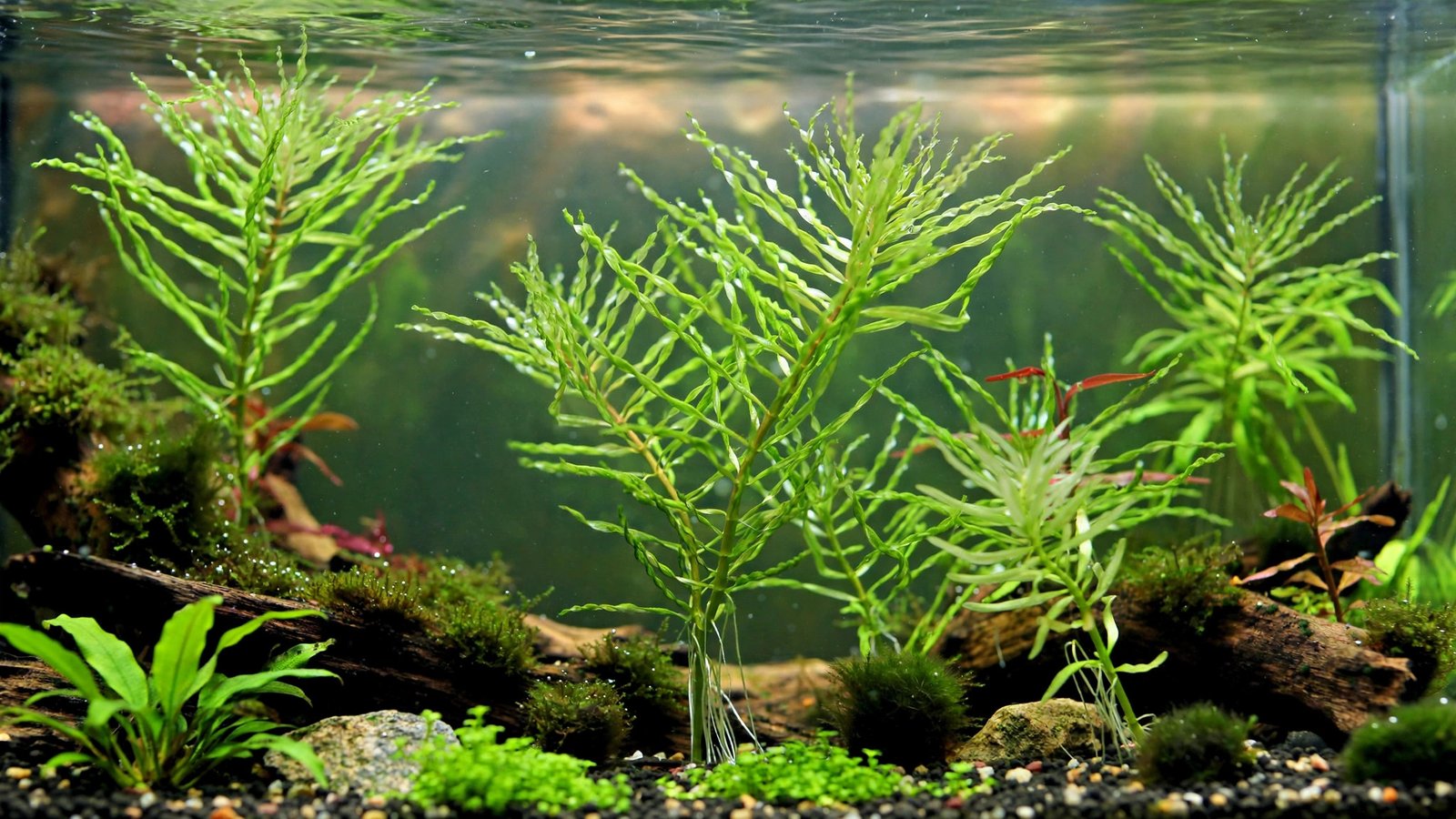
Few stem plants stop visitors mid-sentence the way this one does. Instead of plain pairs of leaves, each stem of Ludwigia Tornado climbs upward in a tight green corkscrew — a living spiral that looks almost engineered. That spiral is also the whole story of Ludwigia Tornado care: it only appears under strong light and injected CO2, and the moment either slips, the plant unravels into ordinary green stems. This guide shows you how to keep the tornado twisted — exact light targets, CO2 numbers, feeding, and a trimming rhythm that keeps a clump dense and dramatic.
Why Ludwigia Tornado care is really about CO2 and light
Ludwigia Tornado is a cultivated form of Ludwigia inclinata var. verticillata — a spiral mutation of the well-known 'Cuba' variety. Where the parent plant grows its narrow leaves in tidy straight whorls, Tornado twists every whorl into a dense corkscrew — but only when photosynthesis is running at full throttle. That is why light and CO2 are not optional extras here; they are the plant.
In practical terms, Tornado wants a genuine high-tech setup. Aim for 100–150+ PAR at the substrate (roughly 0.8–1.0 W/L of modern LED) over a 7–9 hour photoperiod, and CO2 at a steady 25–30 ppm — lime green on your drop checker from lights-on to lights-off. Start around 2–4 bubbles per second in a 100-liter tank, then tune to the drop checker, not the bubble count. If you have not dialed in injection yet, read our walkthrough on setting up CO2 in your aquarium before you plant this one.
When light falls short, the internodes stretch, the whorls loosen, and within weeks your corkscrew is a plain green stem. The good news: correct the light and CO2, and the newest growth comes back tight.
 ★4.3
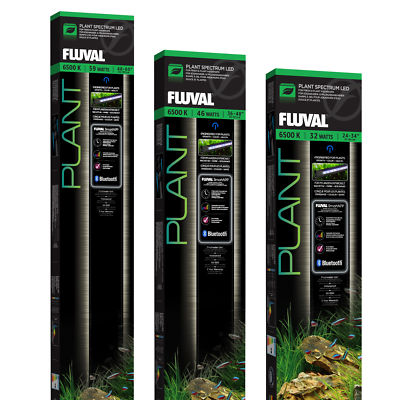
Fluval Plant 3.0 LED Planted Aquarium Lighting, 22W
Check Price on Amazon ★4.3Water, nutrients and the soft-acidic preference
Tornado prefers the soft, slightly acidic water of its South American home: 24–28 °C (tolerates 20–28), pH 6.0–7.0, and carbonate hardness at 0–4 °dKH. Very hard, alkaline water stunts it. Stability matters more than perfect numbers — wild pH or hardness swings stall the growing tips first.
Feed it like any fast stem plant, consistently: nitrate 10–20 ppm, phosphate 1–2 ppm, potassium 10–20 ppm, plus iron around 0.05–0.1 ppm from a chelated micro mix. Iron deepens the copper-red blush on new tips, but it is easy to overdose in the chase for color — which feeds algae instead. Hold the table targets and let time do the coloring.
| Parameter | Target | Notes |
|---|---|---|
| Temperature | 24–28 °C | Tolerates 20–28 °C; grows fastest at the warm end |
| pH | 6.0–7.0 | Soft, slightly acidic is its natural water |
| KH | 0–4 °dKH | Very hard water stunts new growth |
| Nitrate (NO3) | 10–20 ppm | Slightly leaner (5–10 ppm) reddens tips under strong light |
| Phosphate (PO4) | 1–2 ppm | Keep detectable at all times |
| Potassium (K) | 10–20 ppm | Classic stem-plant macro demand |
| Iron (Fe) | 0.05–0.1 ppm | Enhances red tips; do not overdo it |
| CO2 | 25–30 ppm | Lime-green drop checker, lights on to lights off |
| Light | 100–150+ PAR | 7–9 hour photoperiod; spiral unwinds below ~80 PAR |
Planting, trimming and propagation
Plant Tornado in groups of 3–4 stems, spaced 2–3 cm apart, burying only the bottom 2 cm. It roots from every node, so rich aquasoil or a root tab under the group helps at the start, though liquid dosing does the long-term work. Give the group a clear vertical corridor — it wants to reach 30–50 cm, and anything that shades it costs the lower leaves first.
Trimming is where the spiral is maintained. When stems near the surface — usually every 2–3 weeks — cut each stem in half and replant the top, which carries the tightest twist and roots within days. The stump throws two or more side shoots, thickening the group. Old leaves never re-twist: if a stem unwound during a low-light spell, prune the straight sections and keep only the new tops.
How Tornado differs from its Ludwigia cousins
Tornado shares a genus with some of the hobby's most popular stems, but it is the odd one out — and that is the point. If you are still planning the tank, compare it with our picks for the best plants for a planted aquarium to see which stems share its light and CO2 budget.
| Plant | Leaf style | Difficulty | What sets it apart |
|---|---|---|---|
| Ludwigia Tornado | Tight twisted whorls | Moderate–advanced | The only Ludwigia with a corkscrew form; demands high light and CO2 |
| Ludwigia Super Red | Broad oval pairs | Moderate–advanced | True crimson color rather than twisted texture; same high-light appetite |
| Ludwigia 'Rubin' | Broad, deep ruby leaves | Moderate | Dark wine-red foliage; bolder and heavier in the scape than Tornado |
| Ludwigia arcuata | Fine needle leaves | Moderate | Feathery orange-red texture; a gentler step up from beginner stems |
| Ludwigia ovalis | Round pink-orange pairs | Easy–moderate | The forgiving cousin — learn Ludwigia on this one, then graduate to Tornado |
Botanically it is sold as Ludwigia inclinata var. verticillata 'Tornado' — sometimes 'Curly' or 'Cuba Twisted', synonyms for the same mutation (see the botanical datasheet for Ludwigia inclinata var. verticillata 'Curly'). Emersed-grown stock looks different — oval leaves, sometimes yellow flowers — and needs a week or two submerged before it starts twisting.
Frequently Asked Questions
Why did my Tornado lose its spiral and grow straight?
The spiral unwinds when light drops below roughly 80 PAR or CO2 becomes unstable. The plant stops spending energy on the twisted form and grows plain, leggy stems instead. Raise the light to 100–150+ PAR, stabilize CO2 at 25–30 ppm, then prune off the straight sections — only new growth re-twists, so keep the fresh tops.
Can Ludwigia Tornado grow without injected CO2?
It can survive without CO2 injection, but you will not get the plant you paid for: growth slows, the stems stay plain green and leggy, and algae often colonizes the leaf tips. Tornado is genuinely high-tech: to hold its corkscrew form, injected CO2 at a steady 25–30 ppm is effectively required, not optional.
How do I get the red tips on my Tornado?
Red tips are a light response, not a fertilizer trick. Push PAR toward the top of the 100–150 range, hold nitrates slightly lean at 5–10 ppm, and keep iron around 0.05–0.1 ppm from a chelated micro mix. New growth then blushes copper-red while older leaves stay green. Green Tornado is healthy Tornado — treat red as the bonus, not the baseline.
How do I propagate Ludwigia Tornado?
Cut healthy stems in half and replant the tops — they root from the buried nodes within days, and the tightest spiral is always on the newest growth. The stumps sprout two or more side shoots, thickening the group. One mother plant becomes a full background cluster in about a month if you replant every top.
Why are the lower leaves on my Tornado melting?
Bare lower stems mean the base is starved of light — planted too densely, shaded by hardscape, or simply never trimmed. Tornado sacrifices its lowest leaves first. Thin the group so light reaches the substrate, remove the naked stems, and replant fresh tops every 2–3 weeks to keep it from recurring.
Give Tornado strong light, steady CO2 and six honest weeks, and it pays you back with the most distinctive texture in the hobby — a clump of living corkscrews no other Ludwigia can imitate. Set the parameters from the table above, keep the tops coming, and let the spiral do the talking.