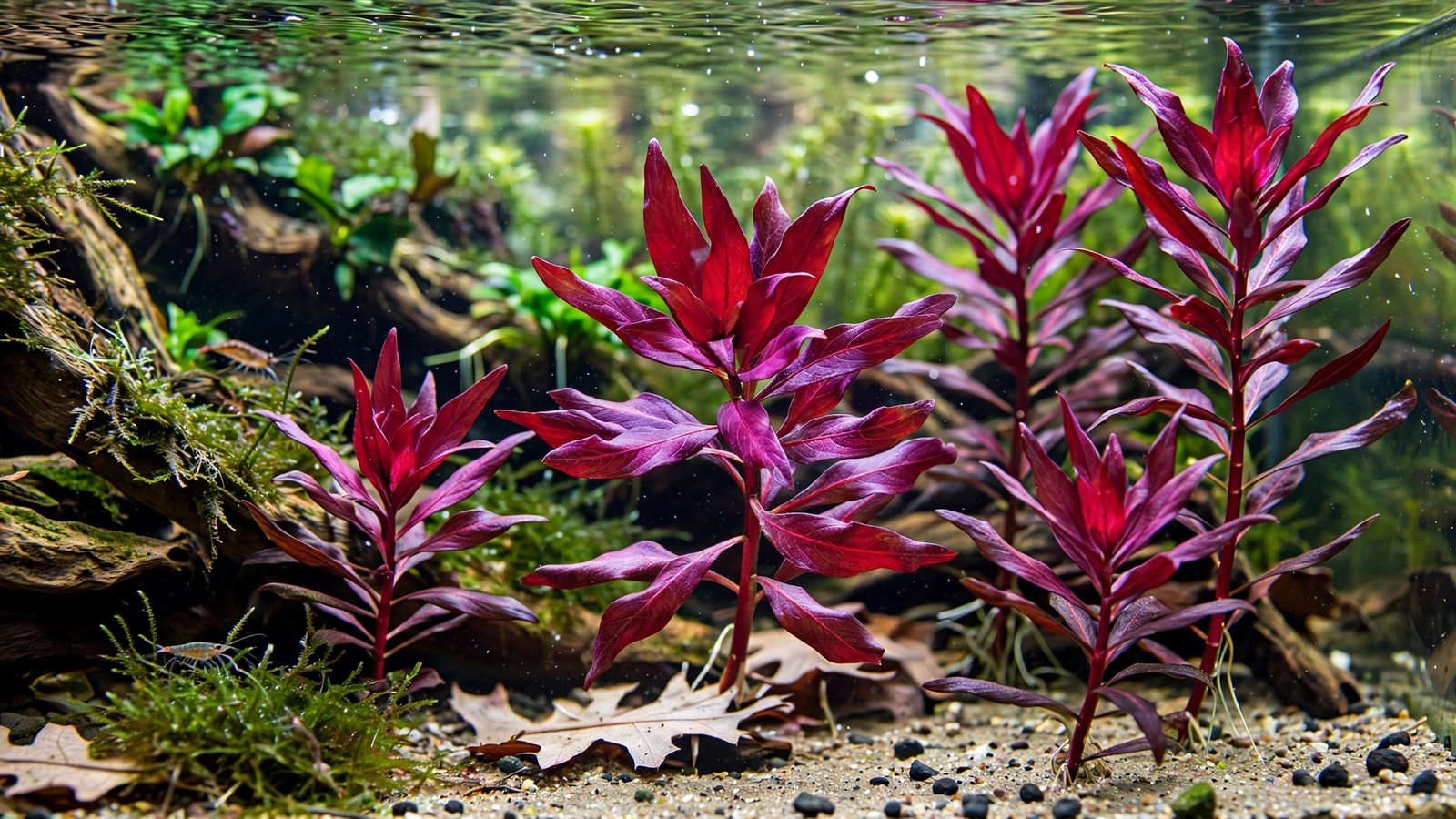
When Ludwigia glandulosa is dialed in, it looks like embers: stiff upright stems packed with wine-red lance-shaped leaves that ignite a midground. When it is not, the same plant reverts to olive-green, stalls, and melts at the base — and most keepers wonder whether they bought the wrong species at all. That doubt is not baseless. This ludwigia glandulosa care guide covers the four-driver recipe for wine-red color — strong light, CO2, full nutrition with iron, and cool water — plus the nursery name mix-up that means the plant in your cup may have been mislabeled from the start.
Ludwigia glandulosa care demands four non-negotiables together: high light (roughly 100+ PAR at the substrate), injected CO2 at a conservative 20–30 ppm, complete macro- and micronutrient dosing including iron, and water at 22–25 °C. Miss any one and the plant stays green or slowly rots. Plant 5–7 stems as a midground accent, prune above a node to branch it, and verify the name on purchase — nurseries routinely mislabel it "peruensis" or "perennis."
Ludwigia Glandulosa Care: The Wine-Red Formula
Ludwigia glandulosa builds its red pigment by pigment from light, carbon, and iron — in low-energy tanks the same genetics produce unremarkable olive-green stems. That is why reviews swing from "best red plant ever" to "just melted": same species, different tank recipe. The three levers must arrive together. Light sets the ceiling, so if you are unsure what "strong light" means in numbers, read how much light aquarium plants really need before chasing color. CO2 supplies carbon to match that light — start low and never raise it faster than your livestock tolerate. Iron fuels anthocyanin, the wine-red pigment: pale new growth or fading red means dose a chelated iron or complete liquid fertilizer (the best liquid fertilizers for aquarium plants all include bioavailable iron), then wait two weeks before adjusting anything.
 ★4.6
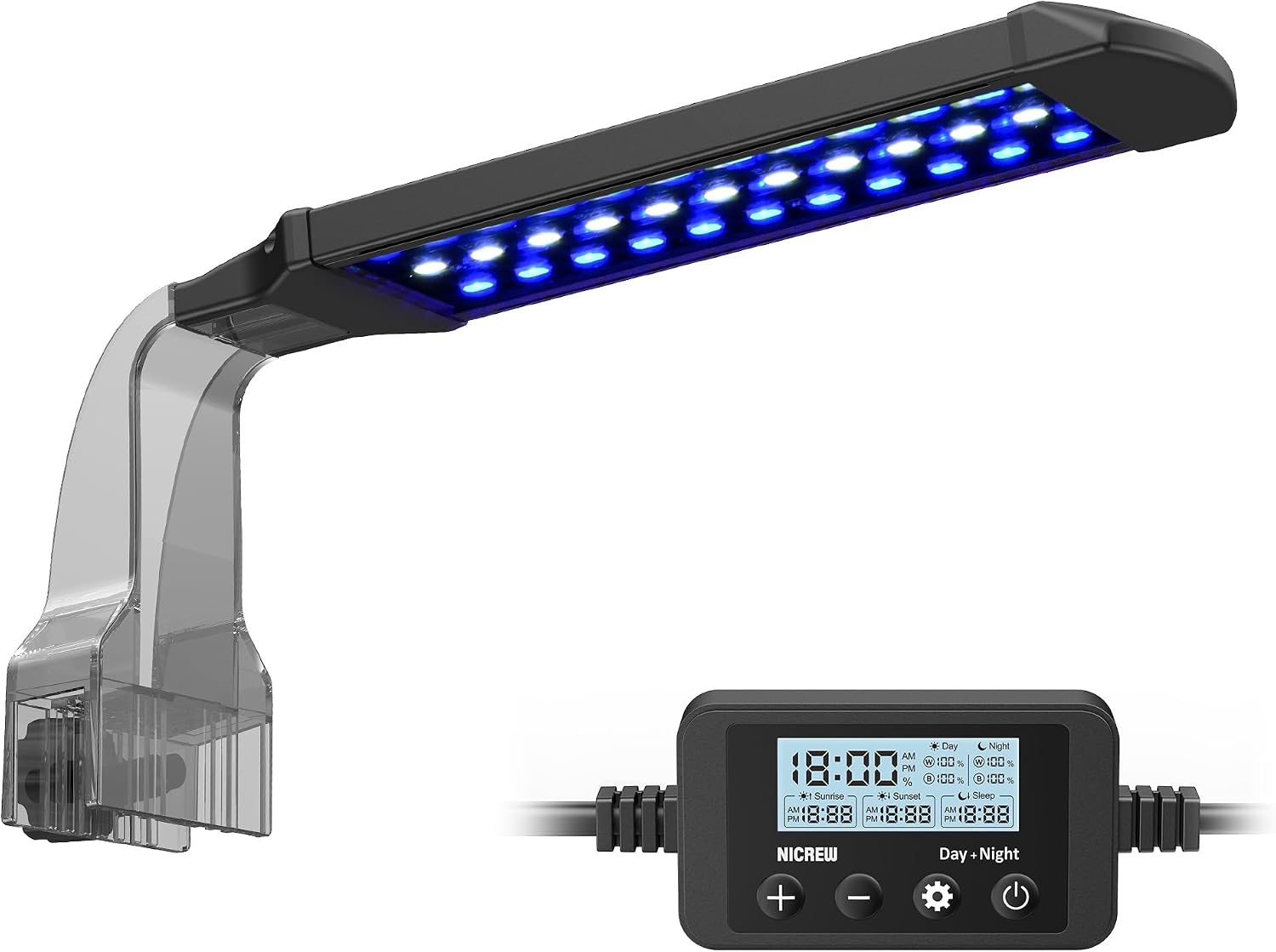
NICREW ClassicLED Plus planted aquarium light
Check Price on Amazon ★4.6The Peruensis Name Mix-Up
"Ludwigia peruensis" shows up constantly in trade listings, but it is not a recognized standalone species the way sellers imply — nurseries have applied it to Ludwigia glandulosa plants so often that the names are effectively conflated in the trade. "Perennis" and "senegalensis" variants appear too — Tropica's own plant database notes Ludwigia glandulosa used to be sold as Ludwigia perennis. Identification beats the label: true Ludwigia glandulosa has rigid, upright, unbranched stems that hold their shape out of water and dense lance-shaped leaves that redden under strong light. Contrast it with Ludwigia super red, a softer bushier cultivar, or Ludwigia repens, whose rounder leaves stay lower. Buy tissue-culture cups that print the full scientific name — clean genetics with no hitchhiker snails are worth the small premium.
Tank Parameters for Ludwigia Glandulosa
| Parameter | Target | Notes |
|---|---|---|
| Temperature | 22–25 °C | Avoid sustained periods above 27 °C — color fades, algae wins |
| pH | 6.0–7.2 | CO2 injection sets the lower end |
| GH / KH | 3–8 dGH / 2–6 dKH | Soft-to-moderate water best |
| Light | 100+ PAR at substrate | High-light LED, 7–8 hours daily |
| CO2 | 20–30 ppm | Start low; raise only while livestock stay calm |
| Substrate | Nutrient-rich aquasoil | ≥ 4 cm deep, iron- and trace-rich |
| Placement | Midground accent | Groups of 5–7 stems, 3–4 cm apart |
Macro and Micro Nutrition
Ludwigia glandulosa feeds through roots and leaves, so single-channel dosing underserves it: nutrient-rich aquasoil or root tabs underneath, a complete liquid fertilizer after each water change. Wondering whether dosing is truly necessary? The honest answer is at do aquarium plants really need fertilizer — for this species it is an unequivocal yes, because deficiency shows first as faded color, then as pinhole melting on lower leaves. Dose lean while the group establishes; this is a slow grower and excess nutrients with a small biomass invite hair algae onto the stems. Step up to full dosing once new growth appears weekly.
Planting and Pruning
Plant stems 3–4 cm apart, never as one clump — inner stems rot in the shade. Midground placement works best: tall enough for a focal accent against green background plants, short enough that the fixture reaches the base. Think of glandulosa as color punctuation — one red group per side, not a red wall. To prune, cut just above a node and replant the top; the rooted base sprouts two shoots, thickening the group into a bush. Allow 6–8 stable weeks before judging the planting — weekly rescapes reset the roots' anchoring progress.
Common Problems
Green reversion. Alive and growing but staying green means light is the gap. Raise intensity or add 30 minutes of photoperiod before touching fertilizer.
Base melting. Translucent dissolving lower stems with healthy tops: the group is planted too densely or the substrate is exhausted. Thin the group, add root tabs, remove rotting tissue promptly.
Pinholes in lower leaves. Classic potassium shortfall — dose a complete liquid fertilizer with K after the next water change.
Algae on stems. Hair or staghorn algae claims slow red stems when light outruns CO2 and dosing. Cut the photoperiod to 6 hours, confirm CO2 stability, spot-treat affected stems rather than blackout-dosing the tank.
Frequently Asked Questions
Can Ludwigia glandulosa grow without CO2?
It survives but will not turn wine-red — expect olive-green, leggy growth with lower-leaf melt. The red that justifies buying it needs injected CO2 in the 20–30 ppm range. If you run low-tech, choose an easier red stem like Ludwigia repens instead.
Is Ludwigia peruensis the same as glandulosa?
Effectively, in the trade: "peruensis" is a nursery label routinely applied to Ludwigia glandulosa and is not a distinct species to hunt down. Rigid upright stems with dense lance-shaped leaves that redden under strong light mean glandulosa, whatever the label says.
Why is my Ludwigia glandulosa turning green?
One of the four color drivers is missing: light below ~100 PAR at the substrate, unstable or low CO2, iron/micronutrient shortfall, or water above ~27 °C. Fix light first, confirm CO2 stability for two weeks, then adjust fertilizer — dosing harder under weak light only feeds algae.
How fast does Ludwigia glandulosa grow?
Slow — a few centimeters per week even in good conditions. Plant the final group count from day one rather than expecting one pot to fill the space, and allow 6–8 stable weeks before it bushes out.
Does it need special substrate?
It performs best in nutrient-rich aquasoil at least 4 cm deep, ideally iron-rich. Inert gravel works with root tabs under the group plus liquid dosing, but color will be weaker and growth slower. Pair either with injected CO2 for real results.
Ludwigia glandulosa rewards patience more than tinkering. Set the four drivers — strong light, conservative CO2, complete nutrition with iron, cool water — then leave the group alone for two months. When those wine-red stems thicken out in the midground, few plants in the hobby earn their spotlight harder.