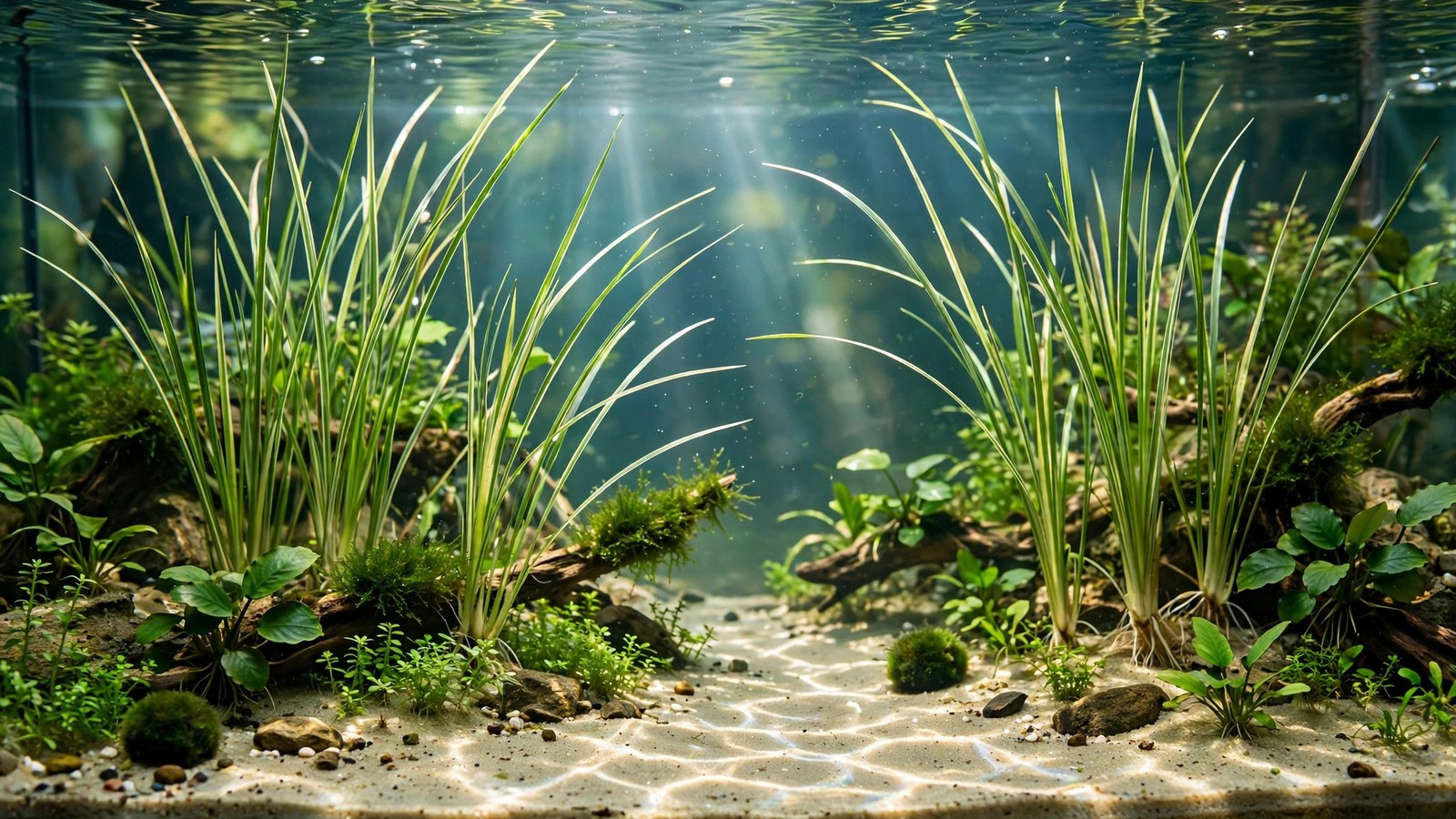
Japanese rush has been killing hobbyists' aquascapes quietly for years — not because it's a bad plant, but because the wrong form keeps getting sold as an aquarium plant. Tall, wild-type Acorus gramineus rots within months of submersion, while the dwarf 'Pusillus' cultivar thrives for years in the same tank. Understand the difference and Acorus gramineus care is straightforward: cool water, medium light, and one technique almost nobody uses on a grass-like plant — never bury the rhizome.
Why Sources Contradict Each Other About Acorus Gramineus Care
One database says Japanese rush thrives submerged; another says it isn't an aquarium plant at all. Both are honest — the trade sells several plants under this name: the true dwarf 'Pusillus' (the aquarium plant), intermediate cultivars that tolerate brief submersion, and wild-type tall plants that belong in a pond.
The wild types grow 30–50 cm and are genuine marginals: roots wet, leaves in the air. Forced underwater, they live on stored energy for a while, then yellow from the tips inward and rot. That's the "great for three months, then dying" pattern hobbyists keep reporting. If a label promises 40 cm underwater, it's a pond plant.
Choosing the Right Cultivar for Your Tank
For submerged use, buy only material labeled as a dwarf cultivar. The most reliable is 'Pusillus' — it stays under about 15 cm and holds bright green, grass-like leaves underwater long-term. Buy firm plants with white roots and a solid rhizome; don't accept a tall pot "that will stay small if you trim it." It won't.
Acorus Gramineus Care: The Core Technique
Here is the signature move: never bury the rhizome. Like Anubias, Acorus gramineus grows from a horizontal rhizome that rots when buried in substrate. Pushing a pot of dwarf Acorus deep into the gravel is the single most common failure mode in home aquariums.
Instead, do one of these:
- Tie or glue it to stone or wood with cotton thread or cyanoacrylate plant glue, rhizome fully exposed. The safest method.
- Set it on the substrate surface, rhizome resting on top, only the roots tucked into the gravel. Weight it with a small stone until anchored.
- Wedge it between stones in a rock-work border so current flows around the rhizome.
Once the rhizome is exposed and healthy, the rest of Acorus gramineus care is simple. Medium light keeps it compact and green; CO2 is optional, which is why it fits the easiest aquarium plants for a beginner community tank — hardy and low-tech once placed correctly. A lean liquid fertilizer helps leaf color, but heavy dosing isn't needed.
Water Parameters and the Cool-Water Advantage
| Parameter | Target | Notes |
|---|---|---|
| Temperature | 18–23°C | Optimum; tolerates brief dips to ~15°C |
| pH | 6.0–7.5 | Adaptable, no special demands |
| Hardness | Soft–moderately hard | Not fussy |
| Light | Medium | Compact growth, best color |
| CO2 | None needed | Grows fine without injection |
The cool-water preference is Acorus gramineus's biggest differentiator from most tropical plants. It grows best between 18 and 23°C — cooler than a standard tropical tank — making it an outstanding choice for unheated aquariums and temperate shrimp tanks. Above 26°C, growth slows and the crown becomes vulnerable to algae and rot.
pH and hardness matter far less: the dwarf cultivar tolerates typical tap-water ranges. What matters more is cleanliness — keep debris from settling into the leaf crown, since trapped detritus against the rhizome is a rot trigger.
Propagation and Maintenance
Propagation is division. When the rhizome has grown several new leaf fans, lift the plant and cut it into sections, each with at least three or four leaves and some roots, then reattach each piece rhizome-exposed. Maintenance is minimal: pull yellowing outer leaves gently from the base (never cut mid-blade) and thin congested clumps once or twice a year so water circulates around the rhizomes.
Troubleshooting Common Problems
- Yellowing from the tips inward: usually a tall wild-type plant exhausting its reserves — it was never suited to submersion. Replace with true dwarf 'Pusillus'.
- Mushy, brown rhizome: buried rhizome rotting. Lift the plant, trim all soft tissue back to firm material, and reattach it exposed on stone or wood.
- Algae on the leaves: too much light or warm, nutrient-heavy water. Move the plant into slight hardscape shade and keep temperatures in the 18–23°C band.
- No growth at all: normal in cool tanks — the dwarf form is slow. If leaves stay green and firm, it's healthy; it's just thinking.
Slow-growing plants reward honest sourcing — the same "verify the cultivar before buying" discipline that keeps Utricularia gibba care simple applies here: the plant you think you're buying should be the plant you actually get.
Where Japanese Rush Fits in Your Layout
Think of dwarf Acorus as a grass-like texture plant for the foreground and borders. Its upright, strappy leaves contrast well against rosette plants and low carpets, and read especially well against dark stone. Because it's slow, it won't invade a Mayaca fluviatilis carpet the way runners would.
It's also a natural bridge plant: a clump of Acorus at the waterline connects a planted tank visually to a paludarium, and the same plant can grow with its crown above water indefinitely. The freshwater aquarium plants complete guide maps which species belong fully submerged and which are marginals like this one. For a warmer-water counterpoint with similar patience requirements, see Alternanthera lilacina.
What to Buy (And What to Skip)
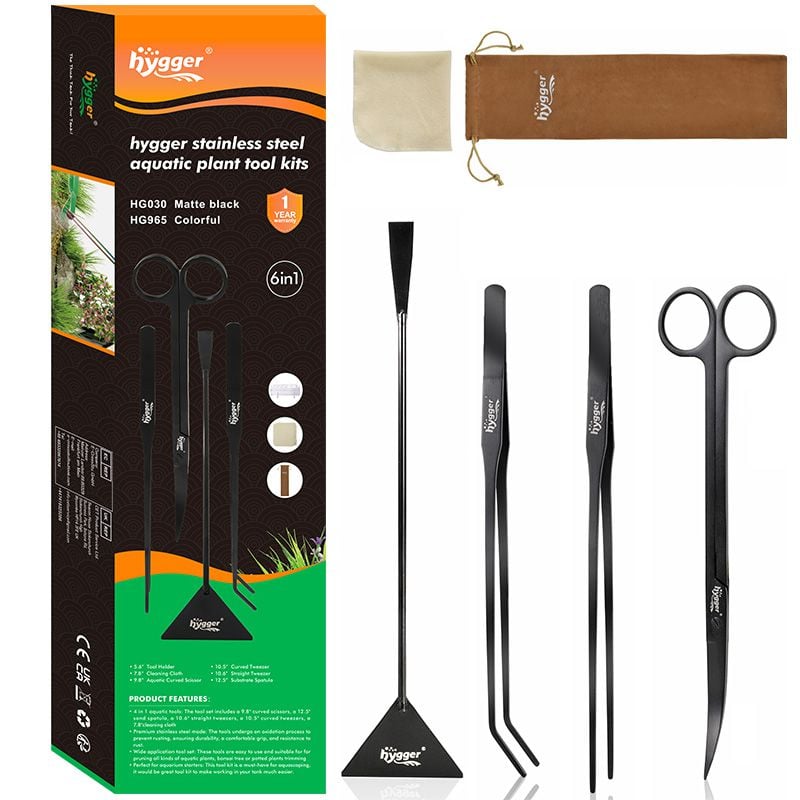
Buy from sellers who name the cultivar — 'Pusillus' from an aquarium-specific retailer is the gold standard. Avoid any listing that shows a 40-cm grass and promises it as an aquarium plant. For planting you need only cotton thread or cyanoacrylate plant glue for the rhizome-attachment method, plus a hang-on basket or shelf for the riparium route.
 ★4.6
hygger 6-in-1 Aquarium Aquascaping Tool Kit
Check Price on Amazon ★4.6Frequently Asked Questions
Can Acorus gramineus really grow underwater?
Only the dwarf 'Pusillus' cultivar — and even it grows slower submerged than emersed. Tall wild types (30–50 cm) are pond marginals that rot within months underwater. Buy named dwarf material, keep the rhizome exposed, and the aquarium form is genuinely low-maintenance.
Why is my Japanese rush rotting at the base?
A buried rhizome is the usual cause: the thick horizontal stem rots when pushed into substrate. Lift the plant, trim all mushy brown tissue back to firm white material, and reattach it to stone or wood with the rhizome fully exposed. Detritus trapped in the crown also causes rot, so keep the base clean.
What water temperature does Japanese rush need?
Acorus gramineus prefers cool water — 18–23°C is the sweet spot, and it tolerates dips toward 15°C. This makes it ideal for unheated tanks and temperate setups. Above about 26°C growth stalls and the crown becomes more prone to rot and algae.
Does Acorus gramineus need CO2?
No. The dwarf form grows well without CO2 injection under medium light, which is why it fits low-tech and beginner setups. CO2 may speed growth slightly, but this is a naturally slow plant — don't expect carpet-plant pace even with injection.
Japanese rush rewards honesty: buy the right cultivar, respect the rhizome, and keep the water cool. That's the whole secret — and once you've seen dwarf Acorus sitting crisp and green while everything around it sulks, you'll wonder why the tall impostors ever get shelf space in aquarium shops.
Retailer care notes are worth consulting when a listing is ambiguous: AquaSabi publishes submerged-care guidance for its dwarf 'Pusillus' stock, and Aquatic Community maintains one of the more candid plant-database entries on the species.